Showing posts with label Cleveland Orchestra. Show all posts

Thursday, March 02, 2023

Mitsuko Uchida captivates Severance audience with Beethoven’s Piano Sonatas


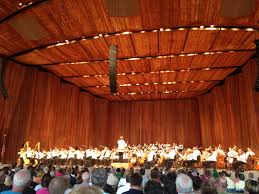
The final notes of “Piano Sonata No. 32” still hung in the air of the hushed Mandel Concert Hall at Severance Music Center as pianist Mitsuko Uchida held her pose and slowly raised her hands from the Steinway piano’s keys.  As she relaxed her body the packed house rose as one, yelling praise and clapping madly.  Three curtain calls later, Uchida left the stage with the audience still applauding! 
 
Yes, they had just witnessed a master pianist present an impressive and long-to-be-remembered concert!
 
One of the most revered artists of our time, Dame Mitsuko Uchida is known as a peerless interpreter of the works of Mozart, Schubert, Schumann and Beethoven.  
 
Musical America’s 2022 Artist of the Year, and a Carnegie Hall Perspectives artist across the 2022/3, 2023/4 and 2024/5 seasons, she has been nominated for a Grammy® Award, and won the 2022 Gramophone Piano Award.
 
Born in  Japan, Uchida moved to ViennaAustria, with her diplomat parents when she was 12 years old, after her father was named the Japanese ambassador to Austria.  She was enrolled at the Vienna Academy of Music and  gave her first Viennese recital at the age of 14.  

She went on to a much-acclaimed career, much of it with the world-renowned Cleveland Orchestra. 

Her 2009 recording of the Mozart piano concertos nos. 23 and 24, in which she conducted the Cleveland Orchestra as well as playing the solo part, won the Grammy Award in 2011.  

From 2002 to 2007 she was artist-in-residence for the Cleveland Orchestra.  “Her 2015 performance with the Cleveland Orchestra elicited this review from the Cleveland Plain Dealer: “Call it the mark of a master. Just when Mitsuko Uchida was starting to seem predictable, the goddess of purity, the pianist goes and exhibits another persona altogether.

Performing Mozart again with the Cleveland Orchestra Thursday, the pianist-conductor treated listeners to a heartier, more robust version of her art.”

Each of Beethoven’s Sonatas 30, 31, and 32 have been described as “a haiku, beautifully formed, not wasting a note, making a very significant point.”

“In 1820 Beethoven had started work on not only the Ninth Symphony and the Diabelli Variations, but the Missa Solemnis as well.  During this period of creative magnificence, he also produced his three final piano sonatas, each an experiment in form.”

Sonata 30 has been described as opening in a sweeping exhalation, like a speaker encountered in mid-sentence.  Sounding like an improvisation, it ends as it begins, on the wing (when has a vivace sounded so calm?), and is followed immediately by an angry, prickly, minor-key prestissimo — briefer even than its predecessor. The final movement is a kind of balm. Technically a theme with six variations, the movement opens and ends in the warmth of serenity, daring not to conclude with a bang, but with a sigh.”

It was obvious to anyone who knows Beethoven’s piano music that Sonata 30 was quite different than his earlier pieces.  Much more sounding like “modern” music, part of this change was due to the transition of the piano and piano technique.  

“In the period from about 1790 to 1860, the piano underwent tremendous changes that led to the modern structure of the instrument.  This revolution was in response to a preference by composers and pianists for a more powerful, sustained sound.  This was made possible by the ongoing Industrial Revolution, with resources such as high-quality piano wire for strings, and precision casting for the production of massive iron frames that could withstand the tremendous tension of the strings.”

“Piano technique evolved during the transition from harpsichord/clavichord to fortepiano playing, and continued through the development of the modern piano.  Changes in musical styles and audience preferences over the Classical and Romantic periods, as well as the emergence of virtuoso pianists, contributed to the evolution of the piano and the various ‘schools’ of piano playing.”

Sonata 31 was met with critical raves when it was first presented.  The reaction can best be understood by a modern program note which stated, "In none of the other 31 piano sonatas does Beethoven cover as much emotional territory: it goes from the absolute depths of despair to utter euphoria ... it is unbelievably compact given its emotional richness, and its philosophical opening idea acts as the work’s thesis statement, permeating the work, and reaching its apotheosis in its final moments.”

Mitsuko Uchida presented all that emotional richness.

The obvious favorite segment of the program was Sonata 32 which had elements that sounded like the jazzy and melodic compositions of Scott Joplin and George Gershwin.  

The last of Beethoven’s piano sonatas, the work was written between 1821 and 1822.  It is one of the most famous compositions of the composer's "late period" and is widely performed and recorded.

The work is in two movements, which breaks the traditional pattern of the three-movement sonata.  Each is highly contrasting.  The first movement is stormy and impassioned, “majestic” and brisk.”    “The second movement is filled with drama and transcendence ... the triumph of order over chaos, of optimism over anguish.”

Capsule judgment:  Mitsuko Uchida’s recent Severance Hall all Beethoven concert proved once again that she is one of today’s premiere classic pianist!  
 

Upcoming events of the Cleveland Orchestra:
Tickets:  https://www.clevelandorchestra.com/

PICTURES AT AN EXHIBITION, MARCH 2-5
Beloved conductor Herbert Blomstedt returns to Cleveland for a program of Beethoven and Mozart favorites. “What he offers, above all, is a kind of preternatural rightness: no gesture feels out of place, no gesture feels routine,” The New Yorker’s Alex Ross wrote of Blomstedt, who he also described as “the most vital conductor of Beethoven.” Beethoven’s Seventh is the composer’s greatest demonstration of the compelling power of rhythm, and it’s paired with Mozart’s “Paradis” Piano Concerto.

MOTZART REQUIEM, MARCH 9-12
Legends swirl around the creation of Mozart’s Requiem, written on his deathbed and left unfinished: Who was the mysterious figure who commissioned the composer? What parts of the work were truly his own? And was Mozart composing his own funeral mass with this final artistic statement? Many of these questions were explored hauntingly (albeit suspiciously) in the movie Amadeus. We are nevertheless left with a work of overwhelming power — at once intensely dramatic and deeply personal — that touches the core of our humanity.

WEST SIDE STORY IN CONCERT, MARCH 17-19
BERNSTEIN, complete film with Cleveland Orchestra, Brett Mitchell, conductor

THE TEMPEST STYMPHONY, MARCH 30 & APRIL 1
Shakespeare’s plays have provided a limitless source of inspiration, and this evening pairs two particularly evocative responses to his comedy The Tempest. First Thomas Adès, in his Cleveland Orchestra conducting debut, leads the world premiere of his Tempest Symphony, based upon the music from his 2012 opera. This is followed by Jean Sibelius’s Prelude and Suite that was assembled from incidental music he wrote for a Danish production of the play. Through this pairing, Adès explores the boundless nature of creativity and vast range of ingenuity.


Thursday, April 14, 2022

SEVERANCE HALL shimmers with lush sounds in its “Impressions in Sound” concert


Severance Hall, the home of the Cleveland Orchestra, sparkled brightly this past week.  It was not only the stunning art deco Mandel Concert Hall, with its shining gold and silver vine covered ceiling, but it was the amazing symphonic sounds which emanated from the ensemble, as conducted by guest conductor Alan Gilbert. 

 
“Impressions in Sound,” inspired by the esprit of French art and literature and its influence on music, consisted of D’un matin de printemps (“On a spring Morning”), Piano Concerto No 2 in F minor Opus 21Rocaná and La Mer (“The Sea”).
 
Lili Boulanger, the composer of D’un matin de Printemps was a musical child prodigy.  Unfortunately, due to a series of chronic illnesses, she died when she was 25.   
 
Her last work, D’un Matin de Printemps, was originally composed as a duet for violin and piano, and was adapted into various versions, including an orchestral arrangement, which is what the Cleveland Orchestra chose to open this week’s program. 
 
The short, tonal piece is strong on melodies and solo lines, as well as complicated rhythmic twists and turns.  
 
Unlike many of her other works, which are darker in character and harmony, D’un Matin de Printemps is full of fresh and joyful sounds. It was delightful to hear the masterful orchestra play this less than five-minute experience.


The second offering, The Piano Concerto No. 2 in F minor, Op. 21, was a concerto composed by Frederic Chopin in 1829.  In this playing, it featured the piano skills of Emanuel Ax.  
 
Chopin's music, his status as one of music's earliest celebrities, his indirect association with political insurrection, his high-profile love-life, and his early death at age 39 have made him a leading symbol of the Romantic era. 
 
Playing with a style that could be classified as “lighter than air,” Ax inhabited every twist and turn of the composition.  His body swayed in time to the music.  Even when he wasn’t playing, he intently watched the musicians, moving along with their playing.

His piano styling was lively and precise, bringing the music to life. He often played so softly that the piano whispered to the audience, yet none of the notes were overpowered by the orchestra.  

This was the master of the keyboard at his finest, playing a classical piece of music, with a world class orchestra, led by a masterful conductor.  

The audience demanded an encore, and Ax obliged with a delightful solo rendition of Chopin’s Nocturne in F-Sharp Major, Op. 15 No. 2.

The third selection, Rocaná, was composed by Korean born Unsuk Chin.  
 
The composer relates that in Rocaná she conceived that the music was like beams of light and their distortion, refraction, reflections, and undulations. 
 
The title is Sanskrit and means “room of light.”
 
The music in Rocaná flows uninterruptedly, which Chin refers to as a “tonal sculpture.” 
 
As she explains, “The music at times gives the impression of stasis, subtle impulses, interactions, and reactions are continually present. Certain elements appear time and again, yet always in varied form. They are not developed: they instead lead seamlessly into one another and blend, forming new interactions and processes,” much like a Calder mobile in motion. 
 
The composer once pointed out that because of her cultural background she has “a certain aversion to the sound world produced by traditional symphony orchestras rooted in 19th-century aesthetics, and feels a great deal of affinity for non-European musical cultures. That is why I always try to introduce a completely different color into my compositions based on my experience of non-European music.” 

The Cleveland Orchestra Thursday night audience, used to hearing classical tonal music, seemed flummoxed and disorientated by the often-atonal sounds, which was not always pleasant to the ears, created by percussion, including Japanese gongs and temple bells, which are often associated with Asian music.  
 
Some, like myself, seemed to be enthralled by the music, which concluded to polite applause, and several standing and cheering members of the audience.  

In contrasting style, the closing offering, Debussy's La Mer (The Sea), is a lush, melodic, visual-encouraging music, which captures the essence of the sounds of the ocean. It reflects the creativity of Impressionist painters who influenced the young composer, while he lived a bohemian lifestyle in Paris. 
 
Debussy, in turn, influenced generations of composers to follow his evocative masterpiece.  Benjamin Britten created a cycle of pieces from his opera Peter Grimes called Sea Interludes. Vaughan Williams wrote the well-respected Sea Symphony, and Ravel has many pieces about the ocean.  Locally, Solon’s Alex Berko’s AMONG THE WAVES, which was premiered in 2018 by Monterey Symphony, created a kaleidoscopic wash of color and merging of harmony evoking visual and other sensory images of the sea.
 
The audience was enchanted by La Mer obviously carried to the sea’s many moods by the sounds of the orchestra.  The applause was long and appreciative.
 
Capsule judgment: Cleveland Orchestra’s “Impressions in Sound” was a superb evening of music. The well-selected compositions, the quality of the orchestra, the piano skills of Emanuel Ax, and the directing acumen of conductor Alan Gilbert all blended together to create a very special musical experience! Bravo!!
 
Next Up:  Tetzlaff Plays Beethoven, April 14, 15 and 16. For tickets call 216-231-1111or go to www.clevelandorchestra.com

Saturday, October 16, 2021

NEW BEGINNINGS @ Cleveland Orchestra 10/14 & 17, 2021


Appreciative audience welcomes Cleveland Orchestra back to Severance Music Center


Roy Berko


As I glanced around the gorgeous, newly renamed Jack, Joseph and Morton Mandel Concert Hall, in The Severance Music Center, my thoughts flashed back several years to a visit to New York City and a tour of Carnegie Hall.  


Upon entering the Stern Auditorium, the largest performance space of the prestigious entertainment mega center, a member of our group said, “This must be the most beautiful performance space in the country.”  Our tour guide, a typical outspoken New “Yawker” quickly said, “Nope, the best classically designed facility is Severance Hall in Cleveland.”  


Later in the tour, when the topic of best American orchestras was brought up, the guide stated, “The New York Philharmonic and Boston Symphonic are good, but the Cleveland Orchestra is better.”  


My goodness, we were in the presence of a Clevelandophile.  


Not only this docent, but The New York Times has declared “Cleveland [Orchestra] under Welser-Möst’s direction is America’s most brilliant orchestra.”  It went on to praise its “virtuosity, elegance of sound, variety of colors and chamber-like musical cohesion.”


Yes, there are many great music venues.  There are many fine orchestras.  A visit to the home and performance of “our” orchestra, only reenforces what a set of treasures CLE has.  How proud we should be of what this city’s philanthropists and citizens, and the on-going Boards of Directors, have created.


The return to a live performance program, “New Beginnings,” staged on October 14 and 17, just reinforced the orchestra’s masterful sound and ability to captivate an audience.


The program opened with Richard Strauss’s “Macbeth, Opus 23,” a tone poem based on Shakespeare’s tragedy.  


The epic sounding piece is credited with marking a turning point in Strauss’s career, was the first of his cannon of tone poems, and is considered to be the defining example of this type of music.


This playing was the first time that the orchestra has performed the powerful “Macbeth.”


The writing has a fascinating pattern.  Each major character is represented by a unique musical theme. King Duncan is signified by a striding musical sound.  “Macbeth and Lady Macbeth have their own themes that merge when their shared ambitions work to the same end.”   The swirling sounds of the duos demise is the piece’s climax.


This single movement composition was meticulously performed under the baton of Franz Welser-Möst, in his twentieth year of his much-praised tenure.


Joan Tower, the composer of “A New Day,” the second offering, was co-commissioned to write the piece by the Cleveland Orchestra for cellist Alisa Weilerstein.”  


Tower, who is credited with being a primary force in encouraging women classical composers says of the piece, which reflects on her marriage, “I realized that our long time together was getting shorter, becoming more and more precious with each new day.”


The composition’s four movements, each representing separate episodes in a day, runs about 25-minutes in length, and was being played for the first time before an audience.


After an encompassing first movement, the tonal contemporary sounds faded into two movements of rather static music, transitioning into a solid ending.  


Alisa Weilerstein, celloist ordinaire, clothed in a bright red gown, not only proved her musical skills, but also her showmanship.  Her facial expressions, both when she was playing or listening appreciatively to the orchestra, displayed animation, changing with the moods of the music.  She is deserving of her title as “one of the foremost cellists of our time.”


The piece ended with a standing ovation from the appreciative audience and three curtain calls for the orchestra, the composer, who was in attendance, and for the celloist.


Sergei Prokofiev’s “Symphony No. 5, in B-flat major, Opus 100,” is noted as “a personal reflection, showcasing the composer’s facility with melody and rhythmic invention.”  


The composer, though not considered as musically gifted as his fellow Russians, Tchaikovsky or Rachmaninoff, tends to write in more modern terms, often including sounds and melodic inventions not found in Russian or for that matter, other compositions of his time. 


Symphony No. 5 is tuneful, energetic and engaging.  There is a delightful quality to the composition that was evident in Welser-Möst’s energetic direction and the postures and facial expressions of the musicians.


During an intermission in the performance, Joela Jones, long-time primary keyboardist, who has announced her retirement, was awarded the Cleveland Orchestra Distinguished Service Award.


For information about future Cleveland Orchestra concerts and to purchase tickets go to:  

www.Clevelandorchestra.com


Be aware that everyone who enters Severance for concerts and events will be required to show proof of full Covid-19 vaccination.  Guests who are unable to be vaccinated or are ineligible will be required to provide proof of negative Covid PCR test taken within 72 hours of entry.  In addition, face masks are required.


Tuesday, September 05, 2017

Janáček’s “The Cunning Little Vixen” to open The Cleveland Orchestra’s 100th season


The Cleveland Orchestra is on the verge of reaching its centennial.  In celebration of this momentous milestone, the innovative made-for-Cleveland stylized opera production of Leoš Janáček’s “The Cunning Vixen” will grace the Severance Hall stage.  

The production, complete with music provided by one of the world’s great orchestras, under the baton of music director, Franz Welser-Möst, and featuring the Cleveland Orchestra Chorus, the Children’s Chorus and a dozen-plus vocalists, along with animation by the Walter Robot Studios, projections and lighting by Jason Thompson, costumes by Ann Close-Farley and masks by Cristina Waltz, will come forth for three performances. 


“The Cunning Vixen,” which was conceived around 1921, is the tale of a clever fox, who, accompanied by other wildlife as well as a few humans, has a series of adventures while traversing their life cycles. 

The libretto for the comic opera/tragedy, which was adopted by the Czech composer from a serialized novella, incorporates Moravian folk music and rhythms.  

First performed by the Cleveland Orchestra in May of 2014, it is credited with returning the composition to its opera roots.  It features hole-in-the wall carnival cutouts to place the singers’ heads on the animated bodies of the animal characters.

The opera is noted for breaking from traditional forms of that musical format, by adding ballet, mime and orchestral interludes. 

Though the piece contains the vixen’s death at the end of the piece, it is the lightest of the author’s operas.  The sound is often compared to that of the French composer Claude Debussy.

It is noteworthy that at the composer’s request, the final scene from the opera was performed at his funeral.


“The Cunning Little Vixen” will be staged on September 23, 24 and 26 at Severance Hall.  Tickets may be obtained by calling (216) 231-7300 or going on line to https://www.clevelandorchestra.com

Friday, July 21, 2017

“Best of Broadway’ brings out the best of the Cleveland Orchestra and Festival Chorus at Blossom


A massive Blossom crowd, a nearly full amphitheater and a lawn in which not a blade of grass was not the covered with blankets, table cloths, lawn chairs and people, came out to hear the “Best of Broadway,” a series of groovy music, jive, jazz, tin pan alley and ballads from the golden years of musicals performed on the Great White Way. 

America is noted for many things:  democracy, hotdogs, apple pie, baseball, and the musical.  Yes, the art form known as musical theater was given birth in this country. 

The date:  September 12, 1866.  The place: Niblo’s Garden, a 3200-seat theatre on Broadway in New York City.  The situation:  A Parisian ballet troupe found itself without a place to perform when their venue, the New York Academy of Music, burned down.  The manager of Niblo’s Garden invited them to participate as part of a Faustian play that was running in his theatre. 

Named “The Black Crook, “the production is considered a prototype of the modern musical in that its songs and dances were interspersed throughout a story and performed by the actors who spoke lines, sang and danced.  The show ran for a record-breaking 474 performances and then toured the country.  Thus, the American musical format was born.


On July 16, The Cleveland Orchestra, under the baton of conductor Jack Everly, presented compositions from Broadway musicals which spanned the Golden Age of the American Musical, the era after World War II, through the British Invasion of Andrew Lloyd Webber, and onward to more recent productions.

Act One opened with a sprightly rendition of the overture to “Annie Get Your Gun,” by Irving Berlin.  Next up was a somewhat disappointing rendition of “Man of La Mancha,” from the Mitch Leigh/Joe Darion musical by the same name, which featured vocalist Ron Remke who has a fine voice, but sang words, rather than stressing the meaning of the words.   He acquitted himself later in the program with a marvelous rendition of “Gethsemane (I Only Want to Say)” from Jesus Christ, Superstar.

Act One continued with fine renderings of “Maria” from “West Side Story” and “This is the Moment” from “Jekyll & Hyde.” 

The Blossom Festival Chorus then sang an emotion-laden rendition of “Sunrise, Sunset” from “Fiddler on the Roof.”  A stirring “Oklahoma,” from the show of the same name was presented by Richard Todd Adams. 

The act ended with Christian DeCicco, dressed in a classic white gown, leaving the audience spellbound with “Don’t Cry for Me Argentina” from “Evita,” the orchestra finely playing selections from “Miss Saigon,” and the three male vocalists blending their voices for a meaningful version of “The Impossible Dream” from “Man of LaMancha.”

Act Two started with a stirring orchestral rendition of “Seventy-Six Trombones” from Meredith Willson’s “The Music Man” followed by Richard Todd Adam’s crowd-pleasing “Trouble” which received a standing ovation.

It may be hard to say and spell, but Christina DeCicco and Ron Remke stopped the show with their fun-filled “Supercalifragillisticexpialidocious” from “Mary Poppins.”

Then came what must be considered the program’s highlights:  orchestral selections from Andrew Lloyd Webber’s “The Phantom of the Opera,” Ms. DeCicco’s “I Dreamed a Dream” and Mr. Keegan’s “Bring Me Home” from “Les Miz.” 

“Make Our Garden Grow,” from Leonard Bernstein’s “Candide,” though well sung by the company, seemed like an unneeded tag on following the impressive Lloyd Webber compositions.

Capsule judgment:  From their appreciative reaction, the large Blossom audience had no “Trouble” finding “The Music of the Night” to fill “The Impossible Dream” of hearing “The Best Broadway” played and sung by the Cleveland Orchestra, under the baton of Jack Everly, and Blossom Festival Chorus and guest singers (Christina DeCicco, Ted Keegan, Ron Remke and Richard Todd Adams). Next season we hopefully will have a similar program consisting of songs from musicals of the 2000s.

Next up Blossom:
July 22— “Today and Tomorrow—Vim, Verve & Virtuosity” --Kent/Blossom Chamber Orchestra at 7:00 PM present compositions by Ralph Vaughan Williams and Felix Mendelssohn, followed at 8:00 PM by The Cleveland Orchestra playing works by Rossini, Paganini and Dvorak.

July 23— “Fire and Rain:  Folk Anthems of the 1970s,” featuring the guitars and vocals of AJ Swearingten and Jayne Kelli and the Cleveland Orchestra conducted by Rob Fisher.

Next up at Porthouse:
Disney’s “NEWSIES” from July 27 to August 11.

For tickets to these and other Blossom concerts call 216-231-1111 or 800-686-1141, or go the Severance Hall Ticket Office, or Blossom Box Office, or go online to http://www.clevelandorchestra.com

Thursday, December 01, 2016

Cleveland Orchestra sublime, The Nutcracker uninspired


When the Cleveland Ballet left this area for San Jose, California, in 2000, it is rumored that the organization was over one-million dollars in debt.  Lots of fingers were pointed as to why the deficit existed, but one thing is for sure, there will always be, it the minds of those who saw it, one lasting legacy of Dennis Nahat and his reign as the company’s Artistic Director.  From its 1979 debut, when it sold out every night of its two-week run, until its escape to the west coast, Nahat’s THE NUTCRACKER reigned supreme.

Since that departure, many venues have attempted to fill the void by bringing in alternate companies to perform Pyotr Ilyich Tchaikovsky’s THE NUTCRACKER, based on E. T. A. Hoffman’s “The Nutcracker and the Mouse King.”  Dance groups from Russia, Canada and varying parts of the U. S. have come here to dance the wonders of The Snowflakes, and the exploits of The Sugarplum Fairy, Marie, and The Nutcracker. 

Unfortunately, and the present production staged by the Pennsylvania Ballet included, none have been able to duplicate the sheer joy of watching the then “wunderkinds,” Karen Gabay and Raymond Rodriguez, dance Marie and The Nutcracker.  No one has entranced and delighted a “Nutcracker” audience as Nahat, himself, performing Herr Drosselmeier, complete with magic tricks and giving the gift of the nutcracker to our heroine.

Nahat’s opulent production told the story as a dream-come-true.  It had a clear beginning, middle and end.  It had visual beauty, real dancing, not just dancers walking around and falling into poses.  The second act pas de deux was breathtaking, filled with high twists and leaps, marvelous toe work, there was an exciting battle between the rats and the wooden soldiers, and delightful interludes.  The dances of the nations were filled with country-specific choreography.   The costumes, the growing Christmas tree, the falling snow, the scenery, all of which was a major part of the cause of the Ballet’s deficit, may have broken the financial back of the organization, but it delighted the eye and made the soul soar.

One thing Nahat’s version didn’t have was the Cleveland Orchestra, under the direction of Brett Mitchell, playing Tchaikovsky’s glorious, pulse-increasing music.  The Pennsylvania Ballet was blessed with the sound of the world-class musicians, normally housed in Severance Hall or taking much-praised journeys to Miami Beach and Europe.  Nahat also didn’t have the angelic voices of the Cleveland Orchestra Children’s Chorus, to create the vocal segments of the score.  Yes, the musical segments of the evening were sublime, gorgeous.

George Balanchine’s choreography of THE NUTCRACKER, the version presented by the Pennsylvania Ballet, lacks the panache and storytelling of the Nahat version.  The tale has no clear beginning, middle and end.  Much to the delight of the many parents and grandparents in the audience, the stage is filled with many children, in this case, “Children Supernumeraries,” who came from across Northeast Ohio to audition, rehearse and appear in the production.   Many appeared to be quite talented in walking around the stage, dancing a little, and staying in character.  The few Pennsylvania Ballet’s company members were quite competent, but none were truly outstanding. 

In this version of the tale, Marie doesn’t dance, and The Nutcracker/Little Prince has one segment where he re-explains the Rat-Wooden Soldiers battle, in over-wrought pantomime. 

Capsule judgment:  Those who hadn’t seen the Nahat choreography of The Nutcracker should be perfectly happy with the Pennsylvania Ballet version, as evidenced by the reluctant, but eventual standing ovation of many in the very crowded theatre.  It is worth going to hear the Cleveland Orchestra play the score, take in the familiar tale, or what there is of it, and be thankful that there is, at least, an attempt to bring this, the greatest holiday ballet in the lexicon of the Western world, to a PlayhouseSquare stage.
 UPCOMING DANCE CLEVELAND CONCERTS
-------------
Ohio Dance Theatre and Verb Ballets
The Nutcracker, December 16-18, 2016 at the Stocker Arts Center on the campus of Lorain County Community College 1005 N. Abbe Road, Elyria, OH
Tickets:  440-366-4040 or verballets.org
-------------
Dance Theatre of Harlem, January 21, 2017--3 and 7:30 PM at Ohio Theatre

Jessica Lange Dance, March 4, 2017—7:30 PM at Ohio Theatre

Ballet Biarritz presents Cinderella—April 1, 2017 @ 7:30 PM and April 2, 2017 @ 3 PM at Ohio Theatre

Tickets:  216-991-9000 or dancecleveland.org
--------------
CLEVELAND BALLET

On January 27, 2017, A Celebration of Dance and Music returns to the Hanna Theatre.  The program, a remounting of the company’s October 11, 2016 successful program, includes original dances choreographed by Artistic Director Gladisa Guadalupe and Ramon Thielen.
Tickets:  playhousesquare.org

Saturday, November 26, 2016

Great compositions played by the superb Cleveland Orchestra results in a thrilling evening at Severance


The November 25, 26 and 27, 2016 Cleveland Orchestra program, "Beethovens Fateful Fifth," under the baton of Jaap van Zweden, consisted of Benjamin Britten’s “Sinfonia da Requiem,” Wolfgang Amadè Mozart,” Piano Concerto No. 23,” and Ludwig Van Beethoven’s “Symphony No. 5,” a trio that brought continued applause and vocal accolades from the sold-out opening night audience.

“Sinfonia da Requiem”

A mid-twentieth century Britten composition, “Sinfonia da Requiem,” was commissioned by the Japanese government to commemorate the Empire’s 2600th anniversary.   Japan rejected the music because of the use of Latin titles for its three movements and for its somber overall character. 

Ironically, the first performance of “Requiem” took place in New York in March 29, 1941, about eight months before Japan’s attack on Pearl Harbor, which started the Asian phase of the Second World War. 

The twenty-minute piece was later incorporated into “War Requiem,” a work for chorus, orchestra and soloist, which is one of pacifist Britten’s masterpieces.

“Requiem” is one of Britten's purely orchestral work, and was his first major work that did not include a soloist.

Opening with thunderous drumbeats of impending storms and doom, it often has overtones of dissonance and surprisingly comes to a quiet ending, a solemn prayer for the dead.

The Orchestra was in complete command of the composition, enveloping Severance in the multi-textured work.

 “Piano Concerto No. 23”  


Russian born, and both Russian and Cleveland Institute of Music trained, pianist Daniil Trifonov wrapped the audience in his beautifully conceived rendition of Mozart’s “Piano Concerto No. 23.”  His long fingers made love to the keys, flawlessly coaxing exquisite sounds from the instrument.  Physically swaying, a smile often creasing his face, he was totally immersed in the composition and in total sync with both van Zweden and the orchestra.  The audience responded to his performance with three standing ovations, and got rewarded with a short solo encore by Trifonov.

Running about 25 minutes, the piece consists of three movements.  Mozart, who is credited with giving the piano concerto a whole new meaning, was a master at alternating orchestral and solo passages.  He is credited with creating a “piano concerto capable of expressing the most diverse characters and feelings from grandiose and festive too lyrical and intimate, with innumerable shadings in between.”  Trifonov and the Orchestra superbly highlighted the beauty of this Mozart work.


“Fifth Symphony”

The Cleveland Orchestra first played Beethoven’s “Fifth Symphony” during its inaugural season in 1919.  It has been one of their mainstays, both locally and on tour, since.  


Considered the most famous of all symphonies, few ever get tired of hearing it from its first four-note theme, which matches Morse code’s dot-dot-dot-dash pattern tapping out “V,” to its loud, powerful and triumphant finale.
 

The Orchestra, as should be expected from one of the world’s great musical assemblages, played each of the four movements in a concise, focused and glorious manner.  

As my grandson, a Jacob School of Music at the Indiana University award winning composer and pianist stated, “the performance was perfectly executed.”  

What a way to bring to a close a very special evening of music. 
 

Bravo!!!
 

New faces
 

The Orchestra welcomes Wesley Collins, as principal viola and violinist Jessica Lee as assistant concertmaster.
 

Upcoming concerts at Cleveland Orchestra performances include:

CLEVELAND ORCHESTRA and PENNSYLVANIA BALLET, “The Nutcracker”

Two world-class arts organizations combine to stage George Balanchine's “The Nutcracker,” the favorite holiday ballet.  Performed at the State Theatre in PlayhouseSquare on:  November 30 through December 4.

CHRISTMAS CONCERTS

December 10-18—Brett Mitchell, conductor, Cleveland Orchestra Chorus with guest choruses, Cleveland Orchestra Children’s Chorus, Cleveland Orchestra Youth Chorus Chamber Ensemble, College of Wooster Chorus, and University of
Akron Concert Choir.  (See http://www.clevelandorchestra.com/  

for details and to obtain tickets or call 216-231-1111).                                                          


Wednesday, June 08, 2016

2016 Blossom Music Festival is a potpourri of treats!


What do the “1812 Overture,” “An American In Paris,” Pinchas Zukerman, and viewing of film Raiders Of The Lost Ark and playing it’s score all have in common?  They are all part of the 2016 Blossom Music Festival.

Yes, there is something for everyone, no matter your musical tastes, in the July 4-September 4, 2016 season at the beautiful Blossom Music Center.  Sit in the pavilion or lounge on the lawn, but take advantage of northern Ohio music under the stars.

In an interview with Ilya Gidalevich, the Cleveland Orchestra’s assistant artistic administrator, who was hired in January to aid Franz Welser-Möst in the conception and execution of programs at Severance Hall and Blossom Music Center, he revealed that the organization followed the “same programming philosophy of earlier seasons centering on the knowledge that audiences at Blossom were of different age groups and backgrounds than at Severance.”  Therefore, “effort was made to bring in new names as well as those with whom the orchestra has a relationship that would appeal to the Blossom audience demographics.”

The selection of programs are a collaborative process where the history and reputations of the guest artists, the orchestra’s background, the conductors, various selections, and the musicians are considered.    The objective is to “find what will cast the best possible light and make for success.”

Gidalevich, indicated that, “all of the artists are at the top of their field.”  He added, “if you think Broadway, you think Michael Feinstein,” who had a strong performance last year at Blossom.  This year, he will be appearing with the orchestra, itself.  (“Michael Feinstein’s Broadway,” Sunday, July 31 @ 7 p.m.)


Celebrated and award winning cellist Yo-Yo Ma “brings together musicians from all over the world with the thread of the Silk Road.”  (“Silk Road Ensemble with Yo-Yo Ma ,” Saturday, August 13 @ 8 p.m.)

Randy Jackson, best known as the front man for the band, Zebra, will sing selections from the Led Zeppelin repertoire accompanied by the Blossom Festival Orchestra.  (“The Music of Led Zeppelin: A Rock Symphony,” Saturday,
August 20 @ 8 p.m.)

Other highlights of the 2016 Blossom Season include: 
•”1812 Overture,” Saturday July 2 @ 8 p.m. and Sunday July 3, 8 p.m., with fireworks.
•”Beethoven’s Heroic Symphony,” Saturday, July 9 @ 8 p.m., conducted by Welser-Möst, with fireworks.
•”Thibaudet Plays Grieg,” Saturday, July 23, 8 p.m., Jean-Yves Thibaudet plays piano, Jahja Ling, conducts.
•”Magic of the Movies,” Sunday, July 24, 7 p.m., Blossom Festival Chorus, Capathia Jenkins, vocalist, Michael Krajewski, conductor.
•Pinchas Zukerman plays Mozart,” Saturday, July 30 @ 7 p.m.


•Zukerman, violin, and The Cleveland Orchestra, with the Kent/Blossom Chamber Orchestra performing a side-by-side performance of the Tchaikovsky Symphony No. 6 (“Pathétique”), Hans Graf, conductor.
•Orpheus Chamber Orchestra Plays Bach (Brandenburg Concertos #3, 5, 6 & 2), Saturday, August 27, 8 p.m., (Blossom Music Festival debut).

For a complete schedule, times and dates, go to clevelandorchestra.com.

Tickets:  Individual pavilion and lawn tickets, starting at $24, are now on sale by telephone (216-231-1111), in person at the Severance Hall ticket office or online at clevelandorchestra.com.

“Under 18’s Free” offers free tickets to those 17 and under.  Over 90,000 youth have attended Blossom concerts under the support of the Maltz family Foundation.

See you under the stars at Blossom!  Come early, bring a picnic, enjoy the beauty of the grounds.   

Sunday, April 10, 2016

Cleveland Orchestra and Joffrey Ballet combine for a thrilling evening


Roy Berko

What happens when you bring together the music of composer Béla Bartók, noted for developing new sounds for a new century, The Cleveland Orchestra under the direction of Franz Welser-Möst, and The Joffrey Ballet, under the creative vision of Ashley Wheater, and the sounds of two well-trained opera singers?   The result is a creative, spell-binding visual and musical concert of high audience pleasing quality.

Bartók was a “derivative” composer, part of a group of noted artists, whose voices derived from everything around them.  They refashioned the sounds of everyday life into artistic visions.  Included in this group were Debussy, Shakespeare and Eugene O’Neill. 

“Throughout his life, Bartók composed amid a cloud of influences.  He was a sponge for musical idioms, eagerly soaking up the new and the old, the local and the exotic, the simple and the arcane, integrating them with his musical personality and following them to the limits of his imagination.” Bartók always looked for new ways to create.  He painted music in strong and unexpected shading of colors.

The Hungarian would have been pleased to know that his “Miraculous Mandarin,” a pantomime-ballet, and “Bluebeard’s Castle,” a short story opera, had been effectively incorporated into a stimulating evening of ballet and opera. 

The Cleveland Orchestra, is, of course, recognized as being among the world’s handful of “best” orchestras.  This program advances the organization’s “ongoing commitment to offering dramatic stage works not just as great musical experiences, but also as opportunities for dynamic creativity,” and “unshakeable commitment to innovation and a fearless pursuit of success,” a vision which has highlighted the ensemble since its 1918 founding, and stressed in the present tenure of Welser-Möst.

The Chicago-based Joffrey Ballet is a dance company that is noted for its performances of classical ballets and modern dance pieces.  It was founded in 1956 by Gerald Arpino and Robert Joffrey as a touring company.  It moved into its permanent home, the Joffrey Tower, in 1995.  It has a history of performance with the Cleveland Orchestra, mainly joining together at the Blossom Center.

THE MIRACULOUS MANDARIN, tells the tale of a Young Woman (Victoria Jaiani), who plays the decoy game.  She stands by a window and entices men to come to her so that they can be robbed by three thugs (Raúl Casasola, Paulo Rodrigues, and Joan Sebastián Zamora).  The dance showcases three robbery attempts. 

In the first attempt, an old man (Miguel Angel Blanco) approaches.  The exercise is a failure since he has desire, but no money.  The second attempt also ends in frustration as the shy man (Temur Suluashvili) who is interested, also has no money.  The third attempt finds The Mandarin (Yoshihisa Arai), a man of intense power and sexual appeal, walking away with aloof interest.  He returns and their bodies engage with intensity.  The Thugs steal his money and decide to kill him.  They hang his body up, he is suspended by a rope but does not die, is released by The Young Woman, who embraces him as he expires.

The ballet was performed on the apron of Severance Hall.  Using the 12 feet of space in creative ways, the dance works well.  Yuri Possokhov’s choreography was creative, well performed and told the story well, though the handsome, athletic young Thugs visually were not as menacing looking and as intense as they could be.  Jaiani and Arai make an attractive and sensual team as the Young Lady and the Mandarin.

BLUEBEARD’S CASTLE, with both words and music by Bartók, was the composer’s only opera.   The story concerns a young woman (Katarina Dalayman) who “enters the world of a mysterious older man and gradually learns of his history of imprisoning and/or murdering women.”   His castle is filled with doors, seven of which are locked.  As she demands, and he agrees to open the portals, she finds wealth, jewelry, armaments, a garden, a lake, and finally, his biggest secret, the room of women.  As the psychological archetype is acted and sung out, three of the survivors (Amanda Assucena, April Daly, and Victoria Jaiani) emerge and dance with his newest conquered damsel. 

Staged with a series of sheer drapes representing the doors, which obscured the orchestra during most of the piece, the effects of electronic projections cast upon the drapery were compelling, as was the visual effect of each panel floating down from the very high proscenium arch.

Mikhail Petrenko (Duke Bluebeard) is a Russian bass who, while making his Cleveland Orchestra debut, has sung at many of Europe’s most prestigious opera houses.  Katarina Dalayman (Judith, the young woman), is a Swedish soprano  renowned for her dramatically intense stage performances.   Their soaring voices filled the performance hall with powerful musical sounds.

Capsule judgment: BARTÓK ON STAGE was a special evening of music and dance at Severance Hall.  Combining the eminent Cleveland Orchestra and the well-respected Joffrey Ballet, with a duo of world renowned singers led to a stirring aesthetic experience.  Bravo!
BARTÓK ON STAGE was presented on April 7, 8, 9 and 10, 2016 at Severance Hall s part of the 2015-16 Cleveland Orchestra season.

Upcoming concerts at Severance Hall include:  AT THE MOVIES:  BRIDE OF FRANKENSTEIN (April 26 @ 7:30 p.m.) and STRAVINKSY’S THE FIREBIRD (May 5 @  7:30 p.m., May 6 @ 11 a.m. and 7 p.m., and May 7 @ 8 p.m.)

For tickets and information to future Cleveland Orchestra performances go to clevelandorchestra.com or call 26-231-1111.

Saturday, January 09, 2016

Cleveland Orchestra’s stunning “All-Beethoven” Concert features Yefim Bronfman on piano

A recent trip to New York included a tour of Carnegie Hall.   As we entered the famous auditorium someone asked, “How are the acoustics?”  The seasoned tour guide answered, “they are good, but not as good as Cleveland’s Severance Hall.”  He went on to say, “Though this is a beautiful setting, it doesn’t compare to Cleveland’s Severance Hall.  This was followed, about ten minutes later by the comment, “The orchestras that play here are top-notch, especially the Cleveland Orchestra.”  Following the tour I asked if he was a northern Ohio native.  He responded that he wasn’t, but came to Cleveland at least twice a year to hear the orchestra and always attended their performances in the Big Apple.

As I settled into my seat for our Orchestra’s all-Beethoven program, I glanced around the grand Severance Hall and thought, “That guide was right.  This place is gorgeous.”  Our tour guide also would have been in music heaven on Thursday night when the orchestra brilliantly played Beethoven’s “String Quartet, No. 15, Opus 132,” “Piano Concerto No. 3,” and “Choral Fantasy.”

“String Quartet, No. 15, Opus 132 was written as a quartet (two violins, one viola and one cello), that is thought to be the second of Beethoven’s “late” writings for those instruments.  For this concert, the Orchestra’s musical director, Franz Welser-Möst, expanded the sound by adding string basses, and doubling the cello line an octave lower in many sections of the music.  

An examination of the human spirit and the passion of life, it contains the feelings of struggle, remembrance, and a search for  reenergizing.  The mostly soothing sounds vary from loveliness, to marching, to dancing, to renewal.  No sound overpowers the senses, but carries the listener on an enveloping journey.

“Piano Concerto No. 3 in C minor, Opus 37” found Yefim Bronfman at the piano.  The Russian-Israeli-American is noted for his commanding technique and exceptional lyrical playing.  A bear of a man, watching him play almost contradicts the sounds that his large fingers and hands are expected to produce.  Even when he is attacking the keyboard, the sounds are light and airy.  The experience of hearing him interpret the Beethoven work is breathtaking.

The piece is a classic reminder that Beethoven composed his piano concertos for himself to play.  This not only gave him attention as a great composer, but as a master pianist. 

Piano Concerto No. 3 starts as a strings and select brass and winds rendering, without piano accompaniment, followed by the pianist interacting with the instruments.  A series of piano runs then grab and hold the audience.  Bronfman did not disappoint.  His technique mesmerized the near sold-out audience.  The orchestra responded in-kind by doing what it does best—“put on a musical feast of near perfection.”

“Choral Fantasy, Opus 80” combined the skills of Bronfman on the piano, the Cleveland Orchestra Chorus and the Orchestra.  The composition, which music critics claim was the forerunner to Beethoven’s “Ninth Symphony” and the “Ode to Joy,” is “an expression of humanity’s indomitable strength.”

The ever-changing sounds ranged from light to sprightly to full grandeur, to a finale of emotional power.  The composition, the playing, and the singing combined into a compelling experience which concluded with the audience leaping to its feet in a vocal and physical explosion of approval. 

The chorus was under the direction of Robert Porco.

Before the concert the orchestra’s Musical Director, Franz Welser-Möst paid tribute to his long time friend, Pierre Boulez, who passed away on January 5.  The audience stood as Welser-Möst read a poem of remembrance.

Capsule judgment:  Beethoven once said, “Music is a higher revelation than all wisdom and philosophy.”  If he had been present to hear his trio of pieces played by the Cleveland Orchestra and pianist Yefim Bronfman, he probably would have smiled and nodded in approval.  Bravo! 

The “All-Beethoven” concert was repeated on Saturday, January 9, with only the first two sections being played at the Friday morning concert. 

Future Cleveland Orchestra performances:
Shostakovich’s Fourth Symphony, January 14 and 15.
Martin Luther King Jr. Celebration Concert, January 16
Ravel and Debussy, February 4, 5 6
Mitsuko Uchida’s Mozart, February 11, 12, 13
Family Dance Concert—“Gotta Dance,” February 26

For tickets call 216-231-1111 or go to http://www.clevelandorchestra.com

Friday, August 14, 2015

Cleveland Orchestra and Blossom make for a superb evening

There is probably no outdoor venue in the country that matches Blossom for sheer beauty and musical delight.  Wolf Trap in the Virginia countryside near DC, and Tanglewood, home of the Boston Symphony Orchestra are fine, but when you throw in the Blossom setting, and add the Cleveland Orchestra, nirvana has been reached.

Blossom, now in its 48 th season, was founded not only to act as a summer venue for audience entertainment, but to insure that the Cleveland Orchestra could attract some of the world’s great musicians by offering full-year, rather than seasonal contracts.  Obviously, both goals have been reached.

By Blossom also opening itself to not only classical concerts, but classic rock, country, pop, and Broadway concerts, and ballet performances, it has broadened its traditional mature audiences, to a younger attendance base.   Twenty percent of the Orchestra’s audience at Severance Hall and Blossom percent is age 25 and younger.  This is an achievement that is the envy of the world’s orchestras, many of which are facing financial problems.

The concert on August 8 delighted the large audience with a program consisting of Beethoven’s “Lenore Overture No. 2,  his “Piano Concerto No. 5” (“Emperor”), Opus 73, and Dvorak’s “Symphony No.  8.”

“Lenore” is a segment of Beethoven’s only opera, “Fidelio,” which highlights the writer’s belief in freedom from political oppression and the boundless power of human love.  The segment presented is one of three versions of the overture crafted by the writer.  The composition is so strong, some believe that it dwarfs the rest of the opera, thus making the remaining segments “superfluous.” 

The musicians flowed through the composition, with Gustavo Gimeno leading the assemblage with an extended hand and flipping wrist.  He highlighted emphasis by leaning forward and thrusting his baton at the appropriate instrumentalist(s). The finely crafted piece ended to extended applause.

The highlight offering was the forty-minute “Piano Concerto no. 5 in E-flat major, Opus 73,” commonly referred to as “The Emperor Concerto,”
because of its grand sound.  Consisting of three movements—the first with large orchestral chords and piano flourishes, the middle with melding the piano with the orchestra, and filled with lingering phrases, and the third, which included one of the most familiar tunes in classical music.

Pianist  Garrick Ohlsson, a Grammy Award recipient, was the winner of the Chopin International Piano Competition.  He has been hailed for his technical prowess and artistry.  The accolades were proven well deserved in this concert.  He blended well with the orchestra when that was required and also played compelling solo segments. 

“The Emperor Concerto” ended with a well-deserved standing ovation.

Though music during the 19 th century, moved from symphonic tones that were happy, toward sounds that had darker musical colors, Antonin Dvorák did not follow that trend.  He, much like Brahms, his friend and mentor, tended to avoid grappling with grave questions about fate and human life, and instead gave the audience happy feelings while still creating “serious” music.  “Opus 88,” the concert’s last piece, was a joyful music example of his style.

The Orchestra played with energy and successfully carried the audience to the piece’s masterfully strong abrupt finish. 

Beethoven once stated, “Music is a higher revelation than all wisdom and philosophy.  It is the wine of new creation.”  Listening to the Cleveland Orchestra one quickly realizes what he meant!
Future pop Blossom presentations include:

Aug 15-8PM--TCHAIKOVSKY’S VIOLIN CONCERTO, James Feddeck, conductor, Simone Lamsa, violin, playing Weber, Tchaikovsky, & Sibelius.

Aug 16-7PM—THE BRITISH INVASION, Michael Krajewski, conductor, an evening of great British hits…the songs of the Beatles, Rolling Stones, The Who and more.

Aug 22-8PM—BACH AND MOZART, Nicholas McGegan, conductor, Mark Kosower, cello—Back, Haydn, Mozart.

Aug 29—8PM—JAZZ AT LINCOLN CENTER ORCHESTRA WITH WYNTON MARSALIS, the noted NY Lincoln Center musical group joins the Cleveland Orchestra, for an evening of Jazz

Aug 30—7PM—GIL SHAHAM PLAYS BRUCH. Edo de Waart, conductor, Gil Shaham, violin, join to play Bruch and Mahler. 

Sept 5 & 6—8 PM—THE MUSIC OF JOHN WILLIAMS, Richard Kaufman, conductor, tribute to Hollywood’s most legendary composer…”Star Wars,” “E.T.,” “Harry Potter,” “Jaws,” and Schindler’s List.”

For tickets to these and other Blossom concerts call 216-231-1111 or 800-686-1141, go the Severance Hall Ticket Office, or Blossom Box Office, or go online to http://www.clevelandorchestra.com

Sunday, November 30, 2014

“The Nutcracker”—orchestra and chorus superb, short version and dancing proficient

From 1981 until about 2000, Cleveland audiences were enchanted with Dennis Nahat, the then artistic-director of Cleveland Ballet, later the Cleveland San Jose Ballet’ s version of “The Nutcracker.”  Often starring the wunderkinds of the company, Karen Gabay and Raymond Rodriguez, the production was filled creativity, gorgeous costumes and scenery, enveloping story telling, and general wonder.

Since the departure of the company to San Jose, California, the holiday season offering of the epic “The Nutcracker,” adapted from the E.T.A. Hofmann tale, “The Nutcracker and the Mouse King,” with magnificent score by Tchaikovsky, which has become one of the most famous compositions in the western lexicon of music, has been filled by touring productions.  Companies such as the Pennsylvania Ballet and Winnipeg Ballet have performed.  Though competent, they did not compare with the Nahat version, nor meet the dance levels of his performers.

The newest guests are the Joffrey Ballet.  The company has performed during the summer at Blossom with mixed results.  Sometimes their performances have been breath taking, at other times pedestrian. 

Joffrey’s production, staged for seven performances, is drawing large crowds.  Little girls, dressed in their holiday finest, are seen joyously prancing through the lobby, with visions of Nutcrackers, princes and sugarplums in their heads and smiles on their faces.

The Joffrey production was conceived and directed by Robert Joffrey, with choreography for “Waltz of the Snowflakes” and “Waltz of the Flowers” by Gerald Arpino. 

The Joffrey version, as is traditional, is set in Germany on Christmas Eve. (The Winnipeg production was set in Canada, and started out with a hockey match, proceeding the march of guests coming to the family celebration. 

Two children if the house, Clara and Fritz Stahlbaum, and their cousins and guests, enjoy the lovely party.   Clara and Fritz’s godfather, the toymaker, Herr Drosselmeyer, gives the children gifts.  Clara receives a large nutcracker doll, which unfortunately is broken by Fritz and mended by Drosselmeyer.  When the children are sent to sleep, Clara dreams of her nutcracker and his adventures fighting The Mouse King and going on a journey to an enchanted forest where the Sugar Plum Fairy, and the presents, who have been brought to life, perform traditional dances of various countries.

This presentation is an adapted version, cutting out about eight minutes of the traditional staging, cuts which took away some of the visual wonder from the “Waltz of the Snowflakes,” have Drosselmeyer, rather than the nutcracker prince accompany Clara on her journey, and doesn’t have her return to her home to realize she has been dreaming, but, instead, she floats away in a hot air balloon, thus leaving the tale incomplete.  It changed the fairy tale love by almost eliminating the story of Clara and her prince, and instead had her spending time with Drosselmeyer.  

Traditionalists will not be enchanted by these changes, though the shorter sit time is wonderful for children, as was the decision to start the evening performances at 7 o’clock so that parents didn’t have to carry sleeping young children out of the State Theatre.

On opening night the dancing was generally fine.  It was not world class, but acceptable.  Some of the staging confounded.  Why, in the second act, was Drosselmeyer allowed to distract attention from the dancers, upstaging them, by repeatedly waving his arms, wandering among them, rearranging his cloak while sitting, and talking to Clara, was confounding. 

The large number of local children who were incorporated as “supernumeraries,” was exciting, especially since they were excellent, thanks to Gladisa Guadalupe, their rehearsal director.

The sets, costumes, and special effects were beautiful.

The highlights of the evening were the Cleveland Orchestra and the Cleveland Orchestra’s Children’s Chorus.

Under the baton of Tito Muñoz, the orchestra created a sound that virtually engulfed the audience with a clarity and style that made the music live.  Even though they were in the pit, which often muffles the sound, the tones were full and articulate.  The chorus, under the direction of Ann Usher, perched in the mezzanine level boxes on both sides of the theatre, created pitch perfect sounds that added illusions of delight and beauty. 

The combined sound of the orchestra and chorus was acknowledged when on opening the audience, who gave the dancers a polite round of applause, leapt from their seats as Muñoz came onto the stage, gestured toward the orchestra, and the lights came up on the choir.  Bravo!

Capsule judgement:  It has been an interesting experience to see a variety of companies come into the area in and attempt to fill the void of not having a local company to satisfy the “The Nutcracker” tradition.  None of these groups has yet reached the level of the rendition by Dennis Nahat and Cleveland Ballet.  The recent presentation, which combined the Cleveland Orchestra and Chorus with the Joffrey Ballet, was entertaining, with the music and singing superb, and the dancing quite proficient, but not compelling. 

The performances conclude with performances at 2 and 7 on November 30, 2014.  For tickets call 216-241-6000 or go to www.playhousesquare.org

Tuesday, November 18, 2014

Previews and Quick Reviews: CWRU/CPH, Groundworks, KIBBUTZ CONTEMPORARY DANCE COMPANY, THE NUTCRACKER: Joffrey Ballet/Cleveland Orchestra

“Three Sisters” @ CWRU/CPH MFA Acting Program

Eight students are accepted each year to be part of the Case Western Reserve/Cleveland Play House MFA Acting Program.   The purpose of the program is to combine educational and professional theater experiences to prepare students for theatre careers.

Their latest production, staged in the Helen Theatre in the Allen Complex in PlayhouseSquare, was Anton Chekhov’s “The Three Sisters.” 

Chekhov was a Russian realist writer who is often referred to as the literary predictor of the twentieth century Russian Revolution.

“The Three Sisters” centers on the Prozorov sisters who relocated from their beloved Moscow to a provincial Russian town with their late father.  They wish to return to the refined life in Moscow, but fail to do so and their dreams recede further and further.
The production, under the direction of Ron Wilson, is slowly paced and thoughtful.  The acting is generally proficient.  Standouts in the cast are Nick Barbato as Andrei, the frustrated brother of the three sisters who was moving swiftly toward being a professor before he was wrenched from Moscow to live in the provinces,  Kathryn Metzger as Olga, is the matriarchal and spinster sister, Megan King as Masha, who is involved in a disappointing marriage, and Katie O. Solomon as Irina, the youngest sister, who believes her love is in Moscow and she must go there to find happiness. 
The images are nicely showcased in a fragmented set, enhanced by traditional Russian music, and era correct costumes.
The production runs through November 18, 2014.  For tickets call 216-241-6000 or www.clevelandplayhouse.com

The next performance by the CWRU/CPH MFA program will be Phillip Barry’s “The Philadelphia Story” from February 25th through March 7th, 2015 in the Helen.

GroundWorks Dance Theater, Fall Concert @ the Allen Theatre


Bannered as “imagination you can see,” GroundWorks dance has been critically celebrated as an “artistically significant” ensemble.  The company, which was founded in 1998, spreads its creative wings by performing in challenging settings including an ice house, cathedrals, libraries, outdoor venues, often with live musicians on stage.  In its 16 years it has commissioned 23 premiers from national and international choreographers, as well as 30 new works by its Artistic Director, David Shimotakahara, and 10 by Artistic Associate, Amy Miller.

Earlier this fall the company presented its third annual concert series at the Allen Theatre in partnership with Cleveland State University as its professional dance company in residence.

The nicely balanced program introduced GroundWorks newest company member, Troy Macklin, a welcome addition.  His youth and dynamisms fit well with the precision, athleticism and discipline demanded by Shimotakahara.

The program included “Always” choreographed by Gina Gibney to the music of Patsy Cline, centering on story telling, often about relationships.  The pulse and rhythms of the music were well integrated into the movements.  The second offering was the world premiere of “wait. now. go now.” by choreographer Johannes Wieland, which combined theatre and dance centering on how others see us and we see ourselves.   The concluding piece, “CoDa,” choreographed by Ronen Koresh, was a display of high level emotions, which featured the concept of focus as illustrated by strong physical and static movements.

GroundWorks next public presentations, The Winter/Spring Concert will be March 5 & 6 at EJThomas Hall in Akron and March 20 & 21 at The Breen Center,
2008 West 30th Street, Cleveland.

KIBBUTZ CONTEMPORARY DANCE COMPANY


A joint production of the Cleveland-Israel Arts Connection, The Jewish Federation of Cleveland and Dance Cleveland, the Kibbutz Contemporary Dance Company, presented “If At All,” choreographed by Rami Be’er, at the Ohio Theatre.

The 65-minute piece, presented without intermission, was a dance/theatrical piece which centered on interpersonal relationships by using literal and abstract movements, mainly the forming and breaking of circles.  The constant motion, and the expanding and contracting physical space, created a feeling of the altering dynamic of individuals and groups sometimes interacting, sometimes being static, other times being alone.

Though the choreography was often repetitive, the overall effect was positive. The well trained and disciplined dancers, especially, the males, were dynamic in their explosive movements. 

Dance Cleveland’s next offering is the creative Pilobolus (http://www.pilobolus.com/) on Saturday, January 31 @ 8 PM in the State Theatre.  For tickets, which run $20-55, call 216-241-6000 or go on line to www.playhousesquare.org

THE NUTCRACKER:  JOFFREY BALLET AND CLEVELAND ORCHESTRA


The holiday season is upon us and nothing seems to signal it more clearly than a performance of “The Nutcracker.”  And what could be more exciting than hearing Tchaikovsky’s distinctive score, being performed by The Cleveland Orchestra, one of the world’s great musical assemblages, and danced by the famous Joffrey Ballet?   Great music, choreographic excellent, brilliant costumes, larger than life scenery, all showcased in a tale for all times.

When?  November 26-30, 2014.  Tickets:  $20-99.  Where:  State Theatre in PlayhouseSquare. 

Please note:  Children under two years of age are not permitted.  Everyone, no matter their age, must have a ticket and be seated with an adult.

For tickets call 216-241-6000 or go to www.playhousesquare.org