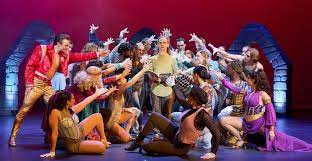
Showing posts with label Baldwin Wallace University Music Theatre Program. Show all posts

Tuesday, November 21, 2023

Uneven PIPPIN somewhat disappoints at Baldwin Wallace University


In the Fall of 1971, while chaperoning a group of college students to New York, I saw PIPPIN, the Stephen Schwartz (music and lyrics), Roger Hirson (book), Bob Fosse (director/choreographer) musical.  I had an instant love affair with the show!

The original production starred Jonathan Rubinstein as Pippin, while the Leading Player was portrayed by Ben Vereen.  Irene Ryan, of “Beverly Hillbilly “fame, played Berthe.  A 2013 revival featured BW grad Sierra Renee as the leading player.

PIPPIN uses the premise of a performance troupe, led by the Leading Player, to tell the “magical” story of a young prince on his search for meaning and significance. 
PIPPIN contains one of my most admired musical theater songs, “Corner of the Sky,” Pippin’s “I want” song, which not only tells us about the character, but reveals the major meaning for the script.  

Originally conceived by Schwartz when he was a student, it was performed by Carnegie Mellon University's Scotch'n'Soda theatre troupe.  Ironically, as the script evolved, Schwartz has said that “not a single line or musical note from that Pippin made it into the final version.”

An example of the evolution of the script is the "Theo ending," which is used in the BW show, was not conceived until 1998, when Mitch Sebastian collaborated with Schwartz in an alternative concept for the show.  The new ending was included in the 2013 Broadway revival.  The new ending, altered the meaning of the original show.

The original Broadway production was performed in one-act. The BW interpretation is performed in two-acts, which, in my opinion, breaks the flow of the show.

The magic aspect of the show is so important, that in its most recent Broadway revival, it was done as a Cirque de Soleil-like production.

Why director, Nathan Henry, decided to eliminate all of the magic tricks and effects, is a mystery.  Without them, much of significance and creativity of the show is eliminated.  He seemed to somewhat lack how to artistically develop the show to accomplish the intent and purpose of the writers.

Talking about questionable choices, the BW students have wonderful singing voices, but the vocal sounds are only part of the role development.  Most important, especially with Stephen Schwartz songs, is the meaning of the words.  Musical director Chase Kessler, seemed to forget that.  In several numbers, notably “Corner of the Sky” words rather than meaning were sung. 

On the other hand, Greg Daniels’ reinterpretation of Bob Fosse’s choreography was superlative.  Yes, the famous “jazz hands” were present, but there was an expansion of the original dance moves which was effective and wonderful.

For added educational experiences, the University’s musicals are often double cast.  (I saw the “Glory Cast,” so my comments only center on that group of actors.)  
Kris Lyons was superlative as the Leading Player.  She played the lines with meaning and style, working the audience well.  This young lady is Broadway ready.

Julia Martin, as Fastrada, was wonderful.  She milked the laughs showing a complete understanding of comedy, exaggeration, and character development! 
 
Jack Borenstein (Charlemagne) started each of his speeches and singing lines with emphasis and then faded into unintelligible endings.  He played for laughs, for the sake of farcical-reaction, sometimes ignoring that the spoken and sung lines had meaning.

Reese Henrick appropriately had fun as Pippin’s grandmother, Berthe, though she would have been helped if the traditional method of letting the audience see the chorus words that she invited us to sing had been projected onto a screen or printed in the program.

Jack Prisco had some fine moments as Pippin.  He has a nice singing voice.
Zach Mackiewicz was character and physically right as Lewis, Pippin’s dense half-brother.

Camille Brooks made a charming Catherine, Pippin’s love interest.

The singing and dancing ensemble were excellent.

Capsule judgement: When someone goes to a musical theatre production at Baldwin Wallace, they probably go with the knowledge that program is ranked as one of the best of its type in the country and the performers are of high quality. They should also be aware that these are students who are not only performing in a show, but are getting a learning experience.  The unevenness of the recently closed production of PIPPIN was not due to the talent of the students, but the decisions of the guest director and a student musical director.  As is, the show was enjoyable, but not of the usual high BW level of achievement.
 
(Full disclosure:  PIPPIN is one of my favorite musical theatre shows.  I’ve directed it and seen at least twenty different companies produce the show, including a previous staging at Baldwin Wallace.  “Corner of the Sky” is my favorite musical theatre song.)

Thursday, November 10, 2022

THE WILD PARTY

THE WILD PARTY--BW’s Music Theatre Program reaches levels of excellence that far exceeds those of college students

 
The Wild Party is a musical by Andrew Lippa, based on Joseph Moncure March’s 1928 narrative poem of the same name.
 
The Wild Party is a musical by Michael John LaChiusa and George C. Wolfe based on the same poem.  The poem was a sensation.  It was considered so lascivious that it was banned in many places when it was published in 1928.  In spite of the shunning, the poem was a success.  Ironically, the only success of March’s writing career.
 
To add to the confusion, both versions of The Wild Party opened during the 1999-2000 season, one on Broadway (the LaChiusa/Wolfe creation), the other off-Broadway (the Lippa concept).
 
The versions differ in format, but still contain the same story line of decadence, bathtub gin, uninhibited sexual behavior, and people who engender little reason to be liked.  The LaChiusa/Wolfe version is presented as a series of vaudeville acts.  Each segment is introduced by signs with titles of what “act” will be performed.  The Lippa version is a more conventional theatrical story with a beginning, middle and end. 
 
The Lippa version is now being staged by Baldwin Wallace’s nationally recognized Musical Theatre program.
 
According to the writer, the story is “about the masks we wear culturally and the removal of those masks over the course of the party [life].   Unfortunately, the characters illicit no reason to be liked.  They lead unproductive, rudderless lives, with seemingly no redemptive qualities.  They are self-centered to the degree that we really don’t care what happens to them.  There are no “good guys” to root for, no protagonists, only antagonists.
 
Victoria Bussert, the Queen of the BW program of the play, states in Director’s Welcome, “THE WILD PARTY is one of those true gems in the musical theatre catalog—a show filled with wildly eccentric characters set in the roaring 1920s with an extraordinary jazz score.”  (The score is dynamically played by Matthew Webb’s well-tuned jazz band, suspended high above the heads of the audience.)
 
She goes on to state, “Jeff [Hermann] and I decided to recreate the space [that we had develop for our 2009 edition of THE WILD PARTY at BW] but added more opportunities for an immersive experience.”  The stage design is a runway that is placed between segments of the audience seated on both sides of a long narrow stage, which creates no emotional space between the actors and the viewers.  (The effect is electric.)
 
Another change from the 2009 production was to use a slice from the LaChiusa/Wolfe version of the script, and have the leads perform their vaudeville act.  (A wonderful chance to give student actors expand on the usual acting experiences of the student actors.)
 
Bussert continues, “THE WILD PARTY is filled with dance, so choreographers Greg Daniels and Lauren Tidmore spent many hours creating totally original numbers filled with 1920/s physical abandon.”  (These are some of most sensual and abandoned dancing you will ever see on stage.) 
 
Featuring Costume Designer Charlotte Yetman’s see through, lots of skin-exposing glitz encrusted clothing that leave no question of cross-dressing, gym cut, sexual trasitioning/transitoned, impressively toned bodies.
 
The over-all effect is everyone being invited to a wild, wild party!
 
The story centers on Queenie, a well-known party giver and purveyor of bathtub gin and drugs, and her relationship with Burrs, a “clown” with a violent streak. 
 
They live a decadent life style that March indicates was the way the “in” Hollywood crowd lived during the swinging 1920s, the era of prohibition, speakeasies, uninhibited sex, orgies, eccentricism, acceptance of various sexual life styles, and wild parties.  (Obviously, the attendees, cannot be Evangelical prudes, as the goings-on, will cause that crowd to quickly run for the doors.)
 
During one of the parties, Mr. Black, a well-dressed, handsome, suave, seemingly wealthy man of impeccable manners appears.  Queenie falls hard for him, and incites Burrs into a jealous rage, with a tragic outcome.
 
(Note:  BW double-casts its shows so the students can have as many educational experiences as possible.  The comments here are for the Queenie cast which includes the talented Queenie (Mia Soriano), her equally talented playmate Burrs (Ricky Moyer), Mr. Black (Praise Oranika) and sensational Kate (Alexa Lopez).  Others in this assemblage are Bella Serrano, Jaedynn Latter, Eileen Brady, Noah Wohlsen, Mack Hubbard, Trey Milcowitz, Noah Rodriques, Zach Mackiewicz and Kate Day Magocsi.  
 
Special notice to Trevor Gill-Snow for his sensational dance interpretation of “Jackie’s Last Dance.”  
 
CAPSULE JUDGMENT:  If watching decadence is your thing, you’ll be turned on by The Wild Party.  If you prefer being in the presence of characters who have redeeming values so you can feel empathy, this is not going to be your show.  The singers, actors, dancers, and the musicians are top-notch.  They reach levels of excellence that far exceed those of college students.  But, what else can you expect?  They are part of the respected and oft-revered Baldwin Wallace Musical Theatre Program.  Bravo!
 
(Added note:  THE WILD PARTY brings down the curtain on the Costume Designing career at BW of the brilliant, multi-award-winning Charlotte Yetman.  She, and her costumes, will long be remembered!!!)
 
THE WILD PARTY runs through November 19.  For tickets https://www.bw.edu/events/theatre-dance/

Friday, November 12, 2021

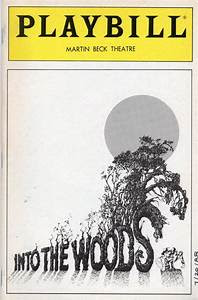
BW’s INTO THE WOODS offers a path out of Covid angst


INTO THE WOODS is a musical with a book by James Lapine and music and lyrics by Stephen Sondheim. 

Yes, that Stephen Sondheim, the man who is credited with reinventing the American musical with shows that tackle unexpected themes, music and lyrics of such complexity and sophistication that they challenge performers and musicians who are responsible for taking “Sondheim” off the page and into the world of production.  

Sondheim, the man who ignores the genre’s traditional subjects and writes instead of assassins (ASSASSINS), unmarried men (COMPANY), has-been performers (FOLLIES), revenge (SWEENEY TODD), artists (SUNDAY IN THE PARK WITH GEORGE), isolationism (PACIFIC OVERTURES) and the foibles of fables. 
 
Foibles of fables is the focus of INTO THE WOODS, now on stage at Baldwin Wallace University.  

The musical intertwines the plots of several Grimm fairy tales by exploring the consequences of the characters' wishes and desires. The main characters are taken from “Little Red Riding Hood,” “Jack and the Beanstalk,” and “Cinderella,” with guest performances by Snow White and Sleeping Beauty.  

The musical is tied together by a story involving a childless baker and his wife and their quest to have a child, which is actually the original beginning of “Rapunzel,” their confronting the witch who placed a curse on them, and their interaction with storybook characters during their journey searching for things the witch requires to withdraw the curse.

The first act ends with “happily ever after,” while the second act illustrates that life is not a fairy tale, but that there is a price to be paid for our wishes. 

The show’s themes include the angst of growing up, the relationship between parents and children, the difficulties of accepting responsibility, morality and, most importantly, wish fulfillment and its consequences.  
 
Theatre experts have opined that, since the show was conceived in the 1980s, the height of the AIDS crisis, the show is a parable about the disease.  They perceived that “the Giant's Wife serves as a metaphor for HIV/AIDS, killing good and bad characters indiscriminately and forcing the survivors to band together to stop the threat and move on from the devastation.”   The modern day parallel would be the implications of the COVID crisis.

“Sondheim drew on parts of his troubled childhood when writing the show. In 1987, he told Time Magazine that the ‘father uncomfortable with babies [was] his father, and [the] mother who regrets having had children [was] his mother.”

INTO THE WOODS had a 1987-89 Broadway run of 765 performances and was nominated for ten Tony Awards, winning three.

The BW production, under the creative direction of Victoria Bussert, is not only well-conceived and compelling, but is also a tribute to the quality of the students and faculty of one of the best collegiate musical theatre programs.

After almost two years of education via zoom, the cast emerged to face the daunting task of performing a very complex show filled with challenging Sondheim music and daunting acting hurdles.  To make matters even more difficult, because of the need to give the many students in the Musical Theatre program an opportunity to perform before a live audience, the show is double cast and there is a full set of understudies.

The task of getting the horde of students ready for the return to live theater, fell on the shoulders of not only Bussert, but choreographer Greg Daniels and musical director Matthew Webb.  The well-honed production is a tribute to their abilities.

The performance comments are based on my having seen the “Prince” cast, which is on stage November 10, 12, 14, 18 and 20.  The “Cinderella” cast is on stage the other performances of the run.

Dario Alvarez well creates a Baker who is focused on his task and is a loving husband and father.  “It Takes Two,” his duet with his wife, the charming, Amelia Beckham, is delightful.

Claire Marie Miller (Cinderella) displays a wonderful comic-timing sense, especially in doing prat-falls.  Her “On the Steps of the Palace,” illustrates not only her strong singing voice but her music story telling abilities.  She shines, as does Amelia Beckham, in “A Very Nice Prince.”

Nicholas Hermick (Jack) displays a wonderful child-sensitive quality, which is well-expressed in “Giants in the Sky.”

Eileen Brady skips and sprightly dances in creating a delightful Little Red Riding hood. “Hello, Little Girl,” co-sung with Jack Borenstein, the wolf, is a show highlight.

“Agony” is a fun-bit nicely sung by Cinderella’s Prince (Jack Hale) and Rapunzel’s Prince (Makay Johnson).

The “star” of the show was RhonniRose Mantilla, the witch, who made “Children Will Listen” one of the greatest songs in the Broadway musical lexicon, a meaningful show closer.  She has a lot of the qualities of BW grad Ciara RenĂ©e, who has appeared on the Great White Way in BIG FISH, PIPPIN, FROZEN, and will take the stage shortly in Broadway’s WAITRESS.

The rest of the leading players and chorus were excellent. 

Jeff Herrmann’s set design which cleverly used the entire proscenium stage, Tesia Dugan Benson’s costumes, Angela Baughman’s sound design, and David Allen Stoughton’s lighting, all added to the over-all positive effect.

Capsule Judgment:  Sprightly, fresh, well done, all involving INTO THE WOODS is a must see!

For tickets to INTO THE WOODS, which runs from November 10-21, 2021 in BW’s Kleist Center for Art and Drama go to bw.edu/tickets or call 440-826-2369.
 
Upcoming BW/Musical Theater events:
December 4, 7 p.m.—SENIOR CELEBRATION—Each music theatre senior will perform one number from their virtual senior recital.  Tickets required.
 
February 4-27, 2022—LIZZIE THE MUSICAL—Beck Center for the Arts, Lakewood--BW Musical Theatre students, as directed by Victoria Bussert, present the Lizzie Borden tale of did she or didn’t she ax-out her parents.  Tickets required. 


April 22 & 23, 2022—LIGHTNING THIEF—Playhouse Square-Helen Theatre—BW grad Chris McCarrell, who starred in the off-Broadway production, will direct present BW students.  The musical tale centers on Percy Jackson, a dyslexic twelve-year old with ADHD.  While on a school trip to the Metropolitan Museum of Art, one of the chaperones attacks him.  Percy's favorite teacher, Mr. Brunner, lends Percy a magical sword-pen to defeat her.  And, thus, the mythical tale begins.  Tickets required.

Sunday, November 22, 2020

BWU’s SPRING AWAKENING confronts not only a powerful script, but the challenge of producing “live” theatre in a world-wide plague


In 2012, when Baldwin Wallace’s number one nationally ranked musical theater program, in conjunction with Beck Center for the Arts, produced SPRING AWAKENING, my capsule judgement read: “SPRING AWAKENING is an emotionally stirring, relevant, and well-staged production.”

My comments about the two Broadway productions of the show, and the Key Bank Touring version of the script also were peppered with positive comments.
 
This is a powerful piece of dramatic musical theater!
 
SPRING AWAKENING, the dramatic Steven Sater (book and lyrics)-Duncan Sheik (music), folk-infused rock music drama, is based on an 1892 play by German author Frank Wedekind.  

The subject matter, which centers on teenagers on the road to self-discovery, portrays abortion, homosexuality, rape, child abuse and suicide.  It was so controversial that its original source was banned for public view for over one-hundred years.

The play is an indictment of late 19th century Germany, where strict rules regarding right and wrong, and wide-spread hypocrisy were rampant.  Sex wasn't discussed, the reasons for actions weren't revealed, and adults held strict control.  It is relevant to modern day Americans where the religious and political right parallels the machinations of the adults and attitudes toward modernity in Wedekind's script.

The play consists mainly of spoken and sung dialogues among the children, with an interspersing of verbalizations of the adults.  

The author has given the voices the ability to open our eyes, in gripping ways, to the joys and sorrows, hopes and despair, and struggles and the resulting tragedies.  Tragedies in which the most promising children are sacrificed due to a lack of appreciation and understanding from their teachers and parents, and the closed-minded attitudes brought about by unthinking and unbending people.

We meet Melchior, intelligent and charismatic, who sees the corruption around him, but is powerless to change the events. 
 
There is Moritz, physically strong but psychologically frail.  He's the product of a harsh father, and is pushed to near insanity when he fails a rigged exam and eventually is led to suicide.  

Wendla is in love with Melchior, and naively becomes pregnant by him.  Her fall from grace is based on her lack of knowledge about human sexuality, still believing that "children are brought by storks" and are only the product of the married.  She, too, becomes a tragic product of her culture's rules regarding abortion and the absolute control by parents. 
  
We also view Ilse, who runs away from a sexually abusive home, another throw-away product of adult rules of the game of life.

We are left at the end of the epic with Melchior, his friends all destroyed, needing to find a reason to go on with his life.

This is a relevant play that should open the eyes of the hypocritically blind to the need for sex education, understanding of the teenage mind, religious and political hypocrisy, and the idiocy of developing unbending rules for the sake of tradition.

Victoria Bussert, the multi award-winning director of Baldwin Wallace’s musical theatre program, has in the past been confronted with many problems in producing plays—snow storms, cast members illnesses that stopped them from going on for a performance, parents pulling their son out of a play because they didn’t agree with the role he was playing, to name a few.  But probably none of the barriers were as daunting as putting on this edition of SPRING AWAKENING in the midst of a pandemic.

As brilliantly described by Andrea Simakis, in her “Masked and Raging, Ohio Students Make a ‘Spring Awakening’” (https://www.americantheatre.org/2020/11/16/masked-and-raging-ohio-students-make-a-spring-awakening/), Bussert, and her staff—Matthew Webb (Music Director and photographer) and Gregg Daniels (choreographer)--had to follow all the Covid-19 health regulations, find over 40 different settings for the staging, overcome calls to the police by a citizen who reported seeing “a boy with purple hair, in a mask, in a park, holding a gun,” as well as dealing with how to produce scenes containing kissing, hand-holding and sex acts without allowing the actors to unmask and remain six-feet part. 
 

Added to the complexity was the need to double-cast each major part so that the students could satisfy the staff’s obligation to give each of the evolving thespians a chance to hone their skills.

(Note:  The following comments are made about the Moritz Cast, which I saw streamed on November 20.  They were again seen on the 22nd.  The Wendla Cast performed on 11/19 and 21st.)

From Wendla’s opening song (Audrey Hare’s “Mamma Who Bore Me”), the concept of the script and the quality of the performances, are exposed.  The petite and lovely Hare exhibits a strong voice and a tenderness that makes her impending destruction heart breaking.  Her rendition of “Whispering” is haunting.  
 
Wendla’s mother, and all of the adult female roles are well-performed by Laura Welsh Berg, a BW grad and the Great Lakes Theater’s Artistic Associate.

We find Melchior (Eric Siegle), Moritz (Steven Huynh), Hanschen (Nick Cortazzo), Ernst (Andrew Nelin) and the boys of the town in class, powerless and cowed by a tyrannical teacher (Lynn Robert Berg, of Great Lakes Theater, who effectively plays all of the adult males).  

The plight of these young men is pictured as one in which they will have little control over their lives or thoughts.   They will be verbally and physically beaten and harassed into becoming “productive” and obedient citizens of society.  Choice, option and personal ideas are of no value here, which is clearly expressed in the powerful proclamation, “The Bitch of Living.”  It is creatively staged, as are all of the dance numbers, by choreographer Greg Daniels.


Melchior, bright and determined, is nicely portrayed by Siegle, whose strong voice is well displayed in “Totally Fucked” and the haunting “Left Behind.”
 
The sexual aspects of the play include not only the drive for heterosexual sexual acting-out, but also homosexual pent-up frustration in Henchen and Ernst’s coming of awareness.  The scene is nicely developed by the handsome Cortazzo and the shy Andrew Nelin.

One of the strongest portrayals is that by Allison Winkel, as Ilse, the product of incest, whose “Blue Wind” and the show’s closing number, “The Song of Purple Summer,” were vocally and emotionally well-interpreted.

The BW production is not without issues.  The actors, who are faced with doing interactive scenes without their partners not in the same environment, sometimes do not interact, just act as if they are doing solos.  Scenes which require intimacy, such as the sex scene between Melchior and Wendla, is somewhat sterile as the duo are divided by a visual screen line.  What should be a revealing scene of homosexual “seduction” is marred by the participants limited to finger touching at a six-foot distance and no kissing or body contact.  These are problems mainly caused by technology, not lack of talent.

Capsule Judgment:  Victoria Bussert and her BWU crew and cast avoided, as one of the songs from “SPRING AWAKENING” states, being “Totally Fucked” and took on the Covid-19 challenge, developing a thought-provoking production which turned out to be the first collegiate pandemic production of the script and further recognition of the college’s program.  Bravo!

Sunday, November 17, 2019

Spectacular KINKY BOOTS delights at Baldwin Wallace


KINKY BOOTS, the Harvey Fierstein (book) and Cyndi Lauper (music and lyrics) award-winning musical, is based on the true story of a men’s shoe factory in England.

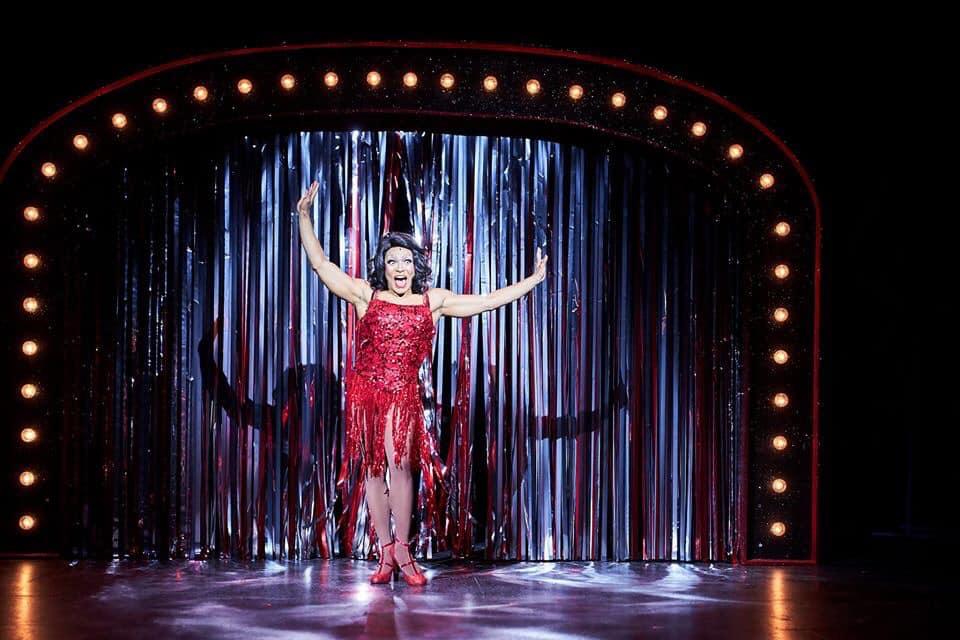
The tale, which was made into a 1999 British TV special, then a 2005 film, centers on Charlie Price, who is left a man’s high-end shoe company in Northampton, England, by his father, and Lola, a she-male who has a fascination with shoes, but especially with red, spike-heeled boots.  

The duo forms a partnership when Charlie’s factory is faced with bankruptcy, causing the potential laying-off of his loyal employees, and Lola, a drag queen/entertainer who, along with her dancing Angels, keeps breaking the heels on their poorly made boots.  It’s a match made in heaven, except for the prejudices against Lola, and the financial and personal pressures pressed on Charlie.

Take the story, which stresses that to be happy in life you must “accept someone for who they are,” add some pop, funk, new wave music, lyrics that are perfectly drawn, humorous situations, and dynamic choreography, and you have a show which garnered 6 Tony Awards, including Best Musical and Best Score.

Baldwin Wallace University’s KINKY BOOTS, which is the first collegiate production of the Tony and Olivier Award-winning musical, is spectacular!

Victoria Bussert’s spot-on directing, Gregg Daniels' dynamic and creative choreography, Matthew Webb’s note-perfect musical direction, and Charlotte Yeman’s costume designs, complete with an array of spectacular hand-made boots, all make this a special production.

Of course, there are the BW Music Theatre students, who pull-off a well-deserved standing ovation production.  

The quality-quotient is not surprising, since the program has been recognized by OnStage Magazine as the “#1 Bachelor of Music, Music Theatre program in the country.”  Yes, as the motto for the program states, “That must have had something to do with it.”

The BW family has a long history with KINKY BOOTS.  Kyle Post, a BW ’07 grad, played one of the dancing Angels for the duration of its 2,500-performance, seven-year Broadway run, dancing and singing in his 6-inch heels.  

Post wasn’t the only one of Bussert’s “kids” who appeared in the show.  Cory Mach (BW ’10) was in the Broadway show as was Shannon O’Boyle (’12).  Ryan Fielding Garrett (BW ’12) was the associate music director and played in the pit and toured as the show’s musical director.  The touring company also included Patty Lohr (’08), as well as Zach Adkins (’15) and Jennifer Noble (’10).

Unusual for so many students from one school to be in a show?  Not, for BW. The KINKY BOOTS program contains a two-page spread listing 42 other program grads who have appeared in one or more Great White Way productions.  This, plus the number appearing in professional theatres around the country, teaching in various educational institutions, plus working in other aspects of the technical and business end of theatre (another 2-page program spread), is responsible for the great attention that BW, the Cleveland area’s crown jewel incubator of musical theater, receives nationally. 

The BW production is a two-cast show for the leading roles.  One group, the Lola cast [Nick Drake (Lola), Charlie H. Ray (Charlie), Nadina Hassan (Nicola) and Kailey Boyle (Lauren)] performs 8 shows, while the Charlie Cast [Gordia Hayes (Lola), Andrew Faria (Charlie), Caroline Didelot (Nicola) and Sydney Howard (Lauren)] has four opportunities.  (I saw the Lola cast, so the review’s name mentions are from that group.)


Nick Drake creates a complete character as Lola.  He puts on the role and wears the glorious costumes and high heels with confidence and pathos.  His singing, dancing and acting ensure a long list of potential New York agents at this April’s BW senior’s showcase, panting to sign this talented young performer.  Don’t be surprised that in next year’s fall campus show’s program, you see his picture and a credit for a Broadway or touring show. 


Charlie H. Ray has the handsome youngish-male, big voice, dancing and performance charm that have taken many of his fellow Bussert-trained performers to Bright White Way attention (think Colton Ryan, Chris McCarrell and Corey Mach).  His Charlie is charming, yet has an under-current of insecurity and determination.  His renditions of “Step One” and the powerful “The Soul of Man,” were among the show’s highlights.

Kailey Boyle, as she proved in her Great Lakes Theatre’s MAMA MIA! and PRIDE AND PREJUDICE and Playhouse Square’s LIZZIE THE MUSICAL is Broadway ready.  Her Lauren had just the right levels of humor and charm.  Her “The History of Wrong Guys” was delightful.

Nadina Hassan was “bitch”-right as Nicola.

The Angels (Mateus Cardoso, Nick Cortazzo, Kyle Elliot, Nic Hermick, Charles Miller and Lee Price) were as good as the dancers in the three other productions of the show that I’ve seen.  Congrats to Gregg Daniels and dance captain Charles Miller for molding the group into a dancing machine.

The entire cast learned to walk and dance in stilettos…a daunting task.  The final number and the curtain call are a show case of wonder as the entire group flaunts around the stage in their 6-inch heels!   

Highlight numbers include such show-stoppers as “The Land of Lola,” “Sex Is in the Heel,” and “Everybody Say Yeah.”  

CAPSULE JUDGEMENT:  KINKY BOOTS is the kind of musical where seeing it once is just not enough. The music, the storyline, the humor and the stage excitement make this a very, very special theatrical experience. BW’s must-see production is worth multi-visits. 

Tickets for “Kinky Boots,” which runs through November 24, 2019, can be obtained by calling 440-826-2240 or going to www.bw.edu/tickets.

Sunday, April 21, 2019

A visit to Broadway with the BWU senior class with some time for reviewing


OnStage’s 2018-2019 rankings of musical theater programs ranked Cleveland suburban Baldwin Wallace University' as number 1 in the nation, indicating that it was the “top destination for any student wanting to study musical theatre."

The OnStage research team was impressed that the BW program "has produced six regional premieres in partnership with Playhouse Square [the country's largest performing arts center outside of New York] and received national attention for academic premieres of Broadway productions."
 

The program, which is headed by Victoria Bussert also has strong professional theatre ties to Beck Center, Great Lakes Theatre, Idaho Shakespeare Festival and the Lake Tahoe Shakespeare Festival.
 

Bussert, is supported in developing the students’ talent by Gregory Daniels, Dance Program Coordinator and Matthew Webb, Music Director. 

Many BW grads appear on Broadway, in touring companies, in regional theaters and on cruise ships.   Last year at least 25 were in Broadway runs and touring shows.
 

The students’ training reaches its crescendo when the senior class travels to New York in April to perform before agents, casting directors and other Great White Way luminaries. 

Last year, all of the BWU class of 2018 grads got agents, many having multiple offers.  Besides agents, at least a half-dozen were offered tryouts in present, upcoming, touring and soon-to-be touring shows. 

As I did last year, I attended rehearsals at BW and went to New York with this year’s seniors.  Members of the class are Amy Keum, David Holbert, Noa Luz Barenblat, Joshua Regan, Kelsey Anne Brown, Zach Landes, Matthew Henry Pitts, Emmy Brett Jake Salter, Gilian Jackson Han, Courtney Hausman, Sam Columbus, Warren Egypt Franklin and Tia Karaplis.


All four of the workshops, which were performed at New World Stages, were packed. 

According to Bussert, “The class had over 150 requests with 9 of them called in for Broadway auditions.” 

Want to see the group before they hit the Broadway stages?  The class will perform as a unit at Cleveland Heights’ Nighttown on April 29.  For tickets and information, go to www.nighttowncleveland.com

Besides attending the showcases, I saw some shows.  Here are capsule judgments of what I saw.  To read the complete reviews go to www.royberko.info and scroll down to find the show.

What:  FIDLER AFN DAKH ongefelt mit Yiddisha traditsye un veytik
     (FIDDLER ON THE ROOF filled with Jewish tradition and pain)
Where: Stage 42
Capsule judgment:   The Yiddish version of FIDDLER ON THE ROOF (FIDLER AFN DAKH) is not the FIDDLER of old, with a new set and costumes.  It’s a more emotionally moving story and less entertaining.  It is more fitting in the telling of what was, but is no more. The authenticity created by using the “real” language of these people adds to the tale filled with Jewish tradition and pain.

What:  THE PLAY THAT GOES WRONG is a farcical delight!
Where:   New World Stages
Capsule judgment:   Like any well-written farce, the quality of the ridiculousness is only as effective as the cast and director.  In the case of THE PLAY THAT GOES WRONG, all of the needed elements are present and hysteria reigns. 

What:  MEAN GIRLS, a musical for youth of the 2019s
Where: August Wilson Theatre  
Capsule judgment:  MEAN GIRLS is filled with music, characters and Tina Fey satire that will appeal to young audiences.  It is a show that will do very well on tour (it will be on stage at Cleveland’s Connor Palace from December 3-22, 2019) and will be performed by every community theater and high school in the country when it is released for amateur production.  Go. Enjoy.

What:  Exquisite, delightful, MY FAIR LADY captivates at Lincoln Center
Where:  Vivian Beaumont Theatre
Capsule judgment:  My Fair Lady has deservedly been called "the perfect musical" and the Lincoln Center revival will do nothing but increase the respect level.  The staging is glorious. The stage pictures exquisite.  The performances universally enchanting.  “Wouldn’t It Be Loverly” if all Broadway shows could reach this pinnacle of writing, staging, performance and musical excellence?

Thursday, November 08, 2018

“Willokommen” to a compelling “Cabaret” at BWU


In 1966, when “Cabaret,” the John Kander, Fred Ebb musical based on John Van Druten’s play, “I Am a Camera,” adapted from the short novel “Goodbye to Berlin“ by Christopher Isherwood opened at the Broadhurst Theatre, patrons were thrown off balance when, as they walked down the aisle toward their seats, a large out-of-proportion self-image was reflected back by a convex mirror on stage. 

As the musical proceeded three concepts of Epic Theater, Berthold Brecht’s concept of making the theatrical process became meaningful for the audience, became apparent.  The audience was wrapped in alienation, historification and epic. 

Alienation is keeping the audience aware that they are in a theatre. That this was a staged production.  The mirror, the exposed lighting instruments, the lack of realistic scenery, the actors often addressing the observers directly and wearing outlandish makeup that made them less than real, became readily apparent.

Historification concerns the story, in this case, Joe Masteroff’s book for the musical, showing historical concepts in a non-real setting.  This was reality, but not necessarily a real story.

Epic, the story is bigger than life and has huge consequences.  There is an important message being told.  Pay attention and apply the concepts to your life!

Yes, that well-describes the uncommon nature of the script and Hal Prince’s unusual staging.  

There was no overture.  Instead, a drum roll and cymbal crash led into the opening number. “The juxtaposition of dialogue scenes with songs used as exposition and separate cabaret numbers providing social commentary was a novel concept that initially startled the audience, but as they gradually came to understand the difference between the two, they were able to accept the reasoning behind them.”

The story, on the surface is easy to describe.  The setting is 1931 Berlin. Germany is in economic and political turmoil.   Adolph Hitler and his Nazis are rising to power.  At the seedy, decadent Kit Kat Club, the home to gays, political-deviants and those more interested in having a good time than being concerned about the world around them, we find English cabaret performer, Sally Bowes, an emcee who will set the Epic nature of the story in context, and Cliff Bradshaw, a bi-sexual American who is out to write the great novel, but has writer’s block.  The relationship between Cliff and the unpredictable Sally, Cliff’s landlord, Frau Schneider and her beau, Herr Schultz, and Ernst, who Cliff met on the train coming to Berlin, and is a member of the rising Nazi party, become the focal point of the storyline.

The club is a metaphor for the political developments of the country.  As the country tumbles into chaos, so does the Kit Kat Club and its clientele.

The original Broadway production became a hit, inspiring numerous subsequent productions, as well as the 1972 film of the same name. 

Both the original show and the film starred Cleveland-native Joel Grey as the emcee.  Both the 1993 London and the Broadway revival starred Alan Cummings.  The difference in the Grey and Cummings characterizations of the role spotlights the vast difference between the philosophy and effect of the interpretations.

Joel Grey was asexual, dressed in a tuxedo with rouged cheeks.  He was delightful, not giving us a hint of the true horrors of the rise of the Nazi party and what was to come.  The after effect was left to the audience.

Alan Cummings' portrayal was highly sexualized, as he wore suspenders around his crotch and red paint on his nipples.  Grey delighted, Cummings was decedent, placing a spotlight on the true story of what was to come and what did transpire such as the destruction of the Jewish community, homosexuals, Gypsies, political dissidents and the mentally ill in Germany.

“In the final scene, the Emcee removes his outer clothes to reveal a striped suit of the type worn by internee concentration camps; on it are pinned a pink triangle (denoting homosexual).”  This was our clue as to what was to come!

Baldwin Wallace’s “Cabaret” under the visionary direction of Victoria Bussert, creative choreography by Gregory Daniels and superlative musical direction of Beth Burrier, goes even further than Cummings’ version of the show.

The ending was so riveting that, as the lights snapped off, signifying the end of the show, the audience was absolutely silent, except for a number of audible sobs. 

It is a shame that the decision was not made to forgo a curtain call and let the audience sit in a minute or two of dark silence, allowing the vivid ending to sink in and become not only a tribute to the six-million or more who the Nazis murdered but the recent hideous Pittsburgh Squirrel Hill synagogue shootings.  The audience should not have been given the opportunity to applaud a eulogy.

In doing this script, the young cast of students were forced to see things they probably hadn’t even thought about.  Events out of their life time-line such as World War II, Kristallnacht, the rounding up of Jews and gays, the concentration camps.  Without that awareness, however, the entire production, especially the ending, would have rung hollow.

(The show is double cast.  The specific performance comments are about the “Cliff Cast” which appeared on opening night.)

Pencil-thin Charlie Ray started out rather mechanically as the Emcee, but as the show progressed Ray’s performance gained natural nuance and his playfulness, while shadowing to the final solution, gained creditability.  “If You Could See Her” was nicely developed, leading to appropriate silence rather than laughter at the end of the number.  His performance during the last scene was mesmerizing. 

Nadina Hassan did her own interpretation of Sally.  This was not a Liza Minelli imitation.  There was a hard edge, “don’t give a damn attitude” to her black lipsticked persona that might turn some off, but was consistent throughout and perfectly fit her vocal choices for her powerful rendition of “Cabaret.”

Zach Landes nicely textured the role of Cliff, making him a realistic and likeable character.  Too bad he only had a short singing segment in “Perfectly Marvelous” as he displayed a pleasant singing voice.

Forced to use students, not adults in the mature roles, Bussert made the decision not to “fake it”--no gray hair spray, no wigs, Herr Schultz (Sam Columbus) and Fraulein Schneider (Erin Niebuhr) assumed the roles and after the original awareness that they were twenty-somethings playing middle-aged people, the portrayals rang true. Their duet “It Couldn’t Please Me More,” was delightful, as was Niebuhr’s “So What.”

The Kit Kat Girls and Boys sang and danced well, nicely executing Daniels’ often difficult era-correct moves.

CAPSULE JUDGEMENT: “Cabaret” is an important epic musical theater script which gets a strong performance at Baldwin Wallace.  The ending of this production was one of the most horrifying and effective closing scenes ever performed on stage.   The long silence that followed it was a tribute to Bussert and her cast and crew.   

“Cabaret” is scheduled to run through November 18, 2018 on the Baldwin Wallace University campus through, 2018.  For tickets and information call 440-826-2240 or go on-line to http://www.bw.edu/tickets

Thursday, May 17, 2018

Baldwin Wallace Musical Theatre Class of ’18 showcases their talents in NY


Backstage.com’s recent listing of the top Musical Theater Programs in the U.S. included such schools as Carnegie Mellon University, Conservatory of Music at University of Cincinnati, University of Michigan, Penn State University and Syracuse University.

Onstage blog’s list had many of the same institutions.  Playbill presented recognitions for the number of its alums appearing in Broadway shows in the 2017-2018 season. 

All these noteworthy sources also had Baldwin Wallace University on their lists.   In addition, College Magazine ranked Baldwin Wallace's Music Theatre program second in the nation in a review of the "Top 10 Colleges for Musical Theatre Majors."

Most of those on the “best” lists are large institutions.  Baldwin Wallace, on the other hand, is a school of about 3,500 located in Berea, Ohio, a suburb of Cleveland.


The BWU Musical Theatre Program, headed by Victoria Bussert, is a very selective program.   Students are chosen from a process in which Bussert “personally auditions over 700 students each year -- in person, not video auditions. Those auditions resulted this year in a class of 22 from around the country -- Alaska to California to Texas to New York to Maine!”

The program is noted for its meticulous preparation of students for a life in professional theatre.  For example, “Each audition and rehearsal is run with AEA [Actors Equity Association] rules to prepare students for the industry standard. The school also offers a master class series that allows students to be seen by 10 different professionals (agents, managers, and casting directors) offering critiques and advice at the beginning their sophomore year.”

The system obviously works.  A list of BWU alumni presently (May, 2018) appearing on the Great White Way include Kate Rockwell (Mean Girls --Drama Desk Nomination), Corey Mach & Kyle Post (Kinky Boots), Cassie Okenka (School of Rock), Caitlin Houlahan and Keri Fuller (Waitress), Steel Burkhart (Aladdin), John Kramer (Book of Mormon) Jai’Len Josey (SpongeBob the Musical) and Zach Adkins (Anastasia).   In addition, six more are in national or international touring companies.  Ryan Garrett, the conductor of Kinky Boots, is a BWU grad.

Then there are those trodding the boards in professional regional productions such as Cory Mach, Keri Rene Fuller and Alex Syiek who recently appeared in Great Lakes Theater’s Hunchback of Notre Dame. Annalise Griswold is presently in Beehive at GLT and Shayla Brielle, who is in Mamma Mia at the Idaho Shakespeare Festival, will be appearing in the show this fall at GLT.

To cap off their undergraduate experience, each of the Musical Theatre’s program’s enrollees spends two days doing showcases at New World Stages, with the goal of getting representation and having the spotlight placed on them for the Great White Way’s professional community.  In addition, this year they each performed at Feinstein’s/54 Below along with BWU alumni- Corey Mach, Caitlin Houlahan and Keri Fuller.

Bussert is actively aided in preparing the students for their showcases by Greg Daniels, the dance program coordinator and Matthew Webb, musical accompanist.

According to Bussert, “We had the largest industry turnout in our 21-year history of doing showcases.” The results of the presentations: “the 15 students had more than 250 requests [for representation and tryouts].”  “Everyone has an agent.”

Bussert added, “[Mentor high school grad] Jason Goldston, had a tryout for SpongeBob The Musical and MacKenzie Wright had a tryout for Wicked.  Alec Irion has had a meeting with Warner Brothers.” “Matthew Harris, Shayla Brielle, TrĂ© Frazier, Olivia Kaufman and Noah Mattocks all had auditions for Hamilton.  Others had tryouts for Book of Mormon, Miss Saigon, Aladdin, Once On This Island and Dear Evan Hansen.”

Besides Broadway, BW musical theatre students are, or have appeared on the stages of “Lyric Opera Chicago, Kennedy Center, La Jolla Playhouse, Goodspeed Opera, ART, Fulton Opera House, Arena Stage, Firebrand Theatre, Northern Stage, Indiana Rep, Berkshire Theatre Festival, Utah Shakespeare Festival...and many more including theatre in London and Australia.”

Students who, for whatever reason didn’t go or stay in New York as performers, have gone on to be, among other things, “writers, directors, producers, composers, cruise performers, personal trainers, teachers, coaches, puppeteers, photographers, marketing directors, film/television/video performers, models, and make-up artists.”  Bussert also stated, “We have a multiple Emmy award-winning TV Producer, Sainty Nelson, along with grads who are in casting, publicity, arts management, music directing, stage management, design and work as agents.”

Several class of 2018 students have shared their BW and showcase experiences.  


Alec Irion signed with Pete Kaiser of The Talent House as his agent, and Tony Cloer of Blue Ridge Entertainment as his manager.   He did so because he wanted to be with a small boutique agency rather than a major company so he could have more one-on-one attention and he felt the duo he signed with “had my back.”  He recently finished a run of tic, tic… BOOM! at the Helen in the Hanna complex in PlayhouseSquare and will be off to New York shortly.

He found the feedback in New York “pleasing and surprising” since he doesn’t perceive himself physically or talent-wise to “fit the usual role of theatre guy.” 

Alec thinks the BWU Musical Theatre program got him ready for his future as it was “so hard,” “kept us going constantly,” “taught us what the business is,” “didn’t spoon feed us.”  Now, he is “excited to go forward.”


Dan Hoy signed with CSED, a large agency with offices in Los Angeles and New York.  He chose them because “the agency is remarkably reputable and seemed excited to work with me.  They were already strategizing and planning when I walked in for my interview and showed real interest in my future and career goals.”  Dan had four tryouts as a result of the showcases.

He stated, “Baldwin Wallace has allowed me to grow immensely as both a performer and a professional.  I feel they have prepared me for a future in the industry.”

Other talented members of the BW music theatre class of 2018 not mentioned in this article are Meghan Cordier, Jon Loya, Michelle Pauker, Holly Moss and Chandler Smith.

As a Cleveland based theatre reviewer, I was invited to sit in on the Class of 2018’s preparation for their showcase and then accompany the fifteen seniors to New York to observe their showcases and share their pursuit of agents, managers and, in some cases tryouts for present and future Broadway shows.  It was a compelling and educational experience.

Heads up:  Watch for the names of the Musical Theatre BWU Class of 2018 on Broadway stages, local venues, television and film productions.  This is a special group of talented and well-trained young people, who are dedicated and ready to make their marks on the world of entertainment.

Sunday, November 20, 2016

Cleveland’s effect on Broadway and relevant capsule comments


Several weeks ago, in my review of Baldwin Wallace University’s production of WEST SIDE STORY I stated, “BWU’s Music Theater program is nationally recognized for its quality, as evidenced by the number of its graduates who have light up the Broadway theater scene and touring productions.  Of those in the WEST SIDE STORY cast I stated: “Broadway bound?  Colton Ryan, though not the tall macho leading man type, should find a place on the Great White Way in roles for the young, clean scrubbed type who have big voices.”


It didn’t take long for the prophecy to come true.  It has been announced that Ryan, a “BW senior music theatre major, has been cast as the main off-stage voice for Ben Platt the lead in DEAR EVAN HANSEN, a new musical by Benj Pasek, Justin Paul and Steven Levenson, that opens at the Music Box Theatre on December 4.” 

Other BW students on Broadway this season are:  Caitlin Houlihan, WAITRESS, Steel Burkhardt, ALADDIN, Shannon O’Boyle and Kyle Post in KINKY BOOTS, Cassie Okenka  SCHOOL OF ROCK, Malik Akil, HOLIDAY INN, and Will Brandstetter in EAT YOUR SCIENCE.

Many locals go to New York and request evaluation of shows that are now on the boards.  Here are a few capsule judgments of some shows I saw on a recent visit.


CAGNEY

Capsule judgement:  CAGNEY is a high energy song and dance bio-musical that grabs and holds attention through infectious singing and dancing, and an award-winning performance by Robert Creighton.  The show has deservedly done so well at the box office that the original limited run has been extended and an additional weekly matinee has been added.  This is a show well-worth seeing.  (To read a complete review of this show go to:  http://royberkinfo.blogspot.com/2016/11/energizing-cagney-lights-up-stage-with.html )


FALSETTOS

Capsule judgement: The well written, sung and acted revival tells the tale of Marvin (Christian Borle, who won Tony Awards for both PETER AND THE STARCATCHER and SOMETHING ROTTEN), as a gay married man who leaves his marriage, and Whizzer (Andrew Rannells, Tony nominee for THE BOOK OF MORMAN), as a Reagan-era nuclear family who galvanize as they cope with their relationships, planning a bar mitzvah, and confronting the AIDS crisis.  Though somewhat dated due to medical advancements in treating AIDS, the script still elicits strong emotional reactions.


A BRONX TALE


Though not open for reviewing since it is still in previews, A BRONX TALE, with book by Chazz Palminteri, music by Alan Menken and lyrics by Glen Slater, features Bobby Conte Thornton, who appeared in the world premiere of Ken Ludwig’s farce, A COMEDY OF TENORS, which opened Cleveland Play House’s 100th anniversary season.  Side note:  Look for A BRONX TALE to be one of the hits of the 2016-2017 Broadway season.

Saturday, November 12, 2016

BWU’s WEST SIDE STORY, a step above the rest


WEST SIDE STORY, the Jerome Robbins (concept development), Leonard Bernstein (Music), Arthur Laurents (book), and Stephen Sondheim (lyrics), had an interesting road from idea to Broadway production to revivals.  The script is now in production by the Baldwin Wallace Department of Theatre and Dance and the Conservatory of Music’s Musical Theatre Program.

In 1974 Jerome Robbins conceived the idea of a contemporary musical adaptation of Shakespeare’s ROMEO AND JULIET.  His idea was to center the focus on the conflict between an Irish Catholic family and Jewish family living on the Lower East Side of Manhattan set during the Easter-Passover season.  The Catholic “Jets” and the Jewish “Emeralds” were “gangs” in conflict. 

Originally titled, EAST SIDE STORY, Bernstein proposed an operatic musical score.  The idea was rejected and a “lyric theater” concept was accepted.  Difficulty with the book and music caused the idea to be dropped. 

A number of years later, the idea re-emerged as WEST SIDE STORY, with Laurents changing the characters’ backgrounds to Polish and Irish descent and the formerly Jewish Maria to Puerto Rican.  Variances with the original ROMEO AND JULIET story were altered, especially Juliet’s faking her death. 

As the score and script developed, there was much adjusting of where various songs would appear and comic relief to increase the impact of the play’s tragic ending were added.   Effort was made, however, to ensure that the show would be a musical drama, not a musical comedy. 

Gang warfare in New York, just as the show was to open, made the topic relevant. 

Cast members, especially the dancers, were treated as actors, not just as bodies to be choreographed, which opened a new way for chorus members to be treated, and laid the foundation for such shows as A CHORUS LINE. 

The original production opened on Broadway in September, 1957, to strong positive reviews, ran 732 performances, went on national tour and returned to run another 253 performances.  Several revivals followed, including a 2009 version in which some of the lyrics and spoken lines were spoken and sung in Spanish.

The script for WEST SIDE STORY appears regularly on the Best American Musical’s lists and is considered to be one of the most difficult shows to stage due to the complex music and required dancing.  The film version won ten Academy Awards, in spite of the fact that the vocals for many of the songs were dubbed, as the roles were played by Hollywood actors rather than accomplished singer-actors.

The story is set in an Upper West Side neighborhood in New York in the mid-1950s, where gang rivalry for “turf” and “face” are the superficial source of conflict.  Tony, a former member of the Jets, realizes the ridiculousness of being a member of a gang from “womb to tomb” and has withdrawn.   At a dance, he falls in love at first sight with Maria, the sister of the leader of the Sharks.  Tragedy follows as gang members are killed, in spite of Tony’s attempt to quell the fight.

This is a musical with a “dark theme, sophisticated music, extended dance scenes, and focus on social problems.”  It is credited with changing the course of the American musical by introducing the musical drama, serious social subjects, and a turn from escape to serious-minded story telling.

Baldwin Wallace University’s Music Theater Department is ranked as one of the best in the nation.  Their undertaking the difficult WEST SIDE STORY is an expected action for the program as the show gives the “Broadway with stars in their eyes” students a chance to stretch their acting, singing and dancing skills. 

The show is double cast.  Since I only saw the opening night performance by the Shark Cast, all of the reviewing comments center on that group of actors.

The production, under the direction of Victoria Bussert and choreographer Gregory Daniels, was an overall success.

Starting slowly and methodically, probably due to opening night nerves, the presentation shifted from automatic pilot to full-throttle somewhere during the middle of the first act. 

The “Jet Song” opening dance number lacked spontaneity.  Though well- choreographed, every move seemed preplanned, not establishing any real tension, a necessity for telegraphing the angst that is the guts of the story.  “The Dance at the Gym-Blues” also was somewhat emotionally flat.  Second act large dance numbers such as “Ballet Sequence,” hit the stride, leading up to an emotional conclusion that found the audience properly shell-shocked.

The “Officer Krupke” number was clearly the audience’s favorite “escape from angst” offering, while the “Ballet Sequence” was beautifully enacted, and “America” delighted.

The same emotional static involvement pattern followed with the vocals.  In his opening song, “Something’s Coming,” Colton Ryan (Tony) had difficulty articulating words in his lower range.  As the show proceeded, he seemed to relax, being, not performing, and his strong and expressive voice gained full vocal power.

Nadina Hassan created a beautiful and expressive Maria, growing emotionally from shy new-immigrant, to strong bereaved woman.  Her “I Feel Pretty” was truly delightful.

Shayla Brielle created a clearly sexually explosive Anita.  The drugstore scene, where she lays the foundation for the show’s climax, was aggressively focused.

Amy Keum was delightful as Anybody’s, the “I want to be a gang boy.”  Michael Canada nicely textured the multiple personality levels of Chino, and Elizabeth Rosenberg sang “Somewhere” with clear emotional meaning.  Dan Hoy was credible as Riff.

The production was enhanced by Jeff Herman’s lighting and Statue of Liberty on-its-side setting, Charlotte Yetman’s costumes, and David Gotwald’s sound design.

Broadway bound?  Colton Ryan, though not the tall macho leading man type, should find a place on the Great White Way in roles for the young, clean scrubbed type who have big voices.  Nadina Hassan has the potential for pretty ingĂ©nue roles.

The large orchestra was excellent, though in several instances their size and volume drowned out the performance. 

CAPSULE JUDGEMENT:  BWU’s Music Theatre program is nationally recognized for its quality, as evidenced by the number of its graduates who have lit up the Broadway theatre scene and touring productions.  WEST SIDE STORY is a difficult show to “get right.”  As should be expected from the quality students and proficient staff, the production was a step above what other colleges could do. Better than Broadway?…no.  But, definitely the incubator where future Broadway stars bud and grow.   Anyone who hasn’t seen this wonderfully conceived musical should attend this production.

WEST SIDE STORY is scheduled to run through November 22, 2016.  For tickets and information call 440-826-2240 or go to www.bw.edu/tickets