Showing posts with label Alex/Noah/Ian Berko reviews. Show all posts
Sunday, December 08, 2013
Wonderful WICKED wows 'em again at the State
How good is the production of WICKED which is now appearing at the State Theatre? In 2009 when I took my then 14-year old grandson, known as the Kid Reviewer because I take him along to give the teen/tween view of shows, he gave it a 9.5 out of 10 on his “rate the play scale.” Why only a 9.5? He said he’s reserving the 10 for the most unbelievable show he’s ever seen. But, he indicated “’WICKED’ was GREAT!” Why? “It had everything. Great story, outstanding production qualities…sets, costumes, lights, special effects. The music and the performances were awesome.” His advice: “Go see this show! It’s appropriate for kids and their parents.”
It’s 2014 and the kid reviewer is an 18-year old multi-award winning composer. His evaluation of this, the 2nd National Tour of WICKED? He gave it a solid 9.75! Yes, he thinks it was even better than when he saw the show “as a kid!
‘WICKED,’ an alternative view of the ‘WIZARD OF OZ,’ tells the “true” story of Elphaba, the Wicked Witch, and her relationship with Glinda, the Good Witch. It has all the elements of the original tale, but packages them in a different way. We find out about how the Lion, the Scarecrow, and the Tin man came to be. How Dorothy got the red (in this version silver) slippers. And, most importantly, what really happened to Elphaba. (Ah, yes, in a quirky ending, there is a happily-ever after story.) We also become aware of the power of gossip and rumors.
The music and lyrics, by one of my favorite theatre composers, Stephen Schwartz, includes such beautiful and delightful songs as “Popular,” “I’m Not That Girl,” “Defying Gravity,” “As Long as You’re Mine,” and Alex’s favorite, “For Good.”
The production qualities of this touring show are outstanding and impressive. There is a dragon hanging over the proscenium arch that has a wingspan the same as a Cessna 172 airplane. They use 200 pounds of dry ice every show for smoke effects and enough power in a single production to supply twelve houses with electricity. There are 175,000 pounds of scenery. This is not a stripped-down touring show, it’s a full-blown Broadway extravaganza.
The cast is strong. No, it’s not the unbelieveable Idina Menzel (Elphaba), Christine Chenoweth (Linda) and Clevelander Joel Gray (as the Wizard), but, realistically, who can top that amazing trio? (BTW—Menzel is on the way to Broadway in IF/THEN, which I saw in an-out-of-town preview in DC. The show needs cutting, but Menzel is her usual mesmerizing self).
In the touring production, Jennifer DiNoia glows gloriously green as Elphaba. She hits the vocal high notes with ease and creates a clear characterization. Haley Podschun is properly bubbly as the “popular” Glinda. She sings beautifully and carries the role well. David Nathan Perlow is excellent as the self-centered Fiyero, who falls in love with Elphaba. BTW…did you know that Adam Lambert, the AMERICAN IDOL runner-up and actor on GLEE was the understudy for Fiyero in the Los Angeles production of WICKED?
Alex Wyse is character-right as Boq. If the name sounds familiar, it should. Wyse is a very talented Clevelander who showcased his talents on local stages for many years.
Talking about Clevelanders, besides Gray and Wyse, the name ARACA on the program should ring some bells. ARACA, (http://www.araca.com) the theatrical production company founded by Michael and Matthew Rego and Hank Miller, all Clevelanders, are the producers of WICKED.
CAPSULE JUDGEMENT: When asked what I should write in my capsule judgement Alex said, with enthusiasm, “Tell them if they didn’t see WICKED yet, go see this show! If they did see it before, “Go see it again, it’s that good!” Grandpa totally agrees!!!!
WICKED runs through January 5 2014 at the State Theatre in downtown Cleveland. For tickets call 216-241-6000 or go to www.playhousesquare.org
It’s 2014 and the kid reviewer is an 18-year old multi-award winning composer. His evaluation of this, the 2nd National Tour of WICKED? He gave it a solid 9.75! Yes, he thinks it was even better than when he saw the show “as a kid!
‘WICKED,’ an alternative view of the ‘WIZARD OF OZ,’ tells the “true” story of Elphaba, the Wicked Witch, and her relationship with Glinda, the Good Witch. It has all the elements of the original tale, but packages them in a different way. We find out about how the Lion, the Scarecrow, and the Tin man came to be. How Dorothy got the red (in this version silver) slippers. And, most importantly, what really happened to Elphaba. (Ah, yes, in a quirky ending, there is a happily-ever after story.) We also become aware of the power of gossip and rumors.
The music and lyrics, by one of my favorite theatre composers, Stephen Schwartz, includes such beautiful and delightful songs as “Popular,” “I’m Not That Girl,” “Defying Gravity,” “As Long as You’re Mine,” and Alex’s favorite, “For Good.”
The production qualities of this touring show are outstanding and impressive. There is a dragon hanging over the proscenium arch that has a wingspan the same as a Cessna 172 airplane. They use 200 pounds of dry ice every show for smoke effects and enough power in a single production to supply twelve houses with electricity. There are 175,000 pounds of scenery. This is not a stripped-down touring show, it’s a full-blown Broadway extravaganza.
The cast is strong. No, it’s not the unbelieveable Idina Menzel (Elphaba), Christine Chenoweth (Linda) and Clevelander Joel Gray (as the Wizard), but, realistically, who can top that amazing trio? (BTW—Menzel is on the way to Broadway in IF/THEN, which I saw in an-out-of-town preview in DC. The show needs cutting, but Menzel is her usual mesmerizing self).
In the touring production, Jennifer DiNoia glows gloriously green as Elphaba. She hits the vocal high notes with ease and creates a clear characterization. Haley Podschun is properly bubbly as the “popular” Glinda. She sings beautifully and carries the role well. David Nathan Perlow is excellent as the self-centered Fiyero, who falls in love with Elphaba. BTW…did you know that Adam Lambert, the AMERICAN IDOL runner-up and actor on GLEE was the understudy for Fiyero in the Los Angeles production of WICKED?
Alex Wyse is character-right as Boq. If the name sounds familiar, it should. Wyse is a very talented Clevelander who showcased his talents on local stages for many years.
Talking about Clevelanders, besides Gray and Wyse, the name ARACA on the program should ring some bells. ARACA, (http://www.araca.com) the theatrical production company founded by Michael and Matthew Rego and Hank Miller, all Clevelanders, are the producers of WICKED.
CAPSULE JUDGEMENT: When asked what I should write in my capsule judgement Alex said, with enthusiasm, “Tell them if they didn’t see WICKED yet, go see this show! If they did see it before, “Go see it again, it’s that good!” Grandpa totally agrees!!!!
WICKED runs through January 5 2014 at the State Theatre in downtown Cleveland. For tickets call 216-241-6000 or go to www.playhousesquare.org
Saturday, October 12, 2013
Beethoven and ALS cross paths in the thought-provoking 33 VARIATIONS
One of the major questions musicologists have asked for years is why the brilliant Ludwig van Beethoven devoted four years of his life to writing 33 variations of what is considered to be a very mediocre waltz by Anton Diabelli.
Answers range from Beethoven’s need for money, that he perceived that the waltz piece was musically greater than it was credited with being, that he wanted to out-do Bach, who wrote The Goldberg Variations which numbered 30, or, that as his hearing moved toward deafness he wanted to create a piece that would be forever remembered.
ALS, Amyotrophic Lateral Sclerosis is a progressive degenerative illness that affects the nerve cells in the brain and spinal cord, and eventually leads to whole body paralysis. It is often referred to as Lou Gehrig’s Disease, named after the great New York Yankee who brought world attention to the illness when he retired from baseball after contracting the sickness.
What do Beethoven and ALS have in common? They are joint topics of Moisés Kaufman’s poignant 33 VARIATIONS, now on stage at Beck Center for the Arts.
The script examines the creative process, the differences between obsessive and non-focused minds, how illness affects people, what the differences are between friendship and love, how the past and present can overlap, the meaning of genius, and how making variations in either music or life can bring about awakenings.
The story examines how Beethoven, in his later life, created a major musical masterpiece, and the journey of Katherine Brandt, a musicologist, as she attempts to discover why Beethoven was so possessed with writing The Diabelli Variations.
We simultaneously view Beethoven losing his hearing, losing his rationality, and Brandt’s desire to complete her work before ALS freezes her body and eventually kills her.
Using a creative format, Kaufman creates parallel and overlapping universes. We are in Vienna, Austria, in 1819 and again in 1823, and simultaneously in New York and Germany in the present. Beethoven is stressfully creating music, Brandt is researching and writing what will be her last position paper, using information from Bonn’s Library, which is the major depository of Beethoven’s papers, letters, diaries and manuscripts.
Beethoven struggles to write and cope with his problems, Brandt struggles to not only find an answer to why Beethoven undertook to write the 33 variations, but to work out problems with her daughter and face inevitable death. In an emotionally charged final scene, we learn whether Brandt was successful in solving the Beethoven riddle.
The play opened in New York in 2009 with Jane Fonda portraying Katherine, in her first Broadway appearance in forty-six years. Both the play and Fonda received Tony nominations.
The Beck production, under the focused direction of Sarah May, is creatively staged. Seeing several different places at once allows for the hundred year time variance, and creates an intriguing effect.
The acting is universally strong. Each performer creates a clearly identifiable person. Dana Hart rants and rages as Beethoven. He crawls under the piano, ear against a leg of the instrument, so that his body can vibrate to the feel of the piano, because his deafness disallows for his hearing the music he has fashioned. He clearly creates irrationality as he castigates Anton, his ever vigilant assistant, while being dependent on the man.
Maryann Nagel withers before our eyes as her ALS attacks Katherine’s body. She puts down Clara, her daughter, for not being focused, but suffers because of her obsessive nature. Her fight for completion of her goal of determining Beethoven’s motives is clearly etched.
Debbie Keppler’s Clara is a nicely developed character, as is Matt O’Shea’s Mike, Katherine’s nurse and Clara’s socially awkward boyfriend. Dr. Gertrude Ladenburger, the curator of the Beethoven memorabilia collection, who, at the start reluctantly helps Katherine, is clearly created by Mary Alice Beck. Both Brian Pedaci (Anton Disabelli) and Trey Gilpin (Anton Schindler) nicely portray their characters.
Pianist Stuart Raleigh interprets and performs the selected variations with strong musical ability.
Trad Burns simple set, which is nicely fleshed out by Ian Hinz’s scene setting projections, works well. Angelina Herin’s costumes clearly delineate each character’s era.
As my pianist and composer grandson, Alex, one of the kid reviewers who often accompany me a play in order to give a different generational view of the offering, commented, “The play held my attention, while teaching me new insights into Beethoven, and how variations can not only be a part of music, but also make for alterations in life.” He praised Raleigh for not only playing well, but for being able to sustain the quality while performing such a long and fragmented composition.
CAPSULE JUDGEMENT: 33 VARIATIONS is an intriguing theatrical experience. The well written script is effectively interpreted by director Sarah May and well performed by an excellent cast. You don’t have to know anything about music, Beethoven, or the research process to enjoy the multi-messaged work. You should leave with a new appreciation of the musical process, gain an understanding of ALC, and be aware of the fragility of life’s journey.
33VARIATIONS is scheduled to run through NOVEMBER 17 at Beck Center for the Arts. For tickets and information call 216-521-2540 or http://www.beckcenter.org
Answers range from Beethoven’s need for money, that he perceived that the waltz piece was musically greater than it was credited with being, that he wanted to out-do Bach, who wrote The Goldberg Variations which numbered 30, or, that as his hearing moved toward deafness he wanted to create a piece that would be forever remembered.
ALS, Amyotrophic Lateral Sclerosis is a progressive degenerative illness that affects the nerve cells in the brain and spinal cord, and eventually leads to whole body paralysis. It is often referred to as Lou Gehrig’s Disease, named after the great New York Yankee who brought world attention to the illness when he retired from baseball after contracting the sickness.
What do Beethoven and ALS have in common? They are joint topics of Moisés Kaufman’s poignant 33 VARIATIONS, now on stage at Beck Center for the Arts.
The script examines the creative process, the differences between obsessive and non-focused minds, how illness affects people, what the differences are between friendship and love, how the past and present can overlap, the meaning of genius, and how making variations in either music or life can bring about awakenings.
The story examines how Beethoven, in his later life, created a major musical masterpiece, and the journey of Katherine Brandt, a musicologist, as she attempts to discover why Beethoven was so possessed with writing The Diabelli Variations.
We simultaneously view Beethoven losing his hearing, losing his rationality, and Brandt’s desire to complete her work before ALS freezes her body and eventually kills her.
Using a creative format, Kaufman creates parallel and overlapping universes. We are in Vienna, Austria, in 1819 and again in 1823, and simultaneously in New York and Germany in the present. Beethoven is stressfully creating music, Brandt is researching and writing what will be her last position paper, using information from Bonn’s Library, which is the major depository of Beethoven’s papers, letters, diaries and manuscripts.
Beethoven struggles to write and cope with his problems, Brandt struggles to not only find an answer to why Beethoven undertook to write the 33 variations, but to work out problems with her daughter and face inevitable death. In an emotionally charged final scene, we learn whether Brandt was successful in solving the Beethoven riddle.
The play opened in New York in 2009 with Jane Fonda portraying Katherine, in her first Broadway appearance in forty-six years. Both the play and Fonda received Tony nominations.
The Beck production, under the focused direction of Sarah May, is creatively staged. Seeing several different places at once allows for the hundred year time variance, and creates an intriguing effect.
The acting is universally strong. Each performer creates a clearly identifiable person. Dana Hart rants and rages as Beethoven. He crawls under the piano, ear against a leg of the instrument, so that his body can vibrate to the feel of the piano, because his deafness disallows for his hearing the music he has fashioned. He clearly creates irrationality as he castigates Anton, his ever vigilant assistant, while being dependent on the man.
Maryann Nagel withers before our eyes as her ALS attacks Katherine’s body. She puts down Clara, her daughter, for not being focused, but suffers because of her obsessive nature. Her fight for completion of her goal of determining Beethoven’s motives is clearly etched.
Debbie Keppler’s Clara is a nicely developed character, as is Matt O’Shea’s Mike, Katherine’s nurse and Clara’s socially awkward boyfriend. Dr. Gertrude Ladenburger, the curator of the Beethoven memorabilia collection, who, at the start reluctantly helps Katherine, is clearly created by Mary Alice Beck. Both Brian Pedaci (Anton Disabelli) and Trey Gilpin (Anton Schindler) nicely portray their characters.
Pianist Stuart Raleigh interprets and performs the selected variations with strong musical ability.
Trad Burns simple set, which is nicely fleshed out by Ian Hinz’s scene setting projections, works well. Angelina Herin’s costumes clearly delineate each character’s era.
As my pianist and composer grandson, Alex, one of the kid reviewers who often accompany me a play in order to give a different generational view of the offering, commented, “The play held my attention, while teaching me new insights into Beethoven, and how variations can not only be a part of music, but also make for alterations in life.” He praised Raleigh for not only playing well, but for being able to sustain the quality while performing such a long and fragmented composition.
CAPSULE JUDGEMENT: 33 VARIATIONS is an intriguing theatrical experience. The well written script is effectively interpreted by director Sarah May and well performed by an excellent cast. You don’t have to know anything about music, Beethoven, or the research process to enjoy the multi-messaged work. You should leave with a new appreciation of the musical process, gain an understanding of ALC, and be aware of the fragility of life’s journey.
33VARIATIONS is scheduled to run through NOVEMBER 17 at Beck Center for the Arts. For tickets and information call 216-521-2540 or http://www.beckcenter.org
Labels:
Alex/Noah/Ian Berko reviews,
Beck Center,
Reviews
Sunday, July 14, 2013
SPAMALOT: silly fun at Beck
You know you aren’t in for the typical Broadway musical, when, at the start of SPAMALOT, now on stage at Beck Center, a historian gives a brief overview of medieval England and a Finnish village appears with dancers slapping each other with dead fish as they perform the “Fisch Schlapping Song.” That opening, complete with women knocking down their male partners, is just the start of the bizarre goings on.
You don’t go to see SPAMALOT to learn the history of Britain, or gain a political or social message. You go to have a fun time watching a musical version of the 1975 film, MONTY PYTHON AND THE HOLY GRAIL, an irreverent parody of the King Arthur legend, with lots of ditsy sidetracks.
The Broadway production, which starred Tim Curry, David Hyde Pierce and Hank Azaria, was written by Eric Idle, with music by John DuPrez. It won three awards at the 2004-2005 Tony ceremonies.
We gleefully watch as King Arthur travels the lands with his servant Patsy, trying to recruit Knights for his famous round table in Camelot. Don’t confuse this with Lerner and Lowe’s CAMELOT. That version of the story offers the idea of the perfect time, place, and love story. This look-see shreds the idyllic with hysteria.
In the process of the “plot” development, we are introduced to the Lady of the Lake, a political radical mother and son who think the king should be elected, an Excalibur resort, the presence of and the word of God, the search for the Holy Grail, lewd French soldiers, a Trojan rabbit, cancan dancers, a holy hand grenade, the search for shrubbery, an explanation of why you can’t do Broadway musicals without Jews, the revelation of a gay “princess,” the outing of Lancelot, and the importance of the Beck theatre’s seat A101.
Songs such as “I’m Not Dead Yet,” “Laker Girls Cheer,” “The Song That Goes Like This,” “You Won’t Succeed on Broadway,” “The Diva’s Lament,” “Here Are You,” “I’m All Alone,” and “Always Look on the Bright Side of Life” carry us on the convoluted journey.
Beck’s production, under the direction of Scott Spence, wisely goes for guffaws. Though even more exaggeration and a faster pace would have been appropriate, to the delight of the audience, most of the farcical shticks work.
Martin Céspedes, the master of getting non to mediocre dancers look like real hoofers lets lose his creative juices. The stage explodes with tap, jazz, South American and modern dances. The classic FIDDLER ON THE ROOF bottle dance, the can-can and a hip hop repertoire add to the fun.
Musical director Larry Goodpaster’s orchestra plays excellently, but they sometimes get over-enthusiastic and drown out the singers. Since hearing the words being sung is vital to understanding the show and inciting the laughs, this, and some overdone accents, turns out to be a detriment. The vocal sound of the chorus and cast members is excellent.
The cast is universally good. Dougfred Miller displays the right pomp and self-effacing dimwit attitude to give us a very credible King Arthur. Pat Miller delights as Patsy. Miller and Miller’s “I’m All Alone” is laugh infused glee.
Brian Altman has the right attitude for the macho, yet closeted Lancelot. Matthew Ryan Thompson uses his comic talents well as Sir Robin.
Tim Allen is fun as Prince Herbert (or should it be Princess Herbert?). His “Where Are You” and “Here Art You,” are show highlights. Jessica L. Cope, she of powerful voice and well-endowed body, wails as Lady of the Lake. Her “The Diva’s Lament (Whatever Happened to My Part?),” was delightful.
The female dancers are strong. The males vary in their abilities, with Storm Hurwitz and Christopher Sanders giving standout performances.
Trad Burns’ set design and Aimee Kluber’s costumes, add the right era touches.
CAPSULE JUDGEMENT: As my grandson Noah, one of the kid reviewers who goes along to give me a fresh eye to shows, said as we exited the theatre, “That was fun. I really liked it!” Anyone who is in the mood for silliness and exaggerated humor should totally enjoy Beck’s ”you’ve got to see this,” SPAMALOT!
SPAMALOT is scheduled to run through August 18 at Beck Center for the Arts. For tickets and information call 216-521-2540 or http://www.beckcenter.org
Labels:
Alex/Noah/Ian Berko reviews,
Beck Center,
Reviews
Friday, February 15, 2013
BLUE MAN GROUP nothing but fun, fun and more fun at the Palace
Roy Berko
(Member, American Theatre Critics Association, Cleveland
Critics Circle)
Ian, my thirteen year old grandson, who I often bring along
to judge whether theatre productions are both appropriate and will be enjoyable
for kids, just kept repeating, “That was fun,” as we returned to our car for
the trip home.
He had seen the BLUE MAN GROUP when they appeared locally in
2010. I had assumed that the
present invention would be filled with new shticks and gimmicks. He was actually pleased that most of
the goings on were retreads of the old.
He was delighted that five of his favorite bits unfolded before his big
blue eyes and ever smiling face.
Yes, the Twinkies routine, where an unsuspecting audience
member is brought on stage and participates in an exercise in which the center
cream of the cake delicacy gets sprayed out into the first four or so rows of
the audience, was there.
(Fortunately, we were in row six.) And so was the painting created by hanging an audience member
up-side-down from a crane, and bouncing him against a blank canvas after he had
been covered with various shades of paint. (Ian’s only complaint was that he wasn’t the one being
body-slammed.)
And, of course, the Captain Crunch cereal eating, or rather
orally spraying of cereal into the audience, was enacted. What kid doesn’t want to participate in
a food fight?
Ian is still trying to figure out how one Blue Man stuffed
29 marshmallows into his mouth and then used them to create a sculpture
piece. He is now the possessor of
one of the marshmallows used in the routine and, I assume, now at home teaching
his older brothers how to perform the deed.
Also included was the presence of huge balls being thrown
out into the audience for eager participants to bounce them from floor to the
balcony to the ceiling of the massive Palace Theatre.
Is it possible to spend 90 minutes at the theatre, not hear
a single word spoken, and be totally and absolutely delighted? When you go to see the touring
production of BLUE MEN GROUP, and there is no doubt, no matter your age, that you should go, at the end of the
experience you’ll be standing on your feet, applauding and shouting for joy,
and trying to hit the big balls as they sail all around you, accompanied by
confetti and streams of ribbon.
BLUE MAN GROUP combines music, comedy and multimedia
theatrics to produce a unique form of entertainment. This isn’t a play.
It isn’t vaudeville. It
isn’t Cirque du Soleil. It is
unique!
To make it even more exciting, not only is the audience
entertained, but they also learn.
Did you know the eyes see a color and the brain translates it into
others? Do you know what 2 ½
dimensional space is all about? Do you know “the 7 rock concert moves?” Do you know the hysteria that texting
can create in a conversation between virtual texters?
Yes, through electronic gimmicks, flying colored paint,
filling their mouths with marshmallows, eating Twinkies, audience
participation, drumming (yes, it does get loud and the bass moves the theatre’s
floor under your feet), three on-stage performers, a band and seven Blue Men
hidden in the dark on-stage, teach and delight.
Be aware that this is a 90-minute show with no
intermission. In spite of the
warnings by the ushers, the pre-show speech, and visual clues on stage, as the
show went on the aisles were bustling with people exiting and entering. Several times the performers gave
anguished looks at the patrons. In
one instance, a stage spotlighting was pointed at several women. What a bad message these people gave
the cast about the manners of Clevelanders.
CAPSULE JUDGEMENT: BLUE MAN GROUP is a total delight. Go, go, go and have a unique theatrical
experience!
Tickets for the show, which runs through February 17, can be
ordered by calling 216-241-6000 or going to http://www.playhousesquare.org
Tuesday, August 28, 2012
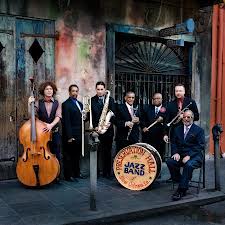
Preservation Hall Jazz Band

Preservation Hall Band jazzes up Blossom
New Orleans’ Preservation Hall is a small weathered music venue in the heart of the French Quarter. Its jazz band was founded in 1961 by Allan and Sandra Jaffe. Since its inception the group has travelled world wide spreading the New Orleans sound, which centers on creating a joyful spirit.
In its own intimate setting the band fits like an old shoe, with the players creating sounds which seems informal, almost like a jam session without structure. In fact, the talented collection of marvelous musicians start out with a preset head, which introduces the tune. Then the players embellish on that theme, and return to conclude the leitmotif.
Blossom is not an intimate venue. It mattered little to the Preservation group. They created intimacy by speaking to the audience, getting the listeners’ involved through cues for cadence clapping, dancing in place, and encouraging applause for instrumental solos. The players yelled encouragement to each other, made comments, and generally enjoyed themselves while creating a joyous audience experience.
The band is headed by Ben Jaffe, the son of the group’s founders. An Oberlin graduate, he introduced one of his college professors and invited the audience to visit the new jazz building on the Oberlin campus.
Song choices included Bourbon Street Parade, Tailgate Ramble, Old Man Mose,
Ice Cream, Tootie Ma, and I'll Fly Away.
The group’s version of Ain’t She Sweet took the audience on a trip to the true joys of jazz.
Mark Braud on trumpet, Freddie Lonzo, trombone, Rickie Monie, piano, Clint Madgen, tenor sax, Ronell Johnson, tuba, and Joseph Lastie Jr, drums, gave a lesson on what it’s like to be in the presence of musical greatness. Eighty-year old Charlie Gabriel, danced as he played his clarinet, and let loose with mello sounds as he sang. He was an obvious audience favorite.
Alex, my sixteen year-old, award winning composing grandson, who has just returned from a summer studying composition and jazz piano at Interlochen, the renowned arts camp in Michigan, was overjoyed with the program. He commented on the group’s ability to build and bound off each other, and capture the audience’s attention. I think nothing would have made him happier than to have been able to slide onto the piano bench and jam with those guys.
Capsule judgement: The exciting and involving Preservation Hall Jazz Band, perfect weather, and the beautiful Blossom setting—what else could anyone want?
New Orleans’ Preservation Hall is a small weathered music venue in the heart of the French Quarter. Its jazz band was founded in 1961 by Allan and Sandra Jaffe. Since its inception the group has travelled world wide spreading the New Orleans sound, which centers on creating a joyful spirit.
In its own intimate setting the band fits like an old shoe, with the players creating sounds which seems informal, almost like a jam session without structure. In fact, the talented collection of marvelous musicians start out with a preset head, which introduces the tune. Then the players embellish on that theme, and return to conclude the leitmotif.
Blossom is not an intimate venue. It mattered little to the Preservation group. They created intimacy by speaking to the audience, getting the listeners’ involved through cues for cadence clapping, dancing in place, and encouraging applause for instrumental solos. The players yelled encouragement to each other, made comments, and generally enjoyed themselves while creating a joyous audience experience.
The band is headed by Ben Jaffe, the son of the group’s founders. An Oberlin graduate, he introduced one of his college professors and invited the audience to visit the new jazz building on the Oberlin campus.
Song choices included Bourbon Street Parade, Tailgate Ramble, Old Man Mose,
Ice Cream, Tootie Ma, and I'll Fly Away.
The group’s version of Ain’t She Sweet took the audience on a trip to the true joys of jazz.
Mark Braud on trumpet, Freddie Lonzo, trombone, Rickie Monie, piano, Clint Madgen, tenor sax, Ronell Johnson, tuba, and Joseph Lastie Jr, drums, gave a lesson on what it’s like to be in the presence of musical greatness. Eighty-year old Charlie Gabriel, danced as he played his clarinet, and let loose with mello sounds as he sang. He was an obvious audience favorite.
Alex, my sixteen year-old, award winning composing grandson, who has just returned from a summer studying composition and jazz piano at Interlochen, the renowned arts camp in Michigan, was overjoyed with the program. He commented on the group’s ability to build and bound off each other, and capture the audience’s attention. I think nothing would have made him happier than to have been able to slide onto the piano bench and jam with those guys.
Capsule judgement: The exciting and involving Preservation Hall Jazz Band, perfect weather, and the beautiful Blossom setting—what else could anyone want?
Sunday, February 05, 2012
Spring Awakening

Mesmerizing SPRING AWAKENING at Beck
On the way out of SPRING AWAKENING at Beck Center, my 16-year old grandson, known as the kid reviewer, said, “That was awesome. The singing, the acting, the music, the choreography, the staging, were all great!” Yes, Alex, you just experienced one of the finest theatrical works you may ever see.
SPRING AWAKENING, the Steven Sater (book and lyrics)-Duncan Sheik (music), folk-infused rock music drama, is based on a 1892 play by Frank Wedekind of Germany. The subject matter, which centers on teenagers on the road to self-discovery, portrays abortion, homosexuality, rape, child abuse and suicide. It was so controversial that its original source was banned for public view for over one hundred years.
The play is a powerful indictment against late 19th century Germany, where strict rules regarding right and wrong, and wide-spread hypocrisy were rampant. Sex wasn’t discussed, the reasons for actions weren’t revealed, and adults held strict control. It is relevant to modern day American where the religious right sometimes parallels the machinations of the adults in Wedekind’s script.
The play consists mainly of spoken and sung dialogues among the children, with an interspersing of voices of the adults. Wedekind has given the voices the ability to open our eyes, in gripping ways, to the joys and sorrows, hopes and despair, and struggles and the resulting tragedies. Tragedies in which the most promising children are sacrificed due a lack of appreciation and understanding from their teachers and parents.
We meet Melchior, intelligent, handsome and charismatic, who sees the corruption around him, but is powerless
to change the events. There is Moritz, physically stronger but psychologically frail. He’s the product of a harsh father, and is pushed to near insanity when he fails an exam and eventually is led to suicide. Wendla is in love with Melchior, and naively becomes pregnant by him. Her fall from grace is based on her lack of knowledge about human sexuality, and still believing that “children are brought by storks.” She, too, becomes a tragic product of her culture’s rules. We also view Ilse, who runs away from a sexually abusive home, another product of the rules of the game of life.We are left at the end of the epic with Melchior, his friends all destroyed, needing to find a reason to go on with his life.
This is a relevant play that has already, and should open additional eyes of the hypocritically blind to the need for sex education, understanding of the teenage mind and the hypocrisy of developing illogical and unbending rules for the sake of tradition.
The Broadway production won eight Tony Awards in 2007. The Baldwin Wallace-Beck Center collaboration, under the keen eye of Victoria Bussert, is as good as the professional shows I saw on Broadway and on-tour. This is Bussert at her best!
The staging is creative, encompassing, focused. The pacing is fine…slow when necessary, fast when appropriate. Ryan Fielding Garrett’s band, which is on stage during the entire production, expertly backs up, rather than drowning out the singers, the vocal blends are excellent, and even though several of the cast don’t have superb singing voices…they so well interpret the words of the songs, that it matters naught.
Zach Adkins, a young Brad Pitt look-alike, is compelling as Melchior. He displays a complete understanding of the mental and emotional workings of the role. As we see him standing alone at the end of the play we can only feel strong emotional bonding with the real person Adkins has created. His song All That’s Known is appealing, while Left Behind is emotionally revealing.

James Penca is spot-on as the conflicted Moritz. He develops a young man unable to fight off the power of his father and members of the school staff, who demand what Moritz is unable to give. His The Bitch of Living is a show highlight, as is Don’t Do Sadness.
Pretty Kyra Kennedy makes for a perfect Wendla. She creates a complete character who displays appropriate naivety and passion. Her Mama Who Bore Me was a strong curtain raiser and Those You’ve Known, a trio with Adkins and Penca, was tear-inducing.
The chorus was excellent, weaving in an out of the scenes with clarity and concentration.
Gregory Daniel’s choreography, Jeff Herrmann’s set and light designs, Richard Ingraham’s sound design, and Alison Garrigan’s costumes all make SPRING AWAKENING a special evening of theatre.
The show is advertised as 17 and older. When I asked Alex if he was uncomfortable, especially in the presence of his grandparents, he gave a, “no way” response. You have to know your teen, but the lessons to be learned from this script are great. In fact, if the characters in this play had known what they could have learned from being exposed to this material, there would have been no need for Wedekind to write the play.
CAPSULE JUDGEMENT: SPRING AWAKENING is an emotionally stirring, relevant, and well staged production. This is not a should see, it’s a must see presentation. Bravo! Bravo! Bravo!
Saturday, June 25, 2011
Jersey Boys (2011)

JERSEY BOYS back at the State…Again, ”Oh What a Night”!
There is a special aura about New Jersey, excuse me, “Nujoisy.” “De joisy fowks” talk different. “Dey” have an “addetude dat” reeks of testosterone (even the women), and find glee in being “in-ya face.” They live by “der own ruhls.” This combination of being and doing flows onto the stage in JERSEY BOYS.
The buzz of the audience before the curtain went up indicated that they were expecting something special. And, did they get it! At the end of the show they were on their feet screaming for more. (In this instance, this was not an automatic Cleveland standing ovation given for anything from good to bad to very bad productions. This was a deserved standing O!)
As Alex, the 15 year-old kid reviewer, said after the show, “Wow, that was special!” The award winning composer went on to rave not only about the music, both the writing and the playing, but the quality of the voices, the acting, and the choreography.
Yes, as one of the show’s songs rocks out, “Oh, What a Night.” JERSEY BOYS is a story about Frankie Valli and The Four Seasons: Frankie Valli, Bob Gaudio, Tommy DeVito and Nick Massi. It supposedly is the story of how a group of blue-collar boys from the wrong side of the tracks became one of the America’s biggest pop music sensations. They supposedly wrote their own songs. They invented their own sound and sold 175 million records worldwide - all before they were thirty.
You’ll note in the last paragraph I said “it supposedly is the story” and they “supposedly wrote their own songs.” There is some controversy over how much the script’s writers, Marshal Brickman and Rick Elice, deviated from the real story. There is also some question about whether Bob Gaudio did write all of the songs. Be that as it may, there is no question about the entertainment value of the Four Seasons or the production. As one of the songs states, “Can’t Take My Eyes Off Of You.” You won’t be able to take your eyes off the stage and keep your feet still as the beat goes on and on and on.
The show opened in November of 2005 in New York. It won four 2006 Tony Awards including Best Musical and continues to break box office records on Broadway.
This production includes Matt Bailey as Tommy DeVito, the founder of the group. DeVito’s wild way of living, his spending and gambling, caused the quartet problems and eventually was the reason for its break up. Bailey is appropriately ego-centered in the role. He sings and moves well.
Steve Gouveia portrays Nick, Tommy’s older brother, who was basically along for the ride. Aubrey fits well his part and sings effectively.
Quinn VanAntwerp, not only looks like the real Bob Gaudio, but has the same boyish charm. Portraying the “intellect” of the group, VanAntwerp wraps himself in the role and is completely believable.
The star of the evening is Joseph Leo Bwarie as Frankie Valli. Bwarie was here in the previous tour and, if anything, reaches even higher levels this time. Earlier this week he released his debut album Nothin' But Love which is for sale in the State Theatre lobby. (Be aware that John Michael Dias portrays Valli on Wednesday and Thursday matinees and some Sunday evenings.)
Everything about this production is professional. The sets, the orchestrations and the costumes all work.
CAPSULE JUDGEMENT: Go, go, go see ‘JERSEY BOYS.’ You will have one hell of a time and feel like “The Big Man [or Woman] In Town” as you go out of the theatre humming, “My Eyes Adored You.”
Friday, June 17, 2011
Chicago

CHICAGO jazzes it up at Porthouse
In a good production, CHICAGO, the musical, sizzles with creative dancing exciting music and fun characterizations. The Porthouse Theatre production sizzles, and is creative and fun! ‘Nuf said.
In the words of my 15 year-old “kid reviewer” grandson, Alex, “That was great!” The award winning composer enthused, “The music was not only well written, but well played. The acting is right on. The singers sang meanings, not just words. The dancing was creative, and except for some unity problems in a couple of the numbers, was well done! The vocal blendings were excellent. Grandpa totally agreed with him.
CHICAGO, which is set in Prohibition era Chicago, is a satire on the Windy City’s well known police and judicial corruption. The mayhem gave birth to celebrity criminals whose fame came and went as newer and more outlandish crimes and payoffs came forth.
The musical is based on a play of the same name written by Maurine Dallas Watkins, a Chicago Tribune reporter who was assigned to cover the 1924 trials of murderesses Beulah Annan and Belva Gaertner.
Annan, who was acquitted of murder through a reported series of payoffs, became the model for the Roxie Hart. Velma is based on Gaertner, a cabaret singer who was also conveniently acquitted of murder. Billy Flynn, the lawyer character, is a composite of the two lawyers in the real cases.
The musical’s path to production started in the 1960s. Superstar Gwen Verdon read the play and asked her husband, the great Broadway choreographer, Bob Fosse, about creating a musical adaptation. Fosse approached playwright Watkins numerous times to buy the rights, but Watkins, who had become a born-again Christian, refused as she believed her play glamorized a scandalous way of living. Upon her death the rights were obtained and Fred Ebb began work on the musical score. Ebb and Fosse penned the book and Fosse directed and choreographed. And, as the saying goes, the rest is history.
The original Broadway production ran for 936 performances and starred Chita Rivera as Velma, Gwen Verdon as Roxie and Jerry Orbach as Billy. The script was revived in 1996 and holds the record for the longest-running musical revival on Broadway, now clocking over 6,000 performances. The 2002 film version, which starred Catherine Zeta-Jones, Renee Zellweger, Richard Gere, John C. Reilly and Queen Latifah, won the Academy Award for best picture.
Porthouse’s production, under the direction of Terri Kent, is excellent. The show moves along at a fast pace, building on the vaudeville motif by having musical director Jonathan Swoboda serve not only as the orchestra leader, but as the narrator. It’s a clever technique which adds to the show’s whimsy.
Choregrapher Mary Ann Black’s has modified the original Fosse choreography to fit the talents of the dancers and the thrust stage venue. Though I would have liked the dancers to get lower to the ground and have more definitive hand and arm gestures, ala Fosse style, the enthusiasm and effect comes through loud and clear.
Swoboda’s band is excellent. The musical sounds don’t drown out the singing and fills the space with the right jazz beat.
Black, who not only choreographed, but plays the cute, conniving Roxie, is terrific in the role. She dances, mugs, feigns innocence and creates a delightful killer. Her solos Funny Honey and Roxie, were show highlights.
Sandra Emerick, Velma, sings, acts and dances well. Her All That Jazz lights up the stage. Her duets with Black, My Own Best Friend, Nowadays and I Know a Girl/Me and My Baby brought gales of applause.
Eric van Baars is fine as Billy. His singing and dancing are solid. He may have added to the role with a little more swagger and arrogance.
Timothy Culver, who portrays Roxie’s nebbish husband, brought down the house with Mister Cellophane.

Dylan Ratell confounds as the cross-dressing Mary Sunshine. He sings with a castrato voice that is outstanding. (Castrato is a male with a singing voice equivalent to that of soprano or mezzo-soprano.) Wow!
Melissa Owens’ Matron Mama Morton, lacks the hard edge and commanding presence needed for the role. Her When You’re Good to Mama lacked the needed power, presence and conniving tone.
Stick around for the song and dance routine after the closing lines. Black and Emerick delight.
CAPSULE JUDGMENT: CHICAGO, Porthouse style, sizzles and delights. It makes for a perfect summer treat. Go! See! Enjoy!
Saturday, March 19, 2011
Stomp

STOMP lives up to its reputation as the Most Unique Theatre Experience
How is it possible to take a bunch of broomsticks, pots and pans, garbage cans, kitchen sinks, water, plastic bags, Zippo lighters, brooms, dustpans, drums, and car parts, combine them with a troop of performers who don't sing, say lines or do any form of traditional dancing, and create a show that has toured the world for twenty years to sold out audiences. Audiences who come back time and time again to experience the going
s on? If you are Steve McNicholas and Luke Cresswell you find a way…and you name it STOMP.The sounds, which really can't be called music in the traditional sense, focus on percussive beats, rhythm and patterns.
How does the audience react? At the end of the production they screamed, and then screamed for more.
On the way out, Alex, my 15 year-old grandson, shouted over the audience excitement, “That was really, really good!” Musically, he should know. A pianist and composer, he was recently informed that he was the second place winner in the 2011 National Federation Of Music Clubs/The Ohio Federation Of Music Clubs Junior Composers Contest.
Alex enjoyed the combination of musical creation and humor. As
he said, “It's pretty hard to hold an audience's attention with just percussion, but they did it. They also had a theme that carried throughout, including each performer having a unique role.” He was so enamored by their sound that as he was listening, he was composing a percussion composition. My only wish is that he use drums, bells, and shakers instead of my hubcaps and his grandmother's soup pots.CAPSULE JUDGEMENT: The New York Drama Desk gave STOMP its award for Most Unique Theatre Experience. They were right on with that designation. It's a performance well worth seeing!
Thursday, March 03, 2011
Shrek the Musical

SHREK THE MUSICAL delights at Palace
Ian, my 11 year old grandson, one of the kid reviewers who I take to shows which are billed as tween and teen friendly to ascertain how younger audience members will like the offering, leaned over following the curtain call of SHREK THE MUSICAL, and smilingly said, “I really liked that!” Complete with ogre ears on his head, he went on to say that he thought the talking Donkey was “hysterical” and filled me in on how the 30-foot dragon was operated by four puppeteers. He thought that “kids and adults of all ages would have fun at the show,” but should know that “it is very long” (about 2 and a half hours).
I agree with Ian. SHREK, part of the Broadway series, is lighting up the stage at the Palace. It is delightful.
This is not an almost-like Broadway production. The sets, costumes and special effects are all there. According to Gina Vernaci, the Vice President of Theatricals for Playhousesquare, Eric Peterson, who portrays Shrek, gets to the theatre two hours before curtain to get into makeup. It takes 10 trailers, each 53 feet long, to transport the show on each of its moves. This compares to the seven trucks that brought in last month's SOUTH PACIFIC. There are 33 containers of costumes. The typical musical travels with 12. This is not a cheapie production! There is even a full, if sometimes overloud, orchestra.
SHREK has music by Jeanine Tesori and book and lyrics by David Lindsay-Abaire. It is based on the 1990 book SHREK! by William Steig, as well as the 2001 DreamWorks film. It opened in New York in December of 2008, after much rewriting and many cast changes, and ran for 441 performances. The touring production has been altered from the original Broadway show with the addition and deletion of songs, a new opening and improved illusions. The biggest alteration is the size and operation of the dragon. It is spectacular, and Carrie Compere, its voice, wailes a new song, “Forever.”

The story concerns a swamp-dwelling ogre who, as a child, was sent away by his parents to find his own path. Big, green and ugly, the belching, gas passer, goes on a life-changing adventure when his land is invaded by a slew of fairy tale characters (e.g., Pinocchio, Wicked Witch, Sugar Plum Fairy, the 3 Bears, Peter Pan, Ugly Ducking and Big Bad Wolf) and by the mean, vertically challenged Lord Farquaad. In order to get his land back, Shrek must rescue Fiona, a cursed lovely princess, fight a dragon, and figure out what to do with a smart-mouthed talking donkey, who becomes his “best friend.” Hey, this is a fairy tale, remember? All in all, the ridiculousness works, and works well. And, yes, there is a happy ending.
The music is infectious. I defy anyone to sit through “I'm a Believer” and not rock and roll in your seat. Other highlights include: “I Know It's Today,” “Who I'd Be,” “Morning Person,” and the hysterical “Don't Let Me Go.”

The cast is outstanding. Eric Peterson (Shrek) has a big voice, a nice touch with comedy, and burps with the best of them. Holly Ann Butler is delightful as Princess Fiona. She lights up the stage and equals Peterson in burping and gas passing. Alan Mingo, Jr. is donkey perfect! Blakely Slaybaugh, complete with growing nose, makes Pinocchio live. David E. M. Vaughn is wonderful as Lord Farquaad.
The choreography and costumes add to the overall delight.
CAPSULE JUDGEMENT: Okay, I'm a sucker for a well staged, fun musical. SHREK fits the bill. I left humming the songs and smiling as many of the kids and adults walked out wearing their ogre ears, proudly stating that they had became believers!
Saturday, February 19, 2011
Rent

RENT compels at Baldwin Wallace
Baldwin Wallace College is doing an American first. For the very first time in history, RENT and LA BOHEME are being performed in repertory.
RENT is Jonathan Larson's rock musical which is broadly based on Puccini's LA BOHÈME, but, is not a translation of that epic opera. It is a reimagining, a view of Larson's 1996 today. It puts the spotlight on the physical and psychological temperature of New York at that time.
The title was chosen because Larson was looking at how, from his viewpoint, traditional society was thwarting the hopes and dreams of the MTV generation. He chose the term rent, because it means tearing apart.
RENT takes place in New York's Lower East Side, before gentrification, when the old buildings and warehouses were home to the bohemian and drug worlds.
The story covers about a year in the life of roommates Mark and Roger, who live in a condemned building, and their friends. Roger, is HIV positive and is numb to life, trying to write a song which has only one musical line that he keeps repeating over and over on his electric guitar. Mark is trying to capture life on film, but may, in fact be using his camera as a tool to steal himself away from life itself. They are intertwined with an exotic dancer/drug addict, a cross dresser, an hiv+ philosophy professor, an ex-friend who has married for money, and Mark's ex-girlfriend and her lover. Together the group deals with love, loss, AIDS, and everyday existence.
The musical is somewhat autobiographical. Larson, who lived in the Big Apple for many years as a starving artist, sacrificed a life of stability for his art, and shared many of the same living conditions, hopes and fears as his characters.
The dynamic score includes the illuminating Light My Candle, the plaintive I Should Tell You and the stirring Seasons of Love.
Much like the storyline, the musical's very existence was met with problems. On January 25, 1996, the morning after the show's final dress rehearsal, coincidentally 100 years to the day of the debut of Puccini's opera, Larson died from an undiagnosed aortic aneurysm. The first preview was canceled and instead, friends and family gathered at the theater where the actors performed a sing-through in Larson's memory. He never knew that the show would be a smash hit and go on to win a Pulitzer Prize.
The BW production, with a few minor issues, is outstanding. I've seen the show on and off Broadway, and in several other venues and this version holds up well against the others. The staging by Victoria Bussert and choreography by Gregory Daniel are exciting and exacting.
The show is being done with two casts. I saw the “Mark” cast, so all my comments will center on those actors. Seeing the “Roger” cast might garner a different viewpoint.
Jon White is outstanding as Roger. He has an excellent voice, moves well, and developed a real and textured characterization. Chris McCarrell is spot on as Mark. He has just the right balance between geek and heartfelt persona. Kyra Kennedy as Joanne, the girlfriend of Mark's ex, has an excellent voice and develops a nice lesbo vibe. Andrea Leach is a total hoot as Maureen. Her performance piece, Over the Moon, was a show-stopper. Jason Samuel, as professor Tom Collins, left no eye unfilled with tears with his segment of the eulogy, Goodbye Love.
On the other hand, Jillian Kates Bumpas did not ignite the role of Mimi. She had upper range singing issues and failed to develop the sensuality of the role. Fortunately, her duet, Without You, sung with Jon White, left a positive impression. Antwaun Holley seemed uncomfortable playing the cross-dressing Angel. Since so much of the second act centers on the character, Holley's lack of dynamic warmth somewhat chilled the effect of his death on the story development. But, as someone near me said, “S/he sure does look good!”
The chorus was outstanding. Not only did they sing well, but they were in character throughout and created meaningful stage pictures. Highlight supporting vocals were performed by Jessica Waddle and Adrianna Cleveland in Seasons of Love.
Jeff Herrmann's scenic and light designs, Charlotte Yetman's costumes and DJ Jankura's sound designs all added to the production.
My grandson, Alex Berko, a gifted musician, who I often bring along to give a teenagers' view of a show and comment on the melodic aspects, was ecstatic, giving the show a near perfect score. He thought the leads' voices, with one exception, were excellent. He liked the staging, thought the choral work was outstanding, though he noted that there were a few instances when the band was out of sync with the singers, especially in Seasons of Love. He commented, and grandpa agreed, that the music, under the direction of Ryan Fielding Garrett, was well played, but, at times drowned out the words to songs making it difficult to understand the words.
CAPSULE JUDGEMENT: BW's RENT is a production well-worth seeing. It will probably be more appreciated by young adult audiences rather than the senior set, but everyone should be impressed by the talent of the students and the quality of the staging.
Friday, January 28, 2011
Beyond Belief An Intimate Evening of Psychological Illusion

Must see BEYOND BELIEF at Kennedys-Down-Under
Intriguing, fascinating, fun, confounding, involving and surprising are just some of the words I heard from the audience after the opening night performance of BEYOND BELIEF, award winning Joshua Seth's display of illusion at Playhouse Square's Kennedy's-Down-Under performance. (The theatre is located below the Ohio Theatre's lobby.)
Psychological Illusionist, voice-over artist, hypnotist and mystery entertainer are all names that have been used to describe Kent native Joshua Seth. He's “one of the busiest illusionists touring the globe today.” Seth, who lives in Bath, and was brought up in Akron, recently returned from yet another cruise. This time he was performing on a ship going around the Hawaiian Islands. Immediately after his opening night performance here, he was jumping on a plane to fly to Baltimore, where he was to perform before over 3000 midshipmen at the Annapolis Naval Academy.
Seth, whose father was a hypnotherapist, fell in love with illusion when taken to see a Blackstone the Magician show when he was eight. He started to delve into the field. His present show grew out of the concept of mentalism, which allows him to work with the audience to influence people's thoughts and create illusion.
During the performance, Seth proved that his reputation as presenting “A high Energy, One-of-A-Kind Show” was true. He also displayed why he won First Place at the Academy of Magical Arts' “Magic Castle Olympics” for his mentalist act.
It's pretty hard to describe the 90-minute show without giving away all the intrigue. Plus, the show varies from night to night depending on the audience and the performer's mood. It's probably enough to say the fascination and excitement centered on illusions which included muscle tensing, emails, dreams, rings, blink responses, cards, head and hand shaking, $100 prizes, lottery tickets, and audience participation.
The Kennedy space is a perfect venue because it is intimate and allows for immediate interaction with the spectators. Due to the small venue, everyone gets into the act. (Yes, he even got a Times newspaper theatre critic on stage.) Seth conjured up people's numbers, names, hobbies, pets' names and travel desires. It's fun, it's astounding, it's a delight for everyone.
The “kid reviewers,” my grandson's, Alex (15), Noah (13) and Ian (11), who often go to shows to give the viewpoint of younger audiences, were perched on their front row seats, laughing, cheering, guessing how Seth did the illusions, and left full of excitement and delight. Yes, it's a show for everyone, young and old alike. (I'd recommend that the kids be 10 or over.)
Capsule judgement: Beyond Belief: An Intimate Evening of Psychological Illusion is a one of a kind experience that is a must see! Call for tickets immediately, as the show, in its present run, will only be offered three more dates (February 3, March 3 and 24), and the 80 seats will go fast as the word gets out. Fun, delight, full of intrigue, a MUST SEE!
Saturday, January 15, 2011
Altar Boyz
Second coming of ALTAR BOYZ not as uplifting as possible
“The Altar Boyz” are in the house.” A countdown leading up to the “final” appearance of the religious rock group started about fifteen minutes before the five male “Catholic” singers made their appearance at the Hanna Theatre. Finally, with flashing lights and a loud musical hosanna, our heroes appeared.
Here's the deal. ALTAR BOYZ, with music and lyrics by Gary Adler and Michael Patrick Walker, and book by Kevin Del Aguila, is a “rock concert” by a “Catholic” group which satirizes boy bands and the popularity of Christian-themed contemporary music. Supposedly, we are attending their last performance. The group is breaking up, for some unexplained reason, well, unexplained until the corny last ten minutes when the “mystery” is revealed. The show includes all sorts of songs you've never heard, but will find enjoyable, including, “The Calling,” “The Miracle Song,” “Everybody Fits,” and “Number 918.”
The five-member group sings, has some lines that bridge the songs together, dance, and try to get the audience to repent. Their level of success is measured on a “sinner's meter” which keeps track of those in the audience who are still on their way to hell. Finally, we are down to four hold-outs. And, no surprise, they are members of the Altar Boyz. All the group except the Jewish kid. Yep, one of the Catholic Altar Boyz is Jewish. Why? I'm certain that the script's writer figured he could use the yarmulke-wearing kid for some laughs and use him as the only one who doesn't “sell out.” Hmmm..is there a religious message here?
Does all this sound familiar? For local theatre-goers it should. Beck Center for the Arts staged the show during the summer of 2008. Because of its great box office success, it is being reborn on the Hanna stage by the same production team and four of the original cast members.
If my musically gifted grandson, Alex, one of the “kid reviewers” is right, the show should attract lots of teen and college people. He gave the proceedings an 8 out of 10 (higher than my score). He liked the rock music, some of the acting and the general staging. He found the vocal blending sometimes off. He “really liked” the singing of Connor O'Brien (Abraham) and Matthew Ryan Thompson. He found Thompson's character interpretation of the gay, fey, bleached blond, curly haired Mark, to be delightful, and his song “Epiphany” fun and well performed. (Thompson is the new member of the cast.)
Alex and grandpa were disappointed in the performance of Josh Rhett Noble. Noble, a New York-based performer, has appeared in over 50 professional shows. He has a trained singing voice and is the only Equity member of the cast. Unfortunately, whether he was ill or just on auto-pilot, his sweat soaked performance was vocally shallow and his acting flat.
On the other hand, Dan Grgic as the “chemically aided” Luke, had nice moments, though some of his speaking lines were swallowed, and Ryan Jagru was appealing as the Hispanic Juan, begging for laughs with a Ricky Ricardo overdone accent.
Scott Spence's direction was basically on course, but there were times when there needed to be more life, more enthusiasm, and more consistency in the performances.
Hernando Cortez's choreography was purposeful. Unfortunately, the dancers were often lacking in corps unity.
Larry Goodpaster needed to quiet down the well-performing band. They often overpowered the performers.
Besides Matthew Ryan Thompson, the highlight of the evening was Trad Burns' lighting design. Shadows danced on the walls, the lighting intensity followed the flow of the music, each performer had his own color hue, the emotional levels were raised and lowered as the lights played. Luminosities at their finest!
CAPSULE JUDGEMENT: The music and the rock concert tone of ALTAR BOYZ will appeal mainly to a younger theatre crowd. That's good…it opens new doors for them to get familiar with live theatre. Too bad the production wasn't as polished as it should have been.
Monday, November 22, 2010
Billy Elliot The Musical

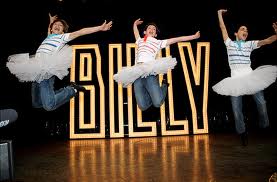
BILLY ELLIOT; A MEANINGFUL STORY AND A PRODUCTION THAT MEETS THE CHALLENGE
When Elton John saw the movie BILLY ELLIOT at the 2000 Cannes Film Festival, he wept. He stated, “The story is very similar to mine: Trying to be something out of the ordinary. Having a talent and wanting to break free from what others want you to do.”
John was so inspired that he approached a director about making the film into a stage musical. After many rejections, based on “who wants to see a musical of striking miners and a kid in Northern England,” John prevailed. The results? A musical that won 10 Tony Awards, and has been seen by over 4.5 million people. A musical which opened on Sunday evening to an enthusiastic audience at the State Theatre. They came expecting something special and from the way they responded, they received it.
BILLY is not the traditional feel good musical. Yes, in the end, there is a happy ending; but, in the process, the story of an adolescent who discovers he has a talent for dance and pursues it against the vehement objections of his father and the derision of his coal mining villagers, is also filled with the devastating repercussions of the 1984 British coal miners strike, which has affected that country until this day.
Besides the low key Elton John music, the thing that seems to most excite the audience is the boy, actually boys, playing Billy. As Stephen Daldry, the show's choreographer puts it, “Not only is the character [Billy] onstage for the better part of three hours, he sings, acts, speaks with a Northern English dialect, does gymnastics, and dances in a variety of styles. In the touring production, the part of Billie is traded off by five boys.
Opening night found 13-year old Giuseppe Bausilio, from Bern, Switzerland, who recently appeared in the role during the Chicago run of the show, as Billie. Other Billies on this tour are from Australia, Michigan and California. The average stay for a Billie is 1.5 years. They physically grow and their voices change. In fact, ”each boy grows out of their shoes at least once, often twice during their time in the role.”
The plot revolves around a boy, whose mother has died and is being brought up by his grandmother, coal mining father and brother, and who, under the guidance of a tough minded dance teacher, trades boxing gloves for ballet shoes. It is based on A. J. Cronin's novel, THE STARS LOOK DOWN, to which the musical's opening song pays homage.
As Alex, my 15-year old grandson, who comes along to productions to give the tween-teen point of view stated, “This is more than a musical about a kid with untapped talent. There is a strong story of history that has to be understood in order to gain a true understanding of the show.” With that in mind he indicated the need to read the information in the program or the poster in the lobby in order to gain the necessary background. “It also might not be appropriate for younger kids due to the language and the story, but they could appreciate the dancing and the fun parts.” He was impressed by the dancing, thought the singing was acceptable, and the story line was well developed.”
The touring production is blessed with a uniformly excellent cast, headed by the multi-talented Faith Prince, probably best known for her Tony award winning portrayal of Adelaide in the revival of GUYS AND DOLLS. Highlight performers included Jacob Zelonky, as Billy's cross-dressing chum, Rich Hebert as Dad, Patti Perkins as Grandma and Jeff Kready as Billy's brother.
Highlights of the
show include a balletic duet performed by Maximilien Baud and Bausilio, the intense “Angry Dance,” and the exuberant “Express Yourself.” There wasn't a dry eye in the house during the original “Dear Billy” a letter from Billy's dead mother to him, and the song's revival, in which Billy writes.The full orchestra was excellent, as was the corps dancing. The stylistic settings, though somewhat low budget, worked.
CAPSULE JUDGEMENT: BILLY ELLIOT THE MUSICAL will hit audiences on many levels. There is a solid story, excellent dancing, quality acting and a talented 13-year old. BTW---don't run out at the start of the curtain calls…it's worth the wait to see the cast totally let loose in a rousing after-act.
Labels:
Alex/Noah/Ian Berko reviews,
Reviews
Thursday, October 07, 2010
Blue Men Group

BLUE MEN GROUP delights and teaches at the Palace
Is it possible to spend 90 minutes at the theatre, not hear a single word spoken, and be totally and absolutely delighted? When you go to see the touring production of BLUE MEN GROUP, and there is no doubt that you should go, at the end of the experience you'll be standing on your feet, applauding and shouting for joy.
BLUE MAN GROUP combines music, comedy and multimedia theatrics to produce a unique form of entertainment. This isn't a play. It isn't vaudeville. It isn't Cirque du Soleil. It is unique!
To make it even more exciting, not only is the audience entertained, but they also learn. Did you know the eyes see a color and the brain translates it into others? Do you know what 2 _ dimensional space is all about? Do you know “the rock concert moves?” On the other hand, do you know how funny Captain Crunch cereal can be? Do you know the hysteria that texting can create in a conversation between virtual texters?
Yes, through electronic gimmicks, flying colored paint, filling their mouths with marshmallows, eating Twinkies, audience participation, drumming (yes, it does get loud and the bass moves the theatre's floor under your feet), three on-stage performers, a band and some Blue Men hidden in the dark on-stage, teach and delight.
The youngest of the three “Kid Reviewers,” Ian, my 10-year old grandson, was totally delighted all evening. Sitting on the edge of his seat, jumping up to hit huge balloons and catch strings of fiber that wafted out over the audience, the boy was one big smile. He couldn't think of a single thing he didn't like. Yes, kids will love the goings on, as will adults and all those in between.
Be aware that this is a 140-minute show with no intermission. In spite of the warnings by the ushers, the pre-show speech, and visual clues on stage, as the show went on the aisles were bustling with people exiting and entering. Several times the performers gave anguished looks at the patrons. In one instance, a stage spotlighting was pointed at several women. What a bad message these people gave the cast about the manners of Clevelanders.
CAPSULE JUDGEMENT: BLUE MAN GROUP is a total delight. Go, go, go and have a unique theatrical experience!
Thursday, September 23, 2010
The 39 Steps

Farcical THE 39 STEPS delights at the Cleveland Play House
THE 39 STEPS, now on stage at the Cleveland Play House, is best known as a 1935 British film directed by Alfred Hitchcock, which was loosely based on a novel by John Buchan. Though the play closely follows the film, Patrick Barlow's stage adaptation, leaves the thriller aspects behind and stresses the fun of the piece. Fun spelled f-a-r-c-e.
Patrick Barlow is a believer in “self-reflexive thought theatre.” The concept recognizes that what is happening on the stage is taking place in a theatre, before an audience. The audience knows it. The actors know it. So, let's not hide the obvious, but use devices and exaggeration to have fun. His concept uses little to create a lot-a few set pieces, some props, and very few actors. In fact, in THE 39 STEPS, 4 actors play over 140 characters. Yep, 1-4-0.
Farce, in the form of double takes, things going deliberately wrong, actors coming out of character, exaggerations, visual images that are created by ladders and a fan turning into a airplane, people walking up and down stairs when no stairs are there, dives off a bridge that isn't there, into water that isn't there, costumes being torn off and others put on before our very eyes, and hats being switched at such a speed that even the actors can't keep track of them. Yes, this is fun stuff.
The stage version started in 1995 when the show toured small villages and tiny theatres in England, It was brought to London in 2005, opened in Boston in 2007, came to New York in 2008, won two Tony Awards, and is still running.
The story concerns Richard Hannay, a Canadian who has come back to England. He is bored, so he goes to a music hall. As he is watching a demonstration of the superlative powers of Mr. Memory, shots are fired. Into his box comes a mysterious woman who talks him into taking her back to his apartment. There, she tells him that she is a spy, being chased by assassins, and that she has uncovered a plot to steal vital British military secrets, masterminded by a man with the top joint missing from one of his fingers. She mentions the "thirty-nine steps." but does not explain its meaning. And so, we start on our madcap romp, complete with dramatic music each time the 39 steps are mentioned!
The Play House production, as directed by Peter Amster, gets it mostly right. Amster and his cast know how to create farce, and, except for some lag spots, they hit all the right tickle bones.
Rob Johansen and Joe Foust, as Clown 1 and 2, are amazing. Their quick changes in costumes, vocal sounds, accents and physicality are engrossing. Nick Sandys is character right as Richard Hannay, and Sarah Nealis plays all the women (except when one of the clowns is playing a woman) with panache.
Linda Buchanan's scenic, Michael Lincoln's lighting, Victoria Toy DeIorio's sound designs enhance the production.
Alex, my teen age grandson, who is known around town as “The Kid Reviewer” as he opens the window of how tweens and teens will react to shows, had very positive words of wisdom. He was “really” delighted. He agreed with grandpa about the lull segments-the end of act I, the hotel segment in the room, and the final scene. He found himself laughing with glee at the “shticks” and appreciated the talent needed to portray “all of those parts.” He thought kids and their parents “will really enjoy the show,” especially all the “really funny parts.” (He's a teenager who likes the word “really.”)
CAPSULE JUDGMENT: Seeing farce done well is a rarity. The Cleveland Play House, during the run of THE 39 STEPS, is an excellent place to experience farce done right! Go! Laugh! Enjoy!
Wednesday, May 12, 2010
Grease

‘GREASE’ ends its tour at the Palace
‘GREASE,’ a version of which is now playing at the Palace Theatre, is the consummate 1950s rock and roll story.
It’s 1959, and at Rydell High School (loosely based on Chicago’s inner city William Howard Taft School), it’s time for a new year for the T-Birds and their Pink Ladies. Though often perceived as a slight musical, "GREASE" actually probes into the issues of the era. It confronts teenage pregnancy, gang violence, love, friendship, teenage rebellion, sexual exploration, and class consciousness/class conflict.
‘GREASE,’ the creation of Jim Jacobs and Warren Casey, opened in 1971. It follows the adventures of the 1950s United States working-class youth subculture known as the greasers. The score re-creates the sounds of early rock and roll.
When it opened on Broadway, much in the tradition of such shows to follow as ‘HAIR’ and ‘RENT,’ it was regarded as a raunchy, raw, aggressive, and vulgar show. Oh, times have changed, and the Cleveland opening night audience was healthily populated by children, tweens and teens, as well as adults.
When the show closed its initial run in 1980, its 3,388-performance run was the longest yet in Broadway history. It was surpassed a of couple years later by ‘A CHORUS LINE.’ It presently holds the thirteenth position for lengthiest run. It went on to be a hugely successful film, a popular 1994 Broadway revival, and a staple of regional theatre, summer stock, community theatre, and high schools.
The present touring production, which ends its run here in Cleveland, highlights American Idol winner Taylor Hicks portraying Teen Angel. He makes a cameo appearance singing one song. Co-author Jacobs says of Hicks’ portrayal, “He's hilarious, because he's not an actor, he's a singer. He does all the stuff like a basic, beginning actor would do, which means he really overplays it and hams it up. But for that character, it's gold." Despite his corny performance, the audience cheered loudly at Hicks’ entrance and loved the post-curtain call rendition of his newest single.
The touring production is acceptable. Maybe the cast has been on the road too long, or they are looking forward to their last paycheck in a couple of weeks when the show drops its curtain in Cleveland, and they return to New York to join the ranks of the 90 or so percent of the members of Actors’ Equity who are unemployed. Whatever, it lacked the necessary spirit to make the show work well. They go through all the motions, but there is a less than real enthusiastic prime time spirit.
The age of the cast members is off-setting. These are definitely not high school students, edging more to the upper twenties and thirties.
Highlight performances include that of the amusing Will Blum, who plays the chubby Roger, otherwise known as “Rump” because of his signature habit of mooning. Bridie Carroll gives a fun performance as Jan, Will’s girlfriend. Their “Mooning,” is delightful. Lauren Ashley Zakrin makes for a sweet Sandy. Her “Hopelessly Devoted to You” is well done. Josh Franklin’s Danny is too suburban clean. He lacks the conceited greaser quality, but his version of “Sandy” was spot on. Kate Morgan Chadwick adds an interesting touch to Frenchy, making her very vulnerable. Both David Ruffin’s Kenickie and Laura D’Andre’s Rizzo lack the underlying hard-edge attitude necessary to develop those parts.
Kathleen Marshall’s choreography was excellent. Highlights were “Shakin’ at the High School Hop,” “Greased Lightnin’,” and “We Go Together.”
The sets for the show, rather than being Broadway level, are rather tired, even somewhat tacky.
Alex, one of the “kid” reviewers who I take to hear a teen’s version of the goings on, gave the show an 8 1/2 out of 10. He thought Will Green (Roger) was “great,” that Lauren Zakrin (Sandy) “had a really good singing voice,” that “there needed to be more greaser attitude by the cast, especially the members of the T-birds.” Of course he loved Bridie Carroll, with whom he had his picture taken after she gave a backstage tour to him and a friend. He also is “definitely going to steal some of the moves of Josh Franklin (Danny),” when he sings “Sandy” in his Solon Junior High School choir’s Spring concert.
CAPSULE JUDGEMENT: The touring production of ‘GREASE’ is an acceptable, but not extremely high quality version of the show. The audience sensed this as was displayed by the fact that the ever-present Cleveland screaming standing ovation, was muted. If you haven’t previously seen ‘GREASE,’ or if you are a ‘GREASE’ fanatic, seeing the show should be a treat.
Saturday, May 08, 2010
Corbian--A Glow in the Dark Adventure
CORBIAN, A GLOW IN THE DARK ADVENTURE’
‘CORBAN, A GLOW IN THE DARK ADVENTURE’ was presented as part of Playhouse Square’s International Children’s Festival. Corban is an hour of fantasy. It is a play without words in which 30 different characters are enacted by five live actors who are dressed in black clothing on which high-tech electroluminescent paint has been adhered. The results are glow-in-the-dark crayon-like creatures who perform on a lightless stage. Dinosaurs, flowers, frogs, turtles, and a human all invade the world of fantasy.
I took Ian, the youngest of the “kid reviewers,” and a friend of his to see the show on order to get a kid’s view of the goings on. The boys, both 10, gave the show an 8 out of 10 for audience interest, creativity and “fun.” Their favorite part, of course, was “the fight between the bad red dinosaur and the good white creature, complete with luminous swords. When asked what the story was about, they both admitted not knowing. But, to be truthful, based on my conversation with a woman sitting behind me, neither did the adults. It mattered little. The kids all seemed to love the goings on, even the 4 and 6 year olds sitting behind me who yelled directions and responses at the characters as the show progressed.
Saturday, April 03, 2010
The 25th Annual Putnam County Spelling Bee
Everyone’s a winner at Beck’s Spelling Bee
How do you spell “f-u-n,” “c-h-a-r-m-i-n-g,” and “a-u-d-i-e-n-c-e p-l-e-a-s-i-n-g?” Easy, ‘THE 25TH ANNUAL PUTNAM COUNTY SPELLING BEE,’ now on stage at Beck Center.
The setting: A thirteen-year old standing on stage Saturday night during Beck’s ‘THE 25TH ANNUAL PUTNAM COUNTY SPELLING BEE.’ The background: The words already spelled included “syzygy,” “hasenpfeffer,” and “origami.” The plot: What would a competitive sports jock do if he was eliminated on his first spell, like just happened to one of the adult spellers? He stood with anguish on his face. The pronouncer said, “And your word is (dramatic pause) cow.” A smile spread across the boy’s face, but, playing by the rules, he asked, “Can you give me a definition?” Followed up by, “Can you use the word in a sentence.” He paused a second, and with complete confidence stated, “Cow, c-o-w, Cow.” The finale: The audience broke into applause.
The boy? Noah Berko, my grandson, known to many of my readers as one of the “kid reviewers.” He had “volunteered" to be one of the audience participants who came forth to offer their spelling knowledge during the show so he could given an “insiders” view of the production.
The musical is based on ‘C-R-E-P-U-S-C-U-L-E,’ an improvisational presentation created by Rebecca Feldman. The script was fleshed into a formatted musical in 2004 with music and lyrics by William Finn and book by Rachel Sheinkin. It opened to critical and audience raves off-Broadway in 2004. It was moved to a Broadway theatre in April of 2005 and ran 1136 performances.
The story concerns six young people in the throes of puberty who learn through pain and pleasure that winning isn’t everything and that losing doesn’t necessarily make you a loser. These kids are their schools’ nerds, the kids whose lives center on doing odd-ball things, such as winning spelling championships, in their own unique and hysterical ways.
Beck’s production, under the creative direction of Scott Spence, is a total winner. I saw the show off-Broadway and then as a touring production, and this staging is the equal of both. Each member of the cast well fits the physical and psychological image needed. They can all sing, are totally involved in their characterizations, and make the evening speed along with humor and pathos.
Highlight songs were the endearing, “I’m Not That Smart,” the hysterical “Magic Foot,” the confessional “Chip’s Lament,” and the charming, “I Love You Song.”
Larry Goodpaster’s musical direction is excellent and Robin Lee Gallo, who was in the original Broadway cast, duplicates the show’s Big Apple choreography with finesse.
Jude McCormick (Chip), he of Eagle Scout badges and erectile problems, Kelly Smith (Logainne Schwartzandgruvenniere), whose two fathers are proud of her being President of her elementary school’s Gay-Straight Alliance, Timothy Allen (Leaf Coneybear) who makes his own outlandish clothes and grasps the entire concept of being ADD and off his meds, Patrick Ciamacco (William Barfee) who spells with his foot, Robin Lee Gallo (Marcy), who insists with rigid body that she isn’t up-tight, and Devon Meddock (Olive) whose mother is searching for her “self” in India, are each f-a-n-t-a-s-t-i-c in their character developments.
Tricia Bestic as the queen mother of the spelling bee, Jonathan Kronenberger as the pronouncer, and Kyle Primous, as the comfort counselor, play their roles to the hilt.
Trad Burns’ set design, Jenniver Sparano’s costumes and Richard Ingraham’s sound enhance the production.
Oh, Noah, finally went out in the third round when he misspelled a word that isn’t even a word. (Is that any way to treat a little kid?) Playing the role to the hilt, he smiled shyly, pouted and took his token award (a box of fruit juice), and left the stage to the cheers of the audience.
CAPSULE JUDGEMENT: The kid reviewers, all three of them, loved the show and were only upset because they each couldn’t appear on stage. Grandpa, and the entire audience, joined the boys during the curtain call as we screamed our approval. This is a must see, fun filled, evening of theatre.
Labels:
Alex/Noah/Ian Berko reviews,
Beck Center,
Reviews
Wednesday, March 10, 2010
Alex Berko appears with Verb Ballets
Alex Berko, the kid reviewer, to appear with Verb Ballets playing one of his compositions
Many of you know Alex Berko as the “kid reviewer” who accompanies me to theatre productions and gives his views on whether the play is kid friendly. What you may not know is that besides his theatre insights, he is an accomplished pianist and composer.
Alex will be one of the featured performers in Verb Ballets’ Fresh Inventions Series of New Works which pairs a composer with a choreographer who uses the members of Verb Ballets company to create a piece of dance.
Alex, who is 14 years old, fell in love with music very early and has been playing piano since the age of 4. He has had many musical accomplishments throughout the years. Alex was awarded 1st place in the 2009 Scholastic Composer’s Contest. He was selected as a young composer (2009) and as a performer (2008) for the Cleveland Composer’s Guild project, “Creativity; Learning through Experience.” Alex was chosen from over 100 students to receive the Samantha Richardson Award for outstanding leadership and musicianship at Orchard Middle School (Solon, OH). He was selected to train and perform with the Cleveland Chamber Music Camp in 2008. Alex has received consistent Superior ratings in the National Federation of Music Clubs annual piano competition. He currently studies composition with Dr. Stephen Stanziano, piano with Mrs. Sandra Shapiro (Cleveland Institute of Music, Cleveland, OH), and music theory with Mrs. Monica Houghton (Cleveland Institute of Music, Cleveland, OH). An honor roll student, Alex was a member of the Solon Middle School soccer team last fall.
Alex will be appearing on stage, playing his composition, Volcano Rhapsody.
Choreographers include Richard Dickinson, Kay Eichman, Diane Gray, Terence Greene, Lisa K. Lock, Troy McCarty, and Sara Whale. Besides Alex, the other composers are Larry Baker, Loris Chobanian, Ty Alan Emerson, Richard Rinehart, Nicholas Underhill, and Eric Ziolek.
The program will be presented at the Cleveland Public Theatre in the Gordon Square Theatre from April 8 to the 11th. CPT is located at 6415 Detroit Avenue in Cleveland. Performances are at 7 p.m. on the 8, 9 and 10 and at 3 p.m. on the 11th. Tickets, which are $10 on the 8th, and $21 on the other dates ($2 discount for students and seniors), may be obtained by calling 216-631-2727 or going on-line to www.cptonline.org.
Labels:
Alex/Noah/Ian Berko reviews,
Verb Ballets
Subscribe to:
Posts (Atom)