Saturday, April 30, 2022

LIFE SUCKS. But at least, it doesn’t at DOBAMA!


Anton Chekov, along with Henrik Ibsen and August Strindberg were late nineteenth and early twentieth century European playwrights who were the seminal figures in the birth of theatrical modernism.  They turned their backs on the escapist romantic stories and took on real issues, and presented real people with real problems. 
 
Chekov is often credited to alerting Russians of the upcoming revolution.  He is also noted for laying the foundation for altering the acting style used in staging theatrical works.  His plays required authentic representation of the character and lead to the Stanislavski system of acting in which an actor didn’t portray a character, but became the character.
 
UNCLE VANYA, one of Chekov’s four great plays, concerns “an elderly professor and his glamorous, much younger second wife, Yelena, return to the rural estate that supports their urban lifestyle. Vanya, brother of the professor's late first wife, who has long managed the estate, and Astrov, the local doctor—both fall under Yelena's spell, while bemoaning the ennui of their provincial existence. Sonya, the professor's daughter by his first wife, who has worked with Vanya to keep the estate going, suffers from her unrequited feelings for Astrov. Matters are brought to a crisis when the professor announces his intention to sell the estate, Vanya and Sonya's home, with a view to investing the proceeds to achieve a higher income for himself and his wife.”
 
The plot of LIFE SUCKS, Aaron Posner’s “kinda” adaptation of Chekov’s work, keeps the same story line, modernizes the time, and uses actor’s directly speaking to and asking questions of the audience, as well as having the actors make political and social commentaries to both interpret for and challenge the theatre-goers.
 
While UNCLE VANYA is clearly a drama, LIFE SUCKS defies traditional categories and might be called a “fantastic, fantasy!”  
 
Posner, himself, defies classification.  He doesn’t write plays, per se, he adapts, creates variations of other author’s works, and re-imagines writings.  
 
The seven characters lustful, lonely, hapless souls, stumble through their lives, often concluding that life sucks.  Or, does it?
 
They, and hopefully we, realize that the world is totally fu**ked up.  Or, is it?  
 
They, and we, see that “life staggers, life confounds, life is beautiful, and life sucks.”  Or, does it? 
 
In contrast to most plays, which only portray the issues, this script allows the audience to answer the questions.  Not in the car on the way home, or at home, but in the theatre!
 
While lots of plays challenge audience members to think, this play gives them the opportunity to express what they can do about it!
 
Both UNCLE VANYA and LIFE SUCKS end with the idea that if you don’t like your life, then you should do something about it.  In UNCLE VANYA the audience is left to ponder.  In LIFE SUCKS, the actors challenge you to answer what will you do?  Don’t want to answer, don’t.  But, if you do, you have the chance.
 
The play is thought provoking yet it has moments of absolute hysteria.  
 
Dobama’s production, under the direction of the theater’s Artistic Director, Nathan Matta, is close to perfection.   
 
The cast—Chis Bohan (Vanya), Andrew Gorell (Aster), Chennelle Bryant-Harris (Pickles), Jourdan Lewanda (Sonia), Steve Marvel (Professor), Anne McEvoy (Babs) and Nicole Sumlin (Ella) is strong, with each actor clearly developing their character. 
 
The beautiful set, lighting and sound all help develop the correct moods. 
 
The only issue was that several actors ignored that the Dobama stage is long and narrow.  This configuration makes for difficulty in hearing when actors are on extreme stage left and right.  They have to project to the last row on the opposite side to be heard.  This has been a problem all season.  Either the theatre needs to reconfigure the audience seating, change the stage shape, or consider putting mics on the actors.
 
Capsule judgment:  Several years-ago I ended my review of Dobama’s production of Posner’s STUPID F**KING BIRD with the comment: “As a person present at the very start of Dobama, I would say that Donald Bianchi, the theater’s founder, would approve and be delighted that ‘his’ theater is still fulfilling ‘his’ dream.”  For LIFE SUCKS, I conclude: “Ditto!”  My recommendation?  Go, see, enjoy, participate!  Applause, applause!
 
LIFE SUCKS runs through May 22, 2022.  For tickets call 216-932-3396 or go to www.dobama.org


Friday, April 29, 2022

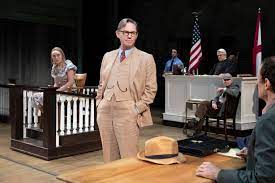
MOCKINGBIRD makes remarkable flight at Connor Palace


The mockingbird is noted for its ability to duplicate the sounds they hear.  The bird’s reference in the title of Harper Lee’s epic novel, TO KILL A MOCKINGBIRD supposedly refers to the statements of prejudice that are repeated over and over in the book’s famous trial.  Statements about Blacks, Jews, the more and less educated, the economic class of a person.  The only way to stop the sounds is to destroy the source.
 
A play version of the book is now on stage at the Connor Palace in Playhouse Square.
 
The script of the play did not have an easy trip to the Great White Way.  
 
Christopher Sergel did a staged adaptation of the novel that has been licensed for over 50 years and has been performed by numerous educational institutions and community theaters.  When Scott Rudin decided to do an adaptation by Aaron Sorkin, “his lawyers claimed worldwide exclusivity for the professional stage rights to any adaptation of Lee's novel and shut productions of the Sergel adaption staged within 25 miles of any city that might eventually host a production of Sorkin's adaptation.”
 
The outcry was great as dozens of theaters across the US were required to cancel productions of Sergel's adaptation.  After a public outcry, Scott Rudin offered to "ameliorate the hurt" by making Sorkin's adaptation available to regional producers.
 
That was only part of the script’s issues before its opening.  “During development of the play, the Lee estate alleged that Sorkin had made too many changes to the original story by framing Atticus as the main character instead of Scout.” After a suit and a countersuit, the premiere of the show was confirmed after an agreement was reached between the two parties. 

Was all the hullaballoo worth it?  

From both the critical and audience sense the answer is a definite, “Yes.”  

The Broadway show opened to mostly positive reviews and the show has been sold out from its opening, to the pandemic shut down, and since the re-up of theatre in the Big Apple.

For those who haven’t read the book (And, why, may I ask have you not probed one of the great American classics?), TO KILL A MOCKINGBIRD, is a dark drama, with humorous interludes, about the roots and consequences of racism and prejudice.  It probes how good and evil can coexist within a single community and within individuals.
  
The plot and characters are loosely based on Lee’s observations of her family, her neighbors and an event that occurred near her hometown of Monroeville, Alabama, in 1936, when she was ten.
 
In the Sorkin-written play there is less emphasis on the coming of age as the children look back at the story as grownups, not as children, suppressing some of the innocence perspective.  The focus has been shifted onto Atticus Finch and the societal issues.

The story covers a span of three years. Scout Finch lives with her brother Jem and their father Atticus in the fictitious town of Maycomb, Alabama, a small, close-knit tradition-bound town, where every family has its social station depending on where they live, who their parents are, their educational level, occupation, and how long their ancestors have lived in Maycomb.  
 
Scout and Jem discover that their father is going to represent Tom, a black man who is accused of beating and raping a white woman.  Tom is tried and convicted even though Atticus proves that he could not have possibly committed the crime. In the process of presenting Tom's case, Atticus inadvertently insults Bob Ewell, a nasty, lazy drunkard whose daughter is Tom's accuser. Ewell vows revenge on Atticus and the judge for besmirching his already tarnished name. 

Things slowly return to normal in Maycomb, but one night when Scout and her brother are returning from a school event, they are assaulted.  Their attacker, Bob Ewell, is killed by a mysterious savior.  Scout realizes that the protector is reclusive neighbor Boo Radley.  The sheriff refuses to press charges against Boo as he saved the children and no good would come from another stress-inducing trial. The town will never again be the same, but life will go on.

The touring production, under the direction of Bartlett Sher, is finely honed.  

Melanie Moore is totally believable as Scout, texturing the character with the right levels of empathy and curiosity.  Justin Mark, as Scout’s brother Jem, and Steven Lee Johnson as Dill, the visiting neighbor, also bring the right level of youthful curiosity and believability to their roles.

Richard Thomas, yes, John Boy from the iconic TV show, The Waltons, brings his own slant to the role.  This is not a Gregory Peck, who played Atticus in the movie, imitation.  He is less a perfect man and more a real human, with flaws.  Well done!

Joey Collins was properly obnoxious as the vile Bob Ewell.  He was so realistic that he received boos in the curtain call from the opening night audience, who had trouble separating the actor from his role.  That is a high tribute to any actor.

Arianna Gayle Stucki was appropriately pathetic as Ewell’s daughter, Mayella.  Yaegel T. Welch portrayed Tom with great sensitivity and Jacqueline Williams had the right level of compassion and indignation as Calpurnia, the Finch’s housekeeper.

Capsule judgment:  The touring production, under the direction of Bartlett Sher, is finely honed.  The staging, the casting, the technical aspects of the play are impeccable.  This is theatre at its finest.  It is an absolutely must see for anyone interested in a well-written, meaningful story that is as relevant today as when it was written.  Bravo!!!

TO KILL A MOCKINGBIRD runs through May 15, 2022 at the Connor Palace Theatre as part of the Key Bank Broadway Series.  For tickets go to playhousesquare.org or call 216-241-6000.


Monday, April 25, 2022

In spite of valiant mission and strong performance, freedom trail-walk is too long a trek at CPT


In 2002, Seventy-year-old Joan Evelyn Southgate, a Cleveland area retired social worker and activist, left Ripley, Ohio, on foot, with the goal of highlighting the courage and resourcefulness of freedom seekers and conductor families who risked everything on the Underground Railroad. 
 
Traveling 10 miles a day, her 519-mile walk crossed Ohio, Pennsylvania, and New York, ended in St. Catharines, Ontario, Harriet Tubman’s terminus on the Underground Railroad. 
 
On the trek she visited Underground Railroad sites, gave presentations at schools, and slept in the homes of welcoming strangers, her own “safe houses.”

Southgate, motivated by her pilgrimage, founded “Restore Cleveland Hope” to save the city’s only remaining Underground Railroad house from demolition. 

To raise money for the project, Southgate, at age 80, walked another 250 miles from Canada back to Cleveland, completing the final mile with 170 companions who had been inspired by her journey.

In 2014, the house, resting on the corner of Mayfield Road and East 115th, in Little Italy, opened as an Underground Railroad teaching center where people can learn “what is possible in the way of changing the world and loving people.”

Now in her 80s, she is still active in fulfilling her dream of being an educator and ensuring that important parts of American history, such as the Underground Railroad, are taught to children and explained in a way that instills a sense of pride in the fight for equality for all.

Southgate was in attendance, surrounded by a large number of her devoted followers, at the opening night of Nina Domingue’s one-woman play, THE ABSOLUTELY AMAZING AND TRUE ADVENTURES OF MS. JOAN EVELYN SOUTHGATE at Cleveland Public Theatre.

Domingue, one of the area’s stellar actors, is also noted as a playwright. 

ABSOLUTELY AMAZING which, according to the playbill comments, was nine years in the making.

As CPT’s Executive Artistic Director Raymond Bodgan, who nurtured the development of this work, states, “I have learned so much from Joan Evelyn Southgate, and I am not alone.  Her wisdom, resilience, her joy, her hope, and her love has made, and continues to make, such an impact in our community.”

He continues, “This has been a long process. Everyone involved in the project has overcome many obstacles and challenges to make this show possible.”  He summarizes, “It is my hope that through these amazing and true adventures, you will be touched by Joan’s wisdom, joy and love.”  

Those who attended the opening night appeared to be truly moved by this determined and sprightly little woman who has made an amazing contribution to the Cleveland and African American communities to insure a permanent understanding of the history of the slavery and, specifically, the Underground Railroad. 

The play, itself, is a different matter.

Original scripts are a process in the making.  They often need to be evaluated by a dramaturg, an expert in script writing and play production, to evaluate the oral and physical aspects of the material.  An oral reading of the script often reveals issues, as does the first attempt to stage it.
  
THE ABSOLUTELY AMAZING AND TRUE ADVENTURES OF MS. JOAN EVELYN SOUTHGATE is such a script.   

The staged version revealed that it is too long. The announced 90-minute length, turned out to be closer to two-hours.  

Going by the adage, “the mind can absorb what the seat can endure,” the audience had more than enough of the material and started to wander the aisles at about the time the play was supposed to end.  The script needs cutting.

The topic was overly developed.  There was too much of the same ideas presented over and over.  This not only added to the excessive time, but became redundant, in spite of Domingue’s fine acting.  The “cough factor,” when an audience gets bored they start to cough, was present about half way through the enactment.

The multi-areas on the stage, which appeared at first glance would allow us to know where on the journey Ms. Southgate was, helped naught, as they didn’t really fulfill that purpose, nor did the electronic graphics which were also inconsistent in their use and purpose.  Good intentions, poor execution.

CAPSULE JUDGMENT:  Ms. Joan Evelyn Southgate is a wonder of a person.  The play about her Freedom Trail walk is an inspiring story, which needs editing and a clearer staging concept!

Next up at CPT:

CANDLE LIGHT HYPOTHESIS WORKSHOP—May 11-21—This immersive performance empowers” the guests” (the audience-members), to curate their own experience, inside the part museum, part haunted house, part workshop.

STATION HOPE 2022—Saturday, May 28—a Celebration of Hope.  A dialogue for change.  Free and open to all.  St. John’s Episcopal church in Ohio City and the surrounding neighborhood.


Sunday, April 24, 2022

Lightning doesn’t quite strike at the BW-PHSquare production


THE LIGHTNING THIEF:  THE PERCY JACKSON MUSICAL, which is finishing its four-performance sold out run at the Helen Theatre, is a co-production of Baldwin Wallace University’s nationally recognized Musical Theatre program and Playhouse Square.  It is the fifteenth collaboration between these two organizations. 
 
The musical, with words and lyrics by Rob Rokicki and book by Joe Tracz, is based on the first book in the multi-edition Perry Jackson series.  
 
It is in the fantasy genre that is parallel to THE HARRY POTTER books, aimed mainly at tween and teen readers, but also attracting older book buyers.  The series has been praised as an “irreverent introduction to Greek mythology” that might persuade some kids to dig deeper into the subject. 


THE LIGHTNING THIEF: THE PERCY JACKSON MUSICAL received positive reviews from critics in its original off-Broadway run, capped off by a critique which called it "worthy of the gods."  The national tour was also generally praised.  

Unfortunately, the Broadway version opened to widely negative reviews, capped-off by The New York Timestheater critic who wrote, “"it is both overblown and underproduced, filled with sentiments it can't support and effects it can't pull off."  He went on to say, the show has "all the charm of a tension headache."

What’s the show about and how effective is the BWU/PHSquare production?

“The musical follows Percy Jackson, a teenager who newly discovers that he is a demigod and goes on an epic quest, with two of his friends, to find Zeus's missing lightning bolt and prevent a war between the Greek gods.”
At the start of the epic tale, we find Percy Jackson, a 12-year-old boy with ADHD and dyslexia, on a field trip to the New York Metropolitan Museum of Art. “While there, his substitute pre-algebra teacher, Mrs. Dodds, asks to speak with him. Once alone, Mrs. Dodds transforms into a Fury, a mythological Greek demon of Hades. Thanks to a pen that transforms into a sword named Riptide, thrown to Percy by his Latin teacher, Mr. Brunner, Percy manages to fend off and vaporize Mrs. Dodds.” 

After this incident, Percy is expelled from his school due to him failing to stay with the group. 

Sally, his mother, assures Percy the quirks and abnormalities of a person is what makes them special.  She takes Percy to the beach where she met the boy’s father, and the two run into Percy’s friend, Grover. Grover turns out to actually be a satyr, a Greek goat-like protector.

And thus, we are swept on a fantasy world of Greek gods, talking squirrels, mythological creatures, friendships and a quest of discovery.

The local production is directed by Aurora’s Chris McCarrell, who graduated from University School and Baldwin Wallace University. He portrayed Marius in the Broadway revival of LES MISÉRABLES, appeared in the television version of PETER PAN, and originated the titular character in THE LIGHTNING THIEF in its Off-Broadway premiere, 2019 tour, and Broadway production.

McCarrell’s connection to the script has been a part of his life since 2016 when the play started its journey to off-Broadway.  As McCarrell states, “The original production directed by Stephen Bracket dived into its scrappiness, its heart and its unhinged humor in a way that opened my eyes to a strikingly new fearless way to create theatre.”  He has taken that theory in directing the show, reinventing the staging, with the help of the students, for the BW/PhSquare production.

The staging works on many levels, falters on others.  

McCarrell and his talented cast have a major challenge at the outset.  The Helen, the Allen’s small black box space, is only about 10 rows deep, making all the action up-close and personal.  That works well for intimate plays and comedies, but not so much for a show that needs special effects and schticks and gimmicks to portray magic and fantasy.  

There are no facilities for electronic images and no fly areas and wing space or trap doors for set pieces and special effects to appear and disappear.  There is no curtain to close to hide set changes.  In other words, the opportunity for the needed “magic” effects is limited.  Only so much can be done with paper masks, fog and light changes.

As a pre-tween young man sitting behind me loudly whispered about half way during the production, “When is this going to be fun like the movie?”  
In spite of some excellent performances and attempts at directorial creativity, in spite of biased screams and applause of the many BW students in attendance at opening night, the show is missing the “wow.”

Danny Bó, he of cherubic face and soulful eyes, has the needed cuteness factor for portraying the multi-challenged Percy.  He has a nice singing voice and stage presence.  Jonah Warhaft (Grover) and Audrey Zahn (Annabeth) the other member of the trio on which the story hinges, did a nice job of developing the characters.  

Too bad the decision was made to mic the cast.  Some of the lines were lost, for even those of us in the front row, because the actors, assuming the mics would pick up their conversational-level projection, could not be heard.  It would have been good training for the cast to learn to project to the last row of the theater.

The rest of the Menace Cast (the show was double cast with the other group titled the Garage Cast) included Kechante Baker, Mark Doyle, Will Boone, Sydney Whittenburg, Dario Alvarez and Avery Elledge, all developed their multi-roles with proficiency.

McCarrell closed his director’s note in the program with the message, “I hope all leave this theatre ready to take on your own monsters, whatever they may be.  Next to your best friends, and your own pens that will never let you down when you need them most as swords.  Stumble on my friends.”  Nice thoughts!  

Capsule judgment:   Though the BW/PhSquare staging needs more schticks and awe to make it into the fantasy the story required, it gave the student performers a chance to do a different kind of musical and the audience a chance to get outside of their normal space and wander into an epic quest.  Guess the kid behind me was right, however, when he said, “When is this going to be fun like the movie?” 
 
Upcoming BW Musical Theatre presentations:  

Sondheim Celebration:  April 25 7 PM, Juniors present songs by the man who reinvented the American Musical, Black Box Theater at Beaumont School, 3301 N. Park Blvd, Cleveland Heights

Freshman showcase:  May 1, 2 PM, Mainstage Kleist Center for Art & Drama

Sondheim Celebration:  May 1, 7 PM, Juniors present songs by the man who reinvented the American Musical

Senior Showcase:  May 6, 6:30 and 8:30, A reenactment of the nonstop theatrical production to showcase each student in front of more than 200 Broadway casting directors and agents who have the power to put them on stage in regional touring productions, cruise ships, television shows and movies.

Thursday, April 14, 2022

SEVERANCE HALL shimmers with lush sounds in its “Impressions in Sound” concert


Severance Hall, the home of the Cleveland Orchestra, sparkled brightly this past week.  It was not only the stunning art deco Mandel Concert Hall, with its shining gold and silver vine covered ceiling, but it was the amazing symphonic sounds which emanated from the ensemble, as conducted by guest conductor Alan Gilbert. 

 
“Impressions in Sound,” inspired by the esprit of French art and literature and its influence on music, consisted of D’un matin de printemps (“On a spring Morning”), Piano Concerto No 2 in F minor Opus 21Rocaná and La Mer (“The Sea”).
 
Lili Boulanger, the composer of D’un matin de Printemps was a musical child prodigy.  Unfortunately, due to a series of chronic illnesses, she died when she was 25.   
 
Her last work, D’un Matin de Printemps, was originally composed as a duet for violin and piano, and was adapted into various versions, including an orchestral arrangement, which is what the Cleveland Orchestra chose to open this week’s program. 
 
The short, tonal piece is strong on melodies and solo lines, as well as complicated rhythmic twists and turns.  
 
Unlike many of her other works, which are darker in character and harmony, D’un Matin de Printemps is full of fresh and joyful sounds. It was delightful to hear the masterful orchestra play this less than five-minute experience.


The second offering, The Piano Concerto No. 2 in F minor, Op. 21, was a concerto composed by Frederic Chopin in 1829.  In this playing, it featured the piano skills of Emanuel Ax.  
 
Chopin's music, his status as one of music's earliest celebrities, his indirect association with political insurrection, his high-profile love-life, and his early death at age 39 have made him a leading symbol of the Romantic era. 
 
Playing with a style that could be classified as “lighter than air,” Ax inhabited every twist and turn of the composition.  His body swayed in time to the music.  Even when he wasn’t playing, he intently watched the musicians, moving along with their playing.

His piano styling was lively and precise, bringing the music to life. He often played so softly that the piano whispered to the audience, yet none of the notes were overpowered by the orchestra.  

This was the master of the keyboard at his finest, playing a classical piece of music, with a world class orchestra, led by a masterful conductor.  

The audience demanded an encore, and Ax obliged with a delightful solo rendition of Chopin’s Nocturne in F-Sharp Major, Op. 15 No. 2.

The third selection, Rocaná, was composed by Korean born Unsuk Chin.  
 
The composer relates that in Rocaná she conceived that the music was like beams of light and their distortion, refraction, reflections, and undulations. 
 
The title is Sanskrit and means “room of light.”
 
The music in Rocaná flows uninterruptedly, which Chin refers to as a “tonal sculpture.” 
 
As she explains, “The music at times gives the impression of stasis, subtle impulses, interactions, and reactions are continually present. Certain elements appear time and again, yet always in varied form. They are not developed: they instead lead seamlessly into one another and blend, forming new interactions and processes,” much like a Calder mobile in motion. 
 
The composer once pointed out that because of her cultural background she has “a certain aversion to the sound world produced by traditional symphony orchestras rooted in 19th-century aesthetics, and feels a great deal of affinity for non-European musical cultures. That is why I always try to introduce a completely different color into my compositions based on my experience of non-European music.” 

The Cleveland Orchestra Thursday night audience, used to hearing classical tonal music, seemed flummoxed and disorientated by the often-atonal sounds, which was not always pleasant to the ears, created by percussion, including Japanese gongs and temple bells, which are often associated with Asian music.  
 
Some, like myself, seemed to be enthralled by the music, which concluded to polite applause, and several standing and cheering members of the audience.  

In contrasting style, the closing offering, Debussy's La Mer (The Sea), is a lush, melodic, visual-encouraging music, which captures the essence of the sounds of the ocean. It reflects the creativity of Impressionist painters who influenced the young composer, while he lived a bohemian lifestyle in Paris. 
 
Debussy, in turn, influenced generations of composers to follow his evocative masterpiece.  Benjamin Britten created a cycle of pieces from his opera Peter Grimes called Sea Interludes. Vaughan Williams wrote the well-respected Sea Symphony, and Ravel has many pieces about the ocean.  Locally, Solon’s Alex Berko’s AMONG THE WAVES, which was premiered in 2018 by Monterey Symphony, created a kaleidoscopic wash of color and merging of harmony evoking visual and other sensory images of the sea.
 
The audience was enchanted by La Mer obviously carried to the sea’s many moods by the sounds of the orchestra.  The applause was long and appreciative.
 
Capsule judgment: Cleveland Orchestra’s “Impressions in Sound” was a superb evening of music. The well-selected compositions, the quality of the orchestra, the piano skills of Emanuel Ax, and the directing acumen of conductor Alan Gilbert all blended together to create a very special musical experience! Bravo!!
 
Next Up:  Tetzlaff Plays Beethoven, April 14, 15 and 16. For tickets call 216-231-1111or go to www.clevelandorchestra.com

Saturday, April 02, 2022

Fortunately, production aspects of METEOR SHOWER at Beck exceeds the quality of the script


METEOR SHOWER, an absurdist comedy by Steve Martin, is now on stage at Beck Center for the Arts.
 
The lights come up on a plush, contemporary house In Ojai, California.  We soon learn that Norm and his wife, Corky, have invited Norm’s tennis partner, Gerald, and his wife, Laura, for an evening of small talk while they watch a once-in-a-lifetime meteor shower from their backyard patio. The couples have never been together before.  The evening begins to spiral out of control when it is revealed that Gerald and Laura have participated in threesomes, Gerald shoots up and takes a line of coke, several meteors land on the house’s terrace with disastrous effect, penis size is discussed, and the repeating of scenes with the same people, but different storylines, takes place.  
 
This is definitely not a wholesome, easy to follow, Neil Simon comedy. 
 
The play premiered on Broadway in late November of 2018 and closed in mid-January of 2019.  By Broadway standards, that is a very short run.
 
The reviews were negative.  Included were such comments as: “METEOR SHOWER plunges into the absurd without establishing a philosophical grounding for the mania.” “METEOR SHOWER is too busy setting up jokes to create the kind of fleshed out characters and relationships necessary to give the comedy real teeth.” And, “"METEOR SHOWER turned out to be a nonsensical and tedious skit that is simultaneously starry and substandard, flimsy and overstuffed."
 
The only positive comments concerned the performance by Amy Schumer as Corky, which resulted in a best actress Tony nomination for the comedian.
 
With the scripts negative track record, why would Beck’s Artistic Director choose it to produce?  Did he think his theatre’s demographic would like this offering?  That’s doubtful, as the audience is mainly elderly and conservative, definitely not the prime audience for sexual comments and absurdity. 
 
Did he think he needed to produce a comic follow-up to last season’s BROADWAY BOUND, which was a Cleveland Critics Circle multi-award cited production?
 
Unfortunately, there are few modern comedy scripts.  Off and on-Broadway theatres have not been producing many comedies.  This is an era of political and sociological angst and that is reflected in what contemporary playwrights are writing.  But, why pick a script that is an almost sure audience turn-off?
 
In spite of the script, under the direction of Scott Spence, the Beck production has many positives, including some keen farcical interludes.  
 
Abraham Adams (Norm) is blessed with a Danny Kaye mobile face, which he uses to milk laughs.  His line interpretations are on target.  
 
Laura Mielcarek (Corky), has a nice approach to comedy, creating a real character who can swerve onto the wild side with believability.
 
Leslie Andrews (Laura) plays sexy with ease.
 
Leilani Barrett (Gerald) did absurd absurdly.
 
Cameron Caley Michalak’s living room/patio set was ingenious and beautiful, nicely enhancing the production.  Tim Chrisman’s lighting and projection designs and Angie Haye’s sound design were well conceived.
 
Capsule Judgment:   One can only wonder why Beck chose to do this play.  As a Broadway reviewer said, “METEOR SHOWER is a train wreck.”  Fortunately, the quality of this production exceeded the quality of the script.
 
For tickets go to beckcenter.org or call 216-521-2540 X10.
 
Next up at Beck:  THE LEGEND OF GEORGIA MCBRIDE, May 27-June 26.

Friday, April 01, 2022

MUCH ADO ABOUT NOTHING delights at Great Lakes Theater


MUCH ADO ABOUT NOTHING delights at Great Lakes Theater
 

Roy Berko
(Member:  Cleveland Critics Circle and American Theatre Critics Association)
 
Shakespeare, in his comedies, writes of trickery, false accusations, restoration of harmony and romance. He uses lots of double entendre and encourages fun and farce as well as broad performances.  
 
Charles Fee, the Producing Artistic Director of GLT, loves nothing more than staging expansive melodrama, farce and slapstick.  
 
As evidenced by MUCH ADO ABOUT NOTHING, now on stage at Great Lakes Theater, Shakespeare, as writer, and Fee, as director, are a match made in Thespian heaven.  
 
The tale concerns young lovers Hero and Claudio, who are to be married in one week. To pass the time, they conspire to set a lover's trap for Benedick, an arrogant confirmed bachelor, and Beatrice, his favorite sparring partner.  
 
Evil Don John devises a scheme where one of his lieutenants will make love to Hero's maid, pretending she is Hero.  He takes two of his henchmen to observe the encounter and convinces them the woman is Hero.  They spread the rumor of the “infidelity.”  
 
The next day, Claudio disgraces Hero publicly and refuses to marry her because she is no longer chaste. She faints. When he is revived, she is persuaded to pretend that she is dead until the situation is sorted out.

Dogberry, a dim-whited warden, accidentally manages to arrest Don John's henchmen, who confess to the plot. 
 
Claudio is crushed when he learns that Hero “died” so to his false accusations. He begs Claudio, her guardian uncle, to punish him.  He is told that his penalty is to marry Claudio’s “other” niece.  Of course, she is Hero, in disguise.  Don John is arrested. Hero and Claudio, as well as Benedick and Beatrice, marry.  
 
In the end, it all turns out to be much ado about nothing.
 
The tale, is outlandishly enhanced by over-acting, an actor continuously falling down stairs, a woman getting soaked by a water hose, and an eavesdropper hiding behind an ever-moving rose trellis.  Ever-present ridiculousness lights up the stage. It’s Fee at his creative best.
 
The cast is universally excellent.  They each understand they are in a Shakespearean comedy and play for believable laughs.
 
Laura Welsh Berg (Beatrice) and Jeffrey C. Hawkins (Benedick) have “caustic,” down pat.  They delight as the sparing partners who love and hate in equal proportions.  
 
Kailey Boyle (Hero) and Domonique Champion (Claudio) are charming as the young lovers, split by an evil interloper, but who finally find happiness.
 
Nick Steen effectively schemes as the nasty Don John.
 
Joe Wegner was born to play Dogberry, the dim-wit Master Constable.  He growls and mumbles with finesse, while M. A. Taylor, his partner, finds every step he encounters to be a device to trip over.  He spends most of the production, on the ground suffering from another farcical incident.
 
The lovely set created by Jeff Herrmann is a perfect setting.  Rick Martin’s lighting and Mathew Webb’s sound interludes and music enhance the production.  Though much of Alex Jaeger’s costumes are lovely, the fact that they jump in style from era to era, is confusing.
 
Capsule judgment:  As evidenced by MUCH ADO ABOUT NOTHING, now on stage at Great Lakes Theater, Shakespeare as writer, and Fee, as director, are a perfect match.  If you want to see Elizabethan comedy at its finest, GO!  This is a must-see experience!
 
Next up at GLT:  ALFRED HITCHCOCK’S THE 39 STEPS, an Edwardian romantic thriller—April 29-May 22, 2022 @ the Hanna Theatre.


Sunday, March 27, 2022

Convergence Continuum’s DOG ACT is full of "whys?"!


Liz Duffy Adams is an American playwright who is noted for her liberal use of “flavored” language, expanded wit, and characters who possess animated personas.  Rather than writing in a sequential mode, she tends to write on a random style which often follows no logical cause-effect.    
Her play, DOG ACT, which is now on stage at convergence-continuum, follows the apocalyptic adventures of Zetta Stone, a traveling performer, and her companion Dog, as they wander through the former northeastern United States on their way to perform in China.  
 
The script is a combination of narration, simple songs, and some preposterous interludes. 
 
On the surface, the play’s description sounds easy to understand.  It is not!  There is a theatrical doomsday overlay, accompanied by lewd and poetic language, riddled with Shakespearean resonance, Biblical and Peter Pan-like references. 
 
This is not a script which one can analyze and figure out what the underlying purpose of the play is about and what the author is trying to teach/tell us.  In fact, the only way to wend yourself through this two-act experience is to sit back and let it happen and not dig much deeper.
 
A review of DOG ACT stated, “The dialogue doesn't provoke the listener to struggle to make sense of the various argots and the strangeness of the words by which we communicate – or don’t.” 
 
With that in mind, a question might be, “Why did con-con’s powers that be choose this script?” 
 
Yes, theatre’s mission is to “produce theatre that expands human imagination and extends the conventional boundaries of language, structure, space and performance,” but does producing an abstract script, that has no apparent relevance or message accomplish that goal?  Why chose a script which is loaded with unnecessary use of profanity, with no purpose other than using profanity for the sake of the use of profanity?
 
The issue with the production is not the direction.  David L. Munnell, seems to have a clear process that he used, including assaulting the audience as they were coming in by having Coke and Bud, using “f**k” over and over, desensitizing the viewer to the excessive use of that word in the script, to making the entire process so obscure that the lack of idea clarity is expected, therefore accepted.
 
The performances, though sometimes uneven, are generally acceptable.  
 
Mike Frye (Dog) has a charming and accessible quality as Dog, who as a young boy, while confined to a fortress, knowing the guard at the gate was not always alert, wandered into the outlying areas, leaving the gate opened, allowing marauders to enter and kill most of the population.  As a result, Dog has been self-transformed into a non-human.   
 
Denise Astorino (Vera), who started the evening yelling, rather than stressing ideas, seemed to settle into the role and create Zetta, the leader of the troupe, into a character obsessed in getting to China to perform.  As with many of the issues in the play, we are unaware of the cause of her oriental obsession.
 
Andrea Belser, who we find out near the end of the script, is on a vengeful hunt to destroy Dog, as she was one of the few people to survive the attack on the community destroyed by the youth’s leaving the gate open, is inconsistent in her line interpretation and character development.  At times she was realistic, at other instances, she acted the role.
 
Wesley Allen (Coke) and Emileo Fernandez (Bud) evilly swore themselves through their roles. Why they were forced into meaningless language, only the author knows.  Their costumes, made out of coke and Budweiser cans were clever, but why was Bud wearing a Young Judea stocking cap?
 
Kate Smith, as Jo-Jo, a storyteller, had some humorous moments with her monotone triple-talking of meaningless tales.
 
The technical aspects of the show were well done.
 
Capsule judgment:  As Bud and Coke, two characters in DOG ACT might ask, “Why in F**ckity, F**ck, did con-con choose to do this convoluted script?” 
 
DOG ACT runs March 25 -April 16, 2022, Thu-Sat at 8 p.m. at convergence continuum’s Liminis Theater, 2438 Scranton Rd., Cleveland, OH 44113 in the historic Tremont neighborhood. Fri. and Sat. tickets are $23 general admission, $18 for seniors and $18 for students. Tickets and information are available at www.convergence-continuum.org and 216- 687-0074.

Sunday, March 20, 2022

MILLWOOD OUTPOST is a raw look at white men in a changing society at Playwrights Local


Playwrights Local says of itself, we are “dedicated to supporting the dramatists of Northeast Ohio.  As a playwrights’ development and production center we foster diverse talents and present locally written works.”  They have done this with excellent results as evidenced by the number of Cleveland Critics Circle and Broadwayworld-Cleveland award recognitions.

After several years of hiatus, caused by the Covid pandemic, the company is back, staging Tom Hayes’ MILLWOOD OUTPOST.

The tale tells that “Confined on a stormy day, six highway workers are forced to share one room in an abandoned Department of Transportation outpost. Over the course of several hours, the men must confront their own fears, prejudices, and beliefs, and those of each other, while elemental forces outside threaten them all.”

Director Rachel Zake, says of the script: “I love how Tom combined realism and mysticism. Particularly, the idea of the storm bearing down and creating a haunting background for the mounting tensions between the characters stood out to me.”

She continues, “The emotions are striking and the conflict is relatable, even for those who aren’t ODOT workers. The struggle between old and new, tradition and progress is one that is familiar. But, we don’t usually see it up close, in a pressure cooker situation, provoked by a mysterious fog. As the audience has the privilege of sitting up close to the action, I think they will feel immediately drawn in by the characters and their journeys.”
 
I wish I could agree with the director, unfortunately, I can not.
 
While the last ten minutes of the play are compelling, the other 70 minutes are slow moving, rambling, seemingly going nowhere.  Then, bang, the real issues are thrown out, tension results, and the playwright’s purpose is exposed, but not fully developed.
 
Where does the problem lie?  
 
Maybe the writer needs to find a way to more quickly get the issues of white male fear of losing their traditional roles in society, concern over women entering the workplace, strongly felt homophobia and anti-Semitism, the differences in the beliefs of the young and educated versus their less schooled elders.  Interestingly, these are the same issues which have stimulated the allegiance to Donald Trump and his fellow hate-spewers.  Maybe this is the hook needed to develop the play’s message.
 
Maybe the director and some of the cast members needed to realize that there are ways of expressing angst without screaming.  Once an actor has screamed, he has used up the emotion and has no place to go to express his frustrations, fears and hatred.  Underplay rather than overplay has its place if the playwright has given the actor the words to express those feelings.
 
Questions abound in the script and production:  What was the real purpose of the bra stuffed into the chair?  Why was the accused homosexual young man stripped of his shirt?  How does a person get drunk on three or four small drinks of wine and why is this even included?  Why was a bright light shining through the window outside if there was a raging storm and all-encompassing fog?  Why were there no sounds of rain pounding the windows?  Why were people coming in from a storm wearing dry clothing and showing no effects of the rain?  Why were the physical confrontations so unrealistic?  Why the mention of Manischewitz kosher wine when the bottle of liquid being used is not that brand?  Why were mentions made of issues, but the issues, themselves not developed?
 
The ending leaves many issues hanging and was so sudden that the audience wasn’t aware that the play was over until the lights came up with the cast lined up for the curtain call.
 
As to the acting, congrats to Zach Palumbo (Nick) and August Scarpelli (Moon) for developing real and accessible characters.


Capsule Judgment:  MILLWOOD OUTPOST is a new script getting its first staged production. It obviously needs work, from the writing, to the staging. The author and director would be wise to use this experience and make changes which would help the important message of the play come out more effectively. 
 
MILLWOOD OUTPOST will be performed Fridays and Saturdays @ 7:30pm and Sundays @ 2:30pm through March 18- April 2, 2022 at the Creative Space at Waterloo Arts.  Get tickets here.
 
Next up for Playwrights Local:  HEY SIRI, written by Mary E. Weems, July 20-24, 2022, BorderlLight Festival.

Monday, March 14, 2022

Meaningful ANTIGONE gets inconsistent production at Cleveland Play Hous


Cleveland Play House’s Artistic Director, Laura Kepley, in her comments in the playbill for ANTIGONE states, “We originally programed ANTIGONE to be produced during the 2019-2020 season.  The play was in its second week of rehearsals when we had to make the heartbreaking announcement that the production was cancelled.”  The rampant COVID epidemic had struck the theatre world!

The pause is over and the script is now being staged in CPH’s black box Outcalt Theatre.

It is ironic that the play, like the last several years, deals with not only the struggles and angst of how to live life, but how we deal with death.  

As Kepley explains, “Our mourning rituals have been altered. ANTIGONE taps into our collective loss and trauma.  It asks questions many of us have been grappling with:  How do we honor those we have lost without losing ourselves along the way?  How do we move forward?” 
 
As Sophocles’ play, ANTIGONE, begins, “the invading army of Argos has been driven from Thebes, but in the course of the battle, two sons of Oedipus (Eteocles and Polynices) have died fighting for opposing sides. Their uncle, Creon is now king of Thebes. He decrees that the body of Polynices, who fought against his native city, will not be given burial rites but will be left to rot, as a warning to traitors. Creon further decrees that anyone who does try to bury Polynices will be punished with death.”

Antigone and Ismene are grieving for the loss of their brothers.  Both are upset, but Antigone is also defiant. She vows to give Polynices the proper burial rites. Ismene begs Antigone to not defy the laws of the city and add to their family's tragedy. Antigone will not yield.

The play explores such themes as the right of the individual to reject society’s infringement on personal freedoms, the differences between theological law and personal beliefs, civil disobedience, citizenship and the honor of family versus duties to the state.

Playwright Emily Mann has taken the script, which normally runs close to three hours in production and reimagined it.  It now runs around ninety minutes and encourages color blind and gender-neutral casting.  In the CPH production Creon (Vanessa Morosco) is a female.  She is married to Eurydice (Laura Starnik), also a female.  Both are white.  Their son, Haemon, is black.  Their nieces, Antigone (Mariah Burks) and Ismene Bridget Kim) are black and Asian.

Though these gender, racial and sexual differences have nothing to do with the plot-line and story development, the change from the norm puts the spotlight on the changing attitudes of our culture, as it reflects the concept that the arts, theatre in this case, represents the era from which it comes.  While this play was written many centuries ago, this staging represents alterations that have taken place as the attitudes and beliefs of cultures change.

The stances of Creon and Antigone are philosophically at odds with each other.  Questions arise.  Shall tradition rule or should they adapt to personal belief?  Will the laws of the gods be followed, or shall adaptations be made to accommodate the needs and individual beliefs of the living?

Those issues are not only at the center of ANTIGONE, but the center of many of the conflicts of today.  

Legal issues abound concerning the influence by religious leaders and their followers versus the views of secularists as they affect gay rights, gender equality and abortion. What should be the procedures for teaching about slavery, the role of white supremacy, the intentions of our founding fathers (there were no founding mothers), and the “war of Northern aggression/Civil War?”

The Play House production, under the direction of Lauren Keating is often successful, at other times pretentious and unnatural.  

Mariah Burks’s Antigone was real, developing ideas and using a presentational style that was accessible, making her thoughts and feelings clear. The same was true for Fabio Palanco (Aide) and  Laura Starnik (Eurydice).   

Others used acting styles that harked back to the days of stylization over substance, while one member of the cast used a pronunciation and verbal style that was more appropriate for an August Wilson script.  Whether those choices were intentionally made by the director or cast members, or were accidental, they distracted from the effect of the production.

Courtney O’Neill created a thrust stage set that was a perfect space for the staging.  Nathan Motta’s music was properly haunting, foreshadowing the play’s start with ominous overtones. and accenting changes in tension and moods during the show.  Karin Olson’s lighting design helped create the right illusions.  The costuming was as confusing as some of the acting styles.

Capsule judgment:  ANTIGONE, as adapted by Emily Mann, carries as important a message of the rejection or blind acceptance of the authority of civic and religious customs and leaders today as it did when the Greek Sophocles wrote the script in the fifth-century BC.  The CPH production was often successful, at other times inconsistent. 
 
For tickets to ANTIGONE call 216-241-6000 or go to:  www.clevelandplayhouse.com

Next up at CPH:  THE THREE MUSKETEERS from April 30-May 22, 2020 in the Allen Theatre.


Thursday, March 10, 2022

PRETTY WOMAN prettier than New York reviewers let on


Roy Berko
(Member:  Cleveland Critics Circle, American Theater Critics Association)

The film PRETTY WOMAN, based on the Roy Orbison song, which was originally planned to be a tale about class and prostitution, but was reconceived into a romantic comedy, opened to both critical and audience delight.  It still gets a considerable audience when it is shown on television.

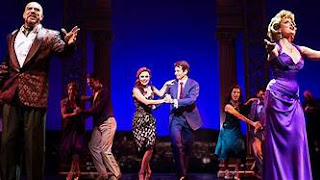
Unfortunately, PRETTY WOMAN: THE MUSICAL, a version of which is now on stage at the Connor Palace as part of the Key Bank Broadway Series, opened to universally negative reviews.

Based on the film’s success, before it’s official opening, the 2018 Broadway previews broke the then Nederlander Theatre box office record for an eight-performance week.

After the reviews came out, generally calling the Bryan Adams and Jim Vallance score as “pleasant but bland,” and “the plot needing updating” and the “gender dynamics of the movie’s plot having aged poorly,” the show limped along, running 27 previews and 420 regular performances.

The book by Garry Marshall and J. F. Lawton tells the tale of “Vivian Ward a free-spirited Hollywood prostitute who lives with her sarcastic wisecracking best friend and roommate, Kit De Luca.  Vivian is hired by Edward Lewis, a handsome wealthy businessman, to be his escort for several business and social functions.”  The question, of course, is whether this is going to be a Cinderella story where the unlikely duo becomes a real-life “happily ever after” tale.  
 
The touring company pulled off a surprise coupe in its opening night.  
 
Playing with a handful of substitutes, due to medical problems, the audience, which gave tepid applause to “Welcome to Hollywood,” a less than dynamic curtain-raiser, warmed up when charming Olivia Valli, playing the Julia Roberts’s role of Vivian, sang, “Any Where but Here,” the show’s “I want song,” whose purpose is to clarify the desires of the leading character and set the plot on track.  Olivia doesn’t want to be a prostitute, but seems to have no options.  It’s similar in plot development to “Wouldn’t It Be Loverly?” from MY FAIR LADY, where Eliza tells us of her desire to own a flower shop and no longer sell flowers on the street.
 
Eliza is taken in by Henry Higgins and Vivian hooks up with Edward Lewis and the plot and the woman’s wishes are accomplished.
 
The audience-production “hey, this is better than I expected” love-fest continued as comic characters, including Kit De Luca (a delightful Jessica Crouch), Nico DeJuses (a fill in for the role of Guilio, a hotel bellman, almost stole the show with his dancing and comic timing), and Happy Man/Hotel Manager (the dynamic Kyle Taylor Parker, who appeared on Broadway as the co-lead in KINKY BOOTS) came on stage.  
 
DeLuca gave us the image of sex-worker having fun, DeJuses is a munchkin-sized charmer, and Parker delighted with “On a Night Like Tonight,” “Don’t Forget to Dance,” and “Never Give Up on a Dream.”
 
When handsome, gym-toned Chris Manuel, filling in for Adam Pascal, of RENT fame in the role of Edward, sang the plaintive “Something About Her,” and then belted out “Freedom” the applause was prolonged and the audience was on their way to experiencing an evening of satisfying musical theatre.
 
Don’t leave before the curtain call or you’ll miss the joint cast and audience singing, dancing, swaying and clapping version of “Pretty Woman,” the movie’s theme song, which is not part of the musical’s score.
 
Capsule Judgment:  PRETTY WOMAN is not a great musical.  It is definitely not CHORUS LINE, or MY FAIR LADY or WEST SIDE STORY, but this production, even with the obvious story line and mediocre score, is worth a sit-through.  The audience, after rendering the required “we are nice Clevelanders and give almost every production a standing ovation,” left with high positive chatter!
 
PRETTY WOMAN THE MUSICAL runs at the Connor Palace through March 27th.  For tickets go to 216-640-8800 or go on line to https://www.playhousesquare.org/events/detail/pretty-woman

Please note:  Though you no longer have to show proof of Covid vaccine, this production requires that those sitting in the first two rows of the lower level (Dress Circle A & B, rows D & E) wear a mask during each performance.

Coming up CLE events:

CLEVELAND PLAY HOUSE  216-241-6000 or go to http://www.playhousesquare.org
7:30 Wednesday-Saturday, 2:30 Saturday and Sunday

ANTIGONE (March 5-27) -- This Sophocles tragedy is reimagined in a dystopian, war-torn world. The show was originally prepared for 2020, but was canceled due to the pandemic.

convergence continuum
convergence-continuum.org or 216-687-0074
Thursday-Saturday @ 8

DOG ACT (March 25-April 16)—Follow the adventures of Zetta Stone, a traveling performer, and her companion Dog (a young man undergoing a voluntary species demotion) as they wander through northeastern United States.

GREAT LAKES THEATER  http://www.greatlakestheater.org or 216-241-6000
Wednesday-Saturday @ 7:30, Saturdays @ 1:30, Sundays @ 3


MUCH ADO ABOUT NOTHING (March 5-April 10) --Beatrice and Benedick would rather exchange scorching insults than sweet nothings. However, the pugnacious pair is forced to forge a partnership in order to defend house and honor.

DANCE CLEVELAND DANCECleveland | DANCECleveland | Modern and Contemporary Dance in Cleveland, OH


Tuesday, March 08, 2022

Meticulously staged KILL MOVE PARADISE is a must see at Dobama


When evaluating a performance at Dobama the mantra to be used is, “Would Donald approve?”  Donald, in this case is Donald Bianchi, who, in 1959, with a small and enthusiastic group of thespians, founded what we now know as Dobama, Cleveland’s off-Broadway theatre.

 
Donald was a quirky, creative, perfectionist.  He set the theatre’s mission as “to premiere important new plays by established and emerging playwrights in professional productions of the highest quality.”  He was undoubtedly the best director I have ever worked with. He demanded high quality!  
 
Would Donald have looked favorably on KILL MOVE PARADISE?  Yes, absolutely YES!  The play script is creatively written.  The production is high quality from the cast, to the set, to the lights, to the sound, to the electronic media.  The essence of Donald is shining on this meaningful staging.  
 
“Mr. Ijames, who has said his play is inspired by the shooting of 12-year-old Tamir Rice by a Cleveland police officer… shows his characters trying to find the logic in the senselessness. It is a torturous and fruitless process.”  In this production, it creates a hypnotic theatrical energy of fear, rage, disgust, and helplessness.
 
KILL MOVE PARADISE is a tone poem of a play.  Using vocabulary that is expressive, emotional and often figurative, the tale of African American males who are wrenched out of their young lives, before they have fully lived those lives, simply because they are black and subject to stereotypes and societal fears and prejudices.  They learn the lesson early to keep both hands raised, never looking “the man” in the eye, and being careful of what and how they communicate. 
 
“KILL MOVE PARADISE tells the story of Isa, Daz, Grif and Tiny, four black men who find themselves stuck in a cosmic purgatory in the afterlife. While balancing the reality of their past and the uncertainty of their future, their souls try to find peace from senseless action and hope in the life they left behind.”
 
The play is a clear statement that black lives matter, that these young men do not deserve the fate that has been handed to them, that enough is enough, and that there is a major problem in America that needs to be fixed! 
 
Using a fascinating theatrical device, the actors spend much of their time looking at and talking directly to audience members.  They provoke reaction by directly asking, “Why are you sitting there staring at me?” “Do you see me.”  “Do I scare you?”  
The Dobama production, performed in a set that resembles a skateboard park, is brilliantly staged by Nathan Henry.  He wrenches all the emotion that is present in this bleak, often humorous, beautiful drama.

The cast, Mell Bowens, Jr., Ananias J. Dixon, Aamar-Malik Culbreth and Daris Stubbs work as a well-oiled unit. They play off each other, create clear individual characters, yet mold into a symbol of a common message.  They are each remarkable.
 
Because, we Clevelanders, are so attuned to the heinous murder of Tamir Rice, as youthful Culbreth, known as Tiny, slides over one of the walls of the skateboard park, holding a toy gun, we know he represents Tamir.  The BWU freshman develops the youth with clarity and purpose.  The other characters are not as person-specific, but as the list of those who have been murdered by police is read, individuals come to mind.  This effect is made vivid by the electronic media.
 
Laura Calrson Tarantowski’s set, Marcus Dana’s lighting design, Derek Graham’s sound design, all enhance the show.
 
Capsule judgement:  The Dobama production is brilliantly staged by Nathan Henry. The cast, Mell Bowens, Jr., Ananias J. Dixon, Aamar-Malik Culbreth and Daris Stubbs work as a well-oiled unit to create a vivid depiction of the misguided mistreatment of young black men in America! This is an absolute must see production!  As Donald Bianchi said, “Take the risk with us.  We are all in this together.  We all own it.”
 
KILL MOVE PARADISE runs through March 27.  For tickets call 216-932-3396 or go to https://www.dobama.org/tickets-index

Monday, February 28, 2022

Apollo’s Fire’s ISRAEL IN EGYPT takes audience on a compelling journey


As the story goes, “In 1991, Jeannette Sorrell was invited to interview for the position of Assistant Conductor with The Cleveland Orchestra.  Sorrell met with Music Director Christoph von Dohnányi who told her that there was no point in trying to find time in the orchestra's schedule for an audition because the audience in Cleveland would never accept a woman as a conductor. Sorrell replied that she had actually not sought this post and she really wanted to work with period instruments. Following this interview, the orchestra's artistic administrator, Roger Wright, offered to help Sorrell launch a period-instrument orchestra in Cleveland." 

With Wright's assistance, “Sorrell received start-up funding from The Cleveland Foundation. The ensemble made its debut in June 1992 under the name of Apollo's Fire - The Cleveland Baroque Orchestra. The debut concerts were sold out. Apollo's Fire began receiving touring invitations within a few months.”  

And, a legend was started. Apollo's Fire, with Sorrell as Music Director, has developed a national and international reputation.

Apollo’s Fire’s recent production, HANDEL’S ISRAEL IN EGYPT A DRAMATIC ORATORIO, a concert which is a new adaptation, took the audience on a triumphant musical journey from the Israelites being enslaved in Egypt, escaping with the aid of the plagues that were cast upon their oppressors, and Moses leading the assemblage crossing the Red Sea into what is now Israel. 

The piece, which has a “dramatic arc, from grief and lamentation, through fear and crisis to triumph,” is a display of the startling abilities of the orchestra’s musical sounds and solo and choral performances.  

The two-hour evening is divided into two segments.  “Part I. Lamentations of the Israelites for death of Joseph.” It starts with the chorus singing, “The sons of Israel do mourn, and they are in bitterness; all the people sigh, and hang down their heads to the ground,” and ends with, “But the waters overwhelmed their enemies, there was not one of them left.”

Part II: “Exodus” and Part III.  “Moses’s Song” begin with “I will sing unto the Lord” and ends “I will sing unto the Lord for he hath triumphed gloriously.”

The printed program wisely provides a narration of the words being sung, which are easy to follow as the auditorium’s lights are left on.

ISRAEL IN EGYPT is different than many of the orchestra’s presentations as the music is played mostly by traditional Western instruments.  In contrast, in their recently released O JERUSALEM CITY OF THREE FAITHS, the musicians play regional and baroque instruments.  In addition, EGYPT is sung entirely in English, in contrast to many of the orchestra’s offerings in which a variety of languages are used.

The soloists, sopranos Margaret Carpenter Haigh and Molly Netter, tenor Jacob Perry Jr. and baritone Edward Vogel were excellent, singing meaning, not just words.  Daniel Moody captured the audience with his compelling countertenor tones.  Moody’s range, the highest male adult singing voice, was impressive in its pure tone.
 
Capsule judgment:  Whether you are a believer in the tale as a religious statement or as a piece of literature, the effect of Sorrell’s adaptation and arrangements and the quality of the Apollo’s Fire music and the singing, makes ISRAEL IN EGYPT a powerful emotional journey and an audience pleaser. 
 
Look forward to Virtuoso Bach & Vivaldi, March 18-22, 2022; and Mozart and the Chevalier, May 6-8, 2022. 


For information call 216-320-0012 or visit apollosfire.org.