Wednesday, September 28, 2011

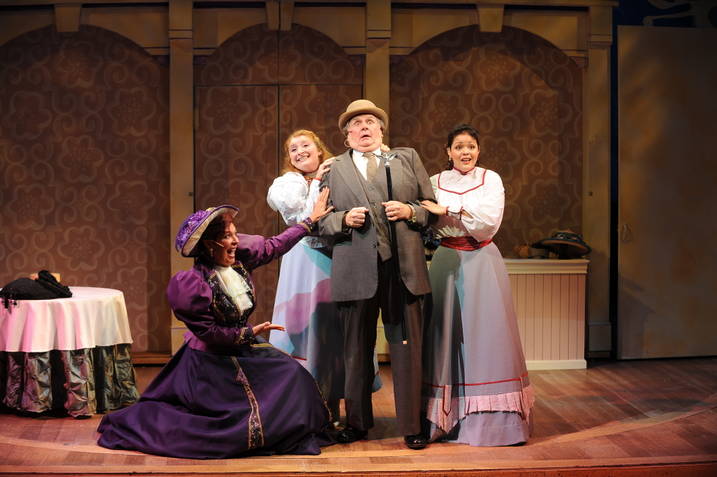
Shaw Festival--2012 preview


THE SHAW FESTIVAL announces its 2012 season

It may appear to be too early to think about it, but The Shaw Festival, which is located in Niagara-on-the-Lake, Canada, has announced its 2012 season.

Many Clevelanders take the four-hour drive up to The Shaw, as it is called by the locals, to participate in theatre, tour the “most beautiful little city in Canada,” shop, and eat at the many wonderful restaurants.

The upcoming season includes:
•Ragtime, Terrence McNally-Lynn Ahrens-Stephen Flaherty’s musical about the U.S. melting pot as it relates to immigrants, racism, and Euro Americans in the early 20th century. It is based on E. L. Doctorow’s ground-breaking novel.
•Present Laughter, Noel Coward’s farcical play which the author describes as "a series of semi-autobiographical pyrotechnics."
•His Girl Friday, John Guare’s “screwball comedy of politics and corruption,” which is an adaptation of the film, The Front Page.
•Hedda Gabler, Ibsen’s theatre of realism epic in which the lead character takes on society in her fight for women’s rights.
•The Millionaires. A seldom done Shaw comedy about the richest woman in the world, and the complications she discovers in her search for love.
•Trouble in Tahiti, Leonard Bernstein's jazzy opera of love and longing in U. S. America’s 1950s suburbia.
•A Man and Some Women, a world premiere by little known, but noted British playwright Githa Sowerby.
•Come Back, Little Sheba, William Inge’s story of a wife clinging to the past and a husband clinging to a bottle.
•French Without Tears, Terrance Rattigan’s longest running London show which is billed as “a sexy comedic romp set in the south of France
•Misalliance, a play about marriage, which author G. B. Shaw describes as a long debate in which “the curtain will be lowered twice. The audience is requested to excuse these interruptions, which are made solely for its convenience."
•Helen's Necklace (Le Collier d'Hélène), Carole Fréchette's poetic exploration which has been described as, “A play that is a metaphor of loss and suffering at different levels.
•The Shaw's Reading Series, which explores provocative contemporary plays from all over the world. Dates and details to be confirmed.

It’s a good idea to make both theatre and lodging reservations early, especially with the B&Bs on weekends. Our home away from home is the beautiful and well-placed Wellington House (www.wellington.house@sympatico.ca), directly across the street from The Festival Theatre. For information on other B&Bs go to www.niagaraonthelake.com/showbedandbreakfasts.

The Niagara area is dotted with wineries, many of which, besides offering wine tastings and sales, have fine dining facilities.

There are some wonderful restaurants including the Dining Room located at the Niagara Culinary Institute (www.niagaracollege.ca/dining. And my in-town favorite, The Grill on King Street (905-468-7222, 233 King St.)

For theatre information, a brochure or tickets, call 800-511-7429 or go on-line to www.shawfest.com. Ask about packages that include lodging, meals and tickets. Also be aware that the festival offers day-of-the-show rush tickets and senior matinee prices.

Go to the Shaw Festival! Find out what lovely hosts Canadians are, and see some great theatre!

Friday, September 23, 2011

A quick critique the Allen Theatre home of the CPH


The Allen Theatre...new home of the Cleveland Play House

I have been asked by inquisitive readers to make some comments about the new facilities.

•I find the new Allen warm and enfolding.

•I love that the designers kept the beautiful old world look of the lobby. The clever use of contemporary carpeting design, which is in the same tones as the ornate walls and decorations, was a stroke of genius to blend the new with the old.

•Inside the theatre, I like the use of metallic scrim to allow for seeing the decorative walls, but blocking them out once the show starts.

•I am disappointed in the seating. In the permanent seats section the rows are somewhat tight. Unlike the redone Hanna, you can’t walk to your seat without others getting up. Because of the shallow raking of the first set of rows, smaller people will have trouble seeing over those sitting in front of them. (My 4’ 10” wife had to sit on two folded coats in order to see the stage clearly.) More than one person complained of hitting their knees on the cup holders which jut into the rows, making for awkward dodging around fellow row members on exits and entrances.

•I did not park in the attached garage so I cannot comment on ease of traversing the walkway into the theatre.

The Life of Galileo


CPH inaugurates its new home with an intriguing look at Galileo

Cleveland Play House is basically all new. It has a new name--no The in its title-- and is housed in a marvelous new facility that blends the traditions of great opulent, old-age architecture with new age modernism.

First to the facility. The Allen Theatre was built to be a movie house. No theatrical trappings were included. It was a long skinny theatre. No attention was given to sight lines, backstage or wing space, or a fly gallery for scenery or set pieces. It was beautiful, but anyone who saw a theatrical production in the space quickly became aware that the acoustics, the ability to clearly see the stage from the hinterlands of the very deep seating areas, were lacking. All that has been changed.

The new Allen is everything that the old Allen wasn’t, except for its initial beauty and the adjustments that have been made to transform the space into a warm, audience friendly contemporary theatre. And, to make things even better, shortly, there will be two more theatres added. This will give CPH something it has never had…flexible spaces that will allow for the selection of a broad range of plays which can be performed in an intimate proscenium, and a flexible black box which can be configured to the needs and wants of the director. Yes, theatre in the round, thrust theatre or any configuration needed. The audiences will be close to the action, the lighting and other theatrical necessities will be top notch and the newest in design. It’s a new beginning for America's first professional regional theatre.

CPH opens its inaugural season in downtown with a compelling production of THE LIFE OF GALILEO. Director Michael Donald Edwards pulled out all the stops to show off the new space. Actors rise off the floor thanks to the rigging system, the stage is displayed in its nude and set adorned modes, projections enhance the visual effect, the closeness of the audience to the stage is used as a device to get the viewers emotionally involved.

THE Life of Galileo, also known as Galileo, is a play by the twentieth-century German dramatist Bertolt Brecht. The play went through various versions from its 1937 beginning to its 1955 rebirth. The latter version became necessary in Brecht’s mind because of the dropping of the atom bomb on Hiroshima, which, according to him, “transferred the positive aspects of science to became a study that was irrational and harmful.”

The story focuses on Galileo, known by many as the father of modern science. Galileo, who is short on cash, adapts “a queer tube thing,” which is being sold on the streets of Amsterdam, into a scientific tool which allows for viewing the stars. Of course, delving into the sciences is dangerous in any country under the control of the Catholic church. Copernicus attempted to explain the solar system in non-God centered ways and wound up being martyred. But, undeterred, Galileo goes forth. When challenged, he stands his ground, but eventually sells out to the church, much to the dismay of his loyal followers. Apparently old and broken, Galileo defies the church and gives one of his former students Two New Sciences, a volume containing his newest discoveries. The book is smuggled out of Italy, and into Lutheran Germany, and becomes the basis for a new age of science.

Though the script is long (about two and a quarter hours) and consists more of talk than action, the CPH production is excellent. The special effects add to audience interest. The high quality of the performances adds to the success.

Paul Whitworth makes for a fine Galileo. He develops a clear and believable character. He wraps himself in the personage of the person who was one of the world’s great thinkers. He elicits both humor and pathos.

Youthful Aric Generette Floyd is delightful and real as Andrea Sarti, a boy who becomes a faithful follower of the great man. Interestingly, he is far more proficient than Sheldon Best, who plays the role as a grown man.

Myra Lucretia Taylor is spot on as Andrea’s mother and Galileo’s trusted servant.

It is nice to see that CPH is using local talents in their new home, including Charles Kartali, Jeffrey Grover, Robert Ellis, Aric Generette Floyd, Eva Gil, Bob Goddard, Andrew Gorell, Dan Hendrock, Michael Herbert, Jeremy Kendall, Kim Krane, Christian Prentice, Jonathan Ramos, Kelli Ruttle, Yan Tual, and Thomas Weil.

Pandora Robertson has done an excellent job of adding both dance and creative movement into the production.

CAPSULE JUDGMENT: THE LIFE OF GALILEO, a thought-provoking probe into the life of one of the world’s great scientists, gets a well developed, focused, creative, often funny production at CPH. It’s a fine opener for the inauguration of a wonderful new chapter in the theatre’s history.

Monday, September 19, 2011

You Got Nerve!


YOU GOT NERVE!, a work in progress at Karamu

In 1915, Russell Jelliffe and Rowena Woodham, a pair of Oberlin graduates, opened The Playhouse Settlement House at the corner of East 38th and Central Avenue. Little did they realize that besides getting people of all races and creeds to share common ventures, they were laying the foundation for what today is the oldest African American theatre in America. A theatre that has helped hone such luminaries as actors Ossie Davis, Ruby Dee, Robert Guillaume, Dick Latessa and Ron O'Neal, as well as playwright and poet Langston Hughes. Cleveland legends Dorothy and Reuben Silver served on the organization’s staff for 21 years.

The Playhouse Settlement was renamed Karamu, a Swahili word meaning "A place of enjoyment in the center of the community,” in 1941. It is indeed a place of enjoyment which has many community building traditions, such as members of the audience being personally thanked by the entire cast during a procession following each show. And, each show starts with a homey interaction between the vivacious Vivian Wilson, the organization’s Marketing Director, and the audience.

In honor of its 97th anniversary, which is named “The Season of Joy and Perseverance,” Karamu Theatre, is presenting a world premiere of a play by its Playwright in Residence, Michael Oatman. A native Clevelander, Oatman, who is a member of the Playwrights Unit at the Cleveland Play House, has written a number of plays including LET IT BLEED, which was premiered at The New Work, New Ways Festival at the University of Nebraska, and BEFORE I DIE; THE WAR AGAINST TUPAC SHAKUR presented at CPH’s Fusion Festival. This year, he was the recipient of the Cleveland Arts Prize “Emerging Artist Award.”

The basic story of YOU GOT NERVE! centers on a group of inner city kids who hassle students at the Cleveland School of the Performing Arts, when the school’s campus is moved into an area that lacks safety. As a result of a fight which ensues, both groups are assigned to community service in the senior citizen’s home which was trashed as it became the uninvited host for the conflict.

As often is the case with the presentation of a new script, YOU GOT NERVE! needs further development. There are some nice moments, such as relating the history of such issues as the poll tax and the connection between the youth and the seniors, but it is definitely a work in progress. some of the language is not that used in natural speech. Lines often sound like written rather than oral language. There are just too many side topics that cause story to lack focus. Teenage love, homelessness, Alzheimer’s, inner city/suburban differences, the African American class system, youth-elderly lack of understanding, historical Black music and entertainers, all come and go within the play’s framework, with none completely developed. What’s the author’s intent and purpose? Specifically, what is he expecting us to carry from the theatre?

The large cast, many of whom are students at the School of the Performing Arts, puts out full effort. There are some nice performances, including those by Chelsea Anderson, who develops a consistent identity as Claire, a bright young lady who lives to sing; Brenda Adrine, as Ms. Adrienne, one of the home’s senior residents, has a nice grasp of the character; and, Antaune Rogers, though playing a character way beyond his years, correctly speaks ideas rather than just words.

On the other hand, there are overdone characterizations with the performers feigning the characters, rather than being the person. Many of the lines seem read, rather than spoken. There is a lack of projection by some actors, so ideas get lost. Director Terrence Spivey needed to work with the cast on realistic performance and idea development. Most of the cast are performers in training, and needed more assistance.

Capsule judgement: YOU GOT NERVE! is a work in progress, both as a script and a production. It’s nice to see Karamu using students from The School of the Performing Arts and blending them with community members to help them broaden their experience base.

Sunday, September 18, 2011

The Marvelous Wonderettes

THE MARVELOUS WONDERETTES is an escapist delight at Beck

Last spring Beck Center presented the musical, JERRY SPRINGER THE OPERA. The production was met with pickets and much controversy. Beck need not worry about hullabaloo with their present production, THE MARVELOUS WONDERETTES, unless there is a cat-fight between two audience members wearing the same cotton candy colored prom dress or your candidate for queen doesn’t get elected. (Hey, suggestion to the Beck public relation’s people… have a “wear your prom dress and get in free night.”)

THE MAREVELOUS WONDERETTES is one of those escapist review shows that features familiar music usually sandwiched between some spoken lines that attempt to tell a rather far-fetched story. No one goes to learn anything. It’s all about enjoying the songs and the musical sounds.

And, in this William Roudebush production, there are a lot of songs and musical sounds to enjoy. The voices are good, the costumes era correct, and there is enough humor to get the most stodgy member of the audience to tap his feet and sing along with the 1950s and 60s songs.

The review was the brain child of Roger Bean, whose mother was a varsity song leader, the precursor to the present show choirs (think Glee). The participants entertained at school functions and dreamed of becoming celebrities. A local Brush High School group, The Poni Tails, actually succeeded in having a number one song on the national charts, several more hits, and a brief career.

In 1998, Bean was asked to write a new musical. Supposedly inspired by his mother's past, he assembled a number of era songs and set them into a theme of best friends, singing at their prom, and the ensuing teen-age conflicts. Eventually, The Marvelous Wonderettes opened in New York City in 2008 where it ran until 2010.
Those of you who are old enough, think back to 1958. Those not old enough, this was the era of chiffon, prim and proper, and no worry about recessions or The Tea Party. Travel back to the fictitious Springfield High School prom where we meet the Wonderettes, four girls with crushes, hopes and fantasies as big as their crinoline skirts and hair! Don’t worry about the story line, it is incidental. Just focus on such songs as “Lollipop,” “Dream Lover,” “Stupid Cupid,” “Lipstick On Your Collar,” “Hold Me, Thrill Me, Kiss Me,” and “It’s My Party.” And finish the evening off by moving forward 10 years, where the group is reassembled for their tenth class reunion.

The quartette consists of the zaftig, outspoken, sensitive Betty Jean (Amiee Collier); the pretty, boy friend-stealing Cindy Lou (Nikki Curmaci) whose dream in life is to be the prom queen; the prim and proper moral leader of the group, Missy (Theresa Kloos); and Suzy (Caitlin Elizabeth Reilly), a gum chewing cutie.

The Beck cast sings well, develops consistent characterizations, moves well and is delightful. Cast members get to vote for the prom queen and get selected to be a teacher heart throb or the French teacher.

The gym prom setting, complete with homemade crepe paper decorations, is perfectly created by Ben Needham. David Glowe’s costume designs are era correct. Caitlin Elizabeth Reilly’s choreography emulates the 50s and later the 60s—the twist, the pony, stroll, hand jive, monkey and the Madison. Musical director Larry Goodpaster has the girls in good voice and the orchestra in perfect tune…underscoring, rather than drowning out the voices.

CAPSULE JUDGEMENT: Beck’s THE MARVELOUS WONDERETTES is one of those feel good evenings of theatre that is slight on story and long on escapist entertainment. It makes for a delightful evening of nostalgia.

Saturday, September 17, 2011

Grizzly Mama


GRIZZLY MAMA at Dobama, truth may be stranger than fiction

In George Brant’s GRIZZLY MAMA, now on stage at Dobama Theatre, the fictional Deb Marshall moves into the house next to Patty Turnback, an Alaskan Tea Party leader (think Sarah Palin) in order to destroy her. Deb is the daughter of the titular leader of the 20th century women’s movement (think Gloria Steinem) who has supposedly pledged, on her mother’s death bed, to get rid of the ultra-right Turnback. Turnback (note the “clever” play on words) has moved the women’s movement back into the dark ages, the days-of-old when women were homemakers and protected their young against wild animals (liberals). Yes, Grizzly Mamas.

Think the idea is preposterous? Well, think again. On September 20, a new book about Palin will be released by author Joe McGinniss. McGinnis has been studying Palin for three years. He even moved next door to her home to dig up dirt. His purpose? To destroy her by killing the lady’s reputation. So, truth can be stranger than fiction.

On the surface, Brant’s play seems like a farcical, overstated, unbelievable dark comedy of spiteful revenge. It rolls out as a script about murder, motherhood, moose and a bunny rabbit. A little mental digging reveals a study of the relationships between mothers and daughters and how they bond, conflict, love and betray each other.

Brants’ character’s are overdone. Deb is written as a divorced out-of-control suburban mom who reimagines herself as a righteous liberal avenger. Her motivations and actions seem unrealistic. Her daughter, Hannah, is an overdrawn self-centered texting teenager who gets wrapped up in the hunt when she becomes friends with the Grizzly Mama’s daughter. A daughter with a major problem, especially for the daughter of a religious ultra-conservative.

The script was commissioned by Dobama to compliment the political atmosphere in which we find ourselves and is about to explode even larger. It is filled with many clever lines and ideas. Daughter Hannah, for example, explains that she is going to a high school where she is taking an AP (advanced placement) course in Intelligent Design and is writing a required paper on Jesus and the Dinosaurs. Deb goes to a local gun store, where she is sold an Uzi-type gun and gets a free handgun thrown in. In order to stop her daughter from texting, Deb nukes the girl’s cell phone in the microwave, but Hannah’s fingers just keep texting away, even without the phone, assuming that the messages will get to her friends back home by cosmic energy. And, Laurel, Turnback’s daughter, complains because her chastity ring has gotten too tight for her finger due to her unwed pregnancy.

On the other hand, the characters don’t ring true, the lines are often forced, there are so many text message references that, as one member of the audience whispered, “If I hear one more omg, lol, or wuzup, I’m going on stage and strangle someone. (The program has a page listening texting terminology for those who are interested.) The logical bridges between scenes aren’t always clearly developed. One must wonder whether the author is aiming at high comedy, farce, or has some really strong message which gets lost because of the lack of a clear rudder.

There are some excellent performances. Erin Scerbak develops a clear Laurel. She is believable in being conflicted and vulnerable. She often develops meaning beyond what her lines say. Caitlin Lewins (Hannah) plays teenage angst and hysteria with ease. Heather Anderson Boll has some problems developing a consistent character as Deb, but much of that appears to be the lines she is given, not her acting.

Laura Kepley’s direction is generally on-target, but there are some lag times in the pacing.

Jill Davis’s log cabin house design gives the right feel and leaves lots of room for the characters to move with ease. Sound designer Richard Ingraham’s use of “I Am Woman” as background and scene change music, is a stroke of genius.

CAPSULE JUDGEMENT: GRIZZLY MAMA is not well written, but there is enough humor and nice acting to make it a pleasant evening of theatre that could incite some interesting going home discussions.

Friday, September 02, 2011

Ten Most Incrediblt College Theatres


Online Colleges, http://www.onlinecolleges.net/2011/09/01/the-10-most-incredible-college-theaters/, has posted a visual and explanatory article featuring ten college theatres which they refer to as "incredible." It is quite informative.

Saturday, August 27, 2011

Fall dance calendar 2011


Dance, dance, dance—Fall in Cleveland

Fall is near and the Cleveland dance scene is about to bust loose! Here are some local early autumn offerings:

VERB BALLETS
American Lore
September 23, 2011 8:00 p.m.
Breen Center for the Performing Arts
Tickets: 216-397-3757 or verballets.org

 Based on the theme, “America is a land rich with stories, a place for rebels and pioneers,” the program includes: Billy the Kid, choreographer Ginger Thatcher premiere of a new take on this outlaw; a revival of Martha Graham's Appalachian Spring; and a revival of Terence Greene's The Gathering.

Dance Showcase
Palace Theatre
September 9, 2011 7:30 p.m.
Free: No tickets required.
The annual PHSquare celebration of dance features a selection of Northeast Ohio’s finest professional companies: The Dancing Wheels Company, Dance/Theater Collective, Inlet Dance Theatre, MorrisonDance, Ohio Dance Theatre, Shri Kalaa Mandir, Travesty Dance Group, Verb Ballets and Sara Whale.

GROUNDWORKS DANCETHEATRE
September 16 and 17 8:00 p.m.
Ice House, 129 North Summit Street, Akron
Tickets: 216-691-3180 or groundworksdance.org
Two world premieres: a commissioned work by former company member Amy Miller and a new work by Artistic Director David Shimotakahara.
DANCING WHEELS
September 9
Dance Show Case (see details above)

September 16, 17 & 18
Ingenuity Festival; Detroit-Superior Bridge
For details go to: http://ingenuitycleveland.com/

DANCE CLEVELAND
Presented by: DANCE Cleveland, EJ Thomas Hall & University of Akron Dance Program
MOMIX
Saturday, October 1st 8:00 PM

EJ Thomas Hall, Akron
Tickets: http://www.dancecleveland.org/performances
Known internationally for presenting works of exceptional inventiveness and physical beauty, MOMIX is a company of dancer-illusionists under the direction of Moses Pendleton. MOMIX will present the evening-length work Botanica, a spectacular piece that follows the rhythms of the seasons, the evolution of the world and the passing of a day. Fabrics, colors, costumes, projections and props create a landscape populated by the creations of Pendleton's original, whimsical, mythical imagination.

Presented by: DANCE Cleveland and PlayhouseSquare
ASZURE BARTON AND ARTISTS
Saturday, October 29 8:00 PM
Ohio Theatre
Tickets: http://www.playhousesquare.org or 216-241-6000
Baryshnikov protégé Aszure Barton has a distinguished reputation for producing striking choreography for stage and film. Her company will present Barton's Busk which explores aspects of what it means to perform.

Sunday, August 21, 2011

Five Flights

Convergence continuum’s FIVE FLIGHTS stumbles on opening night

In its New York run, Adam Bock’s FIVE FLIGHTS was called “an intricately constructed comedy about love and grief that is incredibly funny, surprisingly touching and soaring with joyful humanity.” I wish I could say the same thing about the convergence continuum production. Unfortunately, on opening night, with some members of the cast fighting to just remember, let alone make sense of their lines, the pauses, stumbles, and oft panicked looks on their faces, took much of the very breadth out of the production.

The script which is about religion, belief, love, and loss is divided into four sections: "The Narrative", "A Vision", "The Mad Scenes", "The Conclusion . . .plus,” and " A Little Dance.”

The plot revolves around three adult siblings whose father, in an act of devotion to his recently dead, bird-loving wife, builds an aviary in his wife’s honor to house a bird which landed on him during her funeral. He perceives the feathered creature to be his wife’s reincarnation. After both the bird and the father die, a decision must be made about what to do with the now decaying edifice, which, in reality, is a metaphor for the various flight patterns each of the lives of the participants takes.

The decision is left to three siblings, two of whom we meet during the play. The deciders are sensitive Ed, who was hurt by a gay relationship gone bad; his sister Adele, who is steered into decisions by her love for Olivia, a fanatical preacher of charismatic religion who wants the site for her church; and Jane, the compulsive wife of Bobby, the never seen brother. The confusion is compounded by the entrance of Tom, a hockey player who falls in love with Ed.

Zak Hudak (Ed) and Clinton Elston (Tom) shortly after first meeting look at each other. Hudak with his huge deer-caught-in-the-headlights eyes, Elston in his macho way, move forward, try and figure out how to wrap their arms around each other, awkwardly move their bodies in formations that would create the right contact points, figure whose nose goes to the right and whose to the left, and awkwardly kiss. Then all hell breaks loose and the duo is a tangle of flying body parts. It is a classic bit of theatricality…hysterically funny yet sensual.

Besides the kissing scene, Clyde Simon’s direction gives a fun interpretation to viewing a ballet in which the characters’ eyes and heads bob in time to Tchaikovsky’s music. Unfortunately, the timing was not exactly right, so the effect was somewhat lost.

Simon, who relishes titillation, inserts a nude locker room and shower scene. Though it may appeal to some of the con con audience, the nudity adds little to the development of the play, itself.

Hudak gives a nice textured performance as the conflicted Ed. A master at facial comedy, he creates a humorous, often pathetic yet appealing characterization. Elston, as Ed’s want-to-be lover, is convincing, and has both the physicality and the macho hockey player mannerisms needed for the role. They play well off each other well.

Elaine Flagler is overly strident as Jane. She screams most of her lines in a hysterical high pitched whine. The usual competent Laura Hammer (Olivia), stumbles through her lines. It’s hard to tell whether the blank spaces in dialogue are caused by her forgetfulness or she is getting the wrong cues. Jaclyn Cifranic (Adele) has some nice moments, but never seems comfortable in the role. Robert Branch, as Andre, Tom’s hockey playing buddy, has some funny moments, but has an off-putting accent.

Capsule Judgement: Based on the opening night performance, it’s pretty hard to judge con con’s FIVE FLIGHTS. After the cast learns their lines, the delightful and meaningful script might take flight. As of now, it, like the aviary in which it takes places, is in need of some repair.

Sunday, August 14, 2011

Show Boat


SHOWBOAT, the first musical play, sails courtesy of Mercury Summerstock

Pierre-Jacques Brault, Artistic Director of Mercury Summerstock, is not known for thinking small. He confronts projects that other theatre producers wouldn’t even think of undertaking. No matter that he is working on a shoestring budget, is using a tiny stage, and his company consists of one professional actor and a small group of dedicated performers. Brault “just keeps rolling along,” ignoring the odds.

SHOWBOAT is a musical with music by Jerome Kern and book and lyrics by Oscar Hammerstein II. It was based on Edna Ferber’s novel of the same name.

SHOWBOAT is one of the most important musicals ever written. It was responsible for the transition of the American musical theatre from simple minded operettas, follies, musical revues and shows that featured vaudeville acts. It was not, as OKLAHOMA would be some years later, a true, well-integrated musical in which all the elements—story, songs and dancing—blended together in a way that one was totally dependent on the other, but it laid down the path to be followed. It ushered in a new genre for the theatre, the musical play.

The plot chronicles the lives of those living and working on the Cotton Blossom, a Mississippi River show boat, from 1880 to 1927. Like so many of the Hammerstein stories to follow, the show's dominant theme is social justice. In this case, racial prejudice. And it ushered in another Hammerstein theme, that of tragic and enduring love. (Think CAROUSEL.)

Kern’s libretto is exceptional, especially considering the era from which it comes. Classic songs include Make Believe, Can’t Help Lovin’ Dat Man of Mine, Life Upon the Wicked Stage, You Are Love, Why Do I Love You? and After the Ball.

The Mercury cast, especially the African American performers and chorus, are outstanding. Brain Keith Johnson’s version and reprises of Old Man River brought extended cheers. Kelvette Beacham (Queenie) was a total delight presenting Queenie’s Bally-Hoo and Mis’ry’s Comin’ Aroun’.

Brian Marshall has the handsome looks needed for Gaylord Ravenal the river gambler who wins the heart of Magnolia, the daughter of the riverboat’s owners. He used his excellent singing voice well, but for some reason kept switching accents (e.g., Southern, Irish, general American) and started out playing the role as a caricature and then switched to realism.

Jennifer Myor (Magnolia) has a lovely voice and nice stage presence. Maria Thomas Lister, as the mixed race Julie, sang her role well, but never got below the surface in developing a characterization.

Hester Lewellen was a fine, stiff-backed Parthy, Magnolia’s mother. Mark Seven feigned facial and line stereotypes as Captain Andy. Kaitlyn Dessoffy made for a lovely Kim, Magnolia’s daughter. She has a nice stage presence and fine vocal abilities.

Ryan Neal’s musical direction brought a good sound from his limited sized orchestra, but needed to inspire volume control when underscoring speaking scenes.

Brault’s staging was impressive, especially considering that the show is usually done with numerous massive sets, a huge cast, lots of period costumes and a full orchestra.

CAPSULE JUDGEMENT: SHOWBOAT is a big, important script that is seldom performed because of the cost and staging necessities. It gets a very acceptable production at Mercury. It’s worth going just to hear Brain Keith Johnson curl your toenails as he sings Old Man River.

Review of the Reviewer's Reviews: Joanne Adelman


Wow!! As a proud grandmother of Dani (as well as my other six grandchildren), I just want to thank you for those incredible words you wrote about her. I've always read your columns, but after reading this one, I promise I will no longer skip straight to the capsule judgements any more!!

Thank you so much!!

Joanne Adelman

Saturday, August 13, 2011

big, THE MUSICAL


big, THE MUSICAL a good experience for the starry eyed at FPAC

As could be expected, the curtain call for big, THE MUSICAL, at the Fairmount Performing Arts Conservatory, was met by a standing ovation. Why not? The opening night audience was filled with parents, grandparents and friends of the youthful cast. A cast who is devoting their summer to perfecting their performance skills in possible hopes of becoming the next great theatrical star.

Was it “better than Broadway” as some of the attendees gushed? Of course, not. These are pre-tweens, tweens and teens with limited experience and untapped talent. Was there a future star on stage? Possibly. Professionals have to start somewhere, and places like Fred Sternfeld’s FPAC gives them the opportunity to get training from experienced actors, directors, musical directors and choreographers.

Do some of these kids shine and display that they are above the rest? Yes. Dani Apple, a past PFACer is a case in point. I first saw a very young Dani on stage at Kalliope Music Theatre in Cleveland Heights. It was obvious she had “it,” whatever that means. She has lots of local credits, did a spot in the Macy’s Thanksgiving Parade, and she just finished another season at Stage Door Manor, one of the best national summer theatre programs. She so impressed that she was extensively written about in Theater Geek: The Real Life Drama of a Summer at Stagedoor Manor, a novel about the camp. Stage Door has produced the likes of Natalie Portman, Zach Braff, John Cryer and Lea Michell. Is Dani the next to get her name up on the footlights? Who knows.

As the former Artistic Director of Berkshire Center for the Arts and Theater International (Leysin, Switzerland), I’ve watched former campers go on to great things. Cheryl Arutt, a Berkshire find, was dubbed "queen of the After School Specials,” did hundreds of commercials, numerous television shows, and went on to win the Youth in Film Award for her performance in the film Bobby and Sarah.

I’ve also seen others decide that the Great White Way is not for them. My son, a very talented performer, who started in theatre at age 4, and was cast and cast again, decided that he’d rather be a psychologist. How does he use his theatrical talents? He sings the national anthem at the Indians’ games and does musical gigs.

I saw Crissy Wilzak in a high school production of MY FAIR LADY. She was a rose in a field of weeds. Working with her for two years and then watching her go off to Kent State for further training, it was no surprise to follow her career that included being in the original casts of CHORUS LINE, 1940’s RADIO HOUR and SEESAW, as well as television’s MORK AND MINDY.

Rex Nockingust tried out for a production of CAROUSEL I was directing. After hearing half a song and ten lines of dialogue, I sent all the other competitors for Enoch Snow, Jr. home…I had witnessed a potential superstar. He went on to play numerous parts locally and nationally, including the coveted off-Broadway role of Matt in THE FANTASTICKS.

Yes, there are those special people who, with good training and a lot of luck, reach their star goals. Was there anyone in FPAC’s big, THE MUSICAL who might reach the pinnacle? Maybe. Recent high school grad, Sean Grandillo, has, to my eyes and ears, probably the best shot. Not to say there was no one else on stage who wasn’t very good (okay grandmas and dads of others in the cast, put down the poison pens), but Sean seems to be the whole package…acting, singing, dancing, stage presence, and the immeasurable “it” factor. This is surprising as he only “found” theatre last year.

How far will Sean go? Well, he’s on the right track, having picked a solid college musical theatre program for this fall, has his presence on a YouTube site, and has the FPAC experience. Next steps…more training, tryouts, getting an agent, and stumbling on the one person who can open the doors for his future. And, believe it or not, the latter is probably the most important. For Crissy Wilzak it was going on a student trip to NY while a student at Lorain County Community College, sitting in the front row of HAIR, meeting a cast member, getting introduced to a Broadway director, and eventually getting a chance to be in his off-Broadway production of CHORUS LINE. The rest, so they say, is history.

CAPSULE JUDGEMENT: big, THE MUSICAL, is a pleasant summer musical experience, well fitting the educational purpose of the FPCA. It’s a nice way to see local talent in its budding stage, support their efforts, and for you, at the end of the show, to give the cast and crew the thrill of an ovation and encourage their dreams--realistic or not.

Friday, August 05, 2011

Fall theatre calendar 2011


Go to the theatre--a list of Fall theatre offerings

In less than a month, the local Fall theatre season opens, and it’s filled with lots of changes. Cleveland Play House has dropped “The” from its name and is moving to the refurbished Allen Theatre on Playhousesquare. The Great Lakes Theatre Festival is now Great Lakes Theatre. Ensemble has found a permanent home in the former Coventry school in Cleveland Heights.

Here are some of the fall offerings:

CLEVELAND PLAY HOUSE
Allen Theatre (Mainstage), Playhouse Square. For tickets and information clevelandplayhouse.com, 216-795-7000
•GALILEO (September 16-October 9) CPH moves downtown into their new theatre space with a modern dress version of Bertolt Brecht’s dramatic and humorous play about the great inventor Galileo Galilei.
•daddy long legs (October 16-November 9) A charming musical about a beautiful student whose life is changed overnight when her college tuition is paid by an anonymous patron.
•THE GAME’S AFOOT (OR HOLMES FOR THE HOLIDAYS) (November 25-December 18) (World premiere) Ken Ludwig’s mystery comedy whodunit about what happens when an actor, who is portraying Sherlock Holmes, invites his fellow cast members to his home for a Christmas Eve celebration and one of them is killed!

PLAYHOUSE SQUARE—THE BROADWAY SERIES
Tickets and information: 216-241-6000 or playhousesquare.org
•MILLION DOLLAR QUARTET (October 11-23) A musical based on the famed recording session that brought together rock ‘n’ roll icons Elvis Presley, Johnny Cash, Jerry Lee Lewis and Carl Perkins for the first and only time. Musical numbers include: “Blue Suede Shoes,” “Fever,” “That’s All Right,” “Sixteen Tons,” and “Great Balls of Fire.” PlayhouseSquare will launch the show’s national tour with promotional and educational cooperation from the Rock and Roll Hall of Fame and Museum.
•LA CAGE AUX FOLLES (November 8-20) Winner of three 2010 Tony Awards including the award for Best Musical Revival, this a tuneful and touching tale of one family's struggle to stay together... stay fabulous... and above all else, stay true to themselves! Think “I Am What I Am” and you have the emotional center of the show.

CLEVELAND PUBLIC THEATRE
6415 Detroit Avenue, Cleveland. For more information or tickets, call 216-631-2727 or visit www.cptonline.org.
•Springboard
 (October 6 – October 23)
 The production features staged reading of new scripts by local writers and work that is under consideration for future production. Audience members can give feedback
•Monster Play
 (October 13 - October 29) Co-produced with Theatre Ninjas
, this original and unnatural co-production celebrates the nightmare creatures that haunt our dreams and stare out from our mirrors. "It will thrill you. It may shock you. It might even horrify you.
•YA MAMA!
 (November 3 – November 12) Nina Domingue’s poignant autobiographical solo show chronicles her perilous and humorous journey towards motherhood, from the death of her biological mother to Hurricane Katrina.
•Conni’s Avant-Garde Restaurant: Feast of Miracles
 (December 1–December 18)
This unique theatrical culinary event mixes the ingredients of fine food, wine and ensemble theatre together in a musical performance that includes cabaret, improv comedy and a five course meal.


DOBAMA THEATRE
2340 Lee Road, Cleveland Heights, for tickets: 216-932-6838 or www.dobama.org
•GRIZZLY MAMA (September 9-October 2) (World premiere) A divorced suburban mom reimagines herself as a righteous liberal avenger following the death of her activist mother and moves the family next door to a certain Alaskan presidential candidate.
•TIGERS BE STILL (October 21-November 13) (Regional premiere) A quirky dark comedy about a young woman who expects the perfect career and life to fall in place immediately upon earning her master’s degree in art therapy. No such luck!
•THE SEAFARER (December 2-December 18) (Regional premiere) A tale of the sea, Ireland and redemption which takes place in the home of two aging bachelor brothers on Christmas Eve during a liquor-soaked game of poker.

BECK CENTER
27801 Detroit Avenue, Lakewood, for tickets: www.beckcenter.org or 216-521-2540 X10
•THE MARVELOUS WONDERETTES (September 16-October 16) 1958 and then 1968—four girls with hopes and dreams learn about their lives over a span of 10 years.
•RACE (October 21-November 20) David Mamet’s new play centering on three attorneys, two black and on white, who must defend a wealthy executive charged with raping a black woman.
•joseph and the amazing Technicolor dreamcoat (December 2-31) It’s back by popular demand. Martin Céspedes’s fun choreography lives again!

ENSEMBLE THEATRE
Coventry School, 2843 Washington Blvd, Cleveland Heights For tickets: 216-321-2930 or ensemble-theatre.org
•WAITING FOR LEFTY (October 7-October 30) Clifford Odett’s award winning depression era play is a series of interconnected scenes depicting workers for a fictional taxi company. The climax is a defiant call for the union to strike.

GREAT LAKES THEATER
Hanna Theatre—Playhousesquare For tickets and information: 216-241-6000 or www.greatlakestheater.org/tickets/
•CABARET (September 23-October 29) Take your seat at the Kit Kat Club, a decadent cabaret in pre-war Berlin, where a young American writer, falls in love with the club’s headlining performer. With a bevy of great songs, this Tony Award-winning tale is about love, war and the struggle to survive in tumultuous times. Directed by Victoria Bussert.
•THE TAMING OF THE SHREW (September 30-October 29) William Shakespeare
’s clash of wits and wills centers on fortune-hunting Petruchio who drags quick-tempered Kate to the altar to become the wife she never imagined she’d be. Can love tame a shrewish heart and surprise an unbridled bachelor?
•A CHRISTMAS CAROL (Ohio Theatre) (December 2 – 23) Humbug! Charles Dickens’ tale of one man’s ultimate redemption.

Saturday, July 30, 2011

Hello Dolly


HELLO DOLLY, a love affair between Terri Kent and the audience


It was obvious from the pre-performance speech by the iridescent Maryann Black, to the shouting cheer for Terri Kent’s entrance on stage as Dolly Levi, to the rousing curtain call, that the open night audience was there to pay tribute to the long time Artistic Director of the Porthouse theatre. No matter her near laryngitis from extensive rehearsals, the throng loved her.

Kent, returning to the stage after a thirteen year hiatus, portrayed Dolly Gallagher Levi, as the scheming, irascible matchmaker. The role is the signature piece of the ageless Carol Channing and was also a character made famous by Barbara Streisand in the film version of the show.

HELLO DOLLY!, which has lyrics and music by Jerry Herman and a book by Michael Stewart, is based on Thornton Wilder's THE MERCHANT OF YONKERS, which Wilder revised and retitled THE MATCHMAKER.

The musical was first produced in 1964, winning the Tony Award for Best Musical. It was also made into a 1969 film that was nominated for seven Academy Awards.

Interestingly, though most think of Carol Channing as Dolly Levi, the role was originally written for Ethel Merman, who decided not to do the part. Dolly was offered to Mary Martin, who also declined. Eventually, Channing was hired and made the role not only hers for life, but made the show an international hit.

The story centers on a meddlesome widow who, out of need for money, and her natural exuberance for controlling others and searching for a satisfying life, turns matchmaker, striving to bring romance to others as well as herself.

The memorable score includes such hits as It Takes a Woman, Put on Your Sunday Clothes, Before the Parade Passes By, Elegance, It Only Takes a Moment and the title song, Hello Dolly.
Porthouse’s production, under the direction of Victoria Bussert, is enjoyable, with many highs and some okays.

John Crawford’s choreography is creative, though maybe a stretch for some of his dancers, some of whom had difficulty with the lifts and timing. Jonathan Swoboda’s musical directing is on key, staying under the spoken and sung words, thus not obliterating the words. Most of the vocal blendings were good.

Scenic Designer Nolan O’Dell did the cast a disservice by creating a set that was too far downstage, giving little room to move freely and forcing dancers and actors to continually watch carefully as they walked up and down platforms, thus causing the performers to break concentration while trying to avoid tripping. His choice of bland paint colors for this vivid show is also questionable.

Judith’s costumes were era correct. But, watching the actors sweating profusely in the heavy costumes, on the very hot night, was a little uncomfortable.

Kent was delightful in her portrayal of Dolly. Chuck Richie, as Horace Vandergelder, the focus of Dolly’s husband interest, was excellent in the role. He displayed just enough huff and puff and underbelly vulnerability.

Eric van Baars did what he does best, mugging and having one heck of a good time as Cornelius Hackl, the 33-year old (oh, come now!) boyish clerk in Vandergelder’s store. Jason Leupold was delightful as Barnaby, Cornelius’s sidekick. Jessica Cope was charming as Irene Molloy, Vandergelder’s intended who winds up with Cornelius. Rebecca Wolfe was adorable as Minnie Fay, Irene’s shop assistant.

Highlight numbers included: Dancing, Hello Dolly, It Only Takes a Moment and Put on Your Sunday Clothes.

CAPSULE JUDGMENT: The sold out opening night audience got what they came for—cheering the return to the stage of the charming Terri Kent, and, incidentally, seeing a nice evening of musical theatre!

Thursday, July 28, 2011

Grand Hotel


THE GRAND HOTEL at Mercury Summerstock

GRAND HOTEL, whose 1989 production had a healthy run on Broadway, is the kind of show that seems dated and tired, even with an enthusiastic production.

Based on the 1929 Vicki Baum novel and play, Menschen im Hotel (people in a hotel), and the 1932 MGM feature film, the musical focuses on events taking place over the course of a weekend in an elegant 1928 Berlin hotel.

The story line centers on an overlapping view of various hotel guests. Included are an ill Jewish bookkeeper who is originally the victim of anti-Semitism, but finally is given a room; a temperamental past-her-prime ballerina who becomes involved in a cougar-cub relationship with a destitute Baron who is in deep debt and is being threatened with death; a lying businessman; and a typist who dreams of a career in Hollywood.

The book/music and lyrics are by Luther David, Robert Wright and George Forrest, with additional music and lyrics by Maury Yeston. Never heard of them? Well, you probably haven’t heard of most of the music from the show either. Titles include: Fire and Ice, Villa on a Hill, I Want to Go to Hollywood, Love Can’t Happen, and You Bring New Light. Not exactly stuff that populates your I-pod.

The Mercury cast puts out full effort. Pierre-Jacques Brault’s direction is creative and much of the singing is on key. Brault’s choreography well fits the music and is nicely done, especially considering the tiny stage space he has to work with. Keeping the entire cast on stage so they flow in and out of scenes was a nice touch. The problem is a script and the score. They just don’t go any place, don’t light up the stage, lack being memorable.

Brian Marshall is a combination Groucho Marx and Charlie Chaplin as Otto Kringelein, the ill put-upon Jewish bookkeeper. (Michael Jeter won several awards for the role the original Broadway production.) Marshall has some fine moments, especially in At the Grand Hotel.

Nate Huntley does an acceptable job of acting the role of Baron Von Gaigern, but has difficulty with the higher register singing.

Amiee Collier (Raffaela), Holly Feiler (Elizaveta Grushinskaya) , Emily Grodzik (Flemmchen) all create consistent characterizations. Collier’s What She Needs and Grodzik’s I Want to Go to Hollywood were show highlights. Jonathan Ramos does a nice vocal singing You Bring New Light.

The show runs without intermission.

CAPSULE JUDGEMENT: Mercury’s production is an acceptable evening of theatre, but GRAND HOTEL is one of those musicals that makes you wonder

Tuesday, July 26, 2011

Rockin' Summer, Verb Ballets 7/11


ROCKIN’ SUMMER: Verb Ballets at Cain Park

It was a hot night in the open-air Cain Park Evans theatre. On stage was Verb Ballets performing a program with a world premiere by a former Cleveland School of the Arts dancer/choreographer and a duo of company premiers.

CONTIUUM, choreographed by Antonio Brown, with a Remix of music by Brown, featured mood setting lighting by Trad Burns.

The piece, whose movements well fit the changing moods of the sounds, was the highlight of the evening. Filled with energetic movements, the dancers performed with confidence and discipline. The creation was a moving collage of weaving bodies, aerobic dynamics, flowing arms, contrasting forms and visual energy.

Brown not only created a strong piece, but obviously found a way to work with the company’s many new, as well as the experienced dancers. Bravo Antonio, we want to see more of your work!

SONG WITHOUT WORDS is choreographer Heinz poll’s tribute to those lost in the Holocaust. It was performed to the live playing of pianist David Fisher, who performed for years with the Ohio Ballet under Poll. Fisher created the music’s arrangement.

The story ballet, was enhanced by dark mood lighting, highlighted by the darkening skies which could be seen over the black backdrop in front of a line of the park’s shimmering trees.

Poll’s purposeful choreography showed the strife of those who became victims of the Nazis. Poll based the story on the poem Butterfly by Czech poet, Pavel Friedman who spent much of the war in Thereisenstadt where the poem was found after the war. He died after being transferred to Aushwitz. The poem ends with the poignant line, “That butterfly was the last one. Butterflies don't live in here, in the ghetto.”

Though there was a lack of cohesion in several parts, an excellent duet by Brian Murphy and Stephanie Krise, some strong dancing by Rebecca Nicklos and Kara Madden, a nice trio by Katie Gnagy, Jason Wang and Danielle Brickman, and an angst filled solo by Jarrod Sickles, were the piece’s highlights.

The unspecific costumes didn’t visually set the mood nor identify the people. If these were Jews, why no yarmulkes, tizzies or the required gold stars of David?

The opening number, JANIS & JOE, a 2011-2012 company premiere, was ragged. The ballet, as choreographed by Christopher Fleming, seemed under rehearsed, with many tenuous movements, poor corps timing, and some weak partnering. Maybe all the new male dancers, and the inclusion of a group of youngsters, was just too much to coordinate, but, this was a disappointing and underwhelming performance.

Capsule judgement: Verb Ballets’ ROCKIN’ SUMMER was an uneven evening of dance. The performance’s highlight was CONTINUUM, choreographed by Cleveland School for the Arts’ graduate Antonio Brown.

Sunday, July 24, 2011

Stratford Festival of Canada 2011 reviews


The Stratford Shakespeare Festival of Canada is in full production


The Stratford Festival of Canada, located in Stratford, Ontario, is waiting for you! Great theatre, good food, and nice scenery.

My reactions to the plays I saw were:

Superb, totally involving THE LITTLE YEARS

Every once in a while a play and production so captures the imagination, and is so emotionally moving, that it deserves the designation of “superb,” in a class of its own. Stratford’s THE LITTLE YEARS is such a play and production.

In his masterfully written script, John Mighton examines how life’s circumstances, societal attitudes, and our significant others affect our psyche. The author rightly describes his creation as being, “about lost opportunities and lost potential.”

Kate, a math and science prodigy, is persuaded by her mother and teachers that her ambitions and perspectives are unrealistic for a young woman in 1950. Her brother William, however, is celebrated and nurtured for his genius.

As we watch, a transition of twenty years takes place and we experience the horrific effects of the decisions made. Kate is a self and other outcast, William’s star has burst. She puts her thoughts and feelings into a set of diaries, which when later found and read, brings about dramatic changes in the lives of both Kate and William’s daughter.

This is a poignant chronicle of a meaningful life unlived, but allows for a potential bright future for another person because the life was lived in the way that it was.

The festival’s production, under the laser focused direction of Chris Abraham, is compelling. Abraham has taken Mighton’s words and created one of the finest pieces of theatre I’ve ever seen. Irene Poole is mesmerizing as Kate. This is an award winning performance. The rest of the cast works as a focused unit to bring about an ending that brought tears and cheers from the audience.

Capsule judgement: The Festival’s THE LITTLE YEARS is an amazing accomplishment. It is an absolute must see. I seldom give a play a standing ovation. At the conclusion of the production I was on my feet screaming as soon as I was able to get my emotions under control.

TWELFTH NIGHT delights

Twelfth Night is a romantic comedy. Despite the fact that the play offers a happy ending, in which the various lovers find one another and achieve bliss, Shakespeare shows that love can cause pain.

The play, which has been called, “one of Shakespeare’s transvestite comedies,” contains plot ideas which include that the clear lines of gender are uncertain and ambition is folly.

Like many of Shakespeare's comedies, this one centers on mistaken identity. The leading character, Viola, is shipwrecked on the shores of Illyria during the opening scene. She loses contact with her twin brother, Sebastian, whom she believes to be dead. And thus the elements are set for love, comedy and fun.

Des McAnuff’s directing is focused. The cast is outstanding, the timing wonderful, the visual and special effects attractive, the sets add to the production, and Michael Roth and Des McAnuff’s musical interludes are wonderful. Tom Rooney shines as Malvolio, Cara Ricketts is wonderful as Maria, and Stephen Ouimette steals the show as Sir Andrew Aguecheek.

Capsule judgement: TWELFTH NIGHT is a delightful production which nicely holds the audience’s attention.

The un-MERRY WIVES OF WINDSOR

It’s pretty bad when the best part of a theatrical production is the intermission.

This is the sixth time that the Festival has produced THE MERRY WIVES OF WINDSOR. In the past lives, the productions have been called fun, even giddy. Unfortunately, that’s not the case with the present poorly directed, poorly paced, mainly humorless production.

Merry Wives looks at life in sixteenth century Italy. Sir John Falstaff arrives in Windsor very short on money. He decides to court two wealthy married women, Mistress Ford and Mistress Page. Through a series of fanciful incidents, Falstaff finds himself in a clothing hamper, thrown into the Thames, and generally disgraced. Duels, threats, sexual innuendoes, sarcasm, and rejection open the door for potential delight.

Unfortunately, in the misguided hands of director Frank Galati, the script falls flat. Geraint Wyn Davies is not funny as Falstaff. Nigel Bennett can’t be understood as Doctor Calius. Janet Wright develops no characterization as Mistress Quickly. And, that’s only the tip of the complaints.

As someone in the audience said at intermission, “This is the unfunniest funny play I’ve ever seen.” His companion said, “Let’s get some wine, maybe that will make the second act better.”

Capsule judgement: THE MERRY WIVES OF WINDSOR is a poorly conceived production that is not only boring, but close to embarassing!


TITUS ANDRONICUS…a compelling horror of revenge

In this age of racial, cultural and religious conflicts, civil incivility, and political intractability, it seems only proper that the Festival showcases a horror play about the folly of revenge.

TITUS ANDRONICUS is one of Shakespeare’s least produced shows. It is no wonder. Featuring rape, severing of hands and a tongue, torture, beheadings, rape, vile verbal outbursts, a live burial, cannibalism, and mass murders, this is not a play for the weak of stomach. It is a nonstop tale of abominations.

The play is set during the latter days of the Roman Empire, and tells the fictional story of Titus Andronicus, a general who returns from years of war as a conquering hero, but with only four out of twenty-five sons still alive. He has captured Tamora, Queen of the Goths, her three sons, and Aaron the Moor. In compliance with Roman rituals, Andronicus kills Tomora’s eldest son to avenge the death his own fallen children. This act earns him Tamora's promise of revenge. Thus the path is etched for the ensuing blood bath.

The production, under the focused directing of Darko Tresnjak holds back nothing. Performed in a thrust stage with the audience close to the action, almost too close as every vivid detail jumps out, the action is visually and emotionally startling.

The cast is universally strong, with John Vickery totally believable as Titus, the beautiful Amanda Lisman heartbreaking as his raped and disfigured daughter Lavinia, Claire Lautler, properly hellish as Tomara and Dion Johnstone evil incarnate as Aaron.

Capsule judgement: Filled with visually repulsive action TITUS ANDRONICUS is a repugnant lesson about revenge that is not an easy sit in spite of getting a transfixing production.

CAMELOT, a perfect place, a perfect time, a perfect love story!

Allan Jay Lerner and Frederick Loewe often center their musical plays on finding the perfect place, time and love story. What could be a better place than Camelot, (“in short, there’s simply not a more congenial spot for happ’ly ever-aftering”); the era of King Arthur and his “might for right” round table of knights; and the love of Arthur and Guenevere (or is it Guenevere and Lancelot?)?

The fantasy has wonderful music: I Wonder What the King is Doing Tonight?, The Simple Joys of Maidenhood, How to Handle a Woman, What Do The Simple Folks Do?, I Love You in Silence, and the theme song.

The sets, costumes, lighting, music, and performances are all top notch. Director Gary Griffin’s directing is traditional, but effective, and the choreography is in keeping with the music and the time period.

Geraint Wyn Davies makes for a picture perfect King Arthur. Kaylee Harwood is radiant as Guenevere. Her voice is lovely and she is totally believable in the role. Jonathan Winsby is handsome and sings and acts the role of Lancelot well, but he just doesn’t have the physicality needed for the role.

Capsule judgement: “Don’t let it be forgot, that once there was a spot, for one brief shining moment, that was known as Camelot.” Right now that place is Stratford’s Shakespeare Festival where the show is getting a fine production.

I did not get to see JESUS CHRIST SUPERSTAR. Sources I trust raved about it.

Hotels, motels and bed and breakfasts abound. I like Avery House, 330 Ontario Street (800-510-8813) where Sue makes wonderful breakfasts and Judy is Mrs. Clean! Park your car and walk everywhere.

Hungry? For moderate cost and high quality, try The Annex Cafe (38 Albert Street) and Simply Fish and Chips With a Twist (118 Downie Street), which subscribes to the Ocean Wise program for fish stability.

My wife can’t get out of the Touchmark Shop (137 Ontario Street), which was awarded the Chamber of Commerce 2010 Excellence Award, without bags full of original Canadian clothes and jewelry.

Packages can be arranged by Stratford Escapes (theatrevacations.com), is an efficient way to make reservations. For individual tickets call 800-567-1600 or go on-line to www.stratfordfestival.ca.

Go to Stratford, Canada! Find out what lovely hosts Canadians are, and see some great theatre!