Sunday, November 28, 2010

This Wonderful Life


Meaningful and charming THIS WONDERFUL LIFE at Cleveland Play House

It's that time of year when local theatres are showcasing holiday themed shows. Great Lakes Theatre Festival is raising the curtain once again on the story of stingy a Ebenezer Scrooge's ideological, ethical, and emotional transformation in A CHRISTMAS CAROL. David Sedaris' SANTA LAND DIARIES is bringing smiles at the 14th Street Theatre. Actors' Summit is showcasing a version of Dickens' A CHRISTMAS CAROL that was done 22 years ago at the Cleveland Play House. CPH, which for the last several years has focused on THE CHRISTMAS STORY, the movie version of which was filmed partly in Cleveland, has abandoned that script and is presenting a one-man version of IT’S A WONDERFUL LIFE renamed THIS WONDERFUL LIFE.

IT’S A WONDERFUL LIFE is one of the most popular and heartwarming holiday films. Directed by Frank Capra, the cinema version starred James Stewart, who considered the role to be the favorite of his long career.

Interestingly, the original 1946 film was a financial flop. It only rose to its present cult status when, in 1974, it went into public domain and TV stations could air it for free. And show it they have done, over and over and over. It has been recognized by the American Film Institute as one of the 100 best American films ever made, and placed number one on their list of the most inspirational American films of all time.

IT’S A WONDERFUL LIFE was based on Philip VanDoren Stern's THE GREATEST GIFT, which tells the story of George Bailey, a man whose imminent suicide on Christmas Eve brings about the intervention of Clarence, his guardian angel, who shows George all the lives he has touched and the contributions he has made to his community. The story ends as George finds a gift of a book from Clarence inscribed "Dear George, Remember no man is a failure who has friends. Thanks for the wings. Love, Clarence." A bell rings and George's daughter reminds him that every time a bell rings, an angel gets his wings. George looks skyward, to the winkling stars above and says, "Atta boy, Clarence."

The CPH production is a one-man, intermissionless show. The charming and talented James Leaming plays all the characters. It's a daunting job. For 90-minutes Leaming not only emotes all of the play's lines, but dives off a platform, goes shovel sliding, moves the set pieces, plays one or two or three people at one time, and holds the audience captive.

Leaming starts to charm audience members as they file into the theatre. Talking to those near the stage, learning their names (which he uses in the performance's first couple of minutes), he makes personal contact that perfectly fits the folksy show. The audience has no trouble differentiating the many characters. Leaming changes his voice and body to fit each. From the Jimmy Stewart imitation, to the voice tone of Henry Travers, who portrayed Clarence in the film, he is character-right.

THIS WONDERFUL LIFE was conceived by Mark Setlock and written by Steve Murray. Director Peter Amster, lighting designer Aaron Muhl and sound designer Kevin Kennedy all help give Leaming the assistance he needs to flesh out the message.

CAPSULE JUDGMENT: CPH's THIS WONDERFUL LIFE is a fine script for the holiday season, showcasing the real meaning of humanity and personal integrity. It gets a charming production that only Scrooge wouldn't like.

Monday, November 22, 2010

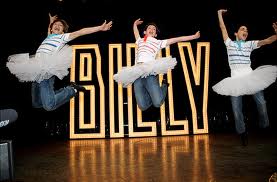
Billy Elliot The Musical


BILLY ELLIOT; A MEANINGFUL STORY AND A PRODUCTION THAT MEETS THE CHALLENGE

When Elton John saw the movie BILLY ELLIOT at the 2000 Cannes Film Festival, he wept. He stated, “The story is very similar to mine: Trying to be something out of the ordinary. Having a talent and wanting to break free from what others want you to do.”

John was so inspired that he approached a director about making the film into a stage musical. After many rejections, based on “who wants to see a musical of striking miners and a kid in Northern England,” John prevailed. The results? A musical that won 10 Tony Awards, and has been seen by over 4.5 million people. A musical which opened on Sunday evening to an enthusiastic audience at the State Theatre. They came expecting something special and from the way they responded, they received it.

BILLY is not the traditional feel good musical. Yes, in the end, there is a happy ending; but, in the process, the story of an adolescent who discovers he has a talent for dance and pursues it against the vehement objections of his father and the derision of his coal mining villagers, is also filled with the devastating repercussions of the 1984 British coal miners strike, which has affected that country until this day.

Besides the low key Elton John music, the thing that seems to most excite the audience is the boy, actually boys, playing Billy. As Stephen Daldry, the show's choreographer puts it, “Not only is the character [Billy] onstage for the better part of three hours, he sings, acts, speaks with a Northern English dialect, does gymnastics, and dances in a variety of styles. In the touring production, the part of Billie is traded off by five boys.

Opening night found 13-year old Giuseppe Bausilio, from Bern, Switzerland, who recently appeared in the role during the Chicago run of the show, as Billie. Other Billies on this tour are from Australia, Michigan and California. The average stay for a Billie is 1.5 years. They physically grow and their voices change. In fact, ”each boy grows out of their shoes at least once, often twice during their time in the role.”

The plot revolves around a boy, whose mother has died and is being brought up by his grandmother, coal mining father and brother, and who, under the guidance of a tough minded dance teacher, trades boxing gloves for ballet shoes. It is based on A. J. Cronin's novel, THE STARS LOOK DOWN, to which the musical's opening song pays homage.

As Alex, my 15-year old grandson, who comes along to productions to give the tween-teen point of view stated, “This is more than a musical about a kid with untapped talent. There is a strong story of history that has to be understood in order to gain a true understanding of the show.” With that in mind he indicated the need to read the information in the program or the poster in the lobby in order to gain the necessary background. “It also might not be appropriate for younger kids due to the language and the story, but they could appreciate the dancing and the fun parts.” He was impressed by the dancing, thought the singing was acceptable, and the story line was well developed.”

The touring production is blessed with a uniformly excellent cast, headed by the multi-talented Faith Prince, probably best known for her Tony award winning portrayal of Adelaide in the revival of GUYS AND DOLLS. Highlight performers included Jacob Zelonky, as Billy's cross-dressing chum, Rich Hebert as Dad, Patti Perkins as Grandma and Jeff Kready as Billy's brother.

Highlights of the show include a balletic duet performed by Maximilien Baud and Bausilio, the intense “Angry Dance,” and the exuberant “Express Yourself.” There wasn't a dry eye in the house during the original “Dear Billy” a letter from Billy's dead mother to him, and the song's revival, in which Billy writes.

The full orchestra was excellent, as was the corps dancing. The stylistic settings, though somewhat low budget, worked.

CAPSULE JUDGEMENT: BILLY ELLIOT THE MUSICAL will hit audiences on many levels. There is a solid story, excellent dancing, quality acting and a talented 13-year old. BTW---don't run out at the start of the curtain calls…it's worth the wait to see the cast totally let loose in a rousing after-act.

Sunday, November 21, 2010

Dividing the Estate


DIVIDING THE ESTATE, a lesson in good Southern storytelling

Humans are storytellers. We tell tales to set patterns for our cultures, to have family continuity, to create histories and retain traditions.

In the US American culture, some of the best story tellers are southern. This may well be because of the sense of community, the large African American population whose traditions include oral story telling, and the commonality of a unified history concerning slavery, class standing and privilege. Writers like Mark Twain, William Faulkner, Robert Penn Warren, Eudora Welty and Harper Lee come to mind.

The story telling southern tradition also gave birth to such playwrights as Lillian Hellman, Alfred Uhry, Tennessee Williams and Horton Foote. Foote's DIVIDING THE ESTATE is now being staged by Ensemble Theatre.

Foote is at his best when he is dissecting the emotional dynamics of southern townsfolk. His DIVIDING THE ESTATE is Foote at his writing best. He creates a tale of a formerly wealthy and landed family, with a questionable history, whose privilege is evaporating in the change of the economic climate. Family squabbling and squawking emerge as the Gordon clan realizes that life, as they know it, is quickly being extinguished. Much like the message of Chekov's THE CHERRY ORCHARD, Foote's subjects are mostly obtuse to the changes that are taking place, often living in a fantasy world of their own design.

Its Harrison, Texas. Three generations of malcontents pass the time in Southern style, drinking iced tea and hard liquor, gossiping, sparring and infighting over money and life styles. Interestingly, though the play takes place in 1987, it is relevant today.

The Gordons, ruled by Stella, a mentally failing octogenarian matriarch, are totally unprepared for the reality of an uncertain future when plunging real estate values and an unexpected tax bill have a negative impact on the family fortune. Stella's children--predatory Mary Jo, complacent Lucille, and alcoholic Lewis--engage in a debate about whether or not they should divide the estate while their mother is still alive in order to ensure themselves financial independence. When reality hits, all the pretenses go flying out the window.

Ensemble's production, under the watchful eye of Sarah May, effectively milks Foote's very southern context. Accents are on target, pacing generally good, ideas develop clearly, and the major characters are well textured. Forced to move a huge cast around the postage stamped Brook's theatre stage, is a major chore, which is not always accomplished, especially when we are supposed to be observing a grand, though tired, southern mansion. There is often a feeling of confinement which doesn't fit the message. There are also line stumbles which, hopefully, during the run of the show disappear.

Strong performances are given by Bernice Bolek as Stella, the matriarch who refuses to accept change is a comin'. Robert Hawkes, as the alcoholic Lewis, walks the fine line between reality and drunkenness with finesse. Anne McEvoy makes daughter Lucille a real person, who is one of the few who grasps reality. Valerie Young is so successful as the self-centered Mary Jo, that I wanted to jump on stage and, in good old southern fashion, give her a “womp upside her h'ad.” Gregory White is compelling as Doug, the 90-something year old servant. The rest of the cast varies from proficient to acceptable.

Given the constraints of the minute stage size, scenic designer Ron Newell justifiably goes for grand furniture rather than massive set.

CAPSULE JUDGEMENT: If you like a well-written story about fading southern gentility, filled with some laughs and clear characterizations, you'll enjoy Horton Foote's DIVIDING THE ESTATE.

Tuesday, November 16, 2010

Groundworks Dancetheater/Trinity Cathedral


GROUNDWORKS says goodbye to Amy Miller with engrossing production

Since 1998, Amy Miller and David Shimotakahara have been the artistic backbone of Groundworks Dance. Unfortunately, for the company and the audiences who have come back again and again to see the ensemble, Miller is moving to New York City. The company's recent program at Trinity Cathedral, a repeat of a presentation done earlier this season at The Akron Ice House, was a final tribute to the relationship between the dynamic duo.

Nothing could more exemplify Shimotakahara and Miller's bond than the last 30 seconds of 'DnA,' when the duo stood face-to-face bathed in share warmth. It was an emotional tribute to the connection that comes from two very talented individuals who melded into a powerful artistic force to give joy to both each other and audiences. Bravo!

The opening number, the world premiere of choreographer Jill Sigman's 'SPLIT STITCH,' was set to original music by Gustavo Aguilar. Each of the four-part movements found the dancers displaying a different set of emotions. Coordinated and segmented moves, interaction, lack of interaction, lyrical and static bodily actions, all highlighted by Dennis Dugan's lighting which cast shadows and moved in coordination and discordance with the dancers, created a series of illusions.

The final piece, 'JUST YESTERDAY,' was a recreation of a Dianne McIntyre choreographed number which is a series of vignettes, based on stories being told by the dancers, which are recreated in movement. Nostalgia, joy, sadness, personal traditions as they related to food, hi-jinks, fads, movies, family, and people who touched the dancers' lives, flowed forth. The fine acoustics of Trinity Cathedral allowed for clarity of hearing the spoken words. All in all, this is a fascinating selection, which got a wonderful performance.

Capsule judgement: As has come to be expected, the sold out performance of GROUNWORKS DANCE THEATER at Trinity Cathedral was a visual delight. Good luck to Amy Miller and welcome to Katie Wells, the newest of the company's dancers.

Inlet Dance/Nehemiah Mission


INLET DANCE AND NEHEMIAH MISSION COMBINE FOR A MEANINGFUL TOGETHERNESS

Inlet Dance, whose motto is “using dance to further people” and Nehemiah Mission, whose purpose is “reaching out to the entire community in order to rebuild the lives and homes of people of all ages, races, ethnicities, religious beliefs and lifestyles,” are organizations on parallel paths. It is only fitting, therefore, that they should be assisting each other. Inlet needed rehearsal space, Nehemiah Mission had an unused gymnasium. Nehemiah Mission needed finances and Inlet is a performance company who could do a series of concerts to raise funds. So the match, probably made in heaven, came to be.

Recently a two-night benefit concert was held at Breen Center on the campus of St. Ignatius High School.

The program included ASCENSION, a Bill Wade choreographed piece with contemporary music by Ryan Lott, which investigated relationships. Filled with gymnastic moves, which featured fine body control and powerful lifts, the well danced piece showed respect for balance and trust.

THE DOOR, choreographed by Steve Rooks, was a series of varying configurations in which the dancers appeared to float through a triangle of light to illuminate a journey through redemption.
IMPAIRED is a fascinating piece in which Justin Stentz and Mackenzie Clevenger danced blindfolded, to experience what it is like to unleash the sensitivity of going through life sightless. The idea flowed from Inlet's residency at the Cleveland Sight Center in which they worked with impaired and blind students.

BEAUTY IN TENSION, one of my favorite offerings in the Inlet repertoire, features a large piece of stretch material which is held tightly by the corps of performers. While in single or group units, the dancers move under the material and attempt to stretch their way out. The emotional and physical tension created is highly involving, causing audience members to squirm in response to the efforts of the dancers.

The highlight piece was STONE BY STONE, a premiere dance choreographed by Bill Wade in collaboration with the cast and set to original music by Jeremy Allen. It is a contemporary telling of the Biblical story of Nehemiah, who, after the Jews were dispersed from Jerusalem, came back and organized the people in voluntary groups to rebuild the city. This concept is much like the mission of the local Nehemiah Society, whose purpose is to recreate Cleveland out of the destruction of years of neglect and financial problems. It visually showed how to rebuild cultures through eliminating the physical and psychological stones which block progress and present hope and restoration to the brokenness of the community.

Capsule judgement: Inlet Dance created an artistic, meaningful and involving evening of dance in their successful fund raising effort on behalf of the Nehemiah Mission of Cleveland.

Saturday, November 13, 2010

METAMORPHSES @ Cleveland State University


METAMORPHSES @ Cleveland State University

METAMORPHOSES, meaning "changes of shape,” is a classical narrative poem in fifteen books by the Roman poet Ovid, and is considered to be a masterpiece of Golden Age Latin Literature. It the history of the world from its creation. The writing, which uses the mock epic form, follows an arbitrary writing pattern in which scenes are not always linked together in numerical order, leaping from story to story with little connection.
The CSU production is a script originally written by Mary Zimmerman, the Artistic Associate of the Goodman Theatre in Chicago. The local production is directed by Holly Holsinger.

With the purpose of staging a show that “reminds us of what it mans to be human, the director states, “These are our stories. They belong to us. They echo from the past. The have become ingrained in our psyches.”

Vocal projection is often weak, the music sometimes drowns out the speaking voices, and the line meanings are not always clear. In spite of these weaknesses, the play is well paced, the humor level is high, and the technical aspects are outstanding, especially scenic designer Russ Borski's set with a water-filled pool and shimmering gold infused back walls. As for the performers, Stephen Farkas has a nice touch with comedy and Lew Wallace makes some excellent character transitions.

Capsule judgement: The production is a daunting task. It requires a level of acting sophistication which, in some cases, is beyond the performance levels of the cast.

Roe Green Center at Kent State


College Theatre: Roe Green Center @ Kent State

On November 6, the Kent State Theatre and Dance program entered into a new world. With the opening of the Roe Green Center, the programs took a large step forward when they increased their performance spaces, storage areas, added a grand new lobby, and updated their lighting and sound systems. Added were a lighting laboratory, acting studio, vocal coaching suite and theatre and dance classrooms, a dance rehabilitation studio, a jazz dance class, a dance technique studio and a swing dance studio. All in all, the facilities are beautiful and practical.

The building was made possible due to a large financial grant by local arts patron and activist, Roe Green. An avid theatergoer, she received her M.A. in theatre from Kent State, has been a long time member of the KSU Foundation and School of Theatre and Dance and Porthouse Advisory Boards. She is on the Board at the Cleveland Play House, where she is the honorary producer of “FusionFest.” A graduate of Beachwood High School, where she was my student and got the “theatre bug,” she was recently inducted into the school's Hall of Fame. She is lovingly known to the KSU theatre students as, “The Fairy Godmother.”

At the building's grand opening ceremony and ribbon cutting, the musical theatre program performed BRIGADOON, under the direction of Terri Kent. A sprightly and well-focused production, it featured fine performances by Miriam Henkel-Moellimann as Fiona, Kaitlyn Warren as Meg, and Gunther Henkel-Moellmann as Charlie.

Sunday, November 07, 2010

Review of the Reviewer's Reviews: Linda "The Flower Lady" Klein


Because of you, we saw Wings -- an unbelievable performance!

Because of you, we saw The Kite Runner - Johnny thought it was the best play he ever saw at The Cleve. Playhouse - spellbounding!

I so enjoy your reviews, Roy - and, usually, when they say "Don't Miss!", we don't, -- because of you!

You DO have a bearing on what we see!

Inoculations


Theater Ninjas' INOCULATIONS challenges the senses

As I was driving home from Theatre Ninja's confounding production of INOCULATIONS, the Terminal Tower loomed ahead. It was lighted in bright purple, the color representing Alzheimer's Awareness. (November is Alzheimer's Awareness month). My mind flashed back to the theatrical experience and its probing into random scientific and philosophical concepts including the way in which colors affect the body.

INOCULATIONS is an evening of two one-act plays, WHO SHOT JACQUES LACAN? and RADIO ROOSTER SAYS THAT'S BAD. The former runs about 15 minutes, the latter around 45.

As described by Jeremy Paul, Theatre Ninja's Artistic Director, “using rhythm and rhyme, songs and science, INOCULATIONS is a crazed meditation on unconscious drives, millennial paranoia, and collective psychosis.” He adds, “Come for the pumpkin pie: stay for the hallucinations.”

Those who have been to Theatre Ninja's previous productions will not be surprised by Paul's explanation, nor his choice of this duet of plays. Paul, has a knack for picking plays which are challenging. Challenging to the cast, who must find the performance devices to portray characters which are usually extremely non-traditional, often edging on the insane. Also challenging to the audience who must figure out what is going on with these people.

INOCULATIONS is the work of Darren O'Donnell, a Canadian novelist, essayist, performance artist, playwright, director and actor. He states that he “engages the public and claims to prove the generosity, abundance and power of the social sphere.” Sounds obtuse and abstract? Yes, those words definitely explain INOCULATIONS.

WHO SHOT JACQUES LACAN? is an investigation of the theories of French psychoanalyst Jacques Lacan. The play, according to the author, is written so that “the performers create a vortex to slowly evoke the audience's unconscious.” To explain: Sigmund Freud, the father of psychoanalysis, proposed that there was a division between the unconscious (id) and the consciousness (ego). Therefore each human self is divided between his conscious and unconsciousness. Freud thought that human actions are shaped by the unconscious. Lacan developed his own version of psychoanalysis by reinterpreting the theories of Freud with an emphasis on the humanist philosophy, indicating that people made conscious choices and not all of a person's actions were below his/her level of awareness. Lacan's concepts are the basis for WHO SHOT JACQUES LACAN?.

The play, in an abstract way asks such questions as, “Why do we do the things we do?” “Do we chose to act as we do, or are hidden drives causing us to perform in certain ways?” and “Are we responsible for our actions?”

RADIO ROOSER SAYS THAT'S BAD exposes us to the thinking (ranting) of Dr. Radio Rooster, a so called “member of the scientific community” who proposes results of real and fictional research on such subjects as the effect on the human body of exposure to different colors of light and how people are manipulated by music. He expresses righteous indignation regarding theories of science, philosophy and psychology while hanging from a swing, turning various color light bulbs on and off, and speaking through the mouths of a dog (“a very, very good dog”) and a mouse (who prefers cheese to peanut butter). This is a character brimming with paranoia and neuroticism.

The Theatre Ninja production, as is the case with Paul's work, is well conceived.
The actors are centered on their purposes, stay in character, and create the proper intensity. LACAN features Ray Caspio, Val Kozlenko, Ryan Lucas, Amy Pawlukiewicz, Michael Prosen, Nick Riley and Darius Stubbs.

RADIO ROOSTER is basically a very long monologue by the talented Nick Koesters. This is a herculean role. Not only were there 45 minutes of lines to memorize, but the timing needed for being exactly in the right place for all the special lighting effects, is daunting. Koesters, the first member of Actors Equity to appear in a Ninjas production, is marvelous. He is aided by a creatively designed light plan by Paul and technically produced by stage manager Dan Kilbane.

Oh, the pumpkin pie reference in the play's description. Come early and have free pumpkin pie to get you in the mood for the production. Following the obtuse concept of the production, the pie is free, canned whipped cream is a dollar.

CAPSULE JUDGEMENT: INOCULATIONS is a confounding yet fascinating evening of theatre. The production is well conceived and performed. Besides understanding the play, is the additional task of finding the arts building/factory, where the show is being performed.

Friday, November 05, 2010

Spotlight on Kristopher Thompson-Bolden


BW grad Kristopher Thompson-Bolden to appear in BILLY ELLIOT

During Kristopher Thompson-Bolden's senior year at Houston's High School for the Performing and Visual Arts, Victoria Bussert, the head of Baldwin Wallace College's acclaimed Musical Theatre program, did a master class and talked about the BW program. Kris was enthralled, visited the campus, enrolled in the program, and has never looked back.

The 28-year old Thompson-Bolden, who will be a featured dancer in the cast of the touring company of BILLIE ELLIOTT, which opens on November 19 at the State Theatre, also works weekly with the “Billies” on acrobatic moves. Billies, because the touring production has five boys, who trade off portraying the show's lead role. The boys are from Australia, Switzerland, Michigan and California.

Kris is well-known to Cleveland audiences for the many roles he played while a temporary resident. He was seen at Porthouse Theatre in BIG RIVER, THE FANTASTICKS, ONCE ON THIS ISLAND and CHORUS LINE. His Richie in that production gained him a Times Theatre Tribute and a personal review which stated, “He [Kris] captivates an audience with his enthusiasm, fine singing and electric dancing.” He appeared in three productions for Cleveland Opera and did MISS SAIGON and CHORUS LINE at Carousel Dinner Theatre. He was also involved in the Great Lakes Theatre Festival.

Kris left a positive impression. Terri Kent, the Artistic Director at Porthouse said, “Kris is a wonderful human being and a talented and genuine artist. I adore him.”

He, in turn, has positive things to say of this area and BW's program, in particular. He states, “BW has a class-act theatre program. The college and the faculty shaped who I am as a person and a performer.”

After graduating from BW, he went on to appear in professional theatre productions of CATS, WEST SIDE STORY, THE COLOR PURPLE and CHILDREN OF EDEN. Besides BILLIE ELLIOT he has also been in the national touring companies of JOSEPH AND HIS AMAZING TECHNICOLOR DREAMCOAT and THE COLOR PURPLE.

The BILLIE ELLIOT tour had what Kris calls a “preview city opening” in Durham, North Carolina on November 3. They will run for two weeks, “working out the kinks in the show” before coming to Cleveland.

Is he interested in appearing on Broadway? Yes, he's interested, but he likes traveling and is making good money touring. He went on to say that “though it's my home base, I'm not attached to New York.” When asked what he expected to be doing ten years from now, he laughed with an infectious sound of pleasure, and sighed!

For further information about Kristopher Thompson-Bolden go to: http://www.facebook.com/kthompsonbolden

What's the musical BILLY ELLIOT about? The winner of ten 2009 Tony Awards including Best Musical, the show is set in a small England town. The story follows Billy as he stumbles out of the boxing ring and into a ballet class, discovering a passion that takes him by surprise, and carries his whole family, and the audience, on an incredibly uplifting adventure.

I saw the show in London, and, if this production is even close to that one, audiences will fall in love with Billy and his tale.

For tickets to BILLIE ELLIOT, which is part of the Key Bank Broadway Series and runs from November 19 through December 12, call 216-241-6000, stop at the State theatre box office, or go to www.playhousesquare.org.
.

Sunday, October 31, 2010

Dead Man's Cell Phone


DEAD MAN'S CELL PHONE'S makes for a fascinating but off-putting experience at Dobama

At the start of DEAD MAN'S CELL PHONE, now on stage at Dobama Theatre, the to be expected “Please turn off your cell phone” echoed forth. Sarah Ruhl, the author of the play, probably would add an additional warning, “Throw away your cell phone if you expect your life to filled with meaningful relationships.”

Ruhl is one of the most acclaimed young authors working in the theater today. She writes surrealist fantasies that happen to be populated by eccentric people, who find themselves in illogical dreams which appear to be real. She blends the mundane and the metaphysical, the authentic and the obscure. She does not write in the traditional mode of beginning (exposition), middle (story development), conclusion (this is what the whole story means or this is the moral.) Her format is nonlinear. She throws in surprises and mysteries as she probes how people experience life. She has said, “Everyone has a great, horrible opera inside him. I feel that my plays, in a way, are very old-fashioned fancifully surreal aspects of the story.”

Sound confusing? That's probably why many of the audience left mumbling that they didn't understand what was going on and the post-play discussion was filled with questions probing the meaning of the piece.

In DEAD MAN'S CELL PHONE, while eating in a restaurant, Jean picks up the incessantly ringing cell phone of a stranger (Gordon). He has good reason not to answer it himself: Gordon is dead. Answering the cell, the simplistic Jean, like Alice in wonderland, falls into a strange psychological hole. As she wanders further and further, events keep getting odder and odder. We learn that Gordon has a lack of real connection with family and friends, though he has been in constant contact with them via cell phone calls and messages. He searches after bodies, but not for emotional contact.

Jean gets swept up in a world, like the world many of us inhabit, in which electronic media acts as the conduit for personal relationships…cell phones, voice mail, texting, twittering, email, electronic meetings. As Ruhl explains it, “I started the play before cell phones were as ubiquitous as they are - but I felt as though they were already changing culture, our sense of solitude and community and our sense of time as always happening in the instant.” She goes on to say that, in spite of extensive communication, much of it is meaningless, often we don't even care who is listening, and that “the air is now filled with these voices - there is no longer any privacy.”

Jean finds herself making up lies to cover for Gordon's lack of conveying his feelings and thoughts to his “loved ones.” She uses her imagination to fill in what she thinks Gordon should have said. This results is a reconstruction of Gordon's relationships with his wife, mother, and mistress. One must question whether Jean's actions are stimulated by her own yearning and lack of fulfillment in her own relationships.

Dobama's production, under the direction of Scott Miller. is unfocused. Yes, the play is abstract, but, as was revealed during the opening night talk-back, Miller seems to have avoided asking himself, and forcing his cast to probe into what Ruhl was specifically trying to convey.

As I was watching the performance and listening to the talk back, I could only recount the words of Donald Bianchi, the founding Artistic Director of Dobama who used to preach over and over, “As a director or an actor, if you don't clearly know what you are trying to say to an audience, you will not accomplish your end goal.”

Yes, Ruhl writes in metaphysical terms, but if the director and cast had decided on what they thought were her underlying motivates, the play may have been focused and probably made more sense. The cast and director explained themselves with such phrases as: “My purpose was to stay in the moment.” “Everyone has to create their own journey.” “We each bring something to it.” “You can take the script and go any place with it.” Sorry, but, to again flash back to Bianchi's concept, unless the director and the cast know what they, as a unit, are trying to accomplish, the results is what may have best be summed up by a question of a member of the audience, “What was going on here?”

In spite of the obtuseness, the performances were excellent. Excellent as performance art, not of conveying clarity of ideas. It's like, as Bianchi used to say, “If a wonderful actor reads from a phone book, we can be astounded by his skill, but that doesn't mean we'll gain much from what is said.”

Joel Hammer, Tracee Patterson, Paula Duesing, Maryann Elder, Dianne Boduszek and Tom Woodward all performed high levels of performance art.

The clearest focus on stage was Mark Jenks set design. Consisting of abstract walls, risers that were off-kilter, and over-lapping areas of action, it conveyed Ruhl's out of balanced surrealistic concepts.

CAPSULE JUDGEMENT: Dobama's DEAD MAN'S CELL PHONE will fascinate some and confound others. It probably isn't going to be an easy sit or a meaningful experience for many, in spite of excellent acting.

Saturday, October 30, 2010

From Breast Cancer to Broadway


FROM BREAST CANCER TO BROADWAY is a moving experience at Karamu

In her speech before the premiere of FROM BREAST CANCER TO BROADWAY, Karamu Theatre's Public Relations Director, Vivian Wilson asked for all those in attendance who were breast cancer survivors to stand up. Over one-third of the mainly female African American audience stood up. Wilson went on to explain that while white American females get breast cancer at a proportionally higher rate, the percentage of African American women who die of the disease is higher. The reasons: the cost and fear of the pain of mammograms, reliance on old folk tales, and lack of general knowledge about the disease.

It is the purpose of FROM BREAST CANCER TO BROADWAY, the real stories of eleven Black women who wrote each of the mini-plays, to spread the word to their community of the truth about the disease and how to treat and deal with it.

According to dynamic and charming Lenice Bozerman, one of the authors to whom I spoke at intermission, the project was an outgrowth of a writing workshop conducted at The Gathering Place, a cancer support center. Each woman wrote of her experiences and, under the guidance of Bridgette Wimberly, the pieces were polished. The performance staging was done by Terrence Spivey.

The themes cover self-blaming, the relational dysfunctionality among friends and family that results from the discovery of the illness, the necessity of turning to a higher source for sustenance and assurance, the lack of knowledge of women in general regarding self-examination and medical testing, the disagreement and lack of empathy of some doctors, the ignoring of a family history in spite of the obvious signs, how pregnancy is affected by breast cancer, how inner-voices emerge under times of stress, the lack of sensitivity on the part of employers and husbands and family members, and the role of support groups and community resources in helping deal with the physical and emotional pain from coping with the disease.

Though there is some unevenness in both the scripts and the performances, the overall effect of the evening is emotionally stimulating and draining. Superior performances were given by Jeanne Madison, Saidah Mitchell and Joyce M. Meadows.

The most important thing is the message to the audience….do self examinations, get mammograms, avail yourself of support groups.

Are you aware that The Angel Network-African American Women Nurturing and Giving Each Other Life), (216-491-7827 or 216-491-6407), makes arrangements for free medical testing, financial support, transportation and even child care to those in need? Are you aware of the programs available from Susan G. Komen for the Cure/Northeast Ohio? Are you cognizant of The Gathering Place (216-595-9546), which provides one-to-one counseling, support groups, nutrition and exercise classes, and lectures and workshops for those who have cancer and their families?

The program contains an excellent glossary of breast cancer terms compiled by Bernadette Scruggs.

CAPSULE JUDGEMENT: Seeing FROM BREAST CANCER TO BROADWAY is more than a theatrical event, it can be a life saving experience for women, African American Women, in particular. It is an eye opening event for all to experience.

Thursday, October 28, 2010

An Orchard


Adaptation of Chekov's CHERRY ORCHARD gets questionable interpretation by CWRU/CPH

Anton Chekov helped take Western theatre to a new level. Before Chekov and the other “modern” playwrights, much of European theatre was basically escapist romantic fluff, entertainment for the sake of entertainment.

Anton Chekov, Henrik Ibsen and August Strindberg dove below the surface of culture and examined what people were doing, why they were motivated to take such actions, and the direction that the societies in which they found themselves were taking.

In THE CHERRY ORCHARD, an adaptation of which is being done by the Case Western Reserve University/Cleveland Play House Master of Fine Arts students, Chekov cast an eye on the aristocracy of Russia and reflected that they were heading for a fall. He basically stated that their unrealistic life style was valueless, much like the overlooked and unused fruit of the cherry trees. He illustrated that the structure of reverence for societal position and wasteful value of life would soon be bulldozed under. He is credited with laying some of the ferment that eventually led to the Russian revolution. This is serious stuff.

The play concerns an aristocratic Russian woman and her family, owners of a large tract of land that contains a cherry orchard. The family has squandered its money and now is confronted with an unpayable mortgage. While presented with options to save the estate, the family, like the Russian aristocracy, essentially does nothing and the play ends to the sound of the cherry orchard being cut down, much like what will happen to the upper classes when the revolution takes place.

Supposedly, when THE CHERRY ORCHARD was first produced, Chekov expressed strong objection to the way in which Konstantin Stanislavski directed the show. That objection lead Stanislavski to reexamine the staging of plays and to his development of the Method Style of Acting in which the actor becomes the character, not acting like the character, clearly understanding the motivations and underpinnings of the person being portrayed.

THE CHERRY ORCHARD, or An ORCHARD as the CWRU/CPH version is titled, can be classified as a modern dramatic tragedy. Though there are times when humor can be injected, it is mainly a realistic look at the naivety of the Russian upper classes in the late 18th and early 19th century.

The approach of the CWRU/CPH production, under the direction of Mark Alan Gordon, which looks for the laughs, stresses overdone and often unrealistic characterizations, almost casting aside the prophetic nature of what is happening in the society and, specifically, to these misguided people, is questionable.

The females in the cast are quite acceptable. Kelli Ruttle as the mother, Kim Krane, the daughter, and Eva Gil, the adopted daughter, all develop characters who basically fit Chekov's writing. Ruttle is properly obtuse as a woman who cannot confront reality, singing merrily and spending money on a lavish party as her world collapses around her. Krane gives us a young woman who lets love lead her to what is an uncertain future with naivety. Gil clearly gives us a frustrated character who knows what is going on but is unable to change the course of action.

On the other hand, the males in the cast play their roles on the surface, lacking realism in their performances. Andrew Gorell so overdoes his role of the uncle that he is laughable, not allowing any room for empathy for his misguided plight. Yan Tual, as the elderly servant, walks like Charlie Chaplin and plays strictly for laughs, so that at the poignant ending of the play, his abandonment, like the destruction of the society, leaves no room for empathy. Dan Hendrock stomps around stage feigning the eventually victorious merchant who grows from serf to landholder. Michael Herbert is never convincing as the student who is supposed to represent the enlightened younger and educated class who will eventually lead the revolution.

In order to do Chekov well, the cast and production team need to understand the motivations behind the writing and the history of the era which is represented. Much of this educational element seems to have been overlooked in this production.

Jill Davis has converted the Studio One theatre into a forest in which the audience, sitting in unmatched chairs, are distributed among trees and set pieces. The effect is very positive as the actors move freely among the audience, making the viewers part of the action. One may question why, however, the orchard was made of birch rather than cherry trees, thus nullifying some of the symbolic underpinnings of the script.

Jeffrey Van Curtis has done an excellent job of creating era correct costumes.

CAPSULE JUDGMENT: THE CHERRY ORCHARD is one of western theatre's great scripts. It gets a questionable interpretation from the Case Western Reserve University/Cleveland Play House Master of Fine Arts program.

Saturday, October 23, 2010

Legally Blonde, the Musical


Cutesy LEGALLY BLONDE, THE MUSICAL entertains once again at Palace

Some shows are just meant to be entertaining…no great message, no deep thoughts, nothing but fluff. LEGALLY BLONDE, THE MUSICAL, is such a script.

The musical, like the movie on which it is based, centers on Elle Woods, a blonde, seemingly ditsy California wealthy sorority girl whose fashion sense far exceeds her common sense. When Warner, her boyfriend, dumps her for someone who is 'serious,” Elle goes into action, and gets admitted to Harvard Law School (that's where Warner is enrolled). Her eventual success, both in the classroom and the court room, are foregone conclusions. The lightweight plot takes us on her journey from bimbo to valedictorian.

The show has a Cleveland connection in that Gina Vernaci, the Vice President of Theatricals for Playhouse Square, was involved in the evolution of the original production. In addition, a group of ten local women partnered together to invest in LEGALLY BLONDE, THE MUSICAL. They attended the Broadway opening of the show.

The touring production is nicely paced. The choreography is good. The sets and costumes are adequate.

The cast, which is mainly main up of young professional actors with touring company and college theatre credits, is not up to the level of the company that came through two years ago, but they are adequate. As Alex, my fifteen year old grandson, a member of the “kid reviewer corps” that I take to shows to get a teen/tween view of shows that advertise that they are “kid friendly” said, “The voices were good, the acting was okay, the plot was slight.” He went on to say the show was cute, and agreed that the standard Cleveland standing ovation at the end of the show, was “a bit much” considering the quality of the production.

The real star of the show, at least based on the amount of applause it received, was Bruiser, the Chihuahua. Unfortunately, the live bulldog which also usually appears in the show was substituted for with a stuffed animal. That kind of indicates the quality level of the production.

The sound people need a serious scolding. The balance between the orchestra and the voices was way off, making hearing the words of the songs almost impossible. Also, several times the guys in the booth forgot to turn the mics on and the actors were left looking like they were moving their mouths with no sound coming out, which was followed by a blast of voice. Not good!

CAPSULE JUDGEMENT: If you like light-hearted musicals with excellent music and some nice singing and dancing, you'll be pleased with this touring production of 'LEGALLY BLONDE, THE MUSICAL.'

Thursday, October 21, 2010

The Kite Runner


THE KITE RUNNER ascends to incredible heights at the Cleveland Play House

Combine a superbly-crafted script, well-conceived and perfectly paced direction, and, a brilliant cast….the results? The Cleveland Play House's THE KITE RUNNER.

On the surface, THE KITE RUNNER is a story of two boys growing up in Kabul, Afghanistan, before, during and after the rise of the Talibahan. In reality, it is a story of culture, dehumanization, human frailty and redemption.

Amir is the son of a wealthy emotionally distant businessman. Hassan is the son of Amir's father's servant. The two are inseparable until, following a kite flying contest, Hassan is brutally attacked while Amir watches and finally abandons his friend and runs away. Their relationship is never the same. Years later, an emotionally crippled Amir returns to Afghanistan to seek out his friend and atone for his youthful cowardice. But fate, global politics and a revelation of past deeds, nearly intercede to thwart Amir's ability to make amends for his ill-conceived choices.

Those who have read Khaled Hosseini's best-selling book may fear that Matthew Spangler, a professor of performance studies, could not have brought the printed page faithfully to the stage. Fear not. Spangler has penned an adaptation that is faithful to the events, characters and spirit of the novel. In fact, seeing the action unravel live adds to the conflicted, guilt-ridden narrative voice of the original author.

The CPH production, under the focused eye of Marc Masterson, wraps itself around the mind and compels attention. There is no time for attention to wander. Every scene grabs the imagination and sweeps the viewer into the action.

Michael Raiford's simple set of Middle Eastern arches, sliding panels and a two-sided brick wall, works masterfully. Lorraine Venberg's culturally correct costumes add to the reality. Brain Lilienthal's lighting design leads our emotional highs and lows. Matt Callahan's realistic sound effects further enhances the eerie reality. Cultural consultant, Humaira Ghilzai, has added the needed faithful ethnic authenticity.

Young Matt Pascua, appearing in his professional stage debut, is mesmerizing as Hassan. This is a multi-textured role that develops from childhood exuberance and subservience to pain and near psychological destruction. If there was a local award to be given for superb acting, Pascua would qualify for it.

Jos Viramontes does not just portray the adult Amir, he IS Amir! Acting as the narrator, our Greek chorus who explains and adds textured highlights, as well as the living character, Viramontes is flawless. His emotions and reactions are completely real.

Jose Peru Flores makes the sensitive, fearful Young Amir, live. Aadya Bedi is real as Soraya, Amir's wife. Nasser Faris is properly aloof as Baba, Amir's father. The rest of the ensemble is equally impressive.

CAPSULE JUDGMENT: 'THE KITE RUNNER' is theatre at its finest. This is a must see production….Bravo! Superb! Wow!

Wednesday, October 20, 2010

The Dark Secret of Harvest Home

Murder mystery in a haunted house where a Bette Davis TV series was filmed!

Want the perfect Halloween adventure? How about seeing a new murder mystery in a real “haunted house?” How about in the haunted house that was the actual setting for the Bette Davis min-series, THE DARK SECRET OF HARVEST HOME. Yes, the show was filmed in 1978 at what is now The Estate on Coffee Creek (http://coffeecreekestate.com) in Austinburg.

Not only do you get to be a participant in THE DARK SECRET OF HARVEST HOME, a script by Gilgamesh Taggert, but you get a stellar meal prepared by Chef Nick Kustela which consists of Maine Lobster Bisque, Classic Caesar Salad, Choice of Roasted Sirloin Filet or King Salmon and warm Carmel Apple Bread Pudding.

The cast of the Floriano Productions' show includes Tagerett, Susan Wagner, Trinidad Snider, Brooke Lynn and Paul Floriano and, of course, YOU! The play, a follow-up to the television series, centers on a boy, who was the product of a cult's actions, returning to Austinburg. A murder, and a hunt for the killer takes place. YOU get to question the potential murders in an attempt to reveal the culprit. Sounds like fun, fun, fun.

Monday, October 18, 2010

Don't Call Me Fat


Disappointing DON'T CALL ME FAT at CPT

Özen Yula is a Turkish playwright who has been in-residence in the Cleveland area for the past nine-months under the sponsorship of the Cleveland Foundation's Creative Fusion Program. His play, DON'T CALL ME FAT, is getting its world premiere at Cleveland Public Theatre.

Mr. Yula is an internationally acclaimed writer. It was, therefore, with great anticipation that his “American” play was anticipated. Unfortunately, the play and the production, which was also directed by Yula, were disappointing.

In order to fully understand the writing style, it helps to know that traditional Turkish writing, like that of many middle eastern and Arabic cultures, tends to center on parables, story telling, and statements which lead to open ended concepts with no specific conclusion being reached. It is often melodramatic with tones of soap-opera over-exaggerated tragedy, often with a little farcical vaudeville thrown in. DON'T CALL ME FAT is true to that form. It is unrealistic, hard to accept as being a picture of “real” America, though the present ballooning weight of USAmericans, reliance on reality television to create “truth,” and our “fame for fifteen minutes” mentality, are real topics. It's the form and format which makes the script hard to appreciate.

The story basically concerns an excessively obese John Doe, who is so heavy that he cannot move from his bed. He lives with Jane Doe, his sarcastic and nasty aunt and is attended to by Caregiver Tim, an African American nurse. Into his life comes Psychiatrist Kathy Bengal, an aloof and manipulative health care provider, TV Producer Jordan who, with Bengal's help, convinces John to have a potentially life threatening operation in order to lose weight. The second act is an account of the reality show which follows his operation. Well, kind of. To reveal more would spoil the fragile plot.

The production is overly long, lacks clarity of direction, has some almost embarrassing scenes, and contains graphics which make no sense. When the lines describe fireworks, we see rains drops on Lake Erie. The Lady Gaga segment does not contain any images of the flamboyant performer. Maybe this was supposed to be part of the “come to conclusions on your own” approach.

Kevin Charnas, John Doe, is quite slight, so the fat suit he was wearing was made ridiculous by his slender face and thin hands. Again, an attempt at dichotomy? The acting was over-the-top. The screaming, the high pierced yelling, the lack of clear character development, just added to the problems. Knowing the strong acting abilities of many of the cast members makes me believe that their performances were the result of the director's instructions.

Capsule judgement: It would have been so polite to a guest to our city to praise the quality of the writing and production of DON'T CALL ME FAT, but to do so would have been disingenuous.

A MURDER A MYSTERY & A MARRIAGE


Delightful production greets audience at Actors' Summit new home

Neil Thackaberry stood behind the reservations desk in the beautiful lobby of Actors' Summits' new home on the 6th floor of the Greystone Hall in Akron, looking pleased, very pleased. Not only had his family-operated theatre company finally found a permanent home, but he and the company's Co-Artistic Director, Mary Jo Alexander, had just become grandparents.

In 1998 Thackaberry & Alexander founded Actors' Summit with the purpose of assuring that professional actors in Northeast Ohio had an artistic home. And, though it has taken many moves, including a long stretch in a Hudson warehouse with a pizza parlor and antique store as neighbors, it appears that the company finally has a permanent home. Ironically, it is the venue where the company presented several of their first shows.

It seems only fitting that the company, whose audiences regard attendance at AS's production as going to a family outing, should welcome attendees into their new home with A MURDER A MYSTERY & A MARRIAGE, a folksy, hokey, corny, delightful and fun family-friendly Mark Twain-inspired musical.

Mixing comedy and romance with a see-through plot of suspense, A MURDER, A MYSTERY & A MARRIAGE is a knee-slapping musical served up Grand Ole Opry style. Originally written by Twain, with the idea of leaving the ending undone and having famous writers of his day suggest endings, the musical version is a product of Oberlin grad, James Sugg (music) and Aaron Posner (book and lyrics). Their ending, the obvious conclusion where the sweet lovers flit off for a life of perpetual bliss, and the theatre goers into the lobby to have one more drink from the theatre's fully stocked bar, is the bulls- eye choice.

The story takes us back to 1876 and the small town of Deer Lick, Missouri. The beautiful, but poor, Mary Gray, wants to marry her sweetheart, grocery store clerk Hugh Gregory; but, if they walk down the aisle, she will be disinherited according to her evil uncle's will . Enter a “count,” dressed in black (ah, ha, a sure sign of a melodramatic bad guy), with a strange accent and stranger tale of who he is. The uncle is killed, the male love-interest is charged, brought to the gallows, and (come on now, I'm not going to reveal the obvious ending and ruin the “suspense.”)

AC's production, under the direction of Alexander, is a total delight. Audience members left saying how much fun it was and how much they enjoyed it. The pace, the blocking and even the movements (even Alexander admitted it wasn't choreography), were all perfect for the script.

The cast is universally excellent. The singing isn't always the greatest, but this type of music doesn't need great voices, just keeping on tune, having the right attitude, and singing ideas rather than words.

Dawn Sniadak Yamakowski, who has the most trained singing voice, was on target as Clem, “our friendly narrator.” Frank Jackman, as John, Mary Gray's hog farmer father, is a total delight as he navigates his abundant girth around the stage. Paula Kline Messner, John's “faithful, but forceful and fabulous wife,” is fabulous. Scott Davis, who portrays Mary's “rich, mean and kind of creepy uncle” and also plays banjo in the band, earned the knife in the back which “does him in.” Shani Ferry is properly sweet and innocent as Mary, and Shawn Galligan is appealing as, Hugh, her love interest. Ryan Anderson, who plays a mean “gi'tar,” makes an appearance as the Sheriff. A word of warning, you better be careful, you might get selected to appear as the US Marshall, as an audience participation part of the show. Then there is Keith Stevens, who earned the wrath of the audience, getting boos on his entrances, for his smarmy portrayal of The Stranger. Evie Morris plays the keyboards with joyous abandon.

CAPSULE JUDGEMENT: It's worth going to see A MURDER A MYSTERY & A MARRIAGE, not only to see the show, which is totally delightful, but to see the fancy new digs, including what have to be the most fabulous bathrooms in any local theatre.

Tuesday, October 12, 2010

Review of the Reviewer's Reviews: Al Silverman


Roy....a very lucid and well written review [Wings at the Beck Center]. You are very good at your craft.

al silverman

Monday, October 11, 2010

An Ideal Husband


AN IDEAL HUSBAND delightful yet purposeful at GLTF

Oscar Wilde's AN IDEAL HUSBAND, now running in repertoire with OTHELLO at the Great Lakes Theater Festival, is a social comedy. Comedy because it is full of Wilde's wonderful use of paradox (absurd statements that express truth) and sarcastic comments about society and people. In addition, it deals with important social issues, which are as relevant today as when the play was written in the late 1800s.

To understand Wilde's plays it is helpful to understand Wilde, the man. During his college years he became part of the “Oxford Movement,” a group that expounded upon the virtues of classical culture and artistry. They stressed art for art's sake. This philosophy carries over into his plays. Then there is Wilde's personal life. He was married, but had an affair with the much younger Lord Alfred Douglas, whose father did not approve of the gay relationship and accused Wilde of sodomy. Wilde, unwisely, tried to sue the father. Wilde's case was dropped when his homosexuality, acts which were outlawed in England, was exposed. Wilde was sentenced to two years hard labor in prison. His trial took place during the London run of THE IMPORTANCE OF BEING EARNEST and AN IDEAL HUSBAND. His name was taken off the billboard of the plays and they were originally published without his being credited as the author.

It is prophetic that in AN IDEAL HUSBAND Wilde states, "we shall all have to pay for what we do." He paid heavily for what he had done as he left jail penniless and died shortly thereafter at the age of 46.

AN IDEAL HUSBAND revolves around the lives of two men, successful political figure, Sir Robert Chiltern, and his friend, the charming and frivilous Lord Arthur Goring. The world of these men is turned upside down by the arrival of an old acquaintance, Laura Cheveley, who has come with blackmail in mind. Chiltern could lose everything, including his wife Gertrude, if Cheveley succeeds and Goring could lose his adored Mabel. Underlying the actions is the question of what makes for an ideal husband.

The Great Lakes production, under the direction of Sari Ketter, is delightful. Ketter proposes that the play is like a fairy tale and carries out the theme in manner, dress and setting. She perceives that there are prince charmings (Chiltern and Goring); princesses (Gertrude and Mabel); a wicked witch (Laura Cheveley); a couple of mean gossips (much like Cinderella's step sisters); galloping horses (the stage hands who prance through the choreographed set changes); and in, the end, as in every good fairy tale, an ending in which the “good ones” live happily ever after.

Ketter's concept is not the usual approach to the script. Therefore, some might complain that the production is too light, too frothy and loses the serious undertone. Since I like to see Wilde's comedies take on this light approach, while letting the underlying meaning of the words carry the message, I am most pleased with this production.

The GLTF cast is excellent. Richard Kalutsch, who ironically has a strong physical resemblance to former British Prime Minister Tony Blair, is a believable Sir Chiltern. David Anthony Smith is nothing short of delightful as Viscount Goring (probably Wilde's alter ego). Aled Davies is full of bluster as Goring's nagging father. Jodi Dominick is properly uptight as Chiltern's wife and Sara Bruner is charming as Mabel, Chiltern's sister. Maryann Nagel is so very, very proper as Lady Markby, a prominent member of London society, and Laura Perrotta hones in on the role of scheming Mrs. Chevely as makes her into the “wicked witch” with a vengeance. Credit must also go to the young men playing the servants and footmen for their precise movement of set pieces, which often brought applause and laughs from the audience.

Jason Lee Resler's costume designs are exquisite and Nayna Ramey's fragmented set works well.
CAPSULE JUDGEMENT: GLTF's AN IDEAL HUSBAND is a production which should please and delight audiences.

Sunday, October 10, 2010

Wings


Dorothy Silver flies to great heights in WINGS at Beck

Every once in a while a theatre-goer gets to experience a great actress in a great role. Such is the case with Dorothy Silver and her appearance in Arthur Kopit's WINGS, now on stage at the Beck Center.

It takes a fine director to choreograph the machinations of this script, as the action takes place entirely inside the head of Emily Stilson, who has a stroke while reading a book. We follow her through her frustration as her frozen body hears but cannot react. We watch as she fights valiantly to regain some semblance of herself, a vital woman who at one time was an aerial stunt artist who walked on the wings of flying airplanes (thus, the title of play). This is a play of high drama with some humorous undertones.

Kopit was commissioned to write a radio play for the National Public Radio drama project, Earplay. He had just gone through watching his father suffer a debilitating stroke. Going through that experience, and being privy to others in similar situations, inspired him to write a script using a combination of two women who were patients at the rehab center in which his father was experiencing psychological and physical therapy.

Arthur Kopit, who later adapted the radio script for the stage, describes the play as "a work of speculation informed by fact."

The play is divided into four sections: "Prelude," the moments before her first stroke; "Catastrophe," stay in an institution; "Awakening," a section dealing with her struggle to reorient and regain language skills; and "Explorations," where further therapy, including group sessions, and her reemergence to normality, are portrayed. The segments flow together and are presented in a 90-minute intermissionless format.

The play won the 1979 Tony Award for best play and the Drama Desk Award for Outstanding New Play.

Director Sarah May laid out a clear flight path. She knows the subject, she understands the process used to work with stroke patients, and she has the imagination to take the printed word and create meaning and tension.

Dorothy Silver, the grande dame of Cleveland actresses, spellbinds the audience with her finely nuanced performance. Mrs. Silver's eyes convey constant meaning. Alert before the stroke, lifeless after the incident, filled with confusion as she fights to find reality, tearful with frustration, and, in the play’s climax her eyes shine with clarity as she sees the light. Incongruent laughter, shoulder shrugs, head tilts, nervous giggles, quivers of the voice, and slouched posture all add to Silver's fine-tuning of the characterization.

Though many think of WINGS as a one-person show, it is, in fact, a collective piece. Silver is supported by a fine cast (Derdriu Ring, Robert Hawkes, Anne McEvoy, Patrick Carroll, Rhoda Rosen, Bob Abelman, Danielle Shepherd and Jeremy Jenkins).

Don McBride's well conceived set design, a fragmentation of a wing, struts and contemporary metal sculpture, helps frame the action. Trad Burns' lighting concept leads us through the plunge into darkness, the murkiness of confusion, and then into the light with clarity of purpose. Richard Ingraham's complex sound design creates the illusions needed to take us in and out of Stilson's mind and her surroundings.

CAPSULE JUDGEMENT: WINGS, at Beck Center, is an absolute must see! This is a production that has a defined purpose and execution. Bravo! Bravo! Bravo!

Saturday, October 09, 2010

Othello


Interpretation of OTHELO at GLTF open to debate

OTHELLO, a version of which is now on stage at Great Lakes Theatre Festival, is considered by many literature scholars to be Shakespeare's greatest tragedy. Of all of the Bard's writings, it most shows what happens when love turns bad because of unfounded jealousy.

Shakespeare's use of tragedy in such plays as ANTONY AND CLEOPATRA, HAMLET , JULIUS CAESAR, KING LEAR, MACBETH, ROMEO AND JULIET differs from the traditional western world definition put forth by Aristotle. In the Aristotelian perception, the protagonist, the tragic hero, must be an admirable but flawed character, with whom the audience sympathizes. He is often guided by outside forces to follow a preset path. Think Oedipus, who we feel empathy for in spite of his misguided love for his mother, and his murder of his father. Shakespeare's tragic protagonists are capable of both good and evil because of the Bard's belief in the doctrine of free will, wherein people make decisions, not because the gods have willed they take prescribed actions, but make the decision which leads to their own doom.

When Othello, the only Blackman in the Venetian state and a superstar general, appoints the Florentine Michael Cassio to a prominent position, Iago his right hand man, in a fit of jealous rage, plots to undermine Othello. Thus, starts a series of events that leads to calamity. Iago manipulates all other characters by trapping them in an intricate net of lies. He achieves this by getting close to the people and playing on their weaknesses while portraying himself as "honest" Iago.

This is one of the Bard's character driven shows, centering on six individuals: Othello, a Moor who is a general in the Venetian army; his wife Desdemona; his lieutenant, Cassio; his trusted ensign Iago; Emilia, Iago's wife and Desdemona's maidservant; and, Roderigo, a fool who is in love with Desdemona. We clearly see the character of Othello choosing to believe his friend Iago, to reject his wife due to the lies told by Iago, and make foolish decisions that are his own doing, thus displaying the free will in which Shakespeare believed.

OTHELLO centers on such themes as love, jealousy and betrayal. And, because it also has overtones of racism and political intrigue, it has a modern feel. Director Risa Brainin has used these overtones to stage the show in modern dress and use General American pronunciation.

Besides the format and pronunciation, Brainin has made other decisions, some of which are problematic. The pace of the show is languid, often lulling the audience, before it explodes in the final several scenes. There is a strong question over what might be called the “soap opera” approach of some of the performers' acting styles and line interpretation.

In order for the audience to feel empathy for Othello, the tragic hero, we must accept him as a real person, with real feelings. David Alan Anderson's Othello, is not a real person, he is more a caricature, whose emotions are on the surface, who shows little real love connection for Desdemona, and who is often hard to understand because of slurring and often being inarticulate. He does not display the power of a man who leads armies and is envied by all about him.

David Antony Smith is a delightful Iago. But should Iago be getting laughs? He is the villain. He is the manipulator who must be so real, so innocent (he is usually played as a sweet natured young blue-eyed blond). As is, it is hard to believe that a wise and worldly Othello would fall prey to the obvious manipulations of Smith's Iago.

Kevin Crouch's Cassio is so young and played as being so naïve that why a great nation would eventually turn over it's military to him is a puzzlement.

On the other hand, Sara Bruner (Desdemona) and Laura Perrotta (Emilia) are right on target with their character development. We feel pity for Desdemona as she is unfairly accused and pays dearly for Iago's maniacal, self-centered manipulations. We clearly see what happens when Emilia sees her husband for what he is and takes a stand against him.

Russell Metheny's set design caused problems. Though building a cage around the characters, showing them trapped in their decisions, was effective, the vertical pillars often blocked the facial expressions of the actors as they moved around the stage and made for some strange blocking.

Throughout, the fight and death scenes were obviously choreographed to the degree that they looked unnatural. One of the deaths even got a laugh from the audience the night I saw the show, because of the lack of believability.

Written in five acts, productions vary in their format. GLTF has decided to divide, what turns out to be close to a three hour production, into two long segments.

CAPSULE JUDGEMENT: Whether audience members will like, dislike or tolerate GLTF's OTHELLO will depend on their view regarding how Shakespearean tragedy should be interpreted. I, personally, do not like my tragedies presented as soap operas.

Thursday, October 07, 2010

Blue Men Group


BLUE MEN GROUP delights and teaches at the Palace

Is it possible to spend 90 minutes at the theatre, not hear a single word spoken, and be totally and absolutely delighted? When you go to see the touring production of BLUE MEN GROUP, and there is no doubt that you should go, at the end of the experience you'll be standing on your feet, applauding and shouting for joy.

BLUE MAN GROUP combines music, comedy and multimedia theatrics to produce a unique form of entertainment. This isn't a play. It isn't vaudeville. It isn't Cirque du Soleil. It is unique!

To make it even more exciting, not only is the audience entertained, but they also learn. Did you know the eyes see a color and the brain translates it into others? Do you know what 2 _ dimensional space is all about? Do you know “the rock concert moves?” On the other hand, do you know how funny Captain Crunch cereal can be? Do you know the hysteria that texting can create in a conversation between virtual texters?

Yes, through electronic gimmicks, flying colored paint, filling their mouths with marshmallows, eating Twinkies, audience participation, drumming (yes, it does get loud and the bass moves the theatre's floor under your feet), three on-stage performers, a band and some Blue Men hidden in the dark on-stage, teach and delight.

The youngest of the three “Kid Reviewers,” Ian, my 10-year old grandson, was totally delighted all evening. Sitting on the edge of his seat, jumping up to hit huge balloons and catch strings of fiber that wafted out over the audience, the boy was one big smile. He couldn't think of a single thing he didn't like. Yes, kids will love the goings on, as will adults and all those in between.

Be aware that this is a 140-minute show with no intermission. In spite of the warnings by the ushers, the pre-show speech, and visual clues on stage, as the show went on the aisles were bustling with people exiting and entering. Several times the performers gave anguished looks at the patrons. In one instance, a stage spotlighting was pointed at several women. What a bad message these people gave the cast about the manners of Clevelanders.

CAPSULE JUDGEMENT: BLUE MAN GROUP is a total delight. Go, go, go and have a unique theatrical experience!

Tuesday, October 05, 2010


Verb Ballets presents an evening of premieres at The Breen Center

Verb Ballets' Fall program, which was recently presented at the Breen Center, was an evening of premiers which were generally well danced and varied in visual illusions.

CLEVELAND FLATS SUITE, a sixteen-minute piece choreographed by Diane Gray, with music by Richard Rinehart, was a dual presentation. The dancers moved on stage, while a multi-media program, with graphics by Jay Horowitz, unreeled on the back wall. Both elements were effective on their own, but the combination was often distracting. It was hard to watch the dancers move in front of the visuals and pay attention to both. One often swallowed up the other.

The graphics flow took the viewer on a tour down the Cuyahoga River, under the many bridges, with shots of the various buildings, both those in use and those abandoned.

The dancers, whose moves generally fit the music, were well lighted by Trad Burns, but the lighting effects often worked in counter to the graphics. The corps movements were well executed.

REFLECTIONS, conceived by Artist-in-Residence Terence Greene, and danced by Greene and guest artist Michael Medcalf, portrayed an emotional male duet to a tender love song. Sensual energy permeated the powerfully danced number. This was the emotional highlight of the evening. It also showed what happens when strong male dancers control the stage. Too bad this duo are not regular members of the Verb company.

It's the month of Halloween and what author of the macabre better fits the season than Edgar Allan Poe. THE MYTH AND THE MADNESS OF EDGAR ALLAN POE is a tribute to the tortured life and mind who gave the world such writings as THE PIT AND THE PENDULUM, Cask Of The Amontillado, HOUSE OF USHER, and THE RAVEN,

The musical selections did not consistently carry the tension and psychological turmoil needed to truly create the confused horror pulsing through Poe's head. This was a man surrounded by death and impending doom. His alcoholism, deep depression and his haunting ghosts were physically present in the dance, but not emotionally stirred by the music., which was generally anything but haunting. In spite of this, Brian Murphy, with intense flashing eyes and strong physical moves, proficiently danced the role of Poe. Stephanie Krise as the Principal Raven, moved smoothly on point to interject torture into the writer's life. The hovering ravens were a constant reminder of “Nevermore.”

Capsule judgement: Verb Ballets' fall program was an interesting blend of dance messages and choreographic styles. It made a appealing evening, highlighted by REFLECTIONS and the dynamic performances of Terence Greene and Michael Medcalf.

Monday, October 04, 2010

Preview: Inlet Dance,, David Sedaris, Fairmount Center


PREVIEWS: INLET DANCE, DAVID SEDARIS, FAIRMOUNT CENTER

INLET DANCE

Inlet Dance Theatre and The Nehemiah Mission of Cleveland have partnered to offer Stone by Stone, a fundraiser at the Breen Center for the Performing Arts, on the campus of St. Ignatius High School on November 12 and 13, 2010 at 8:00 p.m.

The feature piece will be Stone by Stone by Bill Wade which is inspired by the Biblical story of Nehemiah rebuilding Jerusalem. Other Inlet pieces in the concert include Ascension, In, Not Of, ImPaired, and The Door.

Reserved seating tickets are $30, with limited $60 VIP tickets that include a post-show reception with the Inlet dancers on Friday. Tickets are available by calling 216-961-6968 or online at www.nehemiahmission.org.


DAVID SEDARIS

David Sedaris, who will be speaking on Tuesday, October 12th at 8:00pm in the State Theatre at PlayhouseSquare, is the rock star of speakers. His sold-out engagements, highlight his funny and philosophical tales which he has published in plays, such SantaLand Diaries. His books, which display his sardonic wit and incisive social critique, including Naked, Me Talk Pretty One Day, Dress Your Family in Corduroy and Denim, and When You Are Engulfed in Flames, each of which became a bestseller.

Tickets, which are priced from $10.00 to $40.00, can be purchased at the PlayhouseSquare Ticket Office, playhousesquare.org or by calling 216-241-6000.

FAIRMOUNT CENTER


The encore production of 13, a new musical, features the return of the entire original Ohio premier cast. 13 follows the lives of thirteen 13 year olds as they navigate their way through friendships, love, popularity, honesty, and growing-up.

My review of last year's production was: “13 is a slight script, which will have strong appeal to tweens and teens. It is being performed by teenagers, not theatre professionals, and it does itself proud on its own level. Adults should will themselves back to the age of teen angst. Teens should revel in life as they know it. And they should go and enjoy a group of kids who are having a wonderful time, making their personal dreams of being “stars” come true.”

The show runs through October 10, 2010 at Mayfield Village Civic Center, 6622 Wilson Mills Road, Mayfield Village which is at the corner of Wilson Mills and SOM Center Roads.

EAT (IT'S NOT ABOUT FOOD)

After seeing last years' production of Eat, It's Not About Food, I wrote: “If you are a teenager, the parent of a teenager, or an educator of teens, 'EAT IT'S NOT ABUT FOOD' is required viewing. Shut off the tv, stop the texting, and go. If you are teen, it could save your life or, if you are a parent, it could save the life of your child.” Now the theatre is making the show available for schools, colleges, universities, community groups and organizations throughout the region from November of 2010 to May of 2011.

The show puts the spotlight on the world of eating disorders, society's obsession with food, weight and body image, as presented through the eyes of teens and adults struggling with this epidemic,

For tickets to 13, or information about booking EAT (IT'S NOT ABOUT FOOD),
go to http://fairmountcenter.tix.com/ or call 440-338-3171.