Saturday, August 25, 2007

Spotlight on Martin Cespedes

SPOTLIGHT ON MARTIN CESPEDES—CONSIDERED BY MANY TO BE THE BEST THEATRE CHOREOGRAPHER ON THE NORTH COAST

Who is the best theatre choreographer in the Greater Cleveland area? If awards and critical acclaim are the measuring stick, Westlake resident and Lorain Admiral King graduate Martin Cespedes could well be the correct answer.

The forty-six year old Cespedes is the recipient of nine Times Theatre Tributes Awards. He was nominated by Northern Ohio Live for their Theater Award in 2005, 2006 and again this year. He was named by Scene Magazine as Cleveland’s Best Choreographer of 2006. He was highlighted for his theatrical work by Bravo magazine.

Cespedes’s creativity has recently been seen in Cain Park’s ‘NINE’ and ‘OLIVER,’ and Beck Center’s ‘EQUUS’ and ‘JEKYLL AND HYDE.’ He directed and choreographed ‘SMOKEY JOE’S CAFE’ and ‘FIVE GUYS NAMED MOE’ at Beck and ‘AIN’T MISBEHAVIN’ and ‘MY WAY (the music of Frank Sinatra)’ at Weathervane Playhouse.

Born in New York, Cespedes is a first generation American. His mother, who was a professional singer, is Puerto Rican. His father is Spanish.

When did he become interested in theatrical dance? He says, “Though I lived in New York, as a child I never had seen a Broadway show. When I was 7, I saw the movie ‘WEST SIDE STORY’ on television and was hit by a lightening bolt. We were quite poor and lived in a building with a fire escape and I spent a lot of time out there reliving that musical.”

He started to gain his dance knowledge when, in fifth grade, he was selected to participate in the elite Jacques d’Amboise’s National Dance Institute in New York City’s PS 161 Program. He was active in that group until, after his parent’s divorce, he moved to Lorain to be near his mother’s family.

During his Admiral King days, he danced in and choreographed local shows and was selected to appear on Cleveland TV’s ‘DANCE FEVER’ and NBC’s ‘WEEKDAY FEVER.’ After graduation he continued his training as an apprentice at the Denver Dance Theatre. While studying there, he saw a casting call for a professional western area tour of ‘GUYS AND DOLLS.’ He tried out, was selected, dropped out of the Denver company, and his professional career was underway.

He went on to appear in the national tours of ‘MAN OF LA MANCHA’ with Jack Jones, ‘THE KING AND I’ with Hayley Mills, ‘SOUTH PACIFIC’ with Robert Goulet and ‘WEST SIDE STORY’ with Bebe Neuwirth. He danced in opening acts for “Earth, Wind and Fire” and the “Bee Gees.”

Cepedes worked as John Kenley’s assistant, and performed and ran dance rehearsals, during the legendary producer’s last several seasons in Akron. He recently served as associate choreographer and fight captain for the PBS production of ‘LE CID’ with Placido Domingo. He has also choreographed for Great Lakes Theatre Festival, Cleveland Opera and University of Akron Opera Department.

In addition to choreographing, Cespedes has taught dance for the School of the Cleveland Ballet and at Beck Center.

What is Cespedes’ choreographic style? He states, “Dancing original choreography of musical theatre classics has helped me forge my own craft and made me somewhat of a hybrid choreographer.”

His personal life? As he states, “I have none. Between touring and long rehearsal times I not only don’t have time for socialization, but I even miss important family events like weddings and holidays. Sometimes people in the shows I’m working on don’t understand why I don’t go to cast parties or out with them after rehearsals. They don’t understand that my personal privacy is very important to me and sometimes I just need to be alone.”

What’s in the future? Having just been inducted into SSDC, the national union for directors and choreographers, Cespedes feels he is “at the point where I am ready to break out.” Does this mean he will leave Cleveland? Though locals may hope not, it is going to be hard to keep this talented man in the area if Broadway or other prestige venues call.

Whatever happens in the future, the contributions Martin Cespedes has made to the local theatre scene will never be forgotten!

(The factual information for this article was supplied by Martin Cespedes.)

Theatre calender, Fall/2007


An overview of some local Fall ’07 theatre offerings

Around this time every year I’m asked, “What should I see this fall?” I can’t tell you what to see, at least not until I’ve seen the productions, but I can tell what’s scheduled at some of the local theatres and give a quickie preview of what each show is about.

PLAYHOUSE SQUARE CENTER

‘CHICAGO’
October 9-14
A razzle dazzle musical tale of sin and celebrity.

‘THE DROWSY CHAPERONE’
October 16-28
A musical comedy with tons of laughs and the most 2006 Tony Awards of any musical that opened last year on Broadway!

Hal Holbrook in ‘MARK TWAIN TONIGHT’
November 3
Samuel Clemens returns to the banks of the Cuyahoga River when Hal Holbrook comes to Playhouse Square.

DISNEY’S HIGH SCHOOL MUSICAL
November 13-18
Disney Theatrical Productions have created an exciting stage version of the phenomenal Disney’s High School Musical!

TWELVE ANGRY MEN
November 27 –December 9
What seems like an open-and-shut murder case becomes a twisted puzzle of prejudice and intrigue.

Tickets: 216-0241-6000 or 1-800-766-6048 or online at www.PlayhouseSquare.org


HANNA THEATRE

‘FORBIDDEN BROADWAY: SPECIAL VICTIMS UNIT’
September 12-December 2
The latest version of the inventive and scathing production that pays homage to Broadway’s biggest shows and brightest stars.
Performance times are Wednesday through Friday evenings at 7:30 pm, Saturday at 5:00 pm and 8:30 pm and Sunday at 2:00pm.

Tickets: 216-241-6000 or 1-800-766-6048 or online at www.PlayhouseSquare.org


DOBAMA

‘TAKE ME OUT’
August 17th - September 9th, 2007

A Tony-award winning play in which a major league baseball player announces that he is gay. Dobama’s impressive production explores character, friendship, and what it means to be a man. (Note: The show contains full-frontal male nudity) For a review of this show: www.royberko.info

Presented at Cleveland State Factory Theater, East 24th Street and Chester Avenue

For tickets call 216-932-3396 and leave a message. Tickets will be held for you at the performance. Or go on-line at www.ticketleap.com.


KALLIOPE STAGE

‘DEAR WORLD’
September 27 - October 21 2007

Music and Lyrics by Jerry Herman, Book by Jerome Lawrence and Robert E. Lee
Based on the play THE MADWOMAN OF CHAILLOT by Jean Giraudoux, it asks, “Who will save Paris from greedy oil tycoons determined to blow it up in search of black gold?” Enter a madcap rescue team of bohemians who believe poetry, love and idealism conquer all.

Box Office: 216.321.0870 or tickets@kalliopestage.com


KARAMU

‘PURLIE VICTORIOUS’ (Classic Comedy) by Ossie Davis
September 28 - October 21
Newly ordained preacher, Purlie Victorious Judson, returns to his family’s sharecropper cabin to reacquire the local church and ring the “Freedom Bell.”

‘BLACK NATIVITY’ (Gospel Musical) by Langston Hughes
December 7 -30
Black Nativity is focused on the religious and spiritual aspects of the Christmas story. It is performed with gospel music and colorful costuming within a dance context.


GREAT LAKES THEATER FESTIVAL

‘ARSENIC AND OLD LACE’ by Joseph Kesselring
A drama critic learns that his beloved maiden aunts are homicidal and that insanity runs in his family. Bodies in the window seat, murder as an act of kindness and Teddy Roosevelt leading a charge. Let the fun begin!

‘MEASURE FOR MEASURE’ by William Shakespeare
One of the Bard’s problem plays, often classified as a comedy, in which the Duke of Vienna leaves the government in the hands of a strict judge who is known to be a hard-liner on matters of sexual immorality. Let the conflicts begin!

‘ARSENIC AND OLD LACE’ and ‘MEASURE FOR MEASURE
‘ are presented in repertory from September 21-October 21

‘A CHRISTMAS CAROL’ by Charles Dickens
November 23-December 23
Tiny Tim, Scrooge, Bob Cratchit, the ghosts of Christmas past, present, and future. Let the holiday season begin!

Tickets” 216-664-6064 or www.greatlakestheater.org


BECK CENTER FOR THE ARTS

‘REFLECTIONS’ (PEGGY SINGS LEIBER AND STOLLER) by Jerry Leiber and Mike Stoller
September 14 – October 7
WORLD PREMIERE…A kaleidoscope of beautiful love songs, hilarious send-ups of Broadway, haunting tunes of days gone by, and reflections of the pure joy of living.

‘DISNEY’S BEAUTY AND THE BEAST’ by Linda Woolverton, Alan Menken, Howard Ashman and Tim Rice
November 30 – December 30
The Beck continues its holiday tradition with this third and final production of the classic Disney musical with many of the same cast. Fred Sternfeld again directs.

‘HOLY GHOSTS’ by Romulus Linney
September 28 – October 21
A tale of a Smokey Mountain sect blends both drama and dark comedy which builds to a startling climax.

‘ALL THE GREAT BOOKS (ABRIDGED)’ by Reed Martin and Austin Tichenor
November 16 – December 16
CLEVELAND PREMIERE…a wild evening concerning everything you didn't get around to reading in high school and college!

Tickets: 216-521-2540


THE BANG AND CLATTER

‘THE DEAD GUY’ by Eric Coble
September 21-October 21
You have one million dollars to spend in seven days. At the end of that time, the audience decides how you are going to die!

’BUG’ by Tracy Letts
November 2-December 2
Things are going well for a waitress with a fondness for cocaine and a soft spoken Gulf War drifter, until her abusive ex-husband is released from prison.

‘POUNDING NAILS IN THE FLOOR WITH MY FOREHEAD’ by Eric Bogosian
December 7-December 30
A one-man show that delivers searing commentary on topics from panhandlers to barbecue-crazed millionaires.

Tickets: 330-606-5317


NEAR WEST THEATRE

‘BEAUTY AND THE BEAST’
November 16 - December 2
Based on the Academy Award winning animated feature.
Plays performed at St. Patrick’s Club Building, 3606 Bridge Avenue,.

Tickets and information call 216-961-9750


THE CLEVELAND PLAYHOUSE, MAINSTAGE

‘MAN OF LA MANCHA’ by Dale Wasserman
Drury Theatre, September 14 – October 7
Winner of five Tony Awards, the “Dream the Impossible Dream” musical, is an adventure narrated by a prisoner who recounts a fable of righting all wrongs and winning the heart of one’s true love.


‘SHERLOCK HOLMES: THE FINAL ADVENTURE’ by Steven Dietz
A mystery featuring the world’s greatest detective, the King of Bohemia, a notorious photograph, a kidnapping, and of course, Holmes’ great nemesis, Professor Moriarty.

‘THE CHOSEN’ by Aaron Posner and Chaim Potok
Drury Theatre, November 2-25
Set amid the intellectual and religious turmoil of the 1940’s in America, the play dramatizes the universal challenges of coming of age and a heartfelt path to understanding and reconciliation.

‘A CHRISTMAS STORY,’ adapted by Philip Grecian
Bolton Theatre, November 29 – December 23
Based on the movie filmed in Cleveland in 1983, this classic holiday comedy is a funny and sweet tale of growing up in the 1940s. Suitable for ages 5 and up –back by popular demand!

Tickets: 216-795-7000

New at CPH: Sweetwater Restaurant Group, operated by Gary Lucarelli, will operate a public restaurant in the space formerly occupied by The Cleveland Play House Club. The new restaurant, Stages at The Cleveland Play House, opens in mid- September.

ACTORS’ SUMMIT

‘ROUNDING THIRD’ by Richard Dresser
September 13-30
The tumultuous journey of two Little League fathers, with different philosophies of life and winning, who co-coach a team to the climactic championship game.

‘MEDEA’ by Euripides, translated and adapted by Robinson Jeffers. October 18-November 4
Having saved her husband’s life, Medea is spurned by him when he re-marries for political power. She wreaks aweful and awful revenge on him.

‘A CHILD’S CHRISTMAS IN WALES’ adapted to the stage by Jeremy Brooks and Adrian Mitchell
November 29-December 23
Dylan Thomas’s boyhood memories of Wales.
Tickets: 330-342-0800. Mail orders can be sent to Actors' Summit, 86 Owen Brown Street, Hudson, OH 44236, and email orders may be sent to: info@actorssummit.org

CLEVELAND PUBLIC THEATRE

GORDON SQUARE THEATRE
Oct. 11- 27: ‘AT-TEN-TION SPAN: A FESTIVAL OF 10-MINUTE PLAYS.’ An evening of work by local and national writers.

Nov. 9 –11: ‘THE Y-HAVEN PROJECT’
An original work created and performed by the Men of Y-Haven based on their personal experiences.

Dec. 6 –22: ‘THE SANTALAND DIARIES’
David Sedaris' hilarious retelling of his days as a Macy’s elf.

JAMES LEVIN THEATRE

Oct. 18 – Nov. 3: ‘Osama the Hero” by Dennis Kelly. In this angry, explosive, controversial new work, garages are blowing up all over the neighborhood and vigilantes hunt down someone to shoulder the blame. Ohio and regional premiere

Nov. 8 –18: “LITTLE BOX’
A series of staged readings modeled after the successful Big Box series but on a smaller scale. Designed to foster works by local playwrights and producers at an earlier stage of development.

Nov. 29 – Dec. 22: ‘PULP’ by Patricia Kane, music by Amy Warren and Andre Pluess, lyrics by Patricia Kane.
A sexy and over-the top all female musical comedy takeoff of the lesbian pulp fiction of the 1930’s through the 1950’s. Ohio and Regional Premiere.

Tickets: 216.631.2727 or go to www.cptonline.org.

Tuesday, August 21, 2007

Michael May reviews the reviewer's review


Hi, Mr. Berko.

This is Michael May from the show "Take Me Out". I'm writing to thank you for your attendance and review of the show. I'm very glad that you enjoyed it. Thank you for recommending it to your readers.

Thank you, also, for your suggestions for the improvement of it. You were very fair and accurate in your comments. The importance of articulation was something that our director was consistently on us about. Particularly, because of the type of space we were performing in, we needed to be, and still need to be, mindful of that.

I don't have much else to say. I just wanted to say "Thank you", so "Thank you".

Best wishes to you,
Michael May

Sunday, August 19, 2007

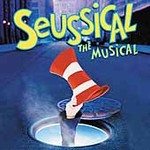
Seussical! The Musical

Entertaining ‘SEUSSICAL! THE MUSICAL’ at Mercury Summer Stock

Pierre-Jacques Brault, the founder and Artistic Director of Mercury Summer Theatre, which is now staging ‘SEUSSICAL! THE MUSICAL,’ has a difficult task. He is working with a company that has a shoe-string budget, performs in a Parma theatre with little stage space, and needs to locate performers and technicians who are willing to spend long rehearsal hours for little or no pay.

In spite of these drawbacks, Brault finds a way to stage audience-pleasing productions. The talented, enthusiastic and ever-smiling Brault, has accomplished this by building a group of loyal disciples who follow the person who, one of his advocates describes as, “The heart and soul of Mercury” and “who I’d do anything for.”

Now, make no grandiose assumptions. Mercury’s productions are not shows that compare with stagings by the area’s professional theatres, but that’s not the mission of Mercury. They want to “serve the community by entertaining, enlightening and celebrating the best of human spirit through art.” And, with all their limitations, they do a nice job.

Mercury’s final production of their 2007 season is ‘SEUSSICAL! THE MUSICAL.’
The show, which is based on the books of Theodor Seuss Geisel, better known as Dr. Seuss, had its debut on Broadway in 2000. During the Broadway run, such luminaries as Rosie O'Donnell and Cathy Rigby played the role of the show’s narrator, The Cat in the Hat.

The play's story is an amalgamation of many of Seuss' most famous books.
The lynch pin of the show is Horton, the sweet and naive elephant, who endeavors to protect the people of Who-ville while sitting on an abandoned bird’s egg.

Lynn Ahrens and Steven Flaherty’s music and lyrics include such delights as “Alone in the Universe,” “Oh, The Thinks You Can Think!” and “It’s Possible.”

Brault’s staging is generally cute and clever. His choreography fits the level of the dancers. The cast, as is the case with most community theatre amateur productions, is uneven.

Daniel Marshall switches personas easily as the Cat In The Hat. Though his singing quality is inconsistent, he is endearing. Dan Dicello, is appealing as the lovable Horton, though he is also erratic in his vocalizations.

Molly Richards is absolutely delightful as Gertrude McFuzz. Her “The One Feather Tail of Miss Gertrude McFuzz” is a show stopper. Kelvette Beacham wailed as Sour Kangaroo.

Noah Weinstein and Annie Hickey were right on as Thing One and Thing Two while Miles Sternfeld had some nice moments as Jojo. Brian Marshall and Danielle Renard were wonderful as the Mayor of Who and the Mayor’s wife.

As is the case when a play is child-appealing, I took a member of my “kid’s reviewing squad” to ‘SEUSSICAL!.’ Eleven year-old Alex Berko gave the show an 8 1/2 on a scale of ten. He loved the comedy elements, but thought the singing was “not as good as it should have been.” He thought the Cat, who was one of his favorites, made every joke work. He loved Gertrude McFuzz and thought Jojo was “really good.” He felt the show started slowly, but said, “I guess they had to tell the audience who everyone was, because not everyone has read the Seuss books, but it did slow things down.” As a musician (he’s a talented pianist), he thought the orchestra sounded a “little tinny.” The show’s messages? “A person’s a person no matter how small” and “we all need someone to believe in.”

CAPSULE JUDGEMENT: Mercury’s ‘SEUSSICAL! THE MUSICAL,’ is a pleasant theatrical experience. Smaller kids may have a little trouble sitting through it as the story doesn’t follow each Seuss tale in order or detail. But, in general, they should do fine and adults will enjoy themselves as well.

Saturday, August 18, 2007

Take Me Out

Dobama hits a home run with ‘TAKE ME OUT’

Homophobia, racism, the meaning of masculinity, and the search for identity are at the very core of ‘TAKE ME OUT,’ Richard Greenberg’s drama with comic overtones, now being performed by Dobama .

‘TAKE ME OUT,’ which opened off-Broadway in 2003, became an instant success and was transferred on-Broadway later that same year. It ran for 355 performances and garnered the Tony Award for Best Play.

Professional sports is a world unto itself. There are written and unwritten rules, not only on how to play the game, but how to protect the “men’s club” that has been perpetuated in the world of athletics. For example, to date, no male major league baseball, football or basketball player has openly declared his homosexuality while being an active participant. The closest was Glenn Burke, the creator of the “high five” gesture, who played with the Los Angeles Dodgers and Oakland Athletics from 1976 to 1979. He was out to his teammates and team owners, but not to the general public.

In ‘TAKE ME OUT,’ Greenberg uses the precedence to ask the question,’ “What would happen if an active major league player did come out?”

Darren Lemming, a mixed-race star for the Empires (a Yankee-like team) is at the top of his career. He has a spotless reputation. For some unexplained reason he decides to "out" himself during a press conference. The result is a series of incidents which exposes how his relationships with teammates, media and fans changes.

While Lemming is the central character in the play, Greenberg uses another player, Kippy Sunderstrom, as the narrator to describe the action. As he leads us, we watch games unfold, locker room interactions, behind the scenes problems develop. We see how Lemming’s admission affects the team and individual relationships.

The situation reaches its climax when Shane Mungitt, a southern, uneducated, unworldly, new “phoneme” relief pitcher is asked a question at a press conference. Not knowing the “rules,” he goes off about “spics, gooks, niggers” and even the “faggot” he has to shower with after the game. In reality, his answer is not unlike that given by John Rocker, a former Atlanta Braves and Cleveland Indian’s relief pitcher, who caused a ruckus with is description of New York City in a Sports Illustrated article in January 2000. He said, "Imagine having to take the 7 Train to the ballpark, looking like you're riding through Beirut, next to some kid with purple hair, next to some queer with AIDS, right next to some dude who just got out of jail for the fourth time, right next to some 20-year-old mom with four kids.” The result, much like that in the play, was a public outcry and Rocker’s eventual suspension.

Dobama’s production, under the wise direction of Scott Plate, is outstanding. The acting is consistent, the pacing is generally excellent. The exception was the startling ending of the second act which was rushed and did not allow the audience to truly experience the extent of the havoc which they have just seen. A slow fade and holding the lights out at the end of the scene would have added to the tension. But, considering everything, that’s a minor issue.

Michael May evoked the necessary positive personal self-confidence and slightly below the surface vulnerability to make Lemming a real person.

Phil Carroll was attitude-perfect. He made it easy to understand why the intellectual and personable Kippy was the team’s leader, soul and conscience.

Caleb Sekeres was nothing short of astounding as Mason Marzac, a physically slight, nebbish-like gay financial planner, who was thrust upon Lemming after the star came out and the “big financial guns” didn’t want to be tainted by dealing with the now tarnished player. Sekeres not only falls in love with Lemming, but the game of baseball. His monologue when he exclaims, “Baseball is better than democracy--at least democracy as practiced in this country,” was a show highlight. It’s worth going just to experience Sekeres’s performance.

Fred Maurer, complete with ticks, spitting, confused look and verbal slurring, makes Shane Mungitt so very, very real. It’s a hard part to develop as Mungitt must be made to be sympathetic while being despicable. Maureer succeeds. Again, one of those special performances!

A combination of general poor articulation and disproportionate screaming in a key scene, made David Lemoyne (Davey Battle) often difficult to understand. He could have shown the same emotions without the excessive theatrics and yelling.

The rest of the cast was very proficient with each developing a consistent characterization. Adding to all of the usual character development issues was the need to feel comfortable while nude in several locker and shower scenes. There was no apparent discomfort on the part of the audience because the actors appeared at ease with their nudity and Plate had directed the scenes as a natural part of the entire locker room experience.

‘TAKE ME OUT’ is an intimate play. Jeff Herrmann’s set and Jeff Lockshine’s lighting helped establish the proper mood. Though the theatre in the square configuration sometimes led to not being able to hear some lines, depending on where the audience member was sitting, this was generally not a major problem. Aimee Kleiuber’s costumes were excellent. The mood of each scene was well set by sound designer Richard Ingraham’s selection of the different versions of “Take Me Out to the Ball Game” as they play progressed.

CAPSULE JUDGEMENT: ‘TAKE ME OUT’ is another of those outstanding productions that has become the hallmark of Dobama. It is a must see for anyone interested in baseball, social issues or just good theatre!

Saturday, August 11, 2007

Some Girl(s)

‘SOME GIRL(S),’ another Neil LaBute play at BANG AND CLATTER

Bang and Clatter, North Coast’s creative little theatre, is now staging Neil LaBute’s ‘SOME GIRL(S). LaBute is the red-hot playwright who penned such gems as ‘IN THE COMPANY OF MEN,’ which became a hit movie; ‘THE MERCY SEAT,’ which was one of the first major theatrical responses to the September 11, 2001 attacks; and ‘FAT PIG,’ which was given a compelling staging earlier this year by B&C.

LaBute, who is noted for writing “revenge plays,” in which women get even with a man who has wronged them, again skewers a man in ‘SOME GIRL(S).’

The story centers on Guy. We watch, well, kind of eavesdrop on him in various hotel rooms, as he revisits five major ex-girlfriends—as well as several others we don't see—prior to his forthcoming marriage. According to Guy, his motive for the visits is to apologize and make up for the breakups. In reality, he is acting out a much deeper psychological problem...his obsessive love ‘em/leave ‘em/feel no regrets way of life.

As the plot develops we start asking about Guy’s real intentions. Is he a “good guy” trying to make amends, or, is he a “bad guy” looking for new material for a tell-all story like the one he recently published, and with which some of the girls were not thrilled.

As is true of LaBute’s writing, each woman we meet has a highly individual language and personality. Eventually, true to LaBute’s theme, each repays Guy in her own way as reconciliation turns into retaliation, one with a slap, another through seduction, a third via guilt, a fourth via humiliation, and the fifth walking out when he expresses deep love for her.

The play opened for a professional run in 2005 in London with David Schwimmer of TV’s ‘FRIENDS’ playing the lead. When the show was transferred to NY in 2006, Schwimmer had another commitment so he was replaced by Eric McCormack of ‘WILL AND GRACE’ notoriety. The off-Broadway cast also included Fran Drescher (“THE NANNY’), Judy Reyes (‘SCRUBS’) and Maura Tierney (‘ER’). The play, in both productions, was a smash hit.

The Bang and Clatter production is quite acceptable, but not sterling. Its pace is too languid in many scenes, in fact most of the first act. Some of the tensions and laugh lines are lost due to the lack of keying of lines. The audience was forced to work too hard to grasp LaBute’s message and keep involved in the action.

Daniel McElhaney, though he tries hard, as can be witnessed by the cascades of sweat pouring down his face, isn’t totally up to the role of Guy. He does not have the charisma or physical appeal of Schwimmer nor the good looks or quirkiness of McCormick. It is rather difficult to believe that McElhaney was able to attract and bed all of these women. To be a “chick magnet” he needs to have some deep appeal, charisma and warmth. What is McElhaney’s? As for his acting, many of his lines, especially in the important ending of the play, seem undeveloped, without a concept of understanding nor clarity of meaning.

Sam (Margaret Morris), was Guy’s high school sweetheart whom he left with no explanation. She is now in an unfulfilling marriage and saddled with multiple children. Morris conveys an attitude of being properly angry, but much of her angst is displayed with contorted facial expressions that detract.

Tyler (Rachel Roberts) is a free spirit, nonintellectual and promiscuous. She and Guy enjoyed some kinky sex, and their breakup apparently suited her just as much as him, but she, too, makes him pay! Roberts physically fits the role of the beautiful Tyler, but seems a little uncomfortable with the demands of the part. This is the most talky scene, which seems to drag on and on.

Reggie (Lisa Siciliano) was twelve when eighteen year-old Guy kissed and inappropriately touched his best friend’s young sister. She was both confused and enthralled by the action. Johnson shows all the signs of someone in deep conflict, conveying the mood swings that are the results of the conflict between desire and guilt.

In Boston, where Guy was a college instructor, he had a clandestine adulterous affair with Lindsay (Laurel Johnson), an older colleague who was married to another academic. When their carryings-on were discovered, Guy fled and left her to face the humiliation alone. Johnson is excellent as the wronged Lindsay. She embodies the role and seems to have the clearest understanding of the whys of the revenge she plots.

Finally, in Los Angeles, there is Bobbi (Alanna Romansky), another who was loved and left. She may have been Guy’s real love, but he was unable to rid himself of his love ‘em but leave ‘em past. Romansky develops her role well and is generally believable.

Sean Derry’s set design and the set changes by the female members of the cast are quite clever. As Guy stays in hotels of the same chain, the rooms in which the encounters take place are marked by the same furniture, but through slight shifts of the scenery, they become superficial like Guy.

Capsule judgement: ‘SOME GIRL(S)’ is a thought provoking play with an interesting premise. Though acceptable, the production needed a leading man who more fit the physical and personality needs of the role, and who also understood the underlying motivations of the character. As is, it’s a show worth seeing, but is far from what it should be.

Sunday, August 05, 2007

Lion King

Spectacular ‘LION KING’ roars into State Theatre

When it was proposed that the film ‘THE LION KING’ be transformed into a stage musical, there were many nay-sayers. How could animated animals be successfully portrayed by real people? How could the stage include such vast and sweeping elements as the rolling African savannah and the plot-necessary wildebeest stampede?

Enter Julie Taymor. She not only conceived the concept for the production, but directed the show, devised the costumes, co-designed the masks and puppets, and wrote additional lyrics to supplement those used in the Disney movie. The result of her creative genius is a spectacular visual and artistic production.

The stage version opened in New York October 1997. It was an instant success, going on to win Tonys for Best Musical, Best Scenic Design, Best Costume Design, Best Lighting Design, Best Choreography (Garth Fagan) and Best Direction of a Musical (Julie Taymor).

The story line centers on the animal kingdom of the African veldt. Simba, a young lion prince avenges his father's murder by his treacherous uncle. In the process he ventures into the jungle, discovers new and eccentric friends, finds his true love, and discovers his destiny. The message? “You can run from your past, or learn from it.”

One of the concerns of attending a touring show, especially of a production that has already been around in its original traveling version, is that there will be a watering down of theatrical elements. Fear not. The production appearing on the State Theatre stage is every bit as vibrant as the Broadway production. The sets, the costumes, the masks, the special effects, the musical sounds, the acting talent---they are all on our local stage.

Appearing on that stage are over 200 puppets; 25 kinds of animals, birds, fish and insects; 12 bird kites; 18-foot giraffes; 39 hyenas; 52 wildebeests and a 13 -foot elephant. It takes two 48-foot semi-trailers to transport the production’s puppets from city to city. There are 143 people directly involved in each production, including 53 cast members, 21 musicians, 17 wardrobe people, 5 hair/makeup artists, 3 puppet craftsmen, 13 carpenters, 10 electricians and 3 sound people.

Right from the parade of the animals at the beginning of the show when the human/puppets traverse down the aisles, it is apparent that this is an audience pleasing epic. The applause and “ohs” and “ahs” started immediately and continued throughout the show, climaxing in a screaming ovation as the curtain fell.

Those familiar with the movie version, which has music and lyrics by Elton John and Tim Rice, will be reacquainted with such songs as: “The Circle of Life,” “Can You Feel the Love Tonight” and “Hakuna Matata.” Added are pieces from “The Rhythm of the Pride Lands,” a recording inspired by the film, which sets a sound and mood of South Africa.

There are no well known names in the cast, but each performer is excellent. No second rate, “making their acting debut” performers here, which is often the case in some touring shows.

Since my “kid’s point of view” assistants, grandsons Alex and Noah Berko, are at sleep away camp, I was curious about how children were reacting to the show. Between the dark moments, the scary hyenas, the death of the lion king and the explosions, I was wondering how little ones were affected. Most parents of those four and above indicated the kids were thrilled, except for the fact that “it wasn’t like the movie.” Cries of terror during certain scenes indicated that some of the littler ones weren’t faring as well. Anyone planning on taking young children should be aware that the show is long and that there are some scary parts. Watching an animated character die on television is not the same as seeing a real person expire or get attacked so it is essential to evaluate the emotional sensitivities of your child.

Capsule judgment: If you are going to see ‘THE LION KING’ in its full glory, you need to get to the State Theatre and see this, the final official touring production. Though local theatres may attempt to stage the script, it will be nearly impossible to reproduce the spectacle elements!

Nine

‘NINE’ is the right number at Cain Park

‘NINE, THE MUSICAL,’ which is now on stage at the Alma Theatre at Cain Park, is a challenging undertaking. The script requires a director who not only understands the personality and idiosyncracies of Federico Fellini, the famous film director upon whom the story is based, but also has a fine command of stage techniques. There is a demand for an extraordinary choreographer, a cast of 14 very talented women, a male lead who has to control the stage, and a young boy who carries a great deal of the play’s meaning on his tiny shoulders.

Local theatre-goers need not worry. The Cain Park production is not only up to the task, but far exceeds expectations. The show is in the competent hands of director Vicki Bussert, choreographer Martin Cespedes and musical director Nancy Gantose-Maier. It stars Fabio Polanco, who is surrounded by a remarkable set of talented performers.

‘NINE, THE MUSICAL’ has a book by Arthur Kopit. Kopit, is probably best known for his 1960 play, ‘OH DAD, POOR DAD, MAMA'S HUNG YOU IN THE CLOSET AND I'M FEELING' SO SAD.’ An avant-garde writer, his style has been dubbed “pseudoclassical tragifarce.” He was a perfect choice to write about Federico Fellini, whose life was much like an absurdist comedy/drama. Fellini was a genius who ad libbed his way through many of his often abstract, but critically acclaimed films. He was also a man who seemingly had little understanding of long term personal or professional commitments. As Guido Contini (Fellini’s name in the play) sings, “I wouldn’t be lonely if I could be only with you…and you…and you.”

It’s early 1960. Contini (Fellini) is facing his fortieth birthday and is in the midst of a midlife crisis which is blocking his creative impulses. In addition, he is entangled in a web of difficulties involving his wife, a producer, his mistress, a protege, and his deceased mother.

Through a series of daydream sequences, often interrupted by Guido's waking thoughts, the audience gets a look into the mind and creative process of a man who many consider to be not only a genius, but a troubled soul. As deadlines and relationship problems fill his thoughts, Guido retreats deeper into his reflections until the past and present become a single blend of love, hurt, comedy, and drama.

The Broadway production, directed by Tommy Tune and starring Raúl Juliá, opened in 1982 and ran for 729 performances. It won five Tony awards, including best musical. A 2003 revival ran for 283 performances, won two Tony awards, including that for best revival of a musical. The cast included Antonio Banderas, Mary Stuart Masterson, Chita Rivera and Jane Krakowski.

Vicki Bussert has a talent for making the “small” play into a great piece of theatre. Such past Cain Park productions as ‘BAT BOY,’ ‘tick, tick...Boom!’ and ‘SIDE SHOW’ were all examples of fine, fine theatre. She knows how to use intimate spaces like the Alma Theatre to get the audience totally involved in the goings on. She makes ‘NINE’ a must see production.

Bussert is aided by Martin Cespedes, the premiere choreographer on the Cleveland theatre scene. The winner of numerous Times Theatre Awards, Cespedes has a talent for seeing choreographic possibilities that fit both the dancers, no matter their level of talent, while fulfilling the needs of the script. His staging of “Folies Bergeres” is nothing short of spectacular. It’s worth going to see the show to experience this one number.

Musical director Nancy Gantose-Maier and her orchestra were in fine tune. Ross Borski’s scenic and lighting designs were excellent and Terry Pieritz’s black and white costumes set a perfect tone.

And, then there was the cast. Even though the show has clear leading roles, it is, in reality, an ensemble vehicle which requires every performer to be of top quality. This cast is of top quality!

Fabio Polanco was properly obsessively driven as Contini. He has a strong singing voice and acting skills to match. He does not portray the Fellini character, he occupies it.

Maryann Nagel, the grande dame of Cleveland musical theatre, was her usual excellent self as Lilliane LaFleur, Contini’s producer. She was the soul of the spectacular “Folies Bergeres” number, walking down the runway of life with confidence and a flair.

Tracee Patterson, another local acting celeb, was compelling as Luisa, Contini’s long suffering wife. Her “Be On Your Own,” was emotionally wrenching, while “My Husband Makes Movies,” was well interpreted.

Trista Moldovan (Carla) gave a fine sensual rendition of “A Call From The Vatican;” Cassandra Goldbach (Sarraghina) sang a powerful “Ti Voglio Bene/Be Italian;” and, though she often feigned Claudia by posing and posturing rather than experiencing the feelings and thoughts of the character, Joan Ellison effectively sang “A Man Like You.”

Aric Generette Floyd almost stole the show with his performance as the young Guido. Aric has a mobile face, stayed in character throughout the production, and performed his lines with meaning and clarity. This is one talented young man.

Only “The Grand Canal Film” sequence was questionable. The film, which was produced by Kasumi, was overly long. Though it attempted to duplicate the choppy, segmented feel of Fellini, it failed to do so. It was overly repetitive and missed it’s mark by being more comic than absurd.

CAPSULE JUDGEMENT: Cain Park’s “NINE, THE MUSICAL’ is a must see for anyone wanting to experience thoughtful musical theatre at its finest. Those wanting pure entertainment would be better guided to Play House Square’s ‘LION KING.’ For the rest...’NINE’S the right number!

Sunday, July 29, 2007

Verb Ballet--July 29, 2007

Verb Ballets says goodbye to its premiere male dancer, Mark Tomasic

Verb Ballets, in its recent Cain Park concert, again proved why it is heralded as Cleveland’s National Repertory Dance Company. Presenting a program consisting of three company favorites and a world premiere, the corps generally danced with their usual proficiency. Everything was basically positive except for an awareness that this was the last paid concert appearance of Mark Tomasic, the company’s premiere male dancer.

Tomasic will retire and move to San Francisco shortly after Verb’s free concerts on Friday and Saturday, August 24 and 25, at 8 pm, Lincoln Park in Tremont, at Starkweather and West 14th St. (Rain date Sunday, August 26). His presence will be greatly missed since much of Verb’s repertoire centers around his strong dancing. The company now has the unenviable task of trying to replace Tomasic.

The Tremont program, which will include most of the Cain Park offerings include: ‘PLANET SOUP,’ ‘BOLERO,’ and ‘POLKA MADNESS.’

‘PLANET SOUP’ is a flowing, joyous, fast paced piece which is performed to the music of Afro Celt Sound System and Dead Can Dance. It contains a number of movement styles including Indian traditional, Irish reels and African rituals. Artistic Director Hernando Cortez has choreographed the dance to parallel to the ever-changing music. The high point of the program was the segment in which Jason Ignacio did fast paced tinkling, which is an authentic Filipino folk dance in which Ignacio steps between clapping poles.

When Heinz Poll decided to retire from Ohio Ballet, he gave rights to many of his choreographic portfolio to various organizations and dancers. ‘BOLERO,’ one of his most exciting pieces, was given to Xochitl Tejeda de Cerda. Many of those who hold the rights to the pieces grant permission to perform the choreography to various companies. The rights to ‘BOLERO’ have been granted to Verb Ballets. Their production, with restaging by Amy Miller of Groundworks Dance, is a sensual work, consisting of controlled movements, precise turns and flowing hand and arm actions. In one segment, using red capes, the dancers used the material to create a visual image much like a Chinese ribbon dance. The movement of the flowing material created an almost hypnotic effect. The conclusion of the piece was met with hushed silence and then a well deserved tremendous burst of applause.

‘WINGS AND AIRES,’ a duet also choreographed by Heinz Poll, and restaged by Jane Startzman, was presented by permission of Paul Ghiselin. A lovely flowing traditional ballet with modern movements, the number was beautifully danced by Catherine Meredith and Mark Tomasic.

Cleveland is known as the polka capital of America. Cortez choreographed a piece of dance to the live strains of the Johnny Koenig Orchestra based on music written by polka king Frankie Yankovic. The number, which may be forever identified as a “polka ballet,” was more of a nice diversion than a memorable dance. In spite of the fact that the dancing was not as polished as the usual Verb presentations, both the dancers and the audience seemed to have a good time.

Saturday, July 28, 2007

SWEET CHARITY

MaryAnn Black and Eric van Baars delight in ‘SWEET CHARITY’ at Porthouse

‘SWEET CHARITY, now on stage at Porthouse Theatre, is noted as a dancer’s show. In order for a production to be successful it must have a star who is not only a prima dancer, but can sing well, act proficiently, and has a personality that sparkles.

There seems to be no question that the venue’s Artistic Director, Terri Kent, who also serves as director of the show, chose the script because she had the very talented MaryAnn Black available. Black, who has become the darling of Porthouse patrons, is the quintessential Charity. She is in the mold of Gwen Verdon, who starred in the original 1966 production, Shirley MacLaine who was in the 1969 movie, and Debbie Allen who was in the show’s 1986 Broadway revival.

‘SWEET CHARITY,’ based on Federico Fellini's screenplay for “NIGHTS OF CABRIA,” has music by Cy Coleman, lyrics by Dorothy Fields, and book by Neil Simon.

The plot centers on Charity Hope Valentine, a dance hall hostess. She longs to settle down, but the men in her life simply love her, use her and leave her. One steals her purse and throws her in a lake; another, a movie star who is trying to get back at his girlfriend, takes Charity to his apartment, but shoves her under a bed when his girlfriend appears. Finally, she is trapped in an elevator with Oscar, a neurotic who eventually seems to be the man she has waited for. But... (Okay, the plot isn’t great, but I’m not going to ruin it by telling you how the whole thing turns out.)

The show’s excellent score includes “You Should See Yourself,” “There’s Gotta Be Something Better Than This,” “The Rhythm of Life,” and “Where Am I Going?”

The Porthouse production is very entertaining. Though the script is dated, many of the cast are way too young and lack the necessary sleezy edge to be playing their roles, and the orchestra on opening night kept hitting musical clinkers, Black and Eric van Baars, as Oscar, Charity’s obsessive boy friend, make the negatives fade away.

Though she has matured to the place where doing all that singing and dancing can be draining, Black comes through once again. She lights up the stage. “I’m a Brass Band” and “If My Friends Could See Me Now” are definite show stoppers. The segment in which she gets caught in an elevator with van Baars has to be one of the most delightful scenes seen on a local stage. It’s worth going to the show just to see this ten minute interlude.

van Baars is excellent. He sings and acts well and shows comedic talent that is endearing.

Jim Weaver does a fine vocal job on “Too Many Tomorrows,” and Sandra Emerick and Nicole Perrone add some nice bits as two of Charity’s fellow hostesses.

An added attraction is a cameo appearance by my former student, Roe Green, the patron saint of many of this area’s theatres. This is her first ever on-stage appearance. The casting is type perfect! (You’ll have to see the show in order to understand this reference.)

Some of the show is too slowly paced. “Big Spender,’ usually a dynamic music number dragged. “The Rhythm of Life” was rather blah.

John Crawford’s choreography is generally creative (no, not of the level of Bob Fosse’s original stagings). Unfortunately Crawford was blessed with a dance corps, with the exception of Black, which shows little real dancing talent. This blunts the overall effect.

CAPSULE JUDGEMENT: ‘SWEET CHARITY’ is the kind of show that, with a good production, is an audience pleaser. From the reaction of the opening night crowd, audiences will enjoy the Porthouse production.

Friday, July 27, 2007

Inlet Dance 7/07

Inlet delights audience at Cain Park

Bill Wade, founder and artistic director of the six year-old Inlet Dance Theatre must have been a happy man after the company’s recent (July 26) Cain Park performance. In spite of a rainy night, the Evans Theatre was packed.

Contrary to many local dance concerts, the enthusiastic audience was mostly young and racially integrated. They were treated to an eclectic program which featured not only Inlet’s company, apprentices and trainees, but students from the Summer Dance Intensive.

Inlet’s mission is “to create and perform innovative dance and movement theatre at a high level of artistry, speak creatively about human life issues, and bring about personal development in the lives of individuals through training and mentoring.”

Wade, a master teacher and motivator, believes that dance is a “vehicle for personal transformation.” With this in mind, he brings in 12 to 20 year-old students from all over the country to study with the company. They learn release work (The Erick Hawkins technique which is the basis for Inlet’s choreography), nontraditional partnering, the collaborative creative process (invented by Pilobolus Dance theatre), hip-hop and improvisation. The six-and-a-half week program culminates in the yearly Cain Park free program.

As has been the case in the past, both the students and the Inlet “regulars” displayed creativity, discipline and enthusiasm.

Though every section was interesting, highlights of the ten-segment program were: “For Margaret and Dan,” “RubeWreck,” “Performance Improvisation,” “A Close Shave,” and “BALListic.”

“For Margaret and Dan,” a duet piece, with music by Lifehouse, was performed as part of company member Margaret Ludlow’s wedding ceremony a week before the Cain Park concert, as a present from the company. The public debut was beautifully danced by Mikaela Clark and Justin Stentz (who I consider to be the area’s best young male dancer).

‘RubeWreck,” which was danced to music by Animusic and the Beastie Boys, featured the twelve males of the dance intensive and the company. A total delight, it portrayed a young video gamer, creating a vision complete with human Rube Goldberg contraption-like machines which morphed into the concept of the new film “Transformers.” The action brought many laughs from the audience.

“Performance Improvisation” demonstrated the ability of the dance intensive students to ad lib to music they had not previously heard. As a starting point, the corps was given two distinct gestures to use throughout the piece. The ability of the youngsters to stay in character while creating various stories and images was impressive.

A company staple, “A Close Shave, inspired by Patrick Morley’s “Man in the Mirror” featuring Joshua Brown and Justin Stentz, “centers on a man confronting and wrestling with the proverbial man staring back at him every morning when he shaves.” Brown and Stentz displayed both superb strength and consistency while performing the audience pleasing gymnastic piece.

“BALListic,” another staple in Inlet’s repertory, uses 1960’s pop art to probe into what happens when a group of dancers are given a number of huge red physio balls and let loose. With contemporary music by the very talented Ryan Lott (who has written for many local dance companies), the dancers slid over, cavorted under, and bounced around the stage with precision and energy. The Pilobolus-like piece was a fitting closing number for a well performed and creatively programmed evening of dance.

Capsule judgement: Bill Wade and his Inlet Dance Theatre are a unique company. They go outside the square by incorporating previously uninitiated dancers into company performances with positive results for both students and audience.
Side note: The company raises one-quarter of its funding from individual donor support. It deserves our support. Send a tax-deductible contribution to Inlet Dance Theatre, 3921 Mayfield Road, Suite 6, Cleveland Heights, OH 44121 so they can continue to be a community asset!

Wednesday, July 25, 2007

Spotlight on Matthew Sprosty

Matthew Sprosty, Westlake resident and successful playwright

Matthew Sprosty is a class of 2000 graduate of Westlake High School. Matthew Sprosty is a successful playwright. His play, ‘MALICIOUS BUNNY,’ is now being staged by Fourth Wall Productions.

Sprosty, who is the son of Lucille Parsell and Allan Sprosty, both of Westlake, graduated from Ohio University in 2004. He was active in the OU Playwriting Program, one of the few curriculums in the state centering on theatre script preparation.

In speaking of his high school days, Matthew credits Mr. Hoty, his television teacher for getting him interested in the media and Mrs. Sptizer for getting him involved in theatre.

Matthew wrote eight plays he wrote while in college. He also penned nine screen plays. Since college he has written three more. ‘MALICIOUS BUNNY, which was started in August of ’06, had a workshop in Columbus and has been written and rewritten based on input of friends and the workshop audience. By last count, this version is the ninth draft.

Sprosty states, “In my writing I try and figure out things I don’t understand.” In the case of ‘MALICIOUS BUNNY,’ he probes into the world of divorce. His own parents divorced when he was five. In preparing the script he spent a lot of time discussing her perceptions of the divorce with his sister Jaki, who is four years older than Matthew. He said, “Some of her revelations were chilling.” Though not about his parent’s divorce, he incorporated Jaki’s voice into the play.

Any one who gets the opportunity to view the production will quickly discover that Sprosty has a weird and ironic sense of humor. The play is a dark comedy/mystery. He got the idea for Bunny from experiences he had with his previous girlfriend, his relationship with her parents (“they hated me”), and the hidden desires he felt about her and them.

Fourth Wall Productions is just completing its first year of activity. Made up mainly of Ohio University theatre graduates, the company members, who are mainly from the Cleveland area, thought that there was a need on the North Coast for a company which performed new works by new writers. They are interested in attracting a non theatre-going crowd. This would be a younger and “hipper” audience than those who attend traditional theatres. They may have something as their surveying so far indicates that over 5% of Fourth Wall attendees have never before seen a play.

Why has he remained in Cleveland, while the “hot” theatre scenes are elsewhere? “I love Cleveland. I love the theatre here. I hate when I go to Chicago, or New York, that my friends laugh, and ask, ‘Why Cleveland?’” Matthew’s answer, “It’s because I believe Cleveland has huge potential. We raise great talent. We have the most welcoming situations for emerging artists. We just have to find a way to keep them here.” He thinks that Fourth Wall, through bridges they can build with other theatres in and out of the city, will help in his crusade. Fourth Wall has already built bridges with the Cleveland Play House, Bang and Clatter and Kalliope, with hopes for more.

As they enter their fourth year, Fourth Wall Productions is looking forward to expanding their repertoire and building a bigger audience base. Their season next year will include another Sprosty script.

As for Sprosty, who is not only the company’s resident playwright, but also serves on the Board of Directors and as Treasurer of the company, has been approached by other theatres to produce his plays. He continues to write and he’s hopping that he doesn’t get any evil thoughts about his present girl friend and her family that will be the basis for a future play. But, on the other hand . . ..

(To read a review of ‘MALICIOUS BUNNY’ go on-line to: www.royberko.info)

Tuesday, July 24, 2007

Review of the reviewer (Fourth Wall Productions)


A New York theatre company read your review and asked to read Malicious Bunny by Matthew A. Sprosty.

Thanks for your help in Fourth Wall's crusade in turning eyes to Cleveland.

Sincerely,
Fourth Wall Productions

Sunday, July 22, 2007

MALICIOUS BUNNY

Delightful black comedy/mystery at Fourth Wall Productions

On the way out of Kalliope Theatre, where Fourth Wall Productions is staging their newest offering, ‘MALICIOUS BUNNY,’ I said to the script’s author, Matthew Sprosty, “You have a twisted mind! A brilliant, but twisted mind!” He responded with an innocent grin which split his cherubic blushing face.

Fourth Wall Productions is just completing its first year of activity. Made up mainly of Ohio University theatre graduates, the company, who are mainly from the Cleveland area, thought that there was a need on the North Coast for a company which performed new works by new writers. They are mainly looking at scripts from OU’s Playwriting Program. If ‘MALICIOUS BUNNY’ is any example of the quality of the scripts and production values that we will be seeing in the future, Fourth Wall is a welcome addition to the Cleveland scene.

Sprosty has a wonderful way of leading his audience down one path, doing a quick detour, allowing the viewers to find themselves guessing at what will happen next. In ‘MALICIOUS BUNNY’ he has given us a black comedy/mystery that is cleverly conceived.

The author contends that the play is not autobiographical, but did germinate from experiences with his last girl friend and her parents. He emphatically insists, and states in the program that it was his LAST girl friend, not this one. (Okay, Matthew, now that it’s officially in public print, hopefully this saves you from your present main squeeze’s parents not dragging her out of the theatre and forbidding her from seeing you when they attend next Saturday’s performance.)

The plot? A couple of twenty-four year olds have hit the one-and-a-half year point in their marriage. She (Angela) is an artist, who is on a sabbatical from creating. He is an engineering graduate who is working as a janitor because she wants to live in Cleveland, near her parents, and he can’t find a job in his field on the north coast. She is bored and manipulates her somewhat naive husband (Jonathon) to do her beckoning. She may be named Angela, but she is no angel! Her list? Kill her parents, get a million dollars, and buy the penthouse condo in their building. To go any further with the plot would blow the whole premise. It’s enough to say there are enough twists and turns to make the surprise ending a head shaker and allow you to leave with a smile on your face!

Director Rebecca Cole has paced the play well. She is aided by a cast that understands the plot and their characters. (Having the playwright on-hand to work with during the production and explain his concepts obviously turned out to be a great aid in the staging process.)

Nate Bigger, a blond with the look of total innocence and a voice to match, is wonderful as Jonathon. He gets totally wrapped in the role and takes us right along. Though Stephanie Ford’s Angela could have sounded a little more vocally manipulative, she is quite believable as the spoiled little rich girl who gets everything she wants (or, so it seems). Dash Combs is both properly delightful and menacing as Jonathon’s buddy, Greg. Steven Hoffman and Kat Gallagher do well as Angela’s parents, but are much better as the detectives. (Hmm....and why are there detectives? I’m not going to tell!)

Capsule judgement: It’s been a while since I’ve had such a good time at a theatre production. The twists, turns and “oh my goodness moments” in ‘MALICIOUS BUNNY’ keep the audience laughing and thinking of what’s going to happen next. Bravo!

A SPAWN OF PETROLSEXUALS


‘SPAWN OF THE PETROLSEXUALS’ is not a pleasant experience for this reviewer


Christopher Johnston, the playwright of ‘A SPAWN OF PETROLSEXUALS,’ which is now being staged at convergence-continuum theatre, states in the playbill, “I won’t try to articulate my anger and frustration over an America I no longer know, nor our unconscionable lack of concern for consequences.”

Yes, Johnston is angry and frustrated. So am I.

Both Johnston and I are angry that America has lost its course under the corrupt Bush administration and the business overlords as well as the the over-consumption of resources and the breakdown of ethical values. Yes, unless there are some drastic changes we are on a sliding board to becoming a second-rate nation.

Beyond that, my frustration centers on the playwright and convergence’s artistic director.

I believe that theatre should be purposeful and meaningful. The author has an obligation to the audience to present a message in a way that they can reasonably understand the author’s intent. In my opinion, Johnston does not write a play that clearly states the problem or shows a way out of the void. Instead, he writes a script filled with unnecessary abstract imagery, abstract situations, and the use of profanity for the sake of using profanity. He creates abstraction for affect, rather than effect. He also creates happenings that gross out the audience for no reason (eg., one cast member realistically urinating into the mouths of two others in order to “rehydrate” them). During this scene, the person sitting next to me moaned, “That’s disgusting.” It was! Gross can be an effective tool, but what was the act’s real purpose other to gross out the viewer and show how avant garde the author was?

The question that Artistic Director Clyde Simon has to answer is, “why did you choose to stage this script?” Yes, you wanted to do an original play, and the author wrote this specifically for your theatre, but that does not mean you have to do a script of questionable quality. On the way into the theatre, one of the patrons said to Simon, “Am I going to understand this one?” Obvioulsy, the patron has been to convergence in the past and been confounded by Simon’s “unique” selection of scripts. I didn’t get a chance to ask the man after the production about his understanding, but the odds are he was as lost as most of us.

Part way through the first act a character in ‘A SPAWN OF PETROLSEXUALS’ says, “Who’s listening to this crap?” I almost yelled out, “Not me...I turned off the whole proceedings long ago,” and from observing those around me, most of the audience had joined me. The “crap” statement was followed by another of the author’s lines, “I thought and I thought and there is nothing worth saying.” My first reaction upon hearing the line was, “So, Mr. Johnson, why did you write the script?” And, the second was, “Why am I sitting here enduring this?” So, for only the second time in all my theatrical experiences, I left at intermission.

CAPSULE JUDGEMENT: I have sat through many, many theatrical productions. I would have to rank seeing ‘A SPAN OF PETROLSEXUALS’ at convergence as one of the most uncomfortable experiences of them all.
Side note on this review: I don’t like writing critiques that discourage people from attending the theatre, but I would be disingenuous to my readers if I was less than honest about this script and production.

Wednesday, July 18, 2007

Shaw Festival--2007 review #3

AND STILL MORE ON THE SHAW FESTIVAL--play reviews and places to stay, eat and tour

Considered by many theatre experts as the best repertory company in North America, the G. B. Shaw Festival, located in Niagara-on-the-Lake, Canada, a short distance from Niagara Falls, offers an excellent season of productions. In addition there are some excellent restaurants and sites to visit.

In my other columns in this series I reviewed ‘SUMMER AND SMOKE, ’‘HOTEL PECCADILLO,’ ‘MACK AND MABEL,’ ‘THE PHILANDERER,’ ‘LILLIES’ and ‘THE CIRCLE.’ If you missed those reviews go online to www.royberko.info.

The two other plays I saw were: ‘THE CASSILIS ENGAGEMENT’ and ‘THE KILTARTAN COMEDIES.’

THE CASSILIS ENGAGEMENT

Sr. John Hankin, one of the most admired comic writers of the Edwardian era, is generally unknown to present day theatre-goers in spite of the fact that his good friend, G. B. Shaw, once referred to him as “the Mephistopheles of the new comedy.”

Part of the reason for Hankins’ anonymity was his suicide at age 40, as an escape from a life of ill health. It is ironic that his life came to its final curtain, as his plays often do, without a happy ending.

His two major plays were ‘THE RETURN OF THE PRODIGAL’, subtitled “A Comedy for Fathers’ and ‘THE CASSILIS ENGAGEMENT,’ referred to as “A Comedy for Mothers,” which is now in production at the Shaw.

Hankins’ plays, though they are all comedies, are governed by “aesthetics of negativity.” The plots lead toward the dissolution of familial ties and love relationships, toward closure marked by disharmony.

The plot of ‘THE CASSILIS ENGAGEMENT’ centers on three uniquely different mothers. Though the story appears to be a conventional comedy of manners, it proves to be nothing of the kind. The wealthy Mrs. Cassilis dotes on Geoffrey, her unmarried son. The very uptight Countess of Remenham has always assumed that Geoffrey was going to marry her daughter. Foiling the plans, Geoffrey has become engaged to Ethel, a cockney, lower class and crass city girl. Ethel and her mother, Mrs. Borridge, are invited to visit Mrs. Cassilis’s house. What plays out are a series of events which move the plot through one hilarious conflict after another, and toward an obvious ending.

The Shaw production, under the direction of Christopher Newton, turns out to be out and-out fun. Much of this centers on the hysterical performance by Mary Haney as the uneducated and blunt Mrs. Borridge. Her exact opposite, Mrs. Cassilis, played by Goldie Semple, is cool, collected and bright. Semple builds a clear character who manipulates all around her in a passive aggressive manner. David Leyshon (Geoffrey) plays the perfect pawn, caught between mother and fiancee. Donna Belleville so perfectly portrays the uptight Countess of Remenham that, after-a-while, the audience started to groan each time she opened her mouth to speak.

Played in three-quarter round in the intimate Court House Theatre, the production is well-paced and draws a healthy round of laughs.

CAPSULE JUDGEMENT: ‘THE CASSILIS ENGAGEMENT’ is a fun walk along the path of humor. You won’t learn anything much, but you will have a good time watching a master of language and plot development weave his web.
‘THE KILTARTAN COMEDIES’

Lady Augusta Gregory was an Anglo-Irish dramatist and folklorist. She dedicated much of her life to collecting Gaelic folklore and keeping the Irish language viable. She published a series of books related to Kiltartan history. She also wrote plays of questionable value. As a fellow Irish writer stated, “"the presentation of her plays nearly ruined the Abbey [the national Irish theatre venue]".

Shaw has chosen to present two of Lady Gregory’s short writings. The first part of the program is ‘THE RISING OF THE MOON.’ It is based on a ballad of the same name by famous Irish balladeer John Keegan. The song remains popular and the tune widely recognized in Ireland today as a protest song against British control.

The ballad-opera tells the tale of a rogue who tries to escape from a town after committing some crimes, but is caught by a policeman. Through Irish charm and guile, he talks his way to freedom. Gregory intended the message as an attack on England in Ireland’s fight for freedom, though this is not overly evident in the play’s actions, but a careful listen to the words of the song reveal her purposes.

‘SPREADING THE NEWS’ is a delightful bit of fluff which illustrates how rumors are created and spread. This is relevant in spotlighting the Irish as great story tellers and exaggerators. What starts as an act of kindness, the return of a pitch fork that has been left behind, is manipulated into a story of death, infidelity and a potential immigration to America. Mary Haney is riotous as an apple saleswoman who is the hub of the wheel of the rumor. This is fun, fun fun!

CAPSULE JUDGEMENT: The hour-long production of ‘THE KILTARTAN COMEDIES’ is worth going to just to see Mary Haney in ‘SPREADING THE NEWS’ and relive your own experience with how rumors are spread. The first show, ‘THE RISING OF THE MOON,’ will probably be of less interest.

SHAW AREA ATTRACTIONS

Besides the plays themselves, the Festival includes a reading series, coffee concerts, seminars, backstage tours and pre-show chats.

The city has a golf course, speed boat rides and carriages that travel the streets. Just wandering the small town and looking at the beautiful flowers and gardens can be a wonderful experience.

There are some excellent places to eat including my favorite, The Queenston Heights Restaurant (www.queenstonheights.com). It is located in a park just over the US Canadian border. The facility has a breathtaking view of the Niagara River gorge. A new addition to my favorites list is the Restaurant at the Niagara Culinary Institute, located about twenty minutes away from the theatres. Here, student chefs and restaurant management majors hone their skills. The food is excellent and the venue attractive. Remember, these are students, professional wanna’ be’s, and the service may be a little erratic.

Tired of waiting for a casino in Cleveland? For those so-inclined, Niagara Falls, which is near Niagara-on-the-Lake, has two casino resorts. There is also a large outlet store complex for the bargain shopper. And, of course, not to be overlooked are the attractions connected to the magnificent falls.

For theatre information, a brochure, lodging suggestions or tickets call 800-511-7429 or go on-line to www.shawfest.com. Ask about packages that include lodging, meals and tickets. Be aware that the festival offers day-of-the-show rush tickets and senior matinee prices.

Tuesday, July 17, 2007

Shaw Festival 2007/review #2


‘More on the 2007 Shaw Festival--’THE PHILANDERER,’ ‘LILLIES’ and ‘THE CIRCLE’

Each year The Shaw Festival season runs from April through October. A visit to Niagara-on-the-Lake, Canada, about four hours by car from Cleveland, allows those living on the north coast to see up to ten productions, plus noon-time offerings and special events.

In my previous column I reviewed ‘SUMMER AND SMOKE, ’‘HOTEL PECCADILLO’ and ‘MACK AND MABEL.’ If you missed those reviews go online to www.royberko.info.


THE PHILANDERER

In the late 1800s, the liberal Norwegian, Henrik Ibsen began to pen plays about the “new woman,” an independent female, who did not view the man-woman relationship structure as the man being in charge with the female subservient. G. B. Shaw took up the same cry, and along with his commentaries on religion, morality, the educational system and politics, pushed the women’s liberation cause beyond that of Ibsen.

Shaw’s ‘THE PHILANDERER’ is a typical Shavian comedy. It is long on laughs and has many social messages. It centers on the concept of what it means to be a man or a woman. Because the battle between the sexes continues to this very day, the play remains relevant.

‘THE PHILANDERER,’ which was written in 1893, was only Shaw’s second play. Years later, the more mature Shaw decided that the play needed a more complete ending, and added a fourth act. The Festival is presenting both the three and the four-act versions this season. Having only viewed the three-act presentation I cannot comment on the fourth segment. A friend who saw the quad production commented that the last act was more in what we now consider the Shaw later-years style and more completely wrapped up his message.

The play takes us into the Ibsen Club where supposedly modern men and women strive to live social lives of equality, or at least pretend to do so. The action centers on Leonard Charteris, a man committed to remaining unattached. He is a philanderer who believes that only conventional people marry. He believes in "charming friendships." But, when he meets Julia Craven, a self-described "new woman" who belongs only to herself and is the property of no man, he finds he may have met his match, and maybe his mate.

In one of the play’s most delightful scenes, which skewers the medical profession, Peter Krantz, as the aptly named Dr. Paramour, becomes depressed when he learns that a new liver disease he thinks he's discovered doesn't exist. Never mind that the news means his patient is perfectly healthy. It is just one of those Shaw inspired moments inserted to zap a group or cause whose actions he finds ridiculous.

The festival’s production is on target. Ben Carlson is a delightful cad as philandering Charteris. Nicole Underhay (Julia Craven) effectively develops the womanly-woman. Nicola Correia-Damuge (Sylvia Craven) is clearly the manly-woman, who foreshadows the women who will come forth in the next generation’s liberation movement.

Director Alisa Palmer has paced the show well and pointed the comedy lines. Judith Bowden’s set is beautiful and practically designed.

CAPSULE JUDGEMENT: The Shaw Festival does Shaw like no other acting company. Their production of ‘THE PHILANDERER’ is a delight while making the author’s points with fine acting and technical finesse. This is a “sure see.” I’m sorry I didn’t experience the longer version as it would have elongated the wonderful experience.

LILLIES

In 1990, Jackie Maxwell, the Shaw’s Artistic Director, staged the first reading of a new translation of ‘LILLIES,’ a play originally written in French by Michel Marc Bouchard. The script went on to be produced across Canada and in Europe. Maxwell, decided to include ‘LILLIES’ in the 2007 Shaw season.

‘LILLIES’ is a mystery of hidden desires, the living out of fantasies, and the consequences of forbidden love. Set at a Catholic boys school in a small town in Canada, a secret love affair between two of the male students, a closeted jealous student, a gay drama teacher who pushes against school’s homophobic regulations, and a murder, are all part of the action.

The staged reading, directed by Maxwell, was cast with all males, though three of the characters are women. The single gender casting adds an interesting dimension to the proceedings.

The presentation was highlighted by fine performances by Kawa Ada as one participant in the love triangle, Blair Williams as his mother, Guy Bannerman as a priest and Ric Reid as an adult who, as a youth, was a member of the love triangle.

CAPSULE JUDGEMENT: Unfortunately for festival-goers, if they didn’t see the performance on July 13 they will not be able to see it. That’s really sad, as I found ‘LILLIES’ to be the most interesting scripts of this season and even in a staged reading format, for which the cast only had three rehearsals, the tension and idea development was excellent. It can only be hoped that Maxwell considers producing a staged version at a future Festival. (On a local note, I would encourage one of our more adventurous theatres to consider a staged presentation of the script.)


THE CIRCLE

Somerset Maugham, the author of ‘THE CIRCLE,’ is noted for writing plays concerning the British upper-classes and marriage. He believed that, “in order to understand a society one should study its marriage laws and the arrangements between the sexes.” Like Shaw, Maugham used humor and witticism to develop his philosophical points of view.

Maugham questions the 1920 ‘s belief that “men rule the world, wield the political and social instruments of power, and that their women are bred to keep their place while being quietly loving and supportive and provide the country’s great houses with future heirs.”

‘THE CIRCLE,’ which is considered by dramatists as Maugham’s finest play, has an interesting structure which centers on two love triangles, one relationship in the past, one in the present. The writer is a master at conversational style and the turning of a word to make an effect. His abilities are displayed well in this witty script.

Interestingly, the final curtain of 1920’s productions of the play were generally met with hisses and boos as the audience was both shocked and repelled by the unexpected conclusion. Modern day audiences, considering the high rate of infidelity and divorce, are less likely to respond negatively.

The story centers on the three-year marriage of Arnold and Elizabeth. He is a wealthy member of the British parliament. Arnold’s father and mother were divorced when he was young. The mother ran off with the father’s best friend, who, if not for the scandal, might have been elected Prime Minister. Elizabeth invites her lover (Edward Lutton), Arnold’s mother, the mother’s current husband, and a female family friend for a visit. Of course, the reason for the visit is to create havoc. The results, as can be assumed, turn out to be a showcase for questioning the need for marriage, what is the basis for love, and challenges whether love is an important ingredient in a successful marriage.

Director Neil Munro had a clear concept, and accomplished it with proper pacing and imbuing his cast with the necessary attitudes and character development. He has even incorporated clever set and props changes as part of the production.

The cast is excellent. David Jansen is properly uptight as Arnold. Beautiful and talented Moya O’Connell is delightful as conflicted Elizabeth. Gray Powell’s Edward Lutton is appropriately frustrated by Elizabeth’s decisions and the alteration of her choices regarding him. Wendy Thatcher is a hoot as Arnold’s estranged mother. Michael Ball is wonderful as the curmudgeon/puffed-up second husband of Lady Kitty. David Shurmann is attitude perfect as Arnold’s father.

The production is performed in a beautifully appointed drawing room set, in the intimate Royal George Theatre.

CAPSULE JUDGEMENT: By today’s standards, ‘THE CIRCLE’ is a piece of fluff. In the 20s, when it was first staged, Maugham’s script confronted real issues and gave a flash of what was going to happen during the era of women’s liberation. The fine production is worth seeing, if for no other reason than to get a glimpse of early 20th century attitudes about men, women and marriage.

Shaw Festival 2007/review #1

SHAW FESTIVAL offerings good, but not up to last year’s superb productions

Each year the Shaw Festival selects a central theme for their play selections. The 2007 season of the best repertory company in Northern America is centered on “matters of the heart.” The plays being performed all deal with love, marriage, desertion, relational conflict, shifting allegiances and eccentric couplings.

The Shaw season runs from April through October an encompasses ten major productions plus a noon-time series and many special events.

On a recent four-day visit to the Shaw, which is located in what is undoubtedly the prettiest little city in Canada, I saw 7 shows and a reading. Here are reviews of some of the selections. Additional reviews will be presented in a future column.

CAPSULE JUDGEMENT OF SEASON: Last year production after production at the Shaw were excellent. This season, though almost every show was quite acceptable and worth seeing, there were no master strokes. Part of this may have been that seeing show after show which were all variations of each other got a little tedious. Seeing one or two shows in a visit may relieve some of that feeling of “I’ve seen this before.”

SUMMER AND SMOKE

Tennessee Williams is noted for his exploration of spiritual, sexual and psychological themes. His plays, many of which have biographical content, reflect southern US morality and customs. Many of his leading women find themselves in societal settings in which they misunderstand their surroundings and are misunderstood by those around them (think Blanche in ‘STREETCAR NAMED DESIRE’ and Amanda in ‘GLASS MENAGERIE.’) This theme parallels that of the writer’s mother being forced to leave her home in the deep south and move to the more northern Missouri. She never adjusted to that setting.

Williams’ plays may be grouped as tour-de-force scripts, such as ‘CAT ON A HOT TIN ROOF,’ and the aformentioned Streetcar and Menagerie, and lesser successes such as “A ROSE TATOO,’ ‘CAMINO ROYALE,’ and ‘NIGHT OF THE IGUANA.’ ‘SUMMER AND SMOKE’ is one of his less performed and more moderate writings.

‘SUMMER AND SMOKE’ which is set in Glorious Hill, Mississippi, centers on Alma Winemiller, a repressed spinster, who, like smoke, is smoldering with inner fire and her long-time felt love toward Dr. John Buchanan, the boy next door who grew up to be a man of the world, full of youthful bloom and sexual heat (the summer).

The premise of whether a person has a soul and, if so, what are the ethical values inherent in that acceptance. This is a reworking of themes Williams previously explored. There's the refined but fading Southern belle, the crude lothario who strains her principles, a struggle between love and lust, and characters dealing with unrealized expectations. In this writing, however, Williams has his heroine make a complete turn about with no obvious motivation for the change.

In spite of the play’s problematic ending, the Shaw production works well. Director Neil Munro has paced the play properly and has developed clear characterizations within the writer’s limits.

Nicole Underhay is properly conflicted as Alma. She textures the role with moods that swing between euphoria and depression. Though quite good, Guy Bannerman is not quite as effective as the young Dr. Buchanan. At times, his characterization was unbelievable. There were some excellent supporting performances.

The original incidental music aids in mood development. On the other hand, set designer Peter Hartwell’s set doesn’t work. It fails to show the duality that is needed and, after a while, the constant need to move curtain screens becomes tedious.

CAPSULE JUDGEMENT: Though not one of Williams’ great plays, ‘SUMMER AND SMOKE’ carries many of the playwright’s basic themes. The Shaw production is good and worth seeing.
MACK AND MABEL

Mack Sennett is long remembered by those who are fans of silent movies. He did the kind of comedy shtick that gave the world the Keystone Cops, Charlie Chaplin, Fatty Arbuckle and Mabel Norman, the comedy queen of non-talkies. Norman was also Sennett’s on-and-off lover. The duo is the subject of the musical, ‘MACK AND MABEL.’

‘MACK AND MABEL,’ has words and music by Jerry Herman (‘MAME,’ ‘HELLO DOLLY!’ and ‘LE CAGE AUX FOLLES) and book by Michael Stewart (‘BYE, BYE BIRDIE’ and ‘GRAND TOUR’). The script being presented by the festival is the work of Francine Pascal (GEORGE M!’), who revised the original offering for a London production which was better received than its US staging.

The show opened in New York in 1974 to generally poor reviews. The production starred Bernadette Peters and Robert Preston, and despite eight Tony nominations, ran only sixty-six performances. (Side note: I saw one of those Broadway performances and agreed with reviewers’ comments regarding the melodramatic writing and lack of memorable musical score.)

The rags-to-riches story line centers on the hyperactive Sennett, his rise to fame producing short silent films, and his tumultuous love affair with Norman. Sennett was a genius of slapstick comedy and could gage what audience’s wanted. The duo met when they were bit players on the Biograph film lot, but in the musical he discovers her when, as a delicatessen delivery girl, she walks onto a movie set in New York and spontaneously convulses the production team. As in real life, the duo went on to be the comedy’s king and queen of silent flicks, but had a chaotic personal life. The play’s melodramatic conclusion has the two apparently living happily ever-after following one of their many reconciliations. In reality, Norman died at 38 of tuberculosis after being involved in a scandal and becoming a drug and alcohol addict.

The Shaw production, under the direction of Molly Smith and choreographer Baayork Lee, is uneven. Part of the problem is the script, but Smith fails to take advantage of some excellent opportunities to excite the audience. Two of the “show stopper” musical numbers were flat. “Make the World Laugh” is supposed to be the audience’s opportunity to see all of Senett’s character’s in action. Though the music was lively, the pacing was slow and the visuals not dynamic. “Hit Them On the Head,” another musical number that lent itself to all-out farce, was also lacking in needed frenetic pacing and lacked creativity. On the other hand, aided by a strong dancing corps, “Tap Your Troubles Away” displayed what the production numbers should be.

Glynis Ranney was excellent at Mabel. She textured the portrayal with just the right elements of comedy and pathos. Benedict Campbell has an excellent singing voice. Unfortunately, at times he overacted the role of Mack, making dramatic scenes melodramatic. The rest of the cast was excellent.

CAPSULE JUDGEMENT: In spite of its somewhat weak script and production flaws, as evidenced by the response the day I saw the production, audiences will like the Shaw production of ‘MACK AND MABEL.’

HOTEL PECCADILLO

George Feydeau, the author of ‘HOTEL PECCADILLO,’ is noted for writing hilarious farces about the war within people concerning their sexual desires and their ability to act on those desires. His style is so unique that the viewing of one of his plays is referred to by critics as a trip to “Feydeauville.”

‘HOTEL PECCADILLO’ is typical Feydeau. It is filled with scheming, discovery of attempted amorous affairs and the acting out of sexual dreams. It, in some ways, parallels the old joke concerning Moses coming down from Mount Sinai with the 10 commandments. Moses says, “I have good news and bad news. I got HIM down to ten, but Adultery stays.” It is the playing around with a desire for, but the avoidance of getting caught in Adultery, that motivates Feydeau’s writing.

The plot of ‘HOTEL PECCADILLO’ is thin, in fact, almost irrelevant. It is the characters and their actions that carry us into the laughter. For what it’s worth, here is the premise: A psychiatrist wants to bed a patient’s wife. The patient is frustrated in his marriage and wants to bed someone other than his wife. A pilot friend of the psychiatrist brings three beautiful Russian stewardesses and their macho female chaperon for a tryst. The psychiatrist’s assistant is sexually interested in her boss’s teenage son. And, it goes on and on. (See why I said the plot was irrelevant?) This is pure silliness for sillness’s sake. After watching a Feydeau play you gain an understanding of why Jerry Lewis is so popular in France.

Feydeau, as is typical of many writers of farces, depends on sets of double doors by which the adulterers, or those desiring to be adulters, duck in an out. The script requires fast pacing, quick costume changes and the viewer’s willingness to go along with the ridiculousness. He does not write plays to be enjoyed by the uptight, the moralist, the religious fundamentalist or those looking for a serious message.

The Shaw production is fun, but uneven. The first and fourth scenes, those that take place in the psychiatrist’s office are hilarious. The word plays, the farcical interactions, the exaggeration is well done. Unfortunately, the visual farce in scenes two and three, those in the hotel setting with the multiple doors, is sluggish. In order for visual slapstick to work, there must be total abandonment. Director and adaptor Morris Panych is better with the word play segments than with the slapstick.

Set designer Ken MacDonald has fashioned a set centering on perspective of large to small. The front of the triangle set has full-sized doors, the back doors are half-sized. If properly used, the set could add to the fun. But, as is, the pacing is slowed down by the door configurations.

CAPSULE JUDGEMENT: If you just want to have a good time and leave your troubles and reality at the stage door, ‘HOTEL PECADILLO’ is your kind of thing. It is too bad, however, that the director wasn’t able to correctly pace the farcical middle of the play more effectively so the full effect of Feydeau’s concept is evident. As is, it’s like a sandwich made of fine bread with a tasteless middle layer.

In the next column I’ll review ‘THE PHILANDERER,’ ‘LILLIES,’ ‘THE KILTARTAN COMEDIES,’ ‘THE CIRCLE’ and some information about other attractions in OR NER Niagara-on-the-Lake.

Side note: Be aware that the days of low cost due to the high value of the American dollar against the Canadian dollar, are over. The exchange rate is almost equal, dollar for dollar. Also, the original intent to check passports at the US-Canadian border has postponed for a while. All you need to get to our neighbors to the north and back again is some official form of identification (e.g., driver’s license or government id card).

Monday, July 09, 2007

Jekyll & Hyde

‘JEKYLL AND HYDE’ a must see at BECK! Yes, a MUST SEE!

Beck Center’s ‘JEKYLL AND HYDE’ is a must see!

‘JEKYLL & HYDE’ is a musical based on the novel, “THE STRANGE CASE OF DR. JEKYLL AND MR. HYDE” by Robert Louis Stevenson. The show opens with Jekyll saying, "In each of us there are two natures. If this primitive duality of man: good and evil, could be housed in separate identities, life would be relieved of all that is unbearable. It is the curse of mankind that these polar twins should be constantly struggling."

The play centers on Dr. Jekyll’s experimentation with a drug that he perceives will free patients from mental anguish. Since he cannot get funding for human subjects to experiment upon, he tests the potion on himself, thus releasing his evil alter ego.

The original novel’s vivid portrayal of the psychopathology of a split personality is credited with allowing mainstream society to identify the phrase "Jekyll and Hyde" as bipolar behavior.

The musical’s original script conception was by Steve Cuden and Frank Wildhorn. The music was composed by Wildhorn and the lyrics written by Leslie Bricusse (‘STOP THE WORLD, I WANT TO GET OFF’).

The show went through numerous rewrites in order to try to develop a clear voice. Many songs were added and dropped from the original concept and the story adjusted as the show went through many staged readings, recordings and two national tours before its Big Apple appearance. Eventually, ‘JEKYLL AND HYDE’ opened on Broadway in April, 1997. It ran for 1,543 performances, thanks to self-dubbed “Jekkies,” who saw the show over-and-over and created an online discussion group and role-playing games based on the show in order to counter numerous negative reviews.

One such review stated, “the show was overwhelmed by a muddy story adaptation, transparent lyrics and a forgettable, old-fashioned score. Lacking a point of view, or even accessible characters, the show is cold. When Hyde goes on a killing spree in a musical montage the number becomes bizarrely comic. In a tale of good and evil, there’s a problem when murders elicit a giggle.” In a year of virtually no competition, ‘JEKYLL & HYDE’ was not even nominated in the best musical category for a Tony Award.

With that background, how can I enthusiastically state that the Beck production is a must see? The answer: Director Scott Spence, choreographer Martin Cespedes, musical director Larry Goodpaster and a marvelous cast, have taken a problematic play and made it into a gem. An absolute gem!

Spence has a clear vision for the show. He envelops his audience in the power of Stevenson’s original concept. He is blessed with the talented Dan Folino portraying both Dr. Jekyll and Mr. Hyde. Folino gives a tour-de-force performance. His singing is enthralling, his acting compelling. The portrayal is perfectly nuanced. especially his consistent obsessive compulsive mannerisms, which do much to separate Jekyll from Hyde. His vocal presentations of “I Need to Know,” “Take Me As I Am” (sung with Maggie Stahl), ”This is the Moment,” and “Confrontation” were brilliant.

Furthering the excitement of the show are the glorious voices of Maggie Stahl (Lisa Carew, Jekyll’s fiancé) and Amiee Collier (Lucy Harris, a prostitute befriended by Jekyll and bedded by Hyde.) The duo were compelling in “In His Eyes.” Collier’s renditions of “Someone Like You” and “A New Life”were captivating.

Dana Hart (Sir Danvers Carew, Lisa’s father) and Ian Atwood (John Utterson, Jekyll’s lawyer) also have excellent singing voices and developed clear characterizations. The choral sounds are lyrical and except for a male chorus member who upstaged others by his overly affected gestures and constantly looking at the audience instead of concentrating on the stage action, the interactions of the supporting cast helped create a proper tone.

The full-voiced orchestra (musical direction by Larry Goodpaster) and the choreography (another gem of a conception by Martin Cespedes) added to the over-all positive effect.

Don McBride’s set, Alison Garrigan’s costumes and Trad Burns lighting also greatly helped. The only technical flaw were the finicky microphones that didn’t consistently work and the overly loud volume when they did. (Oh for the days when shows were not miked and the performers were required to project on their own. This cast might have done well without the electrical help.)

CAPSULE JUDGEMENT: A standing “O” for Scott Spence, Dan Folino and the cast and crew of ‘JEKYLL AND HYDE.’ Please, you of the Cleveland area, support this production. It deserves full houses every night!