Sunday, April 30, 2006

All in the Timing (Actors' Summit)


Delightful ‘All in the Timing’ mentally challenges at Actors’ Summit

The world according to David Ives, the author of ‘ALL IN THE TIMING,’ now on stage at Actors’ Summit, is a very odd piece. Ives loves to play with the English language and disorient an audience.

On the surface, the segments don’t seem to hook together. In actuality they do. They all deal with language. They probe the way language is used, how it is created, and whether people are really communicating when they use language. This is both the strength and weakness of the script. It will delight many but frustrate those who like things clearly spelled out.

‘ALL IN THE TIMING’ was originally a book of six one-act plays by David Ives written from 1987 to 1993. The current script contains fourteen one acts. Actors’ Summit is using the original script.

The short plays include ‘SURE THING’ in which a man and a woman meet for the first time in a cafe, where they have an awkward meeting continually reset each time they say the wrong thing, until, finally, they connect.

‘WORDS, WORDS, WORDS’ displays three chimpanzees in their attempt to write Hamlet. ‘THE UNIVERSAL LANGUAGE’ finds a man and a woman falling in love while communicating in the invented language intended to be used as part of a con game.

‘PHILIP GLASS BUYS A LOAF OF BREAD’ is a musical parody of contemporary composer Philip Glass, in which he has an existential crisis in a bakery. ‘THE PHILADELPHIA’ concerns a man in a strange state where he must ask for the opposite of what he wants in a restaurant. In ‘VARIATIONS ON THE DEATH OF TROTSKY’ Leon Trotsky dies, and dies and dies.

The Actors’ Summit cast, under the adept direction of A. Neil Thackaberry, does a consistently excellent job of developing the many roles they portray. Both Alicia Kahn and Noah Varness milk the humor out of ‘SURE THING.’ Kahn, Peter Voinovich and Sally Groth totally “monkey-around” in ‘WORDS, WORDS, WORDS.’ Sally Groth and Peter Voinovich do an amazing job of making the audience understand a language that is not understandable. Their ability to remember the complex lines is amazing.

The Philip Glass piece is creatively staged as the actors move in parallel time to the composer’s discordant music. Kahn, Varness and Voinovich are excellent as people caught in black holes where they can’t get what they want. Only ‘VARIATIONS OF THE DEATH OF TROTSKY’ falls short. The piece becomes tedious and doesn’t have the creative power to wrap up the evening.

Ives, in explaining why he writes for the theatre stated, “Our lives happen in voices: in inner monologue and outer dialogue, in scenes of interwoven tension and resolution with comic byplay. As drama. As comedy. As a live, local, handmade event. As theater.”

CAPSULE JUDGEMENT: Ives’ ‘ALL IN THE TIMING’ displays his philosophy and receives a fine production at Actors’ Summit.

Sunday, April 23, 2006

Ponna the ****Dog (convergence-continuum)

‘POONA THE ****DOG’ is a thought twister at convergence-continuum

A catalog description of ‘POONA THE ****DOG AND OTHER PLAYS FOR CHILDREN,’ now on stage at continuum-convergence, states, “These outrageous fairy tales for grown-ups are not for the easily offended! Poona, our ingenuous heroine, meets up with aliens, talking shrubs, and mealy-mouthed salesmen in her quest to find someone to play in her big pink box. Nothing is sacred in this raucous assault on the power of language.”

For those who are easily upset by foul language or political attacks or questioning of the whys and wherefores of modern society, read no further because this play is not for you, and is definitely not for ANY children. If, on the other hand, you are adventurous, want to stretch your imagination and don’t care about **** words, read on.

Jeff Goode, the author, has written a raucous, funny, and perverse funhouse ride which takes no prisoners as it highlights and attacks sex, relationships, television, advertising, politics, religion and fairy tales themselves.

How does Goode accomplish this? He uses fairy tales to tell the story of Poona the lonely ****dog who spends about two hours pursuing friends to play with.

In the first tale, the dog falls instantly in lust when a handsome and conceited prince crosses her path. If this, like all fairy tales, had a happily-ever-after ending, we’d all be satisfied and on our way. But, the prince turns out to be a people user, taking advantage of our poor naive Poona, so she must look further.

Flip the page of the book and we find the next fairy tale, and then the next, and then the next. The tales are social commentaries, such as when a television set is crowned king of the Kingdom of Do (where nobody did). We see the tale of Suzy-Suzy Cyber assassin who metamorphoses from an innocent child into a hit woman, with the help of a computer. Then there is the tale of the guy who interviews God, and wins $500 by out-smarting the “old” guy. (I told you if that you were easily offended not to read beyond the first paragraph.)

These tales go on and on, alternately offensive, baffling, disgusting, and delightful. As one reviewer put it, ‘POONA THE ***DOG’ is a warped experimental oddity that almost defies description.” Or, just think “Saturday Night Live” on stage.

As with almost all convergence productions, director Clyde Simon does an effective good job of pacing, presents generally clear character development and creative approaches to milking the laughs. In spite of his efforts, his cast is inconsistent in their abilities to develop the multi-characterizations they are required to create.

Jovana Batkovic nicely textures the role of Poona. Lucy Bredeson-Smith milks everything she can out of being a human television set. Denise Astorino, as our storyteller, does a nice job of verbally and visually holding the chaos together. Geoffrey Hoffman is wonderful as the Rabbit. His nose twitching is hutch perfect! Wes Shofner is his usual delightful self as the Man Who Could Sell Anything and “God.” Lisa Bradley’s alien is right out of “Mork and Mindy.”

Most of the rest of the cast has their highs and lows, most often because they cannot sustain consistent characterizations. The singing, other than the vocalilzations of Mark K, leaves much to be desired. This group should definitely not do a musical.

Dan Pongallo and Katie Maurer’s graphic designs are show highlights.

CAPSULE JUDGEMENT: As with most convergence-continuum shows, ‘POONA THE ***DOG’ is not for everyone. And, as has become the pattern since their theatre was conceived, the nitch audience that identifies with Simon and Executive Director Brian Breth’s philosophy of being in a 60s time-warp, continues to find its way to the 50-seat theatre. This group won’t be disappointed with POONA.

Mrs. Warren's Profession (Beck Center)


‘MRS. WARREN’S PROFESSION’ challenges cast and audience and Beck

Playwright and social critic George Bernard Shaw never backed away from a battle. His play, ‘MRS. WARREN’S PROFESSION’ was written in 1893, published in 1898, but not performed until 1902 because of British government censorship. When a private performance was finally arranged, it rocked the London theatre. It was, according to the testimony of the author, ‘like an earthquake which shocked the foundations of morality and sent a pallid crowd of critics into the street shrieking that the pillars of society are cracking and the ruin of the state was at hand."
What was the fuss all about?

Mrs. Warren has never disclosed to her Cambridge graduate daughter, Vivie who Vivie's father is and how Mrs. Warren earns her money. During a visit, Vivie is “accidentally” told that her mother is a member of the "oldest profession." Mrs. Warren's confession, "All we had was our appearance and our turn for pleasing men" is met with a sympathetic hearing from her daughter. But after a series of events which challenge Vivie’s ethical system, she rejects her mother.

In the most notorious scene of the play, Mrs. Warren states, “You think that the way you were taught at school to think right and proper is the way things really are. But it's not. It's all only a pretense, to keep the cowardly, slavish, common run of people quiet. The big people, the clever people, the managing people, all know it. They do as I do, and think as I think. Morality means being a mere drudge, toiling and moiling early and late for your bare living and two cheap dresses a year."

Shaw not only examines women, but also men. Each of his male characters represents a type: the aesthete and artist (Mr. Praed), the feckless young man (Frank Gardner), the unscrupulous capitalist (Sir George Crofts) and the hypocritical vicar (Reverend Samuel Gardner). Shaw's perception of Victorian society draws all these men as caricatures and all of them are vile in their own way.

‘MRS. WARREN’S PROFESSION’ was Shaw’s third play and did much to establish him as a social critic. He exposes the weaknesses of the British education system, the negative treatment of women, the flaws of religion, the value of determinism, the foibles of marriage, the questionable value of families, and the negative effects of capitalism. These are issues as relevant today as during Shaw’s time.

Interestingly, after the first World War, when women started to enter the professions, it became possible to mount a public showing of "MRS WARREN'S PROFESSION" without the fear of censorship. Yet, the play continues to make certain audience members and some critics uncomfortable.

British drama and comedy are difficult for American actors and directors to get exactly right. The accents, the pacing, the subtle character developments necessary to make the plays believable, are often lost on non-British or Canadian-trained actors. One only has to see a Shaw play done at the Shaw Festival in Niagara-on-the-Lake, Canada and an American creation of the same script, to note the difference. With that said, Beck’s production, under the direction of Scott Plate, is a generally acceptable US American creation.

Dorothy Silver, the first lady of Cleveland theatre, makes Mrs. Warren both believable and a strong spokesperson for Shaw’s views. She nicely textures the role. The conflict scene between Mrs. Warren and her daughter is well developed.

Bernadette Clemens is properly uptight as Vivie Warren. Though at times her accent seems overly affected, it helps separate her from her mother, who, when riled, falls into her historic lower-class English pronunciation.

Nick Koesters effectively develops the role of Frank Gardner, the gambling son of a Reverend, who sees Vivie as his possible source of financial support. He thrusts and paries well with the emotional levels of the character though at times he seems to be playing with rather than playing the role.

Though too young for the part (the character was written to be in his sixties), Jeffrey Grover (Sir George Crofts) makes for an acceptable cad, but could have textured the role to create a character that was more bi-polar--swinging from charming to deceitful. Michael Regnier (Mr. Praed) and Reuben Silver (Reverand Gardner) are believable in their roles though more textured characterizations could have been developed to illustrate the conrasting sides of the men’s personalities.

Shaw, who often draws attention to the pronunciation of people as the hallmark of their background (think Liza Dolittle and Henry Higgins in ‘PYGMALION’) would not have been pleased with some of the accents of the Beck cast. The sounds came and went and differed for no particular reason.

Don McBride’s set design did little to create a “high class” illusion. Especially distracting were some of the poorly restorred chairs whose squeaking often broke the mood of scenes. On the other hand, Richard Ingraham’s selection of music set the proper tone before the opening curtain and between scenes. Jenniver Sparano’s costumes were outstanding and era correct.

CAPSULE JUDGEMENT: Beck’s ‘MRS. WARREN’S PROFESSION’ is a creditable production, with some excellent acting.

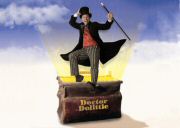
Dr. Dolittle (Playhouse Square Center)


‘Dr. Dolittle’ may please some of the kids, but......

During Tommy Tune’s curtain call speech following his ‘DR. DOLITTLE’ performance at Playhouse Square’s Palace Theatre, he thanked John Kenley. Kenley, the 100 year-old theatrical legend, who was the guiding light behind the Kenley Players, gave Tune his first professional theatrical job. Tune, originally a chorus boy, went on to star not only in Kenley productions, but on Broadway.

It was appropriate that Tune mentioned Kenley, for ‘DR. DOLITTLE’ is much like a typical Kenley Players show. It is long on a star performer and short on quality.

Based on Leslie Bricusse's Oscar-winning film, the stage musical has had a checkered existence. For some inexplicable reason the show, which opened in 1998 to a generally positive reaction, was totally redone for the US audience.

For the tour and projected Broadway run, Jim Henson's Creature Shop was brought in to conceive the animals. Henson’s company is world-renowned for bringing inanimate objects to life through computer technology, cable control and hand puppetry. Creature Shop produced a live-action Pushmi-Pully dancing two-headed llama, a parrot, a dog, a monkey, a giant pink sea snail and a 14-foot flying lunar moth.

The US tour opened in Pittsburgh in August of 2005 to tepid reviews and closed in Hershey, PA on October 2 due to “slow ticket sales.” Since it was listed on so many national theatre packages, such as Cleveland’s Broadway Series, an effort was made to resurrect the vehicle. Enter....Tommy Tune, the National Medal of Arts and nine time Tony winning actor, singer, dancer and director. The show was rewritten and Tune assumed not only the leading role but became the director.

Tune recast the show, selecting Clevelander Dee Hoty to play his love interest. Hoty is a three-time Tony winner. Twelve-year-old Aaron Burr was picked to play Chee-Chee the monkey. Burr recently won the Greatest Dancer competition on ABC’s "Good Morning America.”

Based on "The Doctor Dolittle Stories" by Hugh Lofting, the tale concerns a Pouddelby, England people-doctor turned veterinarian. He finds himself on trial, accused of murder. Insisting that he can actually talk to animals, the doctor defends himself against charges that he threw an unknown woman off a cliff to her death, contending that he was following the wishes of a seal who wanted to return to her fiance in the North Pole. With only his faithful parrot, Polynesia (the finest animal linguist in the world), a neighbor who dislikes him, and a menagerie of animals to support his story, Dolittle is somehow believed. He decides to leave the area and go on a search for the wondrous giant pink sea snail and return the monkey (Che-Che) to his native environs. (Okay, ‘LES MISERABLES’ or ‘CHORUS LINE’ this isn’t.)

It would be nice to say the whole thing works. Unfortunately, it doesn’t. The production often looks like it was developed to go from one Tune dance number to another, with little glue holding the whole thing together. To make things worse, the production qualities are poor. The sets are mostly cheap looking drops. The special effects go awry. On opening night the flying moth didn’t work as intended. On the second night the curtain call was delayed because of technical problems. And, even the choreography is wanting. The dance routines gets boring after a while due to repeated movements.

Tune, at age 66, still dances up a storm and his singing voice is more than adequate. Hoty is excellent. The puppets are fun and the score is pleasant (“Talk To The Animals,” “I”ve Never Seen Anything Like It,” and “Something in Your Smile.”). “Monkey Monkey Island Dance” was the standout production number. Unfortunately, the whole thing just doesn’t hold together.

My grandson, 9 year-old Noah Berko, who attended the production with me, serving as the voice for the children who might attend, thought a lot of things in the show were “fun.” He especially liked the monkey (Aaron Burr), the flying moth on which Tune floated above the stage, and the monkey dance. He liked the goings-on a lot more than his grandpa. But, you must understand that he was sipping a strawberry slushy in a cocktail glass and being fussed over by the nice ladies sitting next to him who kept telling him how cute he was, so he may have been distracted.

Capsule judgment: ‘DR. DOLITTLE’ is just not ready for prime time. I’m not sure that it ever will be without a drastic redo of the redo.

Wednesday, April 19, 2006

Polish Joke (Beck Center)


'POLISH JOKE' at Beck is fun, but....

The Beck Center’s present production is ‘POLISH JOKE.’

Were you offended by the title of the play? Did you think that many of the lines in such a play would start with “Did you hear about the Pollack who....? or “How many Pollacks would it take to ....?”

Well, if so, you weren’t alone. When David Ives’ satirical comedy opened in Hartford, Connecticut, a letter was sent to the editor of a local paper. It read, in part: “As a member of the Polish Cultural Club, I was surprised the production was not advertised in our local Polish newspapers. I understand why now. I was completely unprepared for the level of ridicule and defamation in this production. Part of this is the fault of the playwright, David Ives, born David Roszkowski, and now writing under an Irish pen name. The depiction of Polish Americans in the play was a vehicle for his own self hatred as a Polish-American and lack of connection to his own deep patrimony, which is used only as an occasion for ridicule. From the first scene, Poles are caricatured as fat, dirty, working class drunks, sometimes crawling out of pipes with toilet plungers, at other times pulling shiny, greasy kielbasas out of their pockets. The Polish psyche is repeatedly called one of "disappointment, discouragement, and despair." When I left the theater, I approached a member of the board of directors to voice my complaint, and she retorted "obviously you didn't get it!"

On some levels both of these people are right. The letter writer took the jokes and the stereotypes literally. He did not recognize the use of stereotype to try and make the point of self-hatred by many immigrants, and the need for some people to attempt to deny their heritage as part of their coming to terms with what it means to be an “American.” He couldn’t see the satire because of his deep abiding pride in being Polish. Part of the problem was also the poor writing structure of the play. This is no great work of literature.

On the other hand, the board member was correct. Ives was telling the story of many immigrant groups who tried to escape from their pasts because they did not want to be thought of as “greenhorns,” “foreigners,” not “real” Americans. They didn’t want to be part of the people who ate strange foods, spoke strange languages and wore strange clothing.

POLISH JOKE had its world premiere in Seattle in 2001 and was subsequently produced in New York in 2003.

It recounts the tale of Jasiu through the myriad ramifications of ethnic identity in America. His journey starts, innocently enough, in the Polish working class neighborhood of Chicago called “The Bush.” As a nine-year old, he is influenced by his Uncle Roman who utters the life-altering questions that will send the young man on his pilgrimage, “ Are you sometimes overwhelmed by a tragic feeling of hopelessness and despair?” and “Some days do you get this profound feeling of utter, total futility?” When the boy admits he does have those feelings, Uncle Roman pronounces the cause: “ It’s because you’re Polish”. This begins young Jasiu’s quest to escape his destiny and adopt another ethnic origin with fewer dire consequences.

The play has been called, “hilarious,” “inventive,” and “thoughtful.” I would have used words like “funny in parts,” “poorly structured,” “stretching believability,” and “written more like an extended comedy sketch than a compelling play.” The fragmentation and the feeling that this is an over-extended one joke reflect from Ives best being known as “the master of the comic one-acter.”

Beck’s production, under the direction of Jerrold Scott, is quite acceptable. Greg Wenz is consistently excellent in a role that requires him to grow from age nine to adulthood. He makes Jasiu real in spite of being given lines that often fringed on the ludicrous. Leslie Feagan, though he stumbled over some of his lines, changed from one character to another with ease. He was especially effective as a priest. John Busser, Sheila Maloney and Kim Weston all took on numerous roles with general success.

CAPSULE JUDGEMENT: “POLISH JOKE’ will offend some, hit personal chords with others, and entertain some. It’s one of those theatrical experiences that brings neither boos nor resounding applause.

Les Miserables (Playhouse Square Center)


‘LES MIZ,’ in its last local professional touring stop, is a definite “go see!”

One of the fears of going to a touring show of a musical that announces that it has been on the road since 1988 is that the viewer will see a second-rate cast, watered-down technical effects, and a tired and bored cast that is walking through the motions. Well, have no fears about the ‘LES MISERABLE’ production now in a short 6-day run in Playhouse Square. This is a first rate production in every sense.

‘LES MISERABLES’ opened in London in 1985 and is still running. It came to Broadway in 1987, after playing the Kennedy Center in Washington, DC, and played for over 18 years, making it the third longest-running show in Broadway history. Only ‘CATS’ and ‘’PHANTOM OF THE OPERA’ ran longer. There have been three national touring companies, all of which have visited the North Coast.

LES MIZ is based on Victor Hugo’s classical novel. It is an epic saga of romance and passion which centers on the life of Jean Valjean who was convicted of stealing a loaf of bread to feed his starving nephew. He served his time, broke his parole and then is hunted by Javert, an inspector who becomes obsessed with making the now successful businessman pay and pay-again for his crime.

The show’s beautiful music was composed by Claude-Michel Schonberg and the poignant lyrics were penned by Herbert Kretzmer. The score includes such favorites as “I Dreamed a Dream,” “Do You Hear the People Sing?,” “Bring Him Home,””A Heart Full of Love,” and “Turning.” The musical’s book was developed by Alain Boublil and Schonberg.

Because all the words are sung, it is best to be familiar with the story and score before entering the theatre, especially due to the poor sound system and the horrible Allen Theatre acoustics. . If you aren’t acquainted, the program offers an excellent scene by scene description .

The production encompasses all of the scenic, costuming and lighting effects necessary to make this a true professional offering. The massive turntable, which revolves 63 times during the show, allows for fluid set changes. (Interestingly if a person stood in the same place at the edge of the turntable during an entire production, s/he would travel 1/2 mile.) Other interesting facts about the production are that 101 people are involved in the show’s performance including 26 actors, 28 crew, and a 15 member orchestra. One-thousand seven hundred and eighty-two costumes, 31 wigs, and 150 pairs of shoes are used in a single production.

The cast is outstanding. Randal Keith is as good as any of the Jean Valjean’s I’ve observed in the nine times I’ve seen the show. His voice is glorious and his acting makes the character live. His rendition of “Bring Him Home” brought sustained applause. Robert Hunt, though not as menacing as others who have played the role of Javert, has a powerful voice. His final leap to death is a creative theatrical experience.

Daniel Bogart (Marius) effectively develops the role of the love-struck idealist student. He poignantly sang, “Empty Chairs at Empty Tables,” a tribute to his friends who were killed in an unsuccessful revolt. Melissa Lyons, as Eponine, the young woman in love with Marius, but whose love is unreturned, has a marvelous stage presence. Her fine voice is well displayed in “On My Own.” Leslie Henstock failed to create the right illusion as Cosette, Marius’s love and Valjean’s adopted daughter, though her singing voice was quite lovely.

Jennifer Butt (Madame Thenardier) and Norman Large (Therardier) were audience favorites in their comic relief roles. I found their version of “Master of the House,” which is usually a rousing romp, too slowly paced and lacked the needed abandonment. This was the only time during the 3-hour production that I thought the cast was tired.

CAPSULE JUDGMENT: This is your last chance to see a professional production of “LES MISERABLES,’ and an excellent production at that. When the script falls into the hands of local theatres they will most likely be unable to find a cast and create the sets, costumes and special effects the show requires. SEE IT NOW!

Monday, April 17, 2006

A Little Night Music (Kalliope Stage)


Kalliope Stage presents an acceptable ‘A LITTLE NIGHT MUSIC’

Earlier this year Kalliope Stage opened its second season with an amazing production of the musical ‘SUMMER OF ‘42.’ Their present production of ‘A LITTLE NIGHT MUSIC’ doesn’t live up to the ‘42 experience.

‘A LITTLE NIGHT MUSIC,’ with music and lyrics by Stephen Sondheim and a book by Hugh Wheeler is based on the Ingmar Bergman film “SMILES OF A SUMMER NIGHT.” The show originally opened on Broadway in 1973, with a cast which included Glynnis Johns in the lead role. It won the New York Drama Critics Circle Award and the Tony Award for Best Musical. It was made into a less-than-successful movie starring Elizabeth Taylor.

‘A LITTLE NIGHT MUSIC’ tells the story of a Fredrik Egerman an older lawyer who is married to a very young wife, Anne, who, despite the fact that they have been married almost a year, is still a virgin. An old flame, Desiree Armfeldt is appearing in a play at a local theatre. His romantic interest in her is rekindled when he and Anne attend the production. Desiree, who has an illegitimate daughter, is known for her liaisons. She is having an affair with a jealous and married military man, Carl-Magnus. Complicating matters is Egerman's divinity student son, Henrik, who is in love with his stepmother. The play culminates in a weekend at the country estate of Desiree's mother, Madame Armfeldt where everything turns out for the best.

Much of the show’s music is written in waltz (3/4) time which helps classify the work as an operetta rather than standard musical comedy. The operetta definition is furthered by the fact that the lyrics carry much of the play’s meanings. The score contains one of Sondheim's best-known songs, "Send in the Clowns," as well as "The Glamorous Life," "Every Day a Little Death," "Liaisons," "A Weekend in the Country" and "The Miller's Son."

Seindheim is noted for the complexity of his musical arrangements and requires cast members to sing his songs stressing the meaning of the words, not just mouthing lyrics. It is song interpretation that causes the Paul Gurgol-directed cast the most problem. Many of the cast sings word, not meanings, which results in the ideas being thrown away.

The KALLIOPE cast is uneven. The lead females are wonderful, while the males fail by comparison.

Marla Berg creates a clear characterization as Desiree Armfeldt. She has a fine singing voice and her rendition of “Send In the Clowns” is emotion-perfect! Kathleen Huber is very believable as Madame Armfeldt, but her solo “Liaisons” would have been more effective of it was sung or spoken with a musical cadence as Hermione Gingold did it on Broadway rather than spoken and ingnoring the music. Kimberly Koljat portrays well the role of Anne Egerman but the role should have been cast with a younger actress. Laurel Held Posey is youthfully right as Petra. Katrya Oransky-Petyk has a wonderful comedic flair which works well as Countess Malcolm. As the maid Petra, Laurel Held Posey displays a fine singing voice and a nice sense of comedy.

On the other hand, Frederick Hamilton is miscast as Fredrik Egerman. He is too young for the role, his characterization comes and goes, and he doesn’t interpret his songs well. The always delightful “You Must Meet My Wife,” fell flat. The same must be said for Tony Lehmenkuler who gives a less than stellar performance as Carl-Magnus. His “In Praise of Woman” was musically sung well, but with little attempt to create lyric meaning. Of the males, Brad Herbst came the closest to creating a meaningful character as the melancholy son, but his acting abilities fall short of making the character totally believable.

The vocal chorus, which acts as the narrator, was excellent. The musical accompaniment was much too shallow. The show needs a lush sound not capable of being produced by the few instruments used by musical director Brad Wyner.

Set designer Russ Borski continues to amaze in his ability to satisfy the needs of big shows placed on a postage-stamp sized stage. Borski and Aimee Kluiber’s costumes were awesome. This was the finest costumed show seen on local stages this year.

CAPSULE JUDGEMENT: Kalliope’s “A LITTLE NIGHT MUSIC’ is an acceptable, but not outstanding presentation thanks to some strong female performances and wonderful costume sand set design.

Sunday, April 16, 2006

Charlotte's Web (Cleveland Play House)


Berko boys give thumbs up to ‘Charlotte’s Web’ at CPH

E. B. White’s ‘CHARLOTTE’S WEB’ is one of the most beloved children’s stories. It has been made into an animated movie which is also a favorite. My grandson’s Alex, Noah and Ian accompanied me to the Cleveland Play House’s staged version of the show so I could present a view of the production from the intended audience--kids.

Alex, age 10 and Noah, 8 (“nine next week!” he reminded me) gave the show an 8 on a scale of 1-10 with 10 being superb! Ian, age 6, didn’t contribute a number but said, “I really liked it.” Considering that Ian consistently falls asleep at plays, and that he stayed awake during the entire production and even went on stage to help with the finale, says a whole lot of positive about the happenings.

Alex was impressed that, “the actors sounded exactly like the film performers which allowed me to easily identify with the characters.” Noah “really liked Lelund Durond Thompson who played the lovable and gentle Wilbur, the pig who is saved from being killed by Charlotte, the caring spider who gives her life for the sake of others.” All of the boys thought Jason Miller, who used a Paul Lynde voice to portray the self centered, food-driven rat Templeton, was “hysterical.”

The play’s morals, “practice random acts of kindness every day” and “a good life is more important than a long life,” were repeated by the trio when I asked what the play’s message was.

So, with all the positives, why the 8? The older boys agreed that some of the scenes from the book were left out. These, they felt, were “necessary to completely develop the story.” (Smart kids!)

Their grandfather, who I guess isn’t as critical, gave the production a 10. I was impressed by Mark Alan Gordon’s pacing of the show. He knows what kids want and need and got right to the point, kept the action moving right along, and handled Charlotte’s death scene with great tact. The cast was universally excellent...not a weak thread in the web. The audience talk-back, including the audience in the production, and the fine costumes (James Strunk), scenic design (Reynard Pope), sounds (James Swonger) and lighting (Maureen Patterson) all added to the positive effect of the 50 minute show.

CAPSULE JUDGMENT: The Cleveland Play House’s ‘CHARLOTTE’S WEB’ was a delight.

Dream a Little Dream (Cleveland Play House)


‘Dream a Little Dream’ enjoyable, but not compelling at CPH

Question one: What group had the musical hits, “Monday, Monday,” “Dedicated to the One I Love,” “I Saw Her Again,” “San Francisco (Be Sure To Wear Some Flowers In Your Hair)?” Answer: If you are a 60s music fan or a rock and roll expert then you know it’s The Mamas and the Papas.

Question two: What quartet made up the group? Answer: John and Michelle Phillips, Denny Doherty and the dynamic 300-pound Mama Cass Elliott.

Question three: What happened to Cass Elliott? Answer: After the group broke up because of relational infidelity, too much drugs and liquor and internal wrangling, she went on to a successful solo career. In spite of rumors that she choked to death while eating a sandwich in a London deli, Mama Cass, who had an undetected heart condition, suffered a fatal heart attack at age 30.

Question four: What is the name of the nearly-true musical based on the group and its members? Answer: The original title of the work, when it opened in Toronto in June 2001, was “CALIFORNIA DREAMIN’.” The present title of the production, which is now on stage at the Cleveland Play House, is “DREAM A LITTLE DREAM.’ Supposedly the name was changed because Michelle Phillips entitled her autobiography ‘CALIFORNIA DREAMIN’” and the musical’s producers didn’t want any confusion (or, it can be assumed, didn’t want a law suit).

Question five: Why was the musical written? According to Doherty, one of two surviving members of The Mamas and the Papas, the project began in the mid-1990s when he decided to try to answer the many questions he faced about the seamier side of the band. As he says, “Everybody knows the music and everybody's heard something about something odd going on in there, so I decided to write a play. The songs, the music, tell the story. I'm just filling in the spaces in between." It is mostly a collection of the band's songs connected by Doherty's storytelling. He has also thrown in a few tunes from the era like "The Man Who Wouldn't Sing Along With Mitch" and "Twist and Shout."

He wrote the piece with Canadian playwright Paul Ledoux. The CPH and former productions of the show have been staged by Randal Myler, who is noted for his direction of ‘LOVE JANIS’ and ‘HANK WILLIAMS: LOST HIGHWAY’,’ both of which had Cleveland Play House runs.

The Play House production, which is placed on a multi-level set with the band on stage and the performers entering and exiting during the two-act, two hour production, is more a review with verbal and visual transitions, than a play.

Doherty narrates and is backed up vocally by Lisa MacISAAC, Doris Mason and Graham Shaw. Only Doherty speaks. MacISSAC has a striking physical resemblance to Michelle Phillips. She lacks some of Phillips’ quirky musical sound, but those who don’t know the group won’t know the difference. Mason, who is a somewhat slighter version of Mama Cass, sings well, but just doesn’t have the power and dynamics of the legendary Cass. Shaw basically fades into the background as little actual attention is given to his vocals.

Doherty's words are often illustrated by photographs and hallucinogenic-inspired special effects that flash across a huge screen on the theatre’s back wall. After a while the effect became redundant with many of the pictures being repeated again and again.

The horrible acoustics of the Bolton Theatre make the drum’s beat predominant and the voices often get lost in the high ceiling and the fake seating areas along the walls. It can only be hoped that before the company does ‘MY FAIR LADY’ and ‘RABBIT HOLE” next season a decision is made to stage the performances in the Brooks or bring in a sound technician to redo the acoustics of the Bolton’s original architectural design.

The irony of The Mamas and the Papas was that the band created such harmony while in such personal upheaval. "We made that sound in spite of ourselves," Doherty says. “When we sang, everything else became secondary." And, in ‘DREAM A LITTLE DREAM’ the same thing happens. Only the singing is really important or meaningful. The spoken script is way too long and too redundant. It takes on the feel of a nightly soul-searching for Doherty. A chance to sort out the haze of the drugs, drink and sex and try and put his world in some kind of order.

CAPSULE JUDGEMENT: If you love the music of the 60s and are really fans of The Mamas and the Papas ‘DREAM A LITTLE DREAM’ is a should see. If you like the “inside gossip scoop” you’ll be turned on. For the rest of us, it was nice to hear the music, but the play didn’t do much to “turn me on.”

Wednesday, April 05, 2006

Humana Festival (Actors Theatre of Louisville, KY)

Humana Festival is theatre-goers dream weekend

From May 2 through the 21st, the Cleveland Play House complex will be host to FusionFest, an ambitious offering of new works. The events will include presentations from Cleveland Opera, the Cleveland Museum of Art, Verb Ballets, the Museum of Contemporary Art, Dobama Theater, Karamu House, Jewish Community Center, City Music Cleveland, Cleveland School of the Arts, and Shaker Heights High School.

Thus, CPH will be the only regional theatre in the country offering a new works festival that includes opera, ballet, theatre, dance and music. But, it is not the only venue to offer new works. One of the most exciting and ambitious is the Humana Festival of New American Plays which is now in its 30th year at the Actors Theatre of Louisville. Humana is so well regarded that the American Theatre Critics Association presents its yearly awards during the festival.

From March 31 to April 2, the festival hosted theatre reviewers and drama professionals. In two-and-a-half days attendees saw eight selections which, in reality were 6 full-length plays, 3 ten-minute plays and 17 short plays (‘NEON MIRAGE’).

Each script received a full-scale professional production, not just a staged reading. The shows had professional casts and the technical work was top flight. The authors were all well established scribes. Major play script publishers, theatrical agents, representatives from major theatres looking for scripts to produce were all present. A well received production could mean a lot of money and fame for an author.

It was interesting to hear informal comments about each play from representatives of papers such as Variety and representatives from New York, Los Angeles, San Diego, St. Louis, Miami and Cleveland. Yes, Cleveland was well represented. Tony Brown of the PLAIN DEALER and I were there representing the critics. Joyce Casey of Dobama Theatre, David Shimotakaraha and Pandora Robertson of Groundworks Dance were also present. And local playwright Eric Coble had his play ‘NATURAL SELECTION’ staged.

The likes and dislikes of the viewers reflected their theatrical philosophies. One reviewer, who favored esoteric and cutting edge scripts, praised ‘HOTEL CASSIOPEIA’ and ‘ACT A LADY.’ The former, by Charles L. Mee, mirrored the life of artist Joseph Cornell, who used articles of junk to create his collages. Like his art, the script was a fragmented view of Cornell’s longing, loneliness and heartbreak. The latter, by Jordan Harrison, was a gender-bending fable of a play-within-a-play which attempted to display the power of the theatre to illustrate the male within every female and the female within every male. I found both plays wanting.

Though praised for the performance by its author, ‘LOW’ by Rha Goddess was too long and a bit preachy. The African American writer probed mental illness, how to cope with drugs and the plight of the homeless. Cutting the last ten minutes would add much to the power of the script and intensify its meaning. We didn’t need the morale preached to us.

I felt the best shows were Sharr White’s ‘SIX YEARS,’ Theresa Rebecks’ THE SCENE’ and ‘Eric Coble’s ‘NATURAL SELECTION.’ Though all could use some doctoring, they each held the audience’s attention and I could see them as a candidate for being staged by one of Cleveland’s professional or semi-professional theatres.

‘SIX YEARS’ concerned a World War II veteran who fails to return to his wife and family for six years following the conflict. The play examines damaged souls who, by the closing curtain, have flipped in their security. Though the ending is a little self evident, the emotional highs and lows are audience involving. This might be a script that convergence-continuum would want to explore.

‘THE SCENE,’ which takes place in New York, concerns four people who find themselves playing scenes in their lives, scenes which reveal each of their vulnerabilities and motives. The script is ready for production. With an excellent cast it could be positively received by a traditional audience. It’s a show that would fit nicely in a Dobama or Beck’s studio theatre season.

In ‘NATURAL SELECTION’ Eric Coble digs into his years of living on American Indian reservations to examine what life might be like in the not-so-distant future when the only way to replenish the “stock” of the Culture Fiesta Theme Park’s Native American Pavilion is to venture into the wastelands of North America and find one. It forces the viewer to examine living in a world in which people find reality in cyberspace. It also examines the changing role of culture. At times paralleling the Noah story, the observer is forced into the Native American concept of the flood, the fifth world of the land of the rainbow.

Though the ending is a little dragged out, with some retooling, the play could do well in an off-Broadway or theatre which has a thinking audience. The script is generally surreal, funny, and engaging. Several reviewers shared that ‘NATURAL SELECTION’ was their favorite show.

CAPSULE JUDGEMENT: The Humana Festival is a theatre-goer’s all-you-can-view opportunity. Hopefully, the Cleveland Playhouse’s FusionFest can do for the local theatre and the Northcoast area what Humana has done for Louisville.

Tuesday, March 28, 2006

A Midsummer Night's Dream (Actors' Summit)


Delightful ‘A Midsummer Night’s Dream’ at Actors’ Summit

Seeing Shakespeare at American theatres, especially a theatre that doesn’t specialize in classical productions, can be a forbidding experience. Fear not. In general, Actors Summit’s ‘A MIDSUMMER NIGHT’S DREAM’ is a delightful experience.

Less is known about ‘A MIDSUMMER NIGHT’S DREAM’ than most of Shakespeare’s writings. Not only the date at which it was written, but why the play was scribed is up for discussion. It is assumed to have been developed between 1594 and 1596, early in Shakespeare’s life. It might have been written for an aristocratic wedding. Some Elizabethan scholars suggest it was written for the Queen to celebrate the feast day of St. John.

Also, in contrast to Shakespeare’s pattern for many of his other offerings, there is no known source for the play’s plot. One theory is that it is loosely based on “The Knight's Tale” from Chaucer's ‘CANTERBURY TALES.’

Though popular with viewers, most critics agree that the comedy is not one Shakespeare’s best plays.

The story features three interlocking plots, all of which are connected by marriage. Two couples, Hermia and Lysander and Helena and Demetrius, run away into the fairyland forest in order to avoid forced marriages, are pulled apart and then brought together through some shenanigans pulled off by the impish folk character Puck. The third couple, Oberon and Titania, the King and Queen of the Fairies, are also in a love/hate/love situation. Add a play within a play by a group of inept actors, and we have some wonderful light and joyous moments.

As one critic stated, “If ‘A MIDSUMMER NIGHT'S DREAM’ can be said to convey a message, it is that the creative imagination is in tune with the supernatural world and is best used to confer the blessings of nature upon mankind and marriage.”

Actors’ Summit’s production is filled with many very good and some mediocre acting. Kathleen Cutter is delightful as Hermia. Alicia Kahn lights up the stage as Helena. She has a wonderful sparkle in her voice and face which compels one to smile and empathize with her as she speaks. Andrew Narten (Lysander) and Noah Varness (Demetrius), are both fine and help complete the charming duet of lovers. A. Neil Thackaberry, as Theseus, and Sally Groth (Hippolyta) playfully create the mature couple. Though he sometimes knows no restraint, Peter Voinovich was the audience favorite as Bottom, the weaver who turns into a jackass.

Bob Parenti, playing the dual roles of Egeus, father of Hermia and Quince, a carpenter stumbled over a number of his lines and was often unbelievable. Puck needs to be impish, charming, delightful. Sasha Thackaberry was simply not “puckish” enough, often becoming slave to the poetic rhyming pattern.

Mary Jo Alexander’s costume designs were wonderful as was the creatively designed set.

Director A. Neil Thackaberry has shortened the play so that it runs two-hours, including intermission. No one, except a Shakespeare scholar, will realize that there have been cuts in the script. He has paced the show well and wisely has his actors using Shakespearean dialogue with General American pronunciation which results in ease of understanding.

Actors’ Summit received a large grant to perform matinees for area students. Over 1000 young people will be exposed to Shakespeare through this anonymous grant. It can only be hoped that the donor will see fit next year and for years to come to make money available to allow area students to experience the wonders of live theatre.

CAPSULE JUDGEMENT: Actors’ Summit’s ‘A MIDSUMMER NIGHTS DREAM’ is a delightful offering well worth seeing.

Sunday, March 26, 2006

Verb Ballets (Ohio Theatre)

Verb Ballets continues to impress

While attending the two-day Verb Ballets programs at Playhouse Square’s Ohio Theatre, a reliable source revealed that Ohio Ballet, which had already canceled its winter season, had canceled its spring Cleveland appearance. The source indicated that plans were to possibly do an Akron spring offering. This news does not bode well for the company. It is ironic since Verb Ballets was doing a weekend tribute to Heinz Poll, founder of the Ohio Ballet. It was Poll who made the company a national force, combining traditional and modern ballet.

In the last several years it has become apparent that Verb Ballets is on its way to filling the void caused by the demise of Cleveland-San Jose Ballet and the problems of Ohio Ballet, its potential replacement as the major large company in the area. Verb’s concerts are well attended. Last year’s Playhouse Square offering was sold-out. Their recent two-night stand, in spite of stiff competition from the Cleveland Film Festival, ‘BOMBAY DREAMS’ in the next door Palace Theatre, and Groundworks performing at Cleveland Public Theatre, drew nice sized audiences.

Artistic Director Hernando Cortez has developed a well-disciplined company. He has supplemented his personal creative choreography with works of Poll and Paul Taylor. He has brought in resources such as Jonathan Sheffer, artistic director of RED, to compose music specifically for the company. Trad Burns continues to impress with his lighting designs. The company appears to be on good financial grounds. They have developed a devoted and enthusiastic following.

Both evenings’ programs were well-danced. They were aesthetically pleasing, well conceived and nicely selected to make for two different and stimulating evenings.

On Friday, Eric Conway soared in ‘ESPLANDE ,‘ as did 70 year-old Ann Ennis reprising a role she has made her own. Kallie Marie Bokal/ Glynn Owens and Oren Porterfield/Mark Tomasic coupled impressively in ‘SIX -EASY PIECES.’ Based on Poll’s personal pronouncement that “movement has to have a reason,” his “WINGS AND AIRES’ was a melodic, flowing, exciting classical ballet which combined well with modern dance. His signature style of straight backs, free-flowing motion, meaningful arm movements and erect posture were all well-recreated by the dancers under the restaging concept of Jane Startzman.

Saturday night opened with the exciting and fun-filled ‘FOREVER FLING,’ an Irish hoedown. Fourteen year-old wunderkindt, Austin Thomas, stole the hearts of the audience. A lanky six-footer, Thomas moved quickly with confidence and competence and accomplished amazing vertical leg kicks that brought squeals of delight from the audience. Also impressive in the number were Mark Tomasic and Robert Wesner. Wesner made a major breakthrough in his performance skills. Abandoning his usual overly-dramatic, stilted hand sweeps and classical stiff body running off stage at the end of his solos, his face gleamed with real emotional reactions. His body interpreted and lived the music. I don’t know if it was the Poll influence, Cortez’s directions or Wesner realizing that reality is more important than window-dressing, but the adjustment worked and worked well!

The high point of the evening was ‘CHICHESTER PSALMS,’ choreographed by Cortez to music by Leonard Bernstein. The well-conceived, beautifully structured piece wowed the audience. Brooke Wesner, who coupled with her husband, Robert, was outstanding. Trad Burns’ lighting perfectly paralleled the musical sounds in its ever changing intensity and flow. The marriage of dance, music and lighting was impressive.

The evening ended with Poll’s ‘ELEGIAC SONG.’ Based on Poll’s personal memories of wartime Germany, the choreography impressively mirrored the grieving woman drawings of artist Kathe Kollwitz. The visual images precisely paralleled the haunting music by Shostakovich.

In a well-planned tribute, Elizabeth Flynn, a long-time Cortez friend,who is leaving the company, danced the lead roll in “ELEGIAC SONG.’ Her final bow was met with hundreds of roses being thrown on stage by her devoted followers and a tearful goodbye speech by Cortez.

Verb Ballets will be conducting HOOPLA, a unique fund raiser consisting of 15 small get-togethers ranging from a live piano concert in a South Park home to the premiere of ‘CLEVELAND BARES,’ a Broadway burlesque featuring Cleveland’s hottest dancers. The company’s next public appearance will be on September 15 and 16 at the Cleveland Museum of Natural History. For information on HOOPLA or the fall concert call 216 231-1177.

CAPSULE JUDGEMENT: As their slogan states, ‘Verbs the word,” and again the company proved the truth of that statement. Bravo!

Groundworks Dancetheater (Cleveland Public Theatre)


Groundworks Dance at CPT’s Danceworks ‘06

David Shimotakahara’s Groundworks Dance is one of my favorite companies. I look forward to each of their offerings. In their latest concert, which was part of the Cleveland Public Theatre’s DANCEWORKS ‘06,’ as always, the dancing was superb. Unfortunately, as a friend who I was sitting with said, “This wasn’t up to their usual level.” They were speaking of the program selections. As much as I hate to admit it, I agree.

‘INSIDEOUT,’ in its world premiere, was a series of short pieces developed around the interplay of internal and external perceptions. It was performed as a series of intimate duets in which inner and outer worlds were expressed through word and dance. Though the idea was clever, at times there was a disconnect between the words and movements. This was, in part, caused by the decision to speak the words as if they were a flat melody, often ignoring the phrasing which would have increased the clarity of the message.

The segments ranged from comedy shticks to enactment of serious problems. Two segments, which weren’t word supported were piece highlights. A delightful interlude found Shimotakahara and Mark Otloski using a pair of baggy pants and an oversize jacket to twist, roll and gyrate through, under, around and in. Another excellent segment found Felice Bagley and Jennifer Lott interacting with two vivid white spots in an otherwise black space. Bagley was superb. Lott, a trainee who is still learning Shimotakahara’s precision movements, often flowed in her arm and body movements rather than using precise maneuvers ingrained into the psyches of the other dancers.

A segment that highlighted the weakness of the concept took place late in the program when Amy Miller and Mark Otloski beautifully danced an introspective concept. The spoken segments, however, didn’t parallel the dancers’ moods and movements.

In its Cleveland premiere, ‘TIPPING POINT,’ as choreographed by KT Niehoff, found the dancers sitting on the floor for most of the number. The piece was intended to explore “the relationship between intense isolation and the group mind.” Set to Sarah Murat’s discordant repetitive beating music, the twenty-minute offering became mind numbing after a while. As someone behind me said, “Why don’t they get up and do something, already?” Well, maybe that was Neihoff’s intention. By repeating the same head, arm and body movements at varying speeds, after a while, like work on an assembly line, the participants get to their tipping point. Even with that clarity of explanation, the over-all effect of the piece was not extremely positive.

CAPSULE JUDGEMENT: I have high expectations for Groundworks Dance concerts. My expectation of superb dancing was met, but the programming left something to be desired.

Friday, March 24, 2006

Bombay Dreams (Playhouse Square Center)


‘BOMBAY DREAMS’ doesn’t get standing ovation at the Palace

In 2002, when ‘BOMBAY DREAMS,’ now on stage at Playhouse Square’s Palace Theatre, opened in London it became a cult hit. It ran until June of 2004. Many felt the reason for the success was the large Indian population in England, who frequented the show. When it opened on Broadway in 2004, the show was met with less enthusiasm. It ran for only 284 performances. One review stated, “If you're suffering from a ravenous hunger for rich, intelligent musical theatre, you're unlikely to be satiated by ‘BOMBAY DREAMS’.”

That, and similar reviews not withstanding, one might anticipate that a show produced by Andrew Lloyd Webber, with a score by A. R. Rahman and Don Black, and a book by Meera Syal and Thomas Meehan, which was based on an idea by Shekhar Kapur and Lloyd Webber, might have something to offer. Unfortunately, based on the touring production, the New York reviewer seemed absolutely right.

‘BOMBAY DREAMS’ tells the story of Akaash, a brash young slum dweller who dreams of becoming a Bollywood movie star and meeting his idol, the voluptuous screen siren Rani. And, as in all good fairy tales, whether American or Indian, his dreams come true. But, in order for the plot to work, or at least to add some suspense, Akaash has some personal costs to pay and has to take part in the obligatory on-stage dance in which he is drenched in a water fountain.

The show attempts to mirror many a Bollywood musical in its lavish and plentiful production numbers.

Song titles include "Salaa'm Bombay," "Bollywood," "Love's Never Easy," "Lovely, Lovely Ladies," "Bhangra," "Shakalaka Baby," "I Could Live Here," "Is This Love?," "Famous," "Chaiyya Chaiyya," "How Many Stars?," "Hero," "Ganesh Procession," "The Journey Home" and "Wedding Qawali." In the local version, authentic music was played adequately by a small pit orchestra and two drummers placed in the stalls above both sides of the stage.

The touring production is hardly an example of masterful craftsmanship in either its technical or performance qualities. The sets were mainly colorful drops, nothing like the Broadway and London visual sights. The sound system squealed on opening night and drops were brought in at the wrong times. As for the acting, it ranged from amateur to semi-professional. This was not a high quality Equity cast. The “spectacular” dance numbers were less than spectacular due to repetitive and ill performed choreography.

Sachin Bhatt , who portrayed Akaash, the slum boy who becomes a star, lacked the necessary sensuality and charisma. He simply doesn’t have the acting, singing or dancing abilities to make the character appealing. He also has a distracting habit of snarling as he sings. On the other hand, Reshma Shetty was quite charming as Priya, the woman who finally wins Akaash’s heart.

The performance of Sandra Allen who portrayed Rani, the over-the-hill movie star, was all on the surface. She was never really believable. Aneesh Sheth, as Sweetie, a eunuch who is in love with Akaash, was very good. Kenneth Maha, who was a replacement portraying Priya’s father, was embarrassingly bad. To make matters worse, his fake whitish sideburns kept falling away from his head, making him look like he had swan’s wings sprouting out of his head.

In spite of all the problems, it was difficult not to smile, shake your head at the ridiculousness of the plot, and be mildly entertained by this light-weight tribute to the Indian movie musical.

Capsule judgment: Cleveland audiences give standing ovations to almost anything . A litmus test to the lack of quality of ‘BOMBAY DREAMS’ was that there was not a single person standing during the curtain call, not even from the huge number of Indians who were in attendance. Too bad. With a stronger cast and better production qualities, “BOMBAY NIGHTS’ could have been fun and even educational.

Sunday, March 19, 2006

Cleveland Contemporary Dance Theatre (Cleveland Public Theatre)


Cleveland Contemporary Dance presents inconsistent program

Several years ago Michael Medcalf combined with David Shimitakahara to present a memorable evening of dance. Since then Medcalf has developed his Cleveland Contemporary Dance, the only all African American dance group in the area, into the Karamu House’s residential dance company. They recently presented a program as part of Cleveland Public Theatre’s ‘DANCEWORKS 06.’

Staged with the unusual device of having each choreographer discuss his/her concept in a tape-recorded interview which played before each presentation, the audience was alerted to the philosophical concept of each piece.

Presenting an inconsistent program, the company opened with ‘HYMN/BY THE WATER, which choreographer Medcalf indicated in his pre-show was a journey of two men who move in different ways toward their goal. On the surface this appeared to be an interesting concept. Unfortunately, since both dancers started on the floor, moved behind a screen and removed their clothing, then spent time in what appeared to be sleep and moving in tandem, then arose, put on their clothing and proceeded to dance in tandem to each other, the theme seemed to be unfulfilled. To compound matters, Ryan Lott and DjDoc’s contemporary throbbing music was not carried out in the movements of the dancers. Antwon Duncan and Daniel Isaah Henderson were both proficient but not entrancing.

‘WE, AT THE CROSSROADS,’ was choreographer Paloma McGregor’s attempt to give “dancers a voice.” As with the opening number, the total effect was less than compelling. The dancers were quite undisciplined and displayed various levels of skills. Often their unity moves lacked unity and there were problems in holding freezes. McGregor’s message did not come forth loud and clear.

‘TO HAVE AND TO HOLD,’ as choreographed by Shapiro and Smith, though a little long, was an evening highlight. Using three benches as props, there was a mobility, a joy, an interaction and a discipline in this piece not seen in the two opening numbers. This was a powerful and athletic piece which clearly developed the concept of those who have loved and lost, but have not forgottten.

The evening ended with Kevin Iega Jeff’s exciting ‘CHURCH OF NATIONS.’ Jeff, Medcalf’s mentor, blended 10 men and one women into a cohesive unit. The movements well fit the liturgical music. The dancers moved onto, over, next to, and beside the eleven black chairs arranged in a random pattern. Jeff stated in his taped interview, “You are expressing the idea or not. You need to be prepared.” His dancers were well prepared “to question whether the houses in which we worship should give consent to death and destruction in the name of God.”

CAPSULE JUDGEMENT: Cleveland Contemporary Dance Theatre’s all men’s program was inconsistent. Fortunately, the latter two numbers were compelling, leaving the audience with a positive final image of the evening.

Le Corsaire (American Ballet Theatre)


American Ballet Theatre’s ‘LE CORSAIRE’ fine, but not wonderful

American Ballet Theatre is one of the finest dance companies in the country. Over the past four years they have become fixtures in the Ballet Series at Playhouse Square Center. Their ‘GISELLE’ was breathtaking. ‘WITHIN YOU WITHOUT YOU: A TRIBUTE TO GEORGE HARRISON’ and ‘PILLAR OF FIRE’ were what ballet should be. “SWAN LAKE’ was exciting beyond description.

With that said, I was less than enraptured by “LE CORSAIRE, THE PIRATE.,’ ABT’s most recent Playhouse Square offering. Maybe it was due to the light-weight story line, maybe it was the overly stylized concept, maybe it was the bows after every solo which broke the flow of the story, maybe it was the confusing costuming which found tutus mixed with pirate and Arabic costumes, maybe it was because the male lead (on opening night) did not have the charisma and sensuality required for the swashbuckling image of a pirate. Whatever, ‘LE CORSAIRE,’ though perfectly acceptable, and if presented by a company other than ABT might have been declared as “good,” simply wasn’t up to ABT standards.

On the plus side, Irina Dvorovenko was lovely as Medora, the young Greek woman with whom Conrad, the pirate, falls in love. Her toe-work was impressive as was her ability to make the role her own. Equally rapturous and proficient was Stella Abrera as Medor’s friend. Jose Manuel Carreno, though he was overly dramatic to the point of upstaging the lead dancers as he wandered the stage while others danced and exaggerated his gestures while standing still, was magnificent when he danced. He literally threw himself around the stage while doing his circle turns and captured the audience with his fluid body control. Also impressive was Gennadi Saveliev as Lankendem, the owner of the bazaar.

On the other hand, Maxim Berloserkovsky just wasn’t physically commanding as the pirate. Though his second act pas de deux with Dvorovenko, his real-life wife, was captivating, most of his other dancing was simply acceptable. The same can be said for Hector Lopez, as Conrad’s friend and betrayer. Veronika Part, one of the Odalisques, was consistently out-of-time with her partners and had trouble holding freezes.

A wonderful addition to the proceedings was the inclusion of many local young ballerinas who were impressive in their concentration and dancing abilities.

Conductor Ormsby Wilkins’ full orchestra was excellent.

CAPSULE JUDGMENT: Though quite good, American Ballet Theatre’s ‘LE CORSAIRE, THE PIRATE’ did not capture the local audience as other ABT presentations have done. There was strong applause, but not the leaping and screaming standing ovations the company has received here in the past.

Full Monty (Beck Center)


‘FULL MONTY’ is fun at Beck

A woman bounds onto the stage. It’s Girls’ Night out. She introduces us to the featured attraction of the evening, the very handsome Buddy "Keno" Walsh (Rob Mayes), who is dressed in a business suit, though not for long. The buff Mayes is soon down to a yellow G-string and accepting screams and dollar bills from the women in the audience.

Thus, we are introduced to the world of ‘THE FULL MONTY,’ now on stage at the Beck Center. It’s a tale of six unemployed steel workers who, out of desperation for money and respect, form a male striptease troupe.

Written by Terrance McNally and David Yazbek, the stage musical is based on the 1977 hit British movie of the same name but moves the characters to Buffalo, N.Y. Once the shenanigans start, the only question is whether the anything-but-buff sextet will wind up doing a full monty, the British term for strippers who take it all off.

With the steel plant closed, a meeting is held at the union hall to distribute the last of the pay checks. We meet Jerry Lukowski, who is months behind in his child payments and faces the prospect of no visitations with his 12-year old son. His best friend, extremely overweight Dave Bukatinsky, now a stay-at-home husband with only a security job at Walmart as a potential way out, is also desperate. Then there is Malcolm MacGregor, who lives alone with his infirm mother. They all feel like “Scrap,” ironically the show’s first song.

Waiting at the bus stop, the guys overhear two women excitedly going into a club, paying $50 to see Keno strip. An idea hatches. If he and Dave--real men--were to strip, they could clean up. He talks four oher reluctant guys into going along with his scheme. Tickets don’t sell well, and when asked by some women why, after having seen "the real thing", they would want to see a bunch of amateur local guys strip. Jerry quickly says, much to the shock and disbelief of the guys, "We're different - we go all the way..the full monty.” The only question left for the audience is, “Will they really go all the way?”

Now, it wouldn’t be fair to reveal the answer, but I will say that at the end of the show there are six guys on stage and we learn that the full monty isn't just about showing off the outside, it's about what all of us have on the inside.

Beck’s production is amusing, even delightful in spots, but not totally polished. The cast is uneven in their acting and singing abilities.

Lenne Snively nearly steals the show as the elder pianist, whose wise-cracks add much to the goings-ons. She nails the role of Jeanettte, though after a while one would wish she’d lose the overused cigarette prop. She is matched as an audience favorite by Kris Hebble who is endearing as the very over-weight Dave. Watching Kris strip is a comedy show in and of itself.

Keith Faris (Dave) develops a clear character and when the songs he is rendering are in his pitch range he is quite good. Unfortunately, when he forces his voice, he loses the top register.

If Rob Mayes isn’t a professional Chippendale guy he should be. This boy knows how to strip, and has the looks and body to make it convincing. Patrick Janson is properly appealing as, Malcolm the mommy’s boy, who finds love unexpectedly in the form of Tim Hirzel (Ethan). The matched set are so skinny that when they turn side-ways, they disappear. They are yet another sight of the sights to behold in the final strip number.

Nicki Stacey (Georgie) and Maggie Stahl (Vicki) as two of the harried wives, sing well and develop clear characterizations. Their “You Rule My World (Reprise)” is excellent. Elliott Hooper (Horse) is delightful. His “Big Black Man” is a show-stopper.

The orchestra, under the direction of Larry Goodpaster is excellent, backing up rather than drowning out the singers.

As always, Martin Cespedes’s choreography is creative. The highlights were the moves to “Michael Jordan’s Ball.”

Song high points included, “It’s a Woman’s World,” “Big Ass Rock,” and “Jeannette’s Showbiz Number.”

CAPSULE JUDGEMENT: ‘THE FULL MONTY’ isn’t a great musical, but it is a lot of fun. If you are a prude, you might be shocked by some of the language, and the sight of some male nudity. Others should really enjoy themselves.

Tuesday, March 14, 2006

AIDA (Playhouse Square Center)


'AIDA' bring them to their feet at the State Theatre

Several weeks ago a Disney production of 'BEAUTY AND THE BEAST' graced a Playhouse Square Theatre. From now until March 24th another Disney production is being seen in Cleveland. Though AIDA is aimed at a very different audience, it contains all the Disney elements...grand sets and costumes, fanciful dancing, creative lighting effects, lush music and a competent cast. The pleasure of the audience was displayed on opening night by an immediate standing ovation. In actuality, the applause was probably more for the singing of the lead actors than the production as a whole.

This contemporary version of 'AIDA' starts and ends in the Egyptian room of a modern museum. Amneris, once a queen of an ancient kingdom, invites the audience to witness the tale of love and a struggle for power during the era when war raged between Egypt and its neighbor Nubia. The story relates how an Egyptian army captain, Radames falls in love with Aida, one of the Nubians he has captured. Unknown to him, she is a princess. Their love is fraught with numerous obstacles. The story’s ending leads us to believe that Aida and Radames will spend eternity together entombed beneath the sands of the Egyptian desert. Their tomb has been transported to a museum where, in their reincarnated forms, they meet once again.

Paulete Ivory captivates as Aida. Her voice is glorious. The huge sound that comes from such a tiny woman is amazing. Patrick Cassidy, a cousin of the famous Partridge family Cassidy’s, has a strong singing voice and a powerful physical presence which the costumer has accented by having him appear shirtless in numerous scenes. Local audiences may well remember him for his wonderful portrayal several seasons ago in 'JOSEPH AND HIS AMAZING TECHNICOLOR DREAMCOAT.' Kelli Fournier, for some unknown reason other than the show needed some comic relief, plays Amneris as a Fran Dresher nasal sounding clothes horse. Her wonderful singing voice makes up, however, for the questionable character development.

The dancing is proficient. The costuming is confusing. The Nubians are dressed as native Africans, the Egyptians, however, are in mixed contemporary garb which is not ethnically identifiable.

Typical of Disney productions, no cost has been spared on this show. The tour travels in 13 semi trucks. There are 29 cast members, 9 musicians, 23 backstage crew and 3 stage managers. The pyramid at the opening of Act 2 is formed by two laser lights. One hundred twelve yards of Chinese silk are used to form the Nile River in one scene and 80 yards of silk form the sails on Radames’ ship. To create the night stars 17 fiber optic sources are used. The swimmers in the palace pool (yes, there is a vertical swimming pool) are each flown by use of a waist harness.

Capsule judgement: The score, though by Elton John and Tim Rice, fails to produce a memorable song. The story line is forced and slightly hokey. But when those elements are combined with Disney grandeur, it produces a pleasing evening of theatre. Not great, but enjoyable.

Monday, March 13, 2006

The Body Outlaws (Red Hen Theatre)


‘THE BODY OUTLAWS’ investigated by Red Hen

Theatres are founded for various reasons. The mission of RED HEN is to give a voice to feminist writers and feminist themes. You do not go to one of their performances to see or hear a neutral view of the world. Their staging of ‘BODY OUTLAWS’ won’t disappoint their loyal following.

The staged reading is based on Ophira Edut’s collection of essays in which women discuss their bodies and the cultural views of women’s shapes and forms. It exposes advertisers, toy manufacturers and various others who shape societal attitudes of what women should look like and be. Segments include “The Butt: Its Politics, Its Profanity, Its Power,” “The Skinny on Small,” “Klaus Barbie, and Other Dolls I’d Like to See,” and “Memories of a (Sorta) Ex-Shaver.”

The staging and performances were generally fine. Rose Leininger’s “Sizing Myself Up: Tales of a Plus-Size Model,” the last piece of the evening, was outstanding. She is a fine actress and this selection is highly emotionally involving.

Capsule judgment: The evening is long! Ten pieces at ten to 15 minutes proved to be too much. Especially long when the seats are stiff and unpadded and the performance space very, very cold.

Sunday, March 12, 2006

Danceworks '06 (Inlet Dance, Morrison Dance, Anteus Dance) CPT


DANCEWORKS ‘06 at CPT meets with mixed success

Inlet Dance Theatre is impressive

Bill Wade, the Artistic Director and Founder of Inlet Dance, has a mission. He intensely believes that contemporary dance training and performing can positively impact lives. Besides directing the regular company, which is in its fifth season, Wade works with a trainee/apprentice program, mentors pre-professional dancers who have come to Cleveland to study, and works in outreach programs in various school districts, such as the recently completed month-long Mosaic Experience at Cleveland Heights High School.

It is obvious in attending Inlet Dance concerts that Wade is enamored with a search for wholeness, for the truth, for relationships based on a respectful balance and full of trust, and journeys toward redemption.

The company was impressive in their recent residency at Cleveland Public Theatre, as part of Danceworks 06.

’WONDROUS BEASTS’ found the well-disciplined dancers, who were dressed in colorful tie-dyed unitards, moving in slow-motion controlled maneuvers. Working as individual animals, through a series of gymnastic moves they masterfully combined into a single centipede. The gymnastic moves perfectly fit Ryan Lott’s editing of Mum and Siguar Rose’s jungle music and sounds. Dennis Dugan’s lighting helped enhance the ever-changing moods.

‘SKIRTING THE HEART,’ in its premiere presentation, used religious ritual as an illustration of moving toward salvation. The dancers, dressed in black flowing skirts, eventually disappeared below a ground cover only to emerge in cleansed all-white costumes. Choreographed by Stephen Wynne, the movements perfectly fit Transglobal Underground, KIA’s tribal-type music. The piece was intense and, though a little too long, impressive.

‘THIS COULD HURT,’ based on John Eldredge’s book Wild at Heart, was a wonderful enactment of a group of guys having an adventure full of risk-taking behavior. The gymnastic movements were well executed by Dan Barnes, Joshua Brown, Brett Parker and Justin Stentz. Stentz, who is a company trainee, was impressive throughout the evening. He has the makings of an excellent dancer.

‘ASCENSION,’ also a company premiere, contained many of Wade’s signature maneuvers: controlled gymnastic movements, duos balancing like teeter totters, strong arm thrusts, unchanging facial expressions, male and female equality in strength movements, repetition without redundancy and serious undertones. The piece was danced to the electronic music of Ryan Lott. Lott, who is becoming the favorite of not only Wade, but Groundworks’ David Shimotakahara, is a master at creating contemporary sounds that lend themselves to creative choreography. Performed like a three-ring circus, the trio of couples became acrobats as they balanced and worked with full trust to create impressive visual images. Leila Pelhan, Rebecca Inman, Margret Ludlow, Joshua Brown, Elizabeth Stratton and Justin Stentz were amazing in their body control.

The program ended with Steve Rooks’ ‘THE DOOR.’ The least impressive piece of the evening, it was the most traditional in use of modern dance movements. Billed as a journey through redemption, the dancers were not as engaged in the piece as in other offerings.

CAPSULE JUDGEMENT: Inlet Dance Theatre impressed a sold out audience with a program that generally showed fine choreography combined with excellent dance skills.

Morrison Dance fails to capture audience with Irish dance-theatre pieceMorriso

In its recent residence as part of Cleveland Public Theatre’s Danceworks 06, Morrison Dance presented Christopher Johnston’s ‘THE MAD MASK MAKER OF MAIGH EO.’ It was an attempt to combine dance and story into a unified whole.

The dance/play was based on two Irish myths. ‘THE RED-HAIRED GIRL FROM THE BOG’ centers on a bewitching fairy who could appear as a hag or as a beautiful young woman. The second myth is that there were good fairies to whom people could turn when there was trouble in their village or town. The combined tale found the red haired girl coming to a village and removing the mask-maker, who had been taking the souls of people to make masks. Johnston states that the primary theme of his play is “how at times conflicting and times comingling influences of paganism and Christianity have forged the distinctly Irish spirit.”

In spite of valiant efforts by actors Derdriu Ring, Meg Chamberlain and Andrew Narten, the dialogue was generally flat, fringing on boring. Sarah Morrison’s choreography did not integrate well into the story line.

CAPSULE JUDGEMENT: Seeing a dance company combined with a company of actors to present a performance can provide a compelling evening. It requires a creative script based on an engaging story into which the dancing must blend so that it becomes a seamless unit. Unfortunately, ‘THE MAD MASK MAKER OF MAIGH EO’ was not such an offering.


Anteus Dance Company investigates human cruelty

“Mankind is capable of great cruelty. Humanity also possesses a vast capacity for love and forgiveness.” These two themes were at the core of ‘BURN THE HEAVENS,’ Antaeus Dance Company’s recent production as part of Cleveland Public Theatre’s Danceworks 06.

Performed to the music of Mudbaby, the piece, which was developed through a collaborative process between the dancers and the choreographer, set a clear tone at the beginning. Unfortunately, though well-intentioned, the piece was repetitive and instead of building empathy as it progressed, it lost the audience’s attention and the impact of the offering by being overly long and static. How many times do we have to watch pushing and shoving, hitting and recoiling, dragging and punching before we get the point? As a twenty-minute piece this would have been effective. As an entire program it was just too agonizingly slow and redundant to hold attention.

The dancers successfully executed Joan Meggitt’s intent. The music ate into our souls. James Longs’ jail-like set was well-intentioned, but, unfortunately, by Meggitt allowing the “victims” to escape outside the cell, she broke the feeling of “there is no escape.”

CAPSULE JUDGEMENT: Meggit needs to carefully examine what effect she wants from her audience and choreograph to that end. Her well intentioned concept in ‘BURN THE HEAVENS’ lost its impact due to a lack of restraint.

Saturday, March 11, 2006

Les Ballets De Montreal (Playhouse Square Center)


LES BALLET DE MONTREAL

When the Cleveland Browns football team fled the city, there was an immediate outcry and efforts were made to replace the squad. The club was reconstituted, but the level of success, at least to date, has been less than stellar.

When the Cleveland-San Jose ballet fled town, there were minor ripples of displeasure, but no great outcry. Surprisingly, in contrast to the Browns experience, the outcome has proven to be positive. With CSJB gone, the flood gates were open to smaller companies springing forth and both Dance Cleveland and Playhouse Square Foundation bringing in world class ballet companies.

On the local level Verb Ballet, recently played to a sold-out house in its Playhouse Square debut. It has developed a large and loyal following as has Groundworks Dance Theatre which also performed to sold out houses in its recent Botanical Garden performances. Point of Departure, Safmod, Inlet Dance, Antaeus Dance Company, Neos Dance Theatre, Ohio Dance Theatre, and Ohio Ballet are all alive and well.

On the professional level, world class dance companies continue to appear in Playhouse Square venues. The Kirov Ballet, American Ballet Theatre, Miami Ballet, Les Ballets De Monte Carlo, Paul Taylor Dancers and Momix Dance Theatre have all made successful visits to the city. There have also been some less than successful performances such as the Pennsylvania Ballet’s walking through ‘THE NUTCRACKER’. Here is one case where we miss CSJB’s magical production of that show. But, as a whole, the world of dance is alive and well in Cleveland.

At a recent dance concert, Les Ballet de Montreal played to a sizeable audience at the Ohio theatre.

If you like your dance in little doses, Part I of Les Ballet de Montreal’s ‘THE STOLEN SHOW’ would have thrilled you. The segment consisted of 24 short pieces, each lasting from 30 seconds to 3 minutes. It was both an exhausting and exhilarating experience. The segments moved from solos to duets to the fourteen members of the company all on stage at the same time. The movements covered free form, intricate stretches, floor contortions, modern dance, gyrations, lifts, interweaving of bodies, hip hop complete with yelling and screaming, hopping, skipping, prancing, kick boxing, karate, weaving lines, traditional ballet, twitching, running and movement in place. Need stories? This wasn’t your thing. Want to see all sorts of dance in a creative and exhausting display? If so, you would have loved “Short Works: 24.”

Part II, “The Stolen Show” was delightful. That is, if you could accept that a world class ballet company was going to perform with a horde of plastic chickens that were thrown around the stage and finally performed as a kick line, and with two female dancers who performed wearing three high-heeled shoes between them. Then there were the cadre of clowns. In actuality, this was more performance art than dance, but who cares, it was fun.

An intriguing segment of Part II was watching two dancers simulate choreographing a segment of the performance before our eyes. They spoke to each other in French and English, planned, corrected, reenforced and then performed the whole piece. It was both a creative and pleasant way of introducing the audience to the world of dance development.

LES BALLETS DE MONTREAL was another of the positive dance experiences that have been presented in what might be called a realignment of the area’s dance scene.

Well (Cleveland Play House)

Everything is ‘WELL’ AT CPH

As the audience enters Cleveland Play House’s Drury Theatre, they are confronted by an elderly woman sitting in a worn La-Z-Boy recliner. A younger woman appears from the wings, sharply attired and armed with index cards. She steps into her circle of light and announces that the evening will be a "theatrical exploration of issues of health and illness both in an individual and in a community."

The individual is her mother, "a fantastically energetic person trapped in an utterly exhausted body. The firebrand who once racially integrated her neighborhood in Lansing, Michigan.”

Thus, we are introduced to one of the most bizarre scripts ever written. The structure is unlike anything you’ve ever seen. The plot is in the present, the past and the future at the same time. And, yet, it’s easy to follow.

From the outset, Ann, the mother (Clevelander Denny Dillon of “Saturday Night Live” fame) controls the action. As daughter and playwright Lisa (Alicia Roper in the CPH production) narrates, Ann corrects, clarifies and up-stages. (Does that sound like any mother you know?) While Lisa tries valiantly to tell her tale, mom is so charming and sympathetic that the audience gets pulled out of Lisa’s story. At one point, Ann blithely offers the audience beverages and flings sacks of snacks at the first few rows by way of bidding them welcome. Lisa stands there stunned, wondering if “the absurdist playwright Pirandello really started this way.” As Lisa states, “That's what you get for bending rules, breaking the fourth wall and experimenting. The lesson to be learned might be that a playwright should never invite your mother on the stage with you."

Ann is not the only impediment. Other actors appear and, as Lisa talks, they critique the script and her memories. Lisa finds herself losing control of her own play and, therefore, of her life. What’s right? Who is right? Can life and theatre be integrated? Can we, as the playwright contends, “weave into a whole the parts that don’t fit?”

Sound bizarre? Sound delightful? Sound like a play that received rave reviews in its Off-Broadway presentation? Well, ‘WELL,’ is bizarre, delightful and deserving of the praise it received in its previous productions.

Denny Dillon is hilarious as the mother. She uses her aged kewpi-doll face and whiny voice to the max. She is totally believable. It is easy to understand why the audience appears to take her side in the conflict between her version of reality and Lisa’s.

Alicia Roper is right on target as the daughter. She swings from “in control” to “nearly hysterical” with ease. She is the perfect foil for Dillon.

The rest of the cast, Zandy Hartig, Jason Miller, Lelun Durond Thompson and Bailey Varness are fine in their multi-roles.

Michael Raiford’s scenic design, putting the realistic living room and stairway floating in the midst of an empty stage, works well. It isolates the action, but extends it into all of our experiences.

CAPSULE JUDGMENT: The CPH production, under the adept direction of Michael Bloom, is both insightful and fun. It’s the perfect blend of what high level theatre should be: thought-provoking and entertaining. This is exactly the kind of play selection and direction we had hoped Bloom would bring to the theatre when he was hired as its Artistic Director.

Sunday, March 05, 2006

7 Brides for 7 Brothers (Carousel)


PLEASANT BUT UNINSPIRED 7 BRIDES @Carousel

Name your favorite musical film. If you are fairly typical your list probably included ‘MY FAIR LADY,’ ‘SOUND OF MUSIC,’ ‘WEST SIDE STORY’ and ‘CHICAGO.’ But, did you select ‘SEVEN BRIDES FOR SEVEN BROTHERS’? You might be surprised that in recent favorite movie musical polls, Seven Brides came in third on one list and eighth in another. It was the only musical on those lists which was developed as a film and not transferred from the Broadway stage. It definitely makes my top five list.

In 1954 the film, loosely based on Steven Vincent Benet’s short story “The Sobbin’ Women,’ opened. The flick, which starred Howard Keel, Russ Tamblyn, Jane Powell and Julie Newmar was the sleeper hit of the year and has developed a cult following. Much of the popularity was due to the amazing choreography by Michael Kidd which took such mundane pursuits as chopping wood and raising a barn and made them into spectacular and enthralling visualizations.

In 1979, Jane Powell and Howard Keel reprised their film roles in an off-Broadway stage production, and in 1982 a full-blown Broadway musical opened to moderate success. It is the staged version which is now at Carousel Dinner Theatre.

The story is about Adam, a backwoodsman and Milly, who marries him after knowing Adam for only a few hours. Upon arriving at his cabin in the mountains, Milly is surprised to learn that Adam is one of seven brothers who inhabit the cabin. After a rocky start, the relationship flourishes and Milly teaches the younger brothers manners including how to dance. They are able to test their new “selves” at a barn-raising, where they meet six girls they like. The girls, of course, like the brothers, but due to a fight, the brothers are banned from town and the relationships don’t flourish.

Winter arrives, and the six younger brothers mope for their girls. Adam inspires his brothers to kidnap their lady loves. The girls, of course are upset and Milly is furious. She bans the brothers to the barn while the girls live in the house. Adam, who is also furious, leaves to live out the winter by himself. And, of course, since this is a traditional musical comedy, the brothers and the girls, and Adam and Milly find ways to work out their problems, and they live happily ever after.

Okay, so this isn’t a great story line, but it is fun. Well, it can be fun. For the material to work, it must be done with abandonment and enthusiasm. It must a hoot from beginning to end. It has to be bigger than life.

Unfortunately, the Carousel show, under the emotionally controlled direction and uncreative choreography of Chet Walker, is “nice” not “dynamic.” The cast spent lots of time in straight rows, stepping forward to sing their solos or speak their lines. This is just out and out bad staging. The choreography was repetitious, not always fitting the moods of the music.

Part of the problem may also be due to a limited rehearsal time that the cast had to prepare. Seven days does not make for developing the type of dance coordination and complete comfort with the material that a dance show like this needs. Add to that the necessity for seven superb male and female dancers and the task is daunting.

The show’s sprightly and often tender music is by Gene dePaul with creative lyrics by Johnny Mercer. Songs include, “One Man,” “Goin’ Courting,” “”Sobbin’ Women,” and “Wonderful, Wonderful Day.” Like the dancing, some of the song interpretations were missing the necessary texturing and proper mood.

Jennifer Byrne (Millie) is pretty, has a nice singing voice, but was much too sophisticated for the role. Randy Bobish (Adam) has George Clooney good looks and a nice voice. But, he failed to texture his performance so he came off as being unreal.

Curtiss Howard III was delightful as the youngest brother. Kyle DesChamps (Daniel) showed some great dancing skills.

Robert Kovach’s sets worked well. Dale DiBernardo’s costumes designs were era correct, but in a discussion following the opening night’s production several of the male dancers complained that the high-waisted pants made for difficulty in easy movement.

CAPSULE JUDGEMENT: To be successful, a production of ‘SEVEN BRIDES FOR SEVEN BROTHERS’ requires extraordinary dancing, and the development of a love story that charms the viewer with warmth and wit. The production needs to be an imaginative romp. The Carousel show just doesn’t reach those levels. It’s not bad, it’s just not wonderful.