Friday, June 28, 2002

The Will Rogers Follies: A Life in Revue (Berea Summer Theatre)


'WILL ROGERS FOLLIES' a creative delight at Berea Summer Theatre

Every once in a while a theatre-goer has a very special evening in the theatre. It doesn’t happen often, but it does happen. It takes place when the script, the music (if it’s a musical), the directing concept and the talent all come seamlessly together. Such was the case at Berea Summer Theatre when it opened its summer season with 'THE WILL ROGERS FOLLIES: A LIFE IN REVUE.'

The musical takes us on a delightful and sometimes touching ride through the life of Will Rogers, one of America’s folk favorites. Famous for such lines as “Never met a man I didn’t like” and “live your life so that when you lose, you are ahead,” Will Rogers rose from school dropout to being one of the most respected political philosophers of his day. His philosophical renderings appear in six books, scores of magazine articles and 4,000 syndicated newspaper columns. He performed in 71 movies where he seldom learned the script, preferring to ad lib. He is probably best known for his nightly chats with the audience as part of the Ziegeld Follies. Drawled comments like "We'll be the first nation in the world to go to the poor house in an automobile," displaying the disparity between rich and poor during the Great Depression, endeared him to audiences. Sometimes called the “Poet Lariat” based on his ability to perform outstanding rope trips while talking to the viewers, he won a slot in the GUINESS BOOK OF RECORDS.

Though the show’s individual songs are not memorable, the score won a Tony Award for writers Cy Coleman, Betty Comden and Adolf Green. THE WILL ROGERS FOLLIES: A LIFE IN REVUE was awarded the Tony as the best musical of 1991. The show played to more than four million persons during its first two years on Broadway and three companies that toured the United States and Canada.

Under Lora Workman’s leadership, THE WILL ROGERS FOLLIES: A LIFE IN REVUE is a very professional amateur production. There are no stars next to the names of the performers, stars that represent membership in the Actor’s Equity Association, but there are stars all over the stage. Workman , acting as both director and choreographer, is not only creative but obviously a perfectionist. The kick lines were polished, the splits well executed, the cartwheels twirled as they should, the patter moves were met with extended applause, the stage pictures exciting, and the enthusiasm was caught by the entertained audience. The entire cast obviously understood the show’s concept and learned and polished the many complicated and enthusiastic dance numbers. Workman did what many directors don’t do..she paid attention not only to the leading performers, but to the acting and dancing choruses.

The technical aspects of the BST production support the show. Scene designer Ron Newell’s red, white and blue leveled set worked well. Gina Leone’s lighting helped create the varying moods. Jeffrey Smart’s massive number of costumes were creative. The only technical flaws centered on sound glitches when performers’ mikes did not work.

Steve Higginbotham was inconsistent in his Will Rogers characterization. His first act performance was partally surface. Forced facial expressions, overly articulated diction, difficulty with the Oklahoma speech cadence and surface emotions were present. The veneer vanished in the second act when he seemed to transform himself into a natural Rogers. This was especially true in a long emotionally-charged soliloquy. He sings well and dances with ease.

Kimberly Lauren Koljat who portrayed Rogers wife, Betty Blake, has a nice voice and an infectious smile. Amanda Folino was wonderfully ditzy as Ziegfeld’s Favorite. She is a polished dancer, a fine song stylist and has a fine sense of comic timing. Chuck Burneson, a professional roper, received extended applause for his rope tricks. The Rogers kids, portrayed by Kyle Branzel, Jenny Sherman, J.P. Gagen and Richie Gagen were engaging. The singing and dancing choruses were amazingly adept.

Capsule judgement: 'THE WILL ROGERS FOLLIES: A LIFE IN REVUE' at BST is one of the finest productions in the theatre’s history. If you want a pleasurable evening of summer entertainment go, see, enjoy and as the BST motto states, “And tell your friends!”

West Side Story (Cain Park)


Frantic 'WEST SIDE STORY' at Cain Park

In 1949 Jerome Robbins brought together composer Leonard Bernstein and playwright Arthur Laurents to work on a modern musical version of 'ROMEO AND JULIET.' Originally called 'EAST SIDE STORY,' it was about a Jewish boy’s star-crossed romance with an Italian Catholic girl set against the clashing street gangs on New York’s lower East Side. Eventually, Polish was substituted for Jewish, Puerto Rican replaced Catholic, and the setting was moved to the west side. A 27 year-old lyricist by the name of Stephen Sondheim was brought onto the production team to participate in his first Broaway show. A master musical and many legends emerged.

The show concerns Tony, a second generation Polish-American who once was the leader of the Jets street gang. He becomes committed to peaceful coexistence between the “Americans” and the “Puerto Ricans” when he meets and falls in love with Maria at a high school dance. The star-crossed lovers run into complications, when, in spite of his best efforts at avoidance, Tony kills Maria's brother, who has killed Tony’s best friend in a rumble gone awry. Eventually total tragedy hits when Tony is murdered. The show contains such memorable songs as “Something’s Coming,” “Maria,” “One Hand, One Heart,” “I Have a Love, and “Tonight.”

'WEST SIDE STORY' was one of the first Broadway shows I ever saw. I was entranced by the powerful dancing, the integration of story and song, the quality of the music and the depth of the performances. I have seen many productions of the show since. Each, of course has its own interpretation. I must admit, however, I have never seen an interpretation quite like the one conceived by Victoria Bussert. The concept can best be described as “frantic.”

It must be realized that Bussert is generally working with a group of theatrical amateurs. In the main, these are not Actors Equity performers. These are mostly college and high school kids who give their time and effort free of charge. Even so, there were many talented thespians on stage, enthusiastic performers who put forth full-effort throughout the show.

The usual competent and wise Bussert chose to pace the show at a breakneck speed. Maybe she did this because her cast are mainly suburban intelligent clean scrubbed kids whose life experiences don’t parallel to inner city gangs. By pacing rapidly she may have been trying to substitute excitement for emotional intensity. It didn’t work as well as one might hope. Some dramatic scenes didn’t have time to develop, emotions were shown by shouting and screeching, songs were often sung at a rapid pace that didn’t allow the audience to understand the words. Even the delightful “Officer Krupke” got few laughs because the words were swallowed.

Janiece Kelley-Kiteley’s fine choreography was often turned into speed dancing. In spite of great physical effort of the dancers the overall effect was often chaos. Larry Hartzell’s orchestra must have been gasping for breath as they plowed rapidly through song after song, sometimes drowning out the singers. Even the set changes were done as marathon dashes.

The show does have fine moments. The fight scene in which Bernardo and Riff are killed was masterfully done. Tony and Maria’s meeting at the dance was finely honed. The famous balcony scene was both touching and humorous, filled with the youthful joy of first love.

Many of the performances were also on key. Trista Moldovan, a recent Baldwin Wallace grad, who is New York bound following this show, was excellent as Maria. She has a fine voice and her character development was clear and consistent. Joelle Graham smoldered her way through the part of Anita. Her eyes flashed, her intensity light up the stage. Kevin David Thomas, who earlier this year took the part of Tony for Baldwin Wallace College’s production of 'WEST SIDE STORY,' sings well but was inconsistent in his character development. Ryann Green was right on target as Bernardo.

Capsule judgement: One patron as she was exiting the theatre said, “I’m exhausted.” Too bad, she should have been exhilarated, not exhausted.

Saturday, June 08, 2002

2 OF 2 (Groundworks Dancetheatre)


Groundworks dances to perfection at CPT

David Shimotakahara is the inspiration behind GROUNDWORKS DANCETHEATER. In January, 2002 he and his company were named as “One Of The Year’s 25 To Watch In The Dance World” by the prestigious Dance Magazine.

Anyone who has attended a dance concert choreographed and danced by Shimotakahara knows why. He is a creative and perfecting choreographer. He is a well-conditioned, well-trained and exacting dancer. Combine the two and you have greatness. The Ohio Arts Council agrees as they have awarded him a fourth consecutive Individual Artist Fellowship this year.

'2 OF 2,' now being staged at Cleveland Public Theatre, which the company calls home, is a combination of a duet of dance pieces and a set of two musical selections. The latter are the works of resident Composer Gustavo Aguilar who has worked with Shimotakahara since 1994 in developing the nucleus of the company’s growing repertory. As the choreographer states, their newest collaboration explores “the limitations placed upon us by external forces, and those which we place upon ourselves.”

MIGRATION is about things in flux, the motion of change. It asks the question, “How far can we journey and still be connected to a place, to each other?” It was premiered in 2001.

The piece starts with tinkling bells, then a blending of lighted color appears, then silhouettes, followed by movements behind two suspended blue curtains, shadow dancing, and finally the appearance of a male and female dancer. He (David Shimotakahara) and she (Felice Bagley) are dressed in sarongs shading from green to purple. He bare chested, she in a tank top.

The dance that follows is a synergy of flying movements, both powerful and athletic. The entire piece was accomplished with little touching and static facial expression. The interweaving of bodies, the sliding behind suspended curtains, often appearing as shadows, creates a searching to connect but having barriers that forbids it. The sheet of sweat which covered and shimmered off Shimotakahara’s muscular body, while Bagley remained emotionally cool added to the total effect. The choreographer’s ability to perfectly blend music and dance was evident throughout. Both dancers were in perfect sync during the entire presentation.

'ONETWOONE SO 2' and 'ONETWOONE SHEKERI 2001' were the two musical pieces centered between the dance selections. SO2 was an improvised tenor sax and live computer processing piece well-performed by Robert Reigle and Phil Curtis. SHEKERI 2001 featured composer Javier Alvarez in a solo for live electro acoustic and shekeri (a musical instrument which looks like a large jar covered with colored beads). Though rather long due to the repeated sounds, it was well performed and haunting.

In 'HEART AND VINE' the choreographer “employs the inherent implications of physical action, reaction and inaction as metaphors for attempts at moving forward, letting go, and finding rest.”

The piece featured Felice Bagley, Amy Miller, Brian Murphy, and Shimotakahara.

Dressed in dark colors, the dancers performed a series of single, duet and quad- danced segments in a cacophony of sound and fast angular and dipping movements. The piece was athletic, stylish and strong. The stage was full of multi-emotions ranging from the sensual intertwining of bodies in a segment by Bagley and Shimotakahara to abandonment of control during a highlight BeBop segment by Miller and Murphy, which ended to rousing applause.

It was exciting to see Murphy finally be given the chance to display his outstanding talent. As a dancer with the Ohio Ballet he was held back by having to conform to the abilities of the weaker male corps members. Here, under the guidance of Shimotakahara, and working with other talented performers, he was allowed to use his athleticism, strong body control, and powerful movements to their fullest. Coupling with the extraordinary Amy Miller allowed for a full exposure of his abilities.

Danced to music provided by the ARC Libre Trio, who moved through the dancers as they played, the piece was both exhilarating and exhausting, if a little long. Shortening it would add to the intensity.

The small but appreciative audience saw a production in which the dancing and music were outstanding. The producers might want to consider putting an intermission between the musical pieces. Breaking the music into two sections would allow each segment to stand on its own and not blend together into a very long interlude.

Capsule judgement: GROUNDWORKS DANCETHEATER is a growing entity that needs to be nourished and treasured. The community needs to back this troupe so that it can become what it should be...a nationally recognized company.

Saturday, June 01, 2002

Rivercan’t or The Traficanterbury Tales or A Humorless Celtic Dance Company Made Us Change the Title (Second City--Cleveland/14th Street Theatre)


SECOND CITY opens new home in Cleveland

What do Alan Arkin, Joan Rivers, Robert Klein, John Belushi, John Candy, Bill Murray, Dan Aykroyd, Gilda Radner, George Wendt, Shelley Long, Jim Belushi and Chris Farley have in common? They are all former members of The Second City. What do George Pete Caleodis, Cody Dove, Coleen Doyle, Jack Hourigan, Quinn Patterson and Dana Quercioli have in common? They too are members of The Second City. Except, instead of their having cut their teeth in Chicago, at the company’ s original home, the latter group is here in Cleveland at the newest setting for the famed comedy organization.

Second City has been called “A Temple of Satire” by Time Magazine. The New York Times stated that, “the entire recent tradition of American satire can be summed up in three words: The Second City.”

Recently opened in the Hanna Building in the heart of Playhouse Square, the Cleveland venue is the fifth location in North American to feature a Second City troupe. Other cities include Chicago, Detroit, Las Vegas and Toronto. The local performance space is a newly built contemporary large black box theatre, which seats 300. Patrons sit at tables in comfortable chairs in an arrangement which makes for easy viewing. Food and drink are available at moderate prices. Acoustics are adequate though it was sometimes hard to hear some of the members when the music was played as they spoke.

The show consists of two-40 minute acts interspersed with 30 to 45 minutes of improvisation in which cast members create scenes based on suggestions from the audience. (Think the TV show “Whose Line Is It Anyway?”) The shows, which will change about every three months, are written by the cast and the director.

The opening production, is entitled “Rivercan’t or The Traficanterbury Tales or A Humorless Celtic Dance Company Made Us Change the Title of Our Show.” The latter segment of the title refers to complaints by Riverdance organization over the show’s original title, “Burning Riverdance or The Traficanterbury Tales.” The title is a little misleading. There was a takeoff on Riverdance, but the Traficant reference is misleading, as there was only one reference to the errant Congressman.

In fact, the Cleveland connection, as a whole, was not very well developed. There were references to Mayor Jane Campbell, Halle Berry and Art Modell but there is so much more that makes up the humor of this area.

The improv segments didn’t work as well as should be expected. The cast didn’t seem swift enough to fully develop clever concepts. Hopefully their skills will improve with experience.

During the scripted segments some cast members and the production were inconsistent. Cody Dove and Jack Hourigan were wonderfully funny and totally involved in their presentations. The other cast members varied greatly in their comedy abilities. Again, hopefully this will improve with experience.

Show highlights included a hysterical game of “Pictionary” where gender roles were exposed; the audience’s participation as high school band members; the dancing wheels which was performed while sitting on office chairs; a visit to the psychiatrist; and the sounds of Riverdance.

Weaker sections were the firefighter segment, a high school graduation ceremony, a space walk, a stripper scene, and a chaotic final number which attempted to take the audience on a drive around the area.

Capsule judgement: Here’s hoping that the troupe continues to do what it does well and grows in their presentational abilities. If that happens, Second City will become an exciting place for Clevelanders to go on a regular basis.

Sunday, May 26, 2002

Joseph and his amazing Technicolor Dreamcoat (JCC/Halle Theatre)


Halle’s 'DREAMCOAT' aimed at the kids and their parents

Every production of 'JOSEPH AND HIS TECHNICOLOR DREAMCOAT' is uniquely. Because it is a series of songs, with no script or stage directions, each director does his or her own thing. I’ve seen the show at least 15 times and I’ve never seen the same concept.

Years ago Beck Center did a smashing professional-level adult-centered production starring local actor/director Rob Gibb. Playhouse Square brought in a professional production several years ago that was so outstanding that it made the Biblical story glisten. Last year Berea Summer Theatre did a production which starred the always terrific Craig Recko as Joseph. Now, the Halle Theatre has taken its turn.

Director Jacqi Loewy decided to make her production kid-oriented. It is short, has some nice gimmicks, incorporates a large children’s chorus, and is aimed at the parents and grandparents of the children in the cast and the less-sophisticated theatre goer. My five and six -year old grandson's (Alex and Noah Berko) laughed when the brothers turned their “butts” toward the audience and for some odd reason found the prison scene to be “fun.” Go figure!

Andrew Kay sings well and makes an acceptable Joseph. Sheri Levy Gross, portraying the Narrator, has a nice voice. Tom Wang’s Pharaoh needed more abandonment in his Elvis imitation. The very talented Greg Violand seemed wasted with the minor roles of Jacob and Potiphar. The kids chorus sings well and are kids...how bad can that be?

Don’t go to see this production expecting anything close to a polished show. Take your kids, enjoy the wonderful music and expose them to the theatre. It’s family theatre. No one even minded the exits for “potty” breaks by some younger audience members or the kid who wandered the aisles for most of the production.

Capsule judgement: As a cute blue-haired elderly lady sitting next to me said as we exited, “It’s a nice show.”

Jacques Brel Is Avlie and Well and Living in Paris (Actors' Summit)


'JACQUES BREL' is alive at Actors' Summit

Every once in while a theatre-goer has an experience that makes all future exposures pale by comparison. Sometimes its seeing a single performance: Richard Kiley in 'MAN OF LA MANCHA,' Zero Mostel in 'FIDDLER ON THE ROOF' or Barbara Steisand in 'FUNNY GIRL.' Sometimes it’s a total production that blows the mind, such as the Broadway versions of 'WHO’S AFRAID OF VIRGINIA WOOLF,' 'CHORUS LINE,' or 'WEST SIDE STORY.'

Such an experience was the Cleveland area production of 'JACQUES BREL IS ALIVE AND WELL AND LIVING IN PARIS' many years ago which started in the little theatre at Berea Summer Theatre, moved to Playhouse Square before the theatres were all renovated, and held the record for the longest continuous run of any production until it was recently eclipsed by 'TONY N’ TINA’S WEDDING.' That show, which starred Cliff Bemis, David Frazier, Providence Hollandar and Terri Pieto and was directed by Joe Garry, with musical direction by David Gooding, was an unmatchable experience. I once heard someone describe that show’s rendition of “If We Only Have Love,” the show’s final selection, as making her “toe nails curl.”

The memory lingers on. It was with that mind set that I attended Actors’ Summit’s production of Jacques Brel. It doesn’t match up. This is not to say that the present production is bad, it’s not. It is quite enjoyable as evidenced by the extended applause at the curtain call. It’s just that this rendition does not have the emotional depth, the perfect blending of voices, the seamlessly smooth staging, and the full musical sound of Cleveland’s classic production.

'JACQUES BREL IS ALIVE AND WELL AND LIVING IN PARIS' is not the typical musical review. The cast can’t just sing, dance, and go on to the next song. Jacques Brel was a poet and singer. But, most of all, he was a song writer whose creations each told a story with a beginning, middle and end. He told tales of life, death, relationships, war, class struggle, loneliness and love.

In presenting Brel’s work each piece stands alone. Each piece has an attitude, a tone, a purposefulness. It is here that the Actors’ Summit proeduction lacks. Songs are sung. Most are not experienced by the performers and, therefore, not experienced totally by the audience.

The strongest renditions are “Fanette” powerfully sung by Scott Plate, “Next” by Plate and the ensemble, and “Carousel” by Sally Groth and the ensemble, though the necessary emotional enchantment in the latter was somewhat missing. There are special touches in this show. In “The Girls and the Dogs,” Plate and Wayne Turney are accompanied on stage by two adorable and well-trained dogs who beg, heel and exit on cue. Turney has a wonderful time in “Funeral Tango.”

The cast gives their all. Plate has a big voice, which sometimes causes problems as the other voices are much more subtle and he sometimes drowns out the other performers. Sally Groth sings well, but is somewhat shallow in the upper registers, especially in the song, “Alone.” MaryJo Alexander has a pleasant if not commanding sound. Turney does best in songs where he can clown.

Capsule judgement: All in all, 'JACQUES BREL IS ALIVE AND WELL AND LIVING IN PARIS' at Actors’ Summit is a serviceable show that audience members should enjoy. And, obviously they have, and have spread the word , as the show has been extended for another three weeks.

Friday, May 24, 2002

Dinner With Friends (Cleveland Play House)


'DINNER WITH FRIENDS' thought provoking at Cleveland Play House

Donald Margulies, the author of 'DINNER WITH FRIENDS,' now receiving its Ohio premiere at The Cleveland Play House, received a 2000 Pulitzer Prize. The play also garnered the American Theatre Critics Association New Play Award and the
Dramatists Guild Award. Anyone seeing the play will understand why.

Margulies writes plays that probe how people treat each other and how we deal with the inevitable losses in our lives. In 'DINNER WITH FRIENDS' he digs deeply into relationships, families and marriage in his comedy-tinged drama. Margulies lays bare feelings, loyalties, personal values and self concepts. This is not a feel-good play, it is a mind blowing experience. It would be nearly impossible for an audience member to leave the theatre without probing personal attachments.

'DINNER WITH FRIENDS' allows us to peek in on the lives of four long-time friends. Karen and Gabe are international food critics. Beth is an artist who is married to Tom, a lawyer. We share an evening when Beth announces to Karen and Gabe that Tom is leaving her for another woman. We later hear Tom's side of the story. A flashback scene shares the first meeting of Tom and Beth at Karen and Gabe's summer home. Flashes forward allow us to further examine the two couple's relationship now that one is divorced and the other starts to examine their lives together.

The CPH production doesn't always live up to the potential of the script. Director Seth Gordon has allowed his actors to generally graze the surface of their roles. Though this is enough to involve the audience, as evidenced by the sustained laughter and curtain call applause, he did not pull out all the emotional levels of each character. This was especially true with Kate Hodge's interpretation of Beth. Making her first appearance on a stage, Hodge displayed mannerisms more appropriate to the television screen. Her movements were repetitive, her character never seemed to feel the pain. Wayne Maugans as Tom fared better, but, again, acted out rather than reacted to his internal pain, leaving us adrift as to his real sincerity. A script line summarizes his characterization: "Stuff coming out of his mouth is like bad greeting
cards."

Susan Ericksen fairs better as Karen. By far the best performance is that of David Colacci whose frustrations, feelings and deep hurt and questioning are clear throughout.

Kent Dorsey's set design is outstanding. Housed on a turntable, we are exposed to a kitchen, bedroom, living room, summer house, bar and another bedroom. All are realistic and add dimension to the production.

Capsule judgement: DINNER WITH FRIENDS is an emotional experience. It is the kind of play that stays with a viewer long after the curtain falls. It's a wonderful way for the theatre to end what has been a satisfying season.

Sunday, April 14, 2002

Saturday Night (Beck Center)


'SATURDAY NIGHT' Sondheim's tooth cutting musical

The musical 'SATURDAY NIGHT' was Steven Sondheim’s first attempt at a musical. It began as a play by the authors of the screenplay for 'CASABLANCA.' Money was secured for a staging, but the producer died suddenly and the project was abandoned. Individual songs were published and became part of Sondehim lore. Then, in 1997 a London theatre company, with the blessing of the composer, staged the show. It then had a short off-Broadway run and found its way to the Beck Center stage.

Having completed its run, the odds of your ever seeing it again are remote. This is not the Sondheim of 'WEST SIDE STORY,' 'SUNDAY IN THE PARK WITH GEORGE,' 'COMPANY,' or 'INTO THE WOODS.' This is a Sondheim who writes such lyrics as, “a girl is a thing that is made of glass lace.” This was Sondheim who wrote about a group of Brooklyn male friends who spent most of their waking hours complaining because they didn’t have dates and the attempt of one to become a “swell.”

Fortunately for Beck audiences, director Fred Sternfeld decided not to take the script seriously. He wisely played much of the action as if he were doing a 1930 MGM “let’s go out to the barn and do a musical” complete with exaggerated line interpretations and stylized dance movements.

Several cast members stood out. Rebecca Borger was a delightful as the ditzey Celeste and Kenneth Bently made the role of Ray fun. The multi Times Tribute award- winner Craig Recko was somewhat miscast in the lead role. He seemed uncomfortable with the stylized dancing and stilted lines.

Capsule judgement: It is always interesting to see new theatre pieces...even if they are not of the highest literary quality. This was a good lesson in seeing Sondheim before he matured into one of America’s greatest contemporary lyricists.

Betrayal (Cleveland Play House)


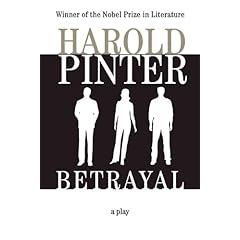
'Betrayal' fails to captivate at Play House

Harold Pinter is a first class poet. His plays and films are masterfully crafted word songs. He is multi-talented. His plays include 'THE BIRTHDAY PARTY,' 'THE DUMB WAITER,' 'PARTY TIME' and 'CELEBRATION.' His film credits include 'THE FRENCH LIEUTENANT’S WOMAN,' 'THE HANDMAID’S TALE' and 'BUTLEY.' Television credits are 'THE HOTHOUSE,' 'PARTY TIME' and 'LANDSCAPE.' He has appeared as an actor in numerous plays, films, tv and radio. His bio lists over 25 international awards. This is one very, very prolific man.

'BETRAYAL,' now on stage at the Cleveland Play House, was first presented in 1978 in London. It contains biographical material, but is not autobiographical. The story, which is written in a backwards tunnel of time, starts with a meeting between adulterous lovers, Jerry and Emma, two years after their seven year affair has died. In nine scenes the play moves back through the stages of the affair, until the play ends with its beginning in Emma and her husband Robert’s house. In the process we see Jerry and Emma’s love for each other and the interactions between best friends Robert and Jerry. We are eavesdroppers in a series of betrayals.

This is a world of poetic tone. Unfortunately, the Play House production, under the direction of Peter Hackett fails to fully orchestrate those rhythms. The play, written as a two act script, is performed without intermission. The slow pace, the lack of setting up many of the humor lines, and the physical setting of the Bolton Theatre, all add up to a less than satisfying enactment of a wonderful script.

The Bolton, which was envisioned as CPH’s answer to an intimate space doesn’t serve the purpose well. This is an intimate play, we need to feel close to the action. The depth of the stage, the fact that much of action takes place near the rear of the stage, doesn’t allow the audience to become involved.

Paul Vincent Black’s Robert doesn’t make us feel his cause for betrayal. Anne Torsiglieri’s Emma doesn’t project the pain that leads to her affair and betrayal. Even the always competent Andrew May fails to dig into the bowels of Jerry. They all just seem to be saying words, not beautifully crafted words.

Pavel Dobrusky’s sterile set doesn’t help in creating the necessary intimacy.

Capsule judgement: All in all, the Cleveland Play House’s BETRAYAL misses the theatrical mark. Bad? No. Not to be seen? No. Wonderful? No.

Blast! (Playhouse Square Center)


'Blast!' explodes with entertainment at the Palace

It has been dubbed “a novel art form, “ “a musical spectacular,” and a “new artistic genre.” In reality, BLAST!, now on stage at the Palace Theatre, is an undefinable piece of entertainment. How many adjectives and adverbs are there to explain perpetual motion and sound, a visual explosion of pleasure, audience glee, and enthusiastic appeal? No matter the number, they can all be used to describe BLAST!

BLAST! has no story line. It is a series of musical numbers, accompanied by a flag show, musicians sitting on chairs hanging from the ceiling, cast members twirling rifles and sabres, performers sitting next to audience members, musicians marching up the aisles, and drummers playing in the lobby during intermission. Add to that the use of grass blades, bells, wings, scalenes, double sticks, media flags, poles, techno flags, techno sabres, glow rifles, glowing light rods, whistles and whirly gigs. The drummers are dynamic, the dancers excellent, the music foot-tapping, the musicians competent.

The rendition of “Gee Officer Krupke” from 'WEST SIDE STORY' found cast members running, writhing, and interacting with each other in a delightful parody. “Color Wheel” was emblazoned by a flag team using material of varying hues. “Tangerinamadidge” was a song played on didgerydoos.

Jim Mason, the creative force behind the show, developed the concept in 1985. A life-long veteran of drum and bugle corps he set out to transform the squads into a complete theatrical experience. As he says, “BLAST! is almost like a Disneyesque animation, only in BLAST! the animation comes to life with real people playing the music and interpreting it visually.”

Capsule judgement: Even non-enthuiasts can be won over by the presentation. As one audience member said, “I was expecting to come out with a headache from the loud noise. Instead I came out humming, whistling, dancing, and wishing that I could entertain like those kids!” (The average age of the cast is 23.8 years.) Yes, it’s impossible not to have a blast at BLAST!.

Sunday, April 07, 2002

Groundworks Dancetheatre & Actors' Summit--2002 (Groundworks Dancetheatre)


Groundworks Dancetheatre--a special treat

Anyone in Northeastern Ohio who appreciates dance and has not had the experience of attending a performance of GROUNDWORKS DANCETHEATRE, has missed out on one of the country’s most exciting companies.

Headed by Artistic Director David Shimotakahara the group performs in various settings. Their latest offerings were staged at Actors’ Summit in Hudson.

Performing to well-deserved near sold-out audiences, the combination of dance and musical performances by pianist David Fisher and guitarist Stephen Aron, was an emotionally fulfilling evening.

Hamlet, the Ballet (Ohio Ballet)


Ohio Ballet's 'HAMLET, THE BALLET' visually effective

Earlier this year the Ohio and Dayton Ballet companies combined to present a wonderful dance version of 'PETER PAN.' Their newest joint venture is the full-length balletic version of Shakespeare’s 'HAMLET.' Though the production does not reach the excitement level of 'PETER PAN,' 'HAMLET, THE BALLET' makes for an enjoyable evening of dance.

Choreographing to contemporary composer Phillip Glass’s composition, choreographer Stephen Mills wisely chose to stylize the production. Mills, the Artistic Director of Ballet Austin, was hailed by Dance Magazine for his sleek and sophisticated version of 'HAMLET, THE BALLET.' And sleek and sophisticated it is. Except for the repeated device of using vertical leaps to portray anguish, the choreography showed texturing and integration of music and movement.

The ballet follows the Hamlet story closely enough that viewers familiar with the Shakespearean piece have no trouble in understanding the danced story. In general, Hamlet’s father is killed by his uncle Claudius. Claudius marries Hamlet’s mother. Hamlet broods, sees visions, and is visited by the ghost of his dead father who asks him to revenge his death. In the process of plotting revenge, more murder, intrigue and finally the destruction of Hamlet’s world, as we know it takes place.

Kirk Henning, who portrayed Hamlet on opening night, danced with ease but he lacked the physical and emotional presence needed to portray the great brooding and bigger-than-life character. Rachel Carmazzi was lovely as the emotionally tortured Ophelia. Mary Beth Hansohn danced and portrayed the role of Gertrude with strength and power. Dmitry Tubolstev, as he has done in previous performances, continues to feign emotion. Though adequately danced, his Claudius was overacted. Brian Murphy exerted his usual strong presence as Laertes. The sword fight between Murphy and Henning was extremely effective and well staged.

Tony Tucci’s lighting design, Christopher McCollum’s contemporary costumes, and Jeffrey Main’s scenic design added a strong visual dimension to the production.

Capsule judgement: Yes, this ballet is sleek and sophisticated!

Who's Afraid of Virginia Woolf (Actors' Studio)


'WHO’S AFRAID OF VIRGINIA WOOLF' superlative at Actors' Summit

Edward Albee’s play WHO'S AFRAID OF VIRGINIA WOOLF? opened on Broadway on October 13, 1962. That same month, the world seemed poised on the edge of a nuclear war when the United States faced off against the Soviet Union over the presence of nuclear weapons on Cuba. Much like the missile crisis, George and Martha, the play’s protagonists, hurl threats, epitaphs, and fight a battle of wills.

Interestingly, though the play is considered to be one of modern America’s classics, the script did not win the Pulitzer Prize. The committee actually selected it as the winner. However, the award is overseen by Columbia University, and the trustees decided that the explicit language, interest in "taboo" subjects, and controversial public reception made it the wrong choice. Nonetheless, it won the New York Drama Critics Circle Award and the Tony Award for Best Play that year.

In this era of Jerry Springer and similar television shows which are embraced by the public, the profanity and hateful words between George and Martha that so shocked audiences in the 1960's, now seems commonplace.

The story concerns the relationship between George, a history professor, and his wife, Martha, the daughter of the college’s president. It depicts a series of battle games with escalating stakes upon which George and Martha have built their marriage. The proceedings encompass a young couple, Honey and Nick, who are guests in the house.

Director Neil Thackaberry, in a master stroke of interpretation, decided to pull away from the oft-used device of George and Martha constantly shouting at each other. Instead, using a clue from the script in which the characters comment on the fact that they are “numbed enough,” he chose to have them underplay their lines. This is not to say the venom is not present. Much like snakes, the couple strikes quickly and often, subtly, with deadly results.

Paula Duesing and Tom Fulton’s performances are both astounding and outstanding. They totally understand the nuances of Albee’s lines and live their roles.

Though his lines are effectively delivered, Peter Voinovich doesn’t have the physical presence to play Nick, the young professor who is described as a stallion. In addition, he sometimes feigns feeling with exaggerated facial expressions.

Susanna Hobrath shrilly whines her way through the role of Nick’s wife Honey, making her spaced out rather than pathetic.

Robert Stegmiller’s light and set designs are excellent.

Capsule judgement: Actors’ Summit should be justly proud of their mounting of WHO’S AFRAID OF VIRGINIA WOOLF. If you like fine modern theatre at its best, see this production.

Saturday, March 23, 2002

The Waverly Gallery (Cleveland Play House)


Play House's 'THE WAVERLY GALLERY' meaningful, but misses the mark

It is sad indeed to watch those around us get old and lose their sense of dignity and purpose. The question facing many, in the era of the longer life spans, is how to deal with those who lose their memories and physical strength, becoming shadows of their former selves. This, basically, is the situation explored by Kenneth Lonergan in his memory play, 'THE WAVERLY GALLERY.'

Gladys Green, a former lawyer, activist and small art gallery owner has come to the stage of her life when her faculties are abandoning her. She runs a small art gallery in Greenwich Village and lives in a near-by building also inhabited by her grandson Daniel. We watch as her family struggles to find the balance between allowing Gladys to maintain her dignity and keeping their own lives in balance.

Lonergan’s script is lacking. The writing doesn’t clearly separate the pathos from the humor. Audience members giggled at what seemed inappropriate moments causing discomfort for those around them. What is funny about seeing a once vital person become lost in a sea of confusion? Should we laugh or cry? Lonergan often gives us no help. Shouldn’t we expect that the elderly woman’s daughter and son-in law who are both psychiatrists to be better be able to handle their loved one’s demise? Problems can overwhelm, but shouldn’t we expect these experts to have more understanding?

Peter Hackett’s direction gives us little help. The actors come out shouting and the decibel level continues throughout. There is little real empathy, just over-wrought frustration and yelling. Even Daniel, the supposedly compassionate grandson, is forced into what would appear to be uncharacteristic rage.

It’s worth seeing the production to experience the acting wonders of long-time television performer Ann Guilbert. Guilbert, who portrayed Millie on 'THE DICK VAN DYKE SHOW' and Grandma Yetta in 'THE NANNY,' gives understanding to the role as we watch her fall deeper and deeper into the chasm of chaos. Andrew Katz, as her grandson, has many wonderful moments. The script and the direction fail him at times causing the character to portray seemingly uncharacteristic acts. Darrie Lawrence and Mike Hartman as the daughter and son-in-law spend too much time yelling and fretting. Is this the fault of the writing or the directing? Gregory Northrop portrays a painter whose presence is irrelevant to the story line.

Capsule judgement: 'THE WAVERLY GALLERY' is disappointing. In this age when the topic of aging is so important, a meaningful, well performed play could have been a gift. As is, it’s an opportunity to see a wonderful performance in a less than pleasing production.

Hairy Ape (Cleveland Public Theatre)


'HAIRY APE' at CPT more style than substance

After seeing 'THE HAIRY APE' at Cleveland Public Theatre no one will accuse guest director David Herskovits of not being creative. His imagination in staging is evident throughout. But, as happens with productions which stress style over substance, the production fails to fully develop the author’s intent and purpose. So much effort was placed on visual images that acting nuances, vocal projection, and idea development were lost.

'THE HAIRY APE' is Eugene O’Neill’s major expressionist play. It draws heavily on the philosophy of Freidrich Nietzsche and from the concepts of psychologists Sigmund Freud and Carl Jung.

'THE HAIRY APE' centers on a depiction of the suffering caused by societal attitudes. O’Neill conjures up a nightmare in which Yank, a steamship stoker, searches for a place to belong, only to end crushed in the arms of a zoo gorilla.

Herskovits, the Artistic Director of the Target Margin Theatre in New York, has conceived a vivid production. He manipulates his actors like chessmen, every move programmed. He uses all parts of the Gordon Theatre, a former movie theatre which is in the process of being refurbished. The partially destroyed balcony, the underbelly of the balcony, the open staging area, and the aisles are all fair game.

Unfortunately, lost in the staging is a lack of attention to presentational detail. Jimmie D. Woody as Yank lacks a clear idea of the meaning of his lines. His final speech, which should be wrenching, makes little sense. Many of the cast are hard to understand due to garbled pronunciation and poorly conceived accents. Performers feign characterizations rather than developing ideas. Sound is often lost under the balcony overhang and actors presenting lines with their backs turned to the audience create sound vacuums.

Capsule judgement: If you are interested in seeing a visually compelling production, and are willing to set aside the playwright’s intended meaning, CPT’S 'THE HAIRY APE' will satisfy you.

Moon for the Misbegottten (Great Lakes Theatre Festival)


Moon for the Misbegotten a must see at GLTF

Eugene O’Neill is the only American ever to be awarded the Nobel Prize for Literature. His writing raised American dramatic theater from frothy escapism to meaningful messages. Ironically, both the Great Lakes Theatre Festival and Cleveland Public Theatre have chosen to present O’Neill plays simultaneously. The plays and productions are quite different.

O’Neill’s works spanned the genres of realism and expressionism. 'MOON FOR THE MISBEGOTTEN,' the script Great Lakes Theatre Festival chose to produce is one of his realistic plays and considered to be his finest work.

GLTF has wisely decided to edit and shorten the autobiographical play which concerns the ill-fated love affair between the guilt-ridden and alcoholic Jamie (modeled on O’Neill’s real life brother) and Josie, a shy woman who hides her real feelings by feigning to be something she is not. The play paints life in harsh colors with an overstroke of light as represented by underlying love and respect of father toward daughter and the brilliance of sunrises.

The production, under the able direction of James Bundy, works extremely well. He shows an understanding of the script, its message and how to get the meaning across.

Vincent Dowling, the former Artistic Director of GLTF, returns to portray Phil Hogan, the drunken lout of a father. He is, as the script describes, “As spry as a yearling and nasty as a wasp.” His performance is acting at its finest. Derdriu Ring, who does not physically fit the supposedly physically unattractive large boned daughter, none-the-less overcomes that by emotionally fleshing out the role. Sean Haberle has some shallow moments as Jamie but generally is convincing.

John Ezell’s set design is wonderfully realistic and Matthew Frey’s lighting helps develop the proper moods.

Capsule judgement: GLTF’S 'MOON FOR THE MISBEGOTTEN' is O’Neill at its finest! The production has been honed to perfectly develop the drama, pathos and humor of the script. This is a must see for any real theatre-lover!

Thursday, March 14, 2002

The Interview (Halle Theatre/JCC)


Powerful script bring audience to tears at Halle/JCC

Every once in while a script is so powerful, so well written, that even when give a mediocre production, it brings the desired effect from an audience. This is the case with THE 'INTERVIEW' at the Halle Theatre.

Local write Fay Sholiton has crafted a play that delves the emotional depths. On the surface it might be viewed as another Holocaust play, but it is more, much, much more. It examines survivor guilt, mother/daughter issues, rejection, generativity (what happens to one generation as they receive the traditions from the previous generation), what happens when one person wants to share and another doesn’t want to receive the message and vice versa, and what it feels like to walk in someone else’s shoes. That’s a lot of stuff to unload in an hour-and-a-half. But Sholiton manages to weave it well!

Unfortunately, the Halle production is not of the same quality as the material. Tom Fulton’s direction just doesn’t delve deeply enough. In general his characters are saying lines, not experiencing emotions. Yiddish (the Jewish language) contains many very descriptive words. One of these is “taum” which is defined as “taste.” It really means the shadings of taste that make foods or events extra special. This production lacks “taum.”

Ann Meshenberg as the interviewer comes closest to delivering a stirring performance. Her meek, bird-like personality in the first act gives way in Act II to an overwhelmed woman who has suffered the emotional loss of not being allowed to share her mother’s experiences, to understand the depths of her torment.

Marji Dodrill, as Holocaust survivor Bracha Weissman, gives a serviceable performance, but fails to lay bare the underlying depth of the woman’s hurt. Dodrill uses anger instead of agony as her acting catalyst resulting in some audience alienation rather than understanding.

Kathryn Wolfe Sebo’s words lacked the depth and nuances needed to display her frustration and bitterness fully.

Michael Roache gives a nice reading of his part as the youthful photographer.

Capsule judgement: 'THE INTERVIEW' is worth seeing. It is a powerful script that left the audience with tear-soaked wads of Kleenex.

Friday, March 08, 2002

Dobama, A Commentary (Dobama)

Letter to the Editor
Cleveland Jewish News:

Dobama Theatre is a theatrical gem and one well-attended by the Jewish community. It is therefore appropriate that the CJN highlighted the theatre's contributions in its March 8 edition. It is especially relevant since Donald Bianchi, the founding light of the theatre, has been diagnosed with acute leukemia.

As much as a I appreciated Margin Herwald's article, there are historical errors that need correction. The article indicates at Dobama's did its first production in a Cleveland Height's hotel. 'Taint so." The first two productions ('ROPE DANCERS' and 'RAPE OF THE BELT') were done at the Chagrin Valley Little Theatre. The company then moved to the now destroyed Quad Hotel at E. 75th and Euclid for the next couple of seasons. This was followed by the move to its present Coventry basement home. The relocation was accomplished by volunteers ripping out of the four-lane bowling alley and constructing a theatre. It was a labor of love for those of us who believed in Bianchi and his mission. Forty years later many of the same people still support this wonderful theatre.

For those who have admired his contributions to theatre in Cleveland please drop a note to Donald Bianchi at 2348 Charney Road, University Heights, 44118. (Please no phone calls or visits).

Roy Berko

Sunday, March 03, 2002

Night Bloomers (Cleveland Play House)


Next Stage Festival at CPH previews 'NIGHT BLOOMERS'

Sarah Morton is one of Cleveland’s better playwrights. Her play SAFETY was nominated for the American Theatre Critic Association’s “New Play Award” and the Osborn Award For Up And Coming Playwrights. Her newest work-in-progress NIGHT BLOOMERS, had its first-ever public reading as part of the NEXT STAGE FESTIVAL OF NEW PLAYS--2002 at the Cleveland Play House. Originally planned as a longer play Morton, according to cast member Dorothy Silver, discarded her original concept following the 9-11 tragedy and sculpted a one-act play in its place.

NIGHT BLOOMERS centers on a grandmother, her twenty-something grandson and a young female playwright. The setting is December, 2001 in the backyard of the grandmother’s house somewhere in the Southwest. Lilia, the grandmother, has received an exotic plant as a present from her daughter whose son Nathan is visiting his grandmother. In reality, Nathan, on the run from reality. A run which always leads him to his grandmother. Neli, the playwright-wanna-be is also in a search...a search for the center of her play, and probably her life. Grandma, though wise, also escaped in her early life to Italy, met and married her husband and has been adrift since. The Night Bloomer plant’s existence centers on building up its energy so it can shoot forth an occasional beautiful bloom. In the play it acts as a metaphor for each of the characters.

Though not a completed work it is an interesting one-act play that evokes questions of the purpose of life and what each person’s role is in his/her existence. One of the major questions that the author will have to address is whether she leaves the work as a one-act play or expands it into a full work.

Capsule judgement: Though just a reading, CPH’s cast was effective. Headed by the wonderful Dorothy Silver, who can make a pause and a sideways glance yell meaning, she was ably supported by Jason Markouc and Erin Hurley.

The Weir (Ensemble)


The Weir slow moving at Ensemble

The Irish are known for many things. Outstanding among them is their ability to spin a tale. Talking and drinking are close runner-ups. Thus, it is no surprise that Conor McPherson’s play 'THE WEIR,' which was the winner of two 1998 Olivier Awards including Best New Play, takes place in a bar and concerns the telling of tales and lots of talk and drinking.

The plot line centers on the arrival of a mysterious outsider to a rural area set in traditions, where little new or exciting ever takes place. She brings with her a search for a new lease on life and breaks the tedium of the pub regulars. Drinking ensues and the barroom chat soon becomes a series of local legends and distressing tales. Supposedly, the play was inspired by the author’s visits to the small town of Leitrim to see her granddad.

When it opened in Philadelphia, on its way to becoming a Broadway hit, one reviewer said, “'THE WEIR' does what all good stories do: effectively transports the audience to another world that seems both far, far away and simultaneously right around the corner from home.”

I’m not sure what the Broadway or Philadelphia reviewer saw, but that’s the not the play being produced on the Ensemble stage. Local viewers are exposed to a very, very talky play, with little action, in which the stories, with one exception, lack the intrigue to hold attention.

Maybe the difference between here and there were the production qualities. But that can’t account totally for the obvious boredom of the audience. All of the actors on the Ensemble stage were competent, if not spell binding. The exception was Meg Kelly, playing Valerie, the mysterious outsider. She was excellent, especially while telling her tale, the reason she needed to come to this forsaken outpost to get away from the real world. That’s not to say that Bernard Canepari, John Kolibob, Steven Vasse-Hansell and Charles Karali were bad. They weren’t. Their Irish accents, thanks to Kartali’s dialect coaching were right on. They developed clear characterizations, though they generally failed to keep the pace fast enough, and the stories entrancing enough, to grab the viewers.

Special attention should be paid to Ron Newell for his wonderful set and Croby Grubb who selected appropriate Irish music to set the proper mood.

Capsule judgement: In retrospect, why this script was awarded two of the prestigious Olivier Awards continues to mystify. No matter the production qualities, there just wasn’t enough there to make this a prize winner.

Saturday, March 02, 2002


Clevelander in 'Hart's War'

Joel Sugerman, son of Ann and Marty Sugerman of University Heights, appears as the Unnamed Soldier in 'HART’S WAR' with Bruce Willis. Sugerman, who is residing in Prague where the film was shot, also appeared in the TV mini-series 'JOAN OF ARC.'

Diamonds and Blues (Ohio Ballet)


Ohio Ballet--baseball, flamenco, The Point Sisters

Several weeks ago when I met with Jeffrey Graham Hughes, the Artistic Director of the Ohio Ballet, we discussed the future and his dream for the company. He is interested in taking it in a direction quite different from the Heinz Poll years. With the dream come pitfalls. Many OB loyalists have difficulty moving on...they were comfortable with the old and want it to remain. We also discussed my observations that though I most often find the new works creative, I often feel that they are not well polished.

Creativity and polish were not an issue with at least one of the pieces from OB’s newest offerings, 'DIAMONDS AND BLUES' at Playhouse Square’s Allen Theatre. The program is being repeated at E. J. Thomas Hall in Akron February 8 & 9.

Karen Gabay, the dancing darling of the now defunct Cleveland San Jose Ballet has started to establish herself as a fine choreographer. Her 'NOUVEAU FLAMENCO' is a modern version of the classic flamenco dance, flamenco on toe shoes. This piece is creative, exciting, and was perfectly executed. Dennis Dugan’s lighting added greatly to the production as did Natasha Guruleva’s black and red costumes. Jesica Salomon was radiant in Part II. Though dancing strongly, with soaring leaps, Dmitry Tubolstev continues to distract with grimacing facial expressions. The company worked as a fine- honed unit in the other segments.

In 'HOT RIFFS AND BLUE NOTES' choreographer Gregory Robinson of the Dayton Ballet presented a series of creative modern dance pieces to the music of the Pointer Sisters. Though innovatively conceived there was a lack of unity among the dancers. Many did not pick up the attitude of the music in their bodies and faces. For example, in Salt Peanuts, the fast pleasurable music engendered hip attitudes. The woman were fine. With the exception of Brian Murphy, whose face and body burst with energy, the male dancers appeared to be concentrating so hard they forgot to have fun, to let loose. (Come on guys, this is not Swan Lake.) Jesica Salomon was wonderfully sensual in Black Coffee. Lowell A. Mathwich’s costumes were attitude perfect.

In an interesting program inclusion, pianist David Fisher presented a musical interlude of three Spanish dance compositions.

The highlight of the evening was supposed to be 'PLAY BALL!' It is intended to take the game of baseball and translate it into a fun-filled ballet. The music spanned most major classical pieces including “Carmen,” “The Comedians,” and “The Barber of Seville.” The piece lacks a strong sense of comedy needed to make it outstanding. Part of the issue is that ballet dancers are hard to accept as baseball players. Also there needs to be a sense of farcical acting that isn’t often part of a dancers’ repertoire. The serious tone of most of the music also seems to get in the way. The highlight of the number was Brian Murphy and Anitra Nurnberger’s nicely performed sixth inning pas de deux. Overall, bad? No. Great? No. Memorable? No. Enjoyable? Yes.

Capsule judgement: It’s worth attending this weekend’s Ohio Ballet performance for no other reason than to see Karen Gabay’s NOUVEAU FLAMENCO. The program should work even better in a setting other than the huge bowling alley shaped Allen Theatre. I’m glad they saved the Playhouse Square theatres but the Allen is a problematic setting for almost every venue, especially for intimate ballet.

Sunday, February 17, 2002

Sumida River Dance Company (Cleveland Public Theatre)


Cleveland Public Theatre's exciting dance program continues with Sumida River

Cleveland Public Theatre has become one of the most exciting entertainment settings in the area. Under the guidance of Artistic Director James Levin and Producing Director Randy Rollison the theatre is not only almost single handled reviving the Detroit Avenue and West 65th Street area, but it is giving the community exciting theatre, dance and entertainment. After completing its most expansive project, the refurbishing of the Gordon Street Theatre, there is no telling where this group will venture next. They have entered Lorain County with its ELYRIA-Y PROGRAM which focuses on spoken words as a means of expression through weekly classes.

With the demise of the Cleveland San Jose Ballet only sporadic dance programs are available to the community. CPT stepped in with their DANCEWORKS 02 which allows audiences to examine tap, hip hop, contemporary, modern and international dance. Much appreciation to the staff, and in particular Jeff Syroney, co-producer of the DANCEWORKS 02, for making a major contribution to the local entertainment scene.

SUMIDA RIVER offers a different view of dance than is usually experienced by local audiences. The program is based on a 15th century Noh Japanese play, SUMIDAGAWA, which tells the story of the tragedy of a mother who has lost her child, and the difficult inner journey of the woman.

Denise Fujiwara, the sole dancer, was in total control of her body during the program. Every movement, every facial expression, every gesture was a well thought out vehicle for conveying meaning.

This was not a program for everyone. The Japanese are noted for their ability to very slowly and meticulously develop a concept. The Fujiwara Dance Inventions style follows that prolonged movement concept. This is definitely not contemporary in your-face dance. It is slow, almost ponderous. A viewer must accept the almost mesmerizing small, intricate movements or the experience can be tortuous. The style does have its following. One audience member had driven here from Pittsburgh specifically to see the performance he had previously experienced in Toronto. A Fujiwara Dance Inventions’ groupie!

Proposals (Beck Center)


Beck's 'PROPOSALS' entertains

Some plays are perfect fodder for community theatres. Neil Simon’s 'PROPOSALS,' getting its Cleveland premiere at Beck Center for the Arts, is that kind of script. It has everything to delight audiences. There is a plausible story line, lots of funny one-liners, conflicted love, and a wonderful voice from the dead.

Neil Simon is the crown prince of American comic theatre. His 30 plays have almost all been hits...hits with the public if not always with the critics. 'PROPOSALS,' in the vein of 'BRIGHTON BEACH MEMOIRS' and 'LOST IN YONKERS' is not only entertaining, but renders a message.

The story concerns the Hines family and their last summer together at their summer home in the Pocono Mountains, Pennsylvania. We are carried back to the 1950’s by Clemma, the African American cook, housekeeper and nanny of the family. Acting much like the Greek chorus, she introduces us to the setting and the characters, and steps in and out of her role as tour guide and participant in the action. This format is unique for Simon as he expands beyond his usual pat writing format. He uses a narrator, an African American lead character, and the play takes place outside of New York City.

Beck’s production, under the guidance of director Sarah May, is a little slowly paced. In spite of that the actors sometimes stomp on laugh lines and/or don’t cue the lines to assure audience response.

The cast is uneven. Joyce M. Meadows is nothing short of outstanding as Clemma. It’s worth going just to see this woman dominate a stage.

Joe Bandille as Burt Hines, the father/husband, and Jennifer Clifford as his daughter Josie are also excellent. James Seward, as Clemma’s estranged husband, hits the right emotional notes. Joel Nunley as Vinnie, a Mafia-clone, just isn’t broad enough in his characterization. He loses many lines as his accent comes and goes. He is also not helped by wearing a costume totally “unMafiosso.” Kellie McIvor, as the airheaded model, again, was played much too seriously. The other cast members tend to act rather than react to the goings-on which leads to surface level performances.

Don McBride’s set is wonderful...one could smell the woods, feel the dampness coming off the lake. Casey Jones 1950’s musical selections had the audience singing along as Doris Day and friends filled the auditorium.

Capsule judgement: With a wonderful production 'PROPOSALS' could totally enrapture an audience. Though Beck’s production falls short of that, it is still very entertaining.

Sunday, February 10, 2002

Kaeja d'Dance (Cleveland Public Theatre)


Cleveland Public Theatre presents award winning Kaeja d'dance

The Cleveland Public Theatre often goes where other local entertainment centers dare not tread. The theatre had the nerve to present the likes of HEDWIG AND THE ANGRY INCH. It allows its facilities to be used to present a play where all the actors wind up nude. And, now, they present an innovative dance series that runs through March 3.

Unfortunately, programs are only scheduled for short runs. For example, Kaeja d’Dance was only presented for three performances this past weekend. It’s too bad there wasn’t time for word to spread about this creative, innovative, fascinating Canadian company. This award winning dance ensemble is led by Allen Kaeja, a Jewish choreographer. His ethnic background and family experiences gave birth to his powerful piece Resistance which chronicles the Jewish struggle that took place against the Nazi. Composed of gymnastic, synchronized, powerful movements, the performers use four benches which are so synchronized into the patterns that they often take on the role of dancers. The furniture pieces are slammed, stacked, balanced on, swung, and spun to create awesome effects. The variety of musical accompaniment spans pinging beats, Hebraic melodies, plaintive pitches and the roar of engines. The movements are perfectly choreographed to fit the tone and feeling of the music. Though it may be difficult for the uninitiated to understand the connection of the piece to the Holocaust, the overall effect of violence, intimacy and reflection are crystal clear. The dancers are suburb. They work as a well polished machine to create a highly emotional performance.

The opening piece was an improvisation in which the dancers were randomly chosen to perform, with and without music, with no rehearsal and no theme. Working like a perfectly honed machine the company created an exciting experience for the audience.

Capsule judgement: The only regret of the evening was that so few people attended this enticing dance program. Let’s hope that in the future CPT asks this wonderful company back.