
Saturday, October 31, 2015
TALL SKINNY CRUEL CRUEL BOYS--Theater Ninja offers a thought-provoking scare-treat
Theater Ninjas, which bills itself as “the Food Truck of Cleveland Theater” due to its having no permanent home, but relishes its nomadic pattern of trying out “new and exciting spaces to perform,” is noted for rethinking what theater can be. According to its Artistic Director, Jeremy Paul, the theater is “committed to making our region and our home a better place to live.” The theater’s newest attempt to achieve its goal is a production of Cleveland native Caroline V. McGraw’s TALL SKINNY CRUEL CRUEL BOYS.
Paul and McGraw are long time friends. They have known each other since high school. When Paul acknowledges, “She was an incredible writer . . . and as we’ve both begun working in theater, I’ve occasionally asked her if she’s written any plays that would be good for Theater Ninjas. With its dark humor, monsters and rhythmic, brutal language, TALL SKINNY CRUEL CRUEL BOYS is the perfect play for us.” He goes on to state, “I’m honored to be able to produce the first professional production of Caroline’s work in her hometown.”
Yes, the script is a perfect fit for the Ninjas. Paul and his artistic staff tend to pick plays or create stagings which stretch the limits and challenge the audience. This is a thinking person’s theater in every sense of the word. McGraw is their kind of writer. TALL SKINNY CRUEL CRUEL BOYS is the odd-quasi-surrealistic play that should excite their niche audience.
Though the two-act script sometimes gets lost in its lack of a clear focus, and misses out on a clear dénouement, it does have its effect.
Brandy is a highly in-demand clown-artist who plys her craft on the children’s birthday party beat. She’s a clown that not only entertains the kids, but their cheating fathers and teenage brothers with her sex acts. She is a complicated woman who has demons in her life, including the monster who sleeps under her bed and rips and claws at her each night. Is the “monster” real or a figment of Brandy’s guilt-ridden imagination? Are the scars on her body the result of the “monster” or self-mutilation?
Besides her own issues, Brandy has to deal with Reverb, a would-be clown collaborator. Is he a stalker or a potential business partner? Then there is Jack, a high school swimmer who shares Brandy’s bed on a regular basis. Did she seduce him or is he a willing participant? His girlfriend confronts Brandy. Is she too, going to become a victim of the clown’s games? Adding to the complications are the questions of what to do with the father she met at one of her clowning gigs who follows her to a gambling resort? And what is to become of her constant liaisons with the mother from another of her birthday appearances?
Paul states, “A clown has to live in the same world you do, and this is why it can be so powerful: clowns are honest. No lies. No hiding. Just simple human connection.”
Paul requests, ”Please: don’t be scared.” Sorry Mr. director. Brandy, with or without her make-up, costume and red rubber nose, is plenty scary! And there are many Brandys out there, troubled people who ply on the weaknesses and desires of others, with or without their permission: Priests and teachers who practice pedophilia; a restaurant spokesperson who trades in child porn; sexual predators on college campuses who don’t understand the need for “consent;” drive-by shooters who don’t respect the lives of others. “Brandy” and her duplicates do their part to make this a scary world.
The Ninja production is creatively staged and well-acted. The intimate 50-seat theater space makes for an up-close-and-personal experience.
Though her clown act could be more creative and involving, Rachel Lee Kolis effectively develops the role of Brandy. Bryon Tobin nicely textures the role of Jack, the high school student who has fallen under Brandy’s spell. Valerie C. Kilmer is believable as Tash, Jack’s girlfriend. Val Kozlenko is properly menacing as The Un, the under-the-bed “monster.” Lauren Joy Fraley nicely fleshes out the pathetic Nina, a hanger-on from a Brandy gig. Ryan Lucas does what he can with the vaguely written part of Reverb.
Eric M. C. Gonzalez’s original music helps underscore the plot development, and Susan Rothmann’s creation of the creature and puppets helps create the appropriate illusions. Ben Gantose adds the right eeriness with his lighting.
CAPSULE JUDGEMENT: Though not for everyone, TALL SKINNY CRUEL CRUEL BOYS will be a positive experience for those who like “thinking” person’s theater. It also makes for a positive Halloween season scare-treat. What’s hiding under your bed?
TALL SKINNY CRUEL CRUEL BOYS runs through November 14, 2015 at Near West Lofts, 6706 Detroit Avenue, Cleveland. For tickets go to http://theaterninjas.com
Please vote for Issue 8--which supports Cuyahoga County's Arts & Culture sector and is NOT A TAX INCREASE.
Paul and McGraw are long time friends. They have known each other since high school. When Paul acknowledges, “She was an incredible writer . . . and as we’ve both begun working in theater, I’ve occasionally asked her if she’s written any plays that would be good for Theater Ninjas. With its dark humor, monsters and rhythmic, brutal language, TALL SKINNY CRUEL CRUEL BOYS is the perfect play for us.” He goes on to state, “I’m honored to be able to produce the first professional production of Caroline’s work in her hometown.”
Yes, the script is a perfect fit for the Ninjas. Paul and his artistic staff tend to pick plays or create stagings which stretch the limits and challenge the audience. This is a thinking person’s theater in every sense of the word. McGraw is their kind of writer. TALL SKINNY CRUEL CRUEL BOYS is the odd-quasi-surrealistic play that should excite their niche audience.
Though the two-act script sometimes gets lost in its lack of a clear focus, and misses out on a clear dénouement, it does have its effect.
Brandy is a highly in-demand clown-artist who plys her craft on the children’s birthday party beat. She’s a clown that not only entertains the kids, but their cheating fathers and teenage brothers with her sex acts. She is a complicated woman who has demons in her life, including the monster who sleeps under her bed and rips and claws at her each night. Is the “monster” real or a figment of Brandy’s guilt-ridden imagination? Are the scars on her body the result of the “monster” or self-mutilation?
Besides her own issues, Brandy has to deal with Reverb, a would-be clown collaborator. Is he a stalker or a potential business partner? Then there is Jack, a high school swimmer who shares Brandy’s bed on a regular basis. Did she seduce him or is he a willing participant? His girlfriend confronts Brandy. Is she too, going to become a victim of the clown’s games? Adding to the complications are the questions of what to do with the father she met at one of her clowning gigs who follows her to a gambling resort? And what is to become of her constant liaisons with the mother from another of her birthday appearances?
Paul states, “A clown has to live in the same world you do, and this is why it can be so powerful: clowns are honest. No lies. No hiding. Just simple human connection.”
Paul requests, ”Please: don’t be scared.” Sorry Mr. director. Brandy, with or without her make-up, costume and red rubber nose, is plenty scary! And there are many Brandys out there, troubled people who ply on the weaknesses and desires of others, with or without their permission: Priests and teachers who practice pedophilia; a restaurant spokesperson who trades in child porn; sexual predators on college campuses who don’t understand the need for “consent;” drive-by shooters who don’t respect the lives of others. “Brandy” and her duplicates do their part to make this a scary world.
The Ninja production is creatively staged and well-acted. The intimate 50-seat theater space makes for an up-close-and-personal experience.
Though her clown act could be more creative and involving, Rachel Lee Kolis effectively develops the role of Brandy. Bryon Tobin nicely textures the role of Jack, the high school student who has fallen under Brandy’s spell. Valerie C. Kilmer is believable as Tash, Jack’s girlfriend. Val Kozlenko is properly menacing as The Un, the under-the-bed “monster.” Lauren Joy Fraley nicely fleshes out the pathetic Nina, a hanger-on from a Brandy gig. Ryan Lucas does what he can with the vaguely written part of Reverb.
Eric M. C. Gonzalez’s original music helps underscore the plot development, and Susan Rothmann’s creation of the creature and puppets helps create the appropriate illusions. Ben Gantose adds the right eeriness with his lighting.
CAPSULE JUDGEMENT: Though not for everyone, TALL SKINNY CRUEL CRUEL BOYS will be a positive experience for those who like “thinking” person’s theater. It also makes for a positive Halloween season scare-treat. What’s hiding under your bed?
TALL SKINNY CRUEL CRUEL BOYS runs through November 14, 2015 at Near West Lofts, 6706 Detroit Avenue, Cleveland. For tickets go to http://theaterninjas.com
Please vote for Issue 8--which supports Cuyahoga County's Arts & Culture sector and is NOT A TAX INCREASE.
Labels:
Reviews,
theatre ninjas
Saturday, October 24, 2015
Meticulously written, directed and performed THE CALL at Dobama
She went on to say, “THE CALL is about adoption, yes. It’s about race, midlife, Africa and marriage. It’s also about taking a leap, as terrifying as it may be. It’s about stepping outside your comfort zone and committing to something bigger than yourself. It’s about recognizing the power of change and then actually doing it. About being an active member of society—the global society—and improving upon it. It’s about hearing the call to be something more, and then taking that call. As uncomfortable as it may be. I didn’t want to write this play. But I’m certainly glad I did.”
From the comments heard following the opening night at Dobama, the assemblage certainly agreed. Discussions ranged from the way the play ended, to the topics it contained, to the quality of the production.
What was all the fuss about?
Tanya Barfield is one of a new breed of contemporary playwrights who writes well-crafted plays with naturalistic language. The plays have a clear theme. They have a structure of beginning, middle and end that exposes the audience to the topic at the start of the show, develops the conflicts and potential resolutions as the play goes along, and revisits the topic and resolves it at the end.
The language is real. The format reflects actual communication patterns. Speeches overlap, language reflects modern day usage. It’s like listening in on a family dinner, a friendship get-together. The humor is natural, the emotional reactions real.
The performers don’t act, they are actual living people, not created beings. No feigning or “drama” here, the people are real, discussing real issues in real ways.
The topics in THE CALL reflect Barfield. A bi-racial gay woman, raised in a loving home by a Caucasian mother and an African-American step dad, she always felt that “from the time I was a baby, ‘political’ was stamped on my forehead and became the fabric of my identity.”
In THE CALL, Annie and Peter, a young White American married couple, have been trying for years to become pregnant. Their natural and artificial attempts have led to no positive outcome, leaving Annie emotionally on edge. They decide to adopt. After much soul-searching, they set their sights on an African child, no more than eighteen-months old. That way, they aid a child in need, get to form the child’s psyche, and avoid dealing with detachment disorder and the re-teaching of language and cultural attitudes.
Their friends, Rebecca and Drea, African American lesbians, based on their visit to Africa and life experiences, encourage the decision. The women even offer to help the couple by doing the child’s hair, thus avoiding the ”nappy-I-got-white parents hair” syndrome.
Peter and Rebecca have known each other for a period of time as her now deceased brother and Peter once volunteered together in Africa.
As the couple works through the adoption bureaucracy, Annie is still recovering from depression from the years of miscarriages, fertility drugs and in-vitro-fertilization. After the excitement of finally hearing that their adoption has been approved, complications enter when the child offered doesn’t fit their age requirements.
A series of confrontations with Rebecca and Drea, the revelation of the process of Rebecca’s brother’s death, and a young African moving in next door, who reveals vital information, add further wrinkles to the tale.
As evidenced by the buzz following the show, the conclusion should incite much conversation.
Matthew Wright has meticulously directed the Dobama production. Every aspect of the show is clearly articulated in design and performance. The naturalistic writing style is adhered to, the entire play is realistic in sound and visual presentation.
The cast is perfection. Ursula Cataan develops an Annie who is on-edge, hopeful, frustrated, and real. She isn’t performing a role, she is Annie!
Area newcomer, Abraham Adams, is a welcome addition to the local stable of young and talented actors. His textured development of Peter makes the character into a sensitive, intelligent man who wants to support his wife, but also has needs of his own that must be deal with. The scene in which he tells Rebecca the “real” tale of her brother’s death is heart-wrenching.
Carly Germany, as has come to be expected from this talented actress, is character perfect as Rebecca. Her love for Drea, her bitterness toward her brother’s death, her attempts to cover stress with humor, are all well developed.
Corlesia Smith has a wonderful way with humor. She doesn’t force it, it just comes naturally. Using vocal tonations, facial expressions and body language, she keys and emphasizes the right attitude to get the desired responses. Her Drea provides the needed interjection of humor into what could be a drama-heavy script.
Nathan Lilly effectively creates in Alemu, the new African neighbor, a pivotal character whose presence makes a major impact on the play’s dénouement.
Laura Carlson Tarantowski creates a series of sets on the small Dobama stage that helps create the proper mood for the play’s setting and actions. Yesenia Real-Rivera’s props help flesh out the needed reality. Zachary Hickle’s costume designs are era and character correct. The mood of the play is set from the start by the use of African-style music as the curtain-raiser and scene bridges.
CAPSULE JUDGEMENT: THE CALL is one of those special theatrical performances that encourages thinking and contemplation, while adding just enough humor to avoid depression. The topic is contemporary, the script is meticulously written, the production well staged, the acting of the highest level. This is a must see production!
THE CALL runs through November 15, 2015 at Dobama Theatre. Call 216-932-3396 or http://www.dobama.org for tickets.
Dobama’s next show is PETER AND THE STARCATCHER from December 4 through January 5, 2015. Tickets for the show are selling quickly. If you intend to attend, call for seats now. To read my review of The Shaw Festivals’ production of the show, go to http://www.royberkinfo.blogspot.com/.../07/creative-delightful-peter-and.html
Friday, October 23, 2015
What is THE HAPPY SAD at convergence continuum?
Tyson Douglas Rand, director of THE HAPPY SAD now in production at convergence-continuum, in his program notes for the show, states, “What is THE HAPPY SAD? Well…it’s a play with music – but it’s not a musical. It’s a funny play about romance and relationships – but it’s NOT a romantic comedy.” He goes on to state, “It’s not a series of problems and solutions. It is a journey of discovery.”
Rand’s explanation points out both the strengths and weaknesses of Ken Urban’s script.
The play centers on seven New York twenty-somethings in a cross-section of what they refer to as “relationships.” That is, if relationship means bouncing from bed to bed with various people, many of whom seem in sexual confusion as to whether they are straight, gay, bisexual, or monogamous. Or, who are in open “relationships.” Or, who are in angst-filled connections.
Annie is “going with” Stan, but she breaks up to go with David, has a fling with Alice, and comes back to Stan. Maybe. Stan spends a lot of time watching porn, questioning his sexuality, and has first-time male sex with Marcus who he found in a Chat Room. Marcus and Aaron are in a “committed relationship,” but both have sex with others. David and Annie are together, then apart, then he hooks up with someone else, has a breakdown, tries to drown himself in a fish tank, goes into rehab. These connections go on and on…
Yes, this is a play with music: “If You Could,” “The Greeting Card Song,” “Lost at Sea,” “Let There Be Time,” and “All My Days.” (They can be heard and downloaded at http://kenurban.org/music).
The question is, What purpose do the songs fulfill? They don’t fit neatly into the flow of the play and push the plot along, or give us a clear insight into the motives of the characters. In fact, the goings-on are interrupted by what the show’s publisher advertises as, “Magical moments when we see the inner lives of the characters.” The songs are pleasant enough, but they don’t seem to accomplish the intended goal.
There are some funny moments, some tender moments; but, more than not, these are a series of snapshot scenes of needy people. Why should we care about them?
The play ends, much like it began, with questions about what any of the characters learned in their probes to find out “what accommodations people make to hold them together.”
The con-con director and cast have given the script a better production than it probably deserves. The pacing is good and each actor develops a consistent characterization. There are some highlight scenes and tender moments.
The opening segment in which Annie (Hillary Wheelock) breaks up with confused Stan (Nate Miller), who has just brought her flowers and a drawing she likes as a token of his affection, is delightful. It gives us hope for what might be coming.
The scene in which Marcus (Ryan Edlinger) and Aaron (Jack Matuszewski) speak to each other on their cells from different rooms in their apartment creates a tender moment where their relationship seems ready to move to a new level of connectedness.
A section of chaos, when all the characters converge on one another in a NY subway stop, is nicely staged and illustrates the interlinking nature of their relationships.
Too bad Urban didn’t write more scenes like these and clearly connect them.
Attractive Hillary Wheelock is excellent as Annie, a teacher who doesn’t seem to have a clear idea of who or what she wants from life. Her nude sex scene with Stan is convincing.
Nate Miller, he of puppy dog eyes and gym-developed body which he shows off numerous times, is properly confused as Stan.
Ryan Edlinger nicely creates a Marcus who seems to have a rudder to steer him through life, but doesn’t appear ready to be either in a relationship with Aaron, or a relationship at all.
Jack Matuszewski is properly insecure as Aaron. Ellie St. Cyr nicely develops the role of Mandy, a teacher with a conflicted family history.
Monica Zach effectively textures her portrayal as Alice, a lesbian in search of “something.” Ryan Christopher Mayer’s character of David is weakly written, leaving the audience unclear about why he “loses it” during a stand-up comedy act. His dive into the fish tank was properly upsetting and laugh-invoking. Mayer does the best he can with the lines he is given.
Capsule Judgement: Con-con straddled itself with a weakly developed script that leaves the director and the actors fighting for dramatic credibility. In spite of this, some nicely textured performances, and some creative directing renders an acceptable theatrical production.
THE HAPPY SAD runs through October 24, 2015 at 8 pm on Thursdays, Fridays and Saturdays at convergence-continuum’s artistic home, The Liminis, at 2438 Scranton Rd. in Cleveland’s Tremont neighborhood. For information and reservations go to convergence-continiuum.org or call 216-687-0074
Next up at con-con is BOB: A LIFE IN FIVE ACTS, Peter Sinn Nachtrieb’s comic story of Bob, born and abandoned in a fast food restaurant restroom and how he embarks on an epic journey in search of the American Dream. The Cleveland premiere runs November 20-December 19, 2015.
Rand’s explanation points out both the strengths and weaknesses of Ken Urban’s script.
The play centers on seven New York twenty-somethings in a cross-section of what they refer to as “relationships.” That is, if relationship means bouncing from bed to bed with various people, many of whom seem in sexual confusion as to whether they are straight, gay, bisexual, or monogamous. Or, who are in open “relationships.” Or, who are in angst-filled connections.
Annie is “going with” Stan, but she breaks up to go with David, has a fling with Alice, and comes back to Stan. Maybe. Stan spends a lot of time watching porn, questioning his sexuality, and has first-time male sex with Marcus who he found in a Chat Room. Marcus and Aaron are in a “committed relationship,” but both have sex with others. David and Annie are together, then apart, then he hooks up with someone else, has a breakdown, tries to drown himself in a fish tank, goes into rehab. These connections go on and on…
Yes, this is a play with music: “If You Could,” “The Greeting Card Song,” “Lost at Sea,” “Let There Be Time,” and “All My Days.” (They can be heard and downloaded at http://kenurban.org/music).
The question is, What purpose do the songs fulfill? They don’t fit neatly into the flow of the play and push the plot along, or give us a clear insight into the motives of the characters. In fact, the goings-on are interrupted by what the show’s publisher advertises as, “Magical moments when we see the inner lives of the characters.” The songs are pleasant enough, but they don’t seem to accomplish the intended goal.
There are some funny moments, some tender moments; but, more than not, these are a series of snapshot scenes of needy people. Why should we care about them?
The play ends, much like it began, with questions about what any of the characters learned in their probes to find out “what accommodations people make to hold them together.”
The con-con director and cast have given the script a better production than it probably deserves. The pacing is good and each actor develops a consistent characterization. There are some highlight scenes and tender moments.
The opening segment in which Annie (Hillary Wheelock) breaks up with confused Stan (Nate Miller), who has just brought her flowers and a drawing she likes as a token of his affection, is delightful. It gives us hope for what might be coming.
The scene in which Marcus (Ryan Edlinger) and Aaron (Jack Matuszewski) speak to each other on their cells from different rooms in their apartment creates a tender moment where their relationship seems ready to move to a new level of connectedness.
A section of chaos, when all the characters converge on one another in a NY subway stop, is nicely staged and illustrates the interlinking nature of their relationships.
Too bad Urban didn’t write more scenes like these and clearly connect them.
Attractive Hillary Wheelock is excellent as Annie, a teacher who doesn’t seem to have a clear idea of who or what she wants from life. Her nude sex scene with Stan is convincing.
Nate Miller, he of puppy dog eyes and gym-developed body which he shows off numerous times, is properly confused as Stan.
Ryan Edlinger nicely creates a Marcus who seems to have a rudder to steer him through life, but doesn’t appear ready to be either in a relationship with Aaron, or a relationship at all.
Jack Matuszewski is properly insecure as Aaron. Ellie St. Cyr nicely develops the role of Mandy, a teacher with a conflicted family history.
Monica Zach effectively textures her portrayal as Alice, a lesbian in search of “something.” Ryan Christopher Mayer’s character of David is weakly written, leaving the audience unclear about why he “loses it” during a stand-up comedy act. His dive into the fish tank was properly upsetting and laugh-invoking. Mayer does the best he can with the lines he is given.
Capsule Judgement: Con-con straddled itself with a weakly developed script that leaves the director and the actors fighting for dramatic credibility. In spite of this, some nicely textured performances, and some creative directing renders an acceptable theatrical production.
THE HAPPY SAD runs through October 24, 2015 at 8 pm on Thursdays, Fridays and Saturdays at convergence-continuum’s artistic home, The Liminis, at 2438 Scranton Rd. in Cleveland’s Tremont neighborhood. For information and reservations go to convergence-continiuum.org or call 216-687-0074
Next up at con-con is BOB: A LIFE IN FIVE ACTS, Peter Sinn Nachtrieb’s comic story of Bob, born and abandoned in a fast food restaurant restroom and how he embarks on an epic journey in search of the American Dream. The Cleveland premiere runs November 20-December 19, 2015.
Labels:
Convergence Continuum,
Reviews
Thursday, October 22, 2015
Farcical BAT BOY THE MUSICAL is a blood-sucking “hoot” at Blank Canvas
In June 23, 1992, if you believed the supermarket tabloid, “Weekly World News,” you’d have accepted that a “large-eyed, fanged human child” was found in a southern West Virginia cave.
According to the now defunct tabloid, their story was factual. The “half human, half bat” was examined and confirmed by scientists and US government officials. It was reported that the original scientist who found him was “Dr. Ronald Diller.” The existence of the bat boy was “confirmed by Matthew Daemon, S.O.S. (Seeker of Subcultural Supernaturals.)” Several times the creature was captured but managed to escape so he couldn’t be viewed by the general public.
“The original front-page photo of the bat boy, showing his grotesque screaming face, was the second-best selling issue in the tabloid’s history” and has since evolved into a pop-culture icon.
As it turns out, the story was concocted by the tabloid’s editor, but the urban legend does not cease. According to various sources, “Bat Boy,” as he is now officially known, has evolved from a 2-foot, nineteen pound boy to a five-foot tall “animal person.” He ran for California governor in 2003. In October, 2008, he endorsed John McCain for President, but in the course of the election cycle, he switched to Barack Obama. In November, 2008, Bat Boy allegedly was seen protesting the passage of California’s Proposition 8.
In 1997, the Bat Boy became observable when he emerged as the leading character in BAT BOY, THE MUSICAL. The music and lyrics are by Laurence O’Keefe, with book by Brian Flemming and Keythe Farley.
An off-Broadway production ran from mid-March until early December of 2001 and won the Lucile Lortel Award for best Off-Broadway musical.
The musical has the Bat Boy learning to speak, thanks to his adoptive family. He yearns to be like other humans, suffers hatred and violence from the local town folk, is the victim of jealous rage, and comes to a tragic end.
The story begins when three teenage spelunkers discover Bat Boy in a cave. One of the teens, Ruth, is bitten by the “thing.” Eventually, Bat Boy is captured, and taken to the home of Dr. Parker, the local veterinarian, while Ruthie is admitted into the hospital.
The doctor’s wife, Meredith, takes a liking to the creature and is determined to transfer Edgar, the name given him by Meredith and her daughter, Shelley, into a well-mannered human. Aided by British English audio tapes, Edgar not only learns to speak with a British accent, but to control his bat urges.
Meredith and Shelley are unaware that Dr. Parker has been feeding Edgar blood, the only food source Bat Boy can absorb, thus keeping him in a bat-like state.
The townspeople are concerned because their cows keep dying off. When Ruthie dies, after being given poison by Dr. Parker, who is jealous of the attention Edgar is getting from Meredith and Shelley, the town turns on Edgar as the cause of their problems.
Shelley, in the meantime, has fallen in love with Edgar, and the duo, with the guidance of Pan, the Greek god of the wild, have a sexual liaison. When Meredith finds out about the relationship, she reveals a closely guarded secret about Edgar’s identity.
Chaos results and, much like any tragedy, even farcical ones, the play ends with the stage littered with dead bodies.
The musical, which is a fantasy-farce, does contain some serious themes, including prejudice being shown toward those who are different, the effects of rumor-mongering, the consequence of seeking revenge, and the power of scapegoating.
Director Patrick Ciamacco has a way with staging the bizarre. BAT BOY is his cup of tea. Okay, cup of blood. The goings-on are a “hoot.”
The cast plays for reality, a requirement for making farce work. They allow the audience to laugh at the outlandishness of the material. The cross-dressing, a highlight device of some of Ciamacco’s shows, works to add to the ridiculousness.
Slight, compact Pat Miller is outstanding as Bat Boy (Edgar). Complete with fanged teeth and eerie contact lenses, he prowls, hangs from the rafters, attacks, and sucks blood with compelling ease. He has an excellent singing voice and creates a completely believable character.
Amiee Collier uses her fine acting to develop Meridith as a compassionate but frustrated woman. She displays a well-trained singing voice.
Brian Altman sings admirably and makes playing evil look easy as the despicable Dr. Parker. Stephanie Harden has a nice singing voice and does a fine transition, taking Shelley from a hater to a lover of Edgar.
The rest of the cast are quite convincing in their portrayals.
Highlight musical numbers include “A Home for You,” “Show You a Thing or Two,” “Let Me Walk Among You,” and “Inside Your Heart.” The explosive choreography for “A Joyful Noise” made it a showstopper.
Katie Zarecki’s choreography was generally creative. Jenniver Sporano’s costumes, Cory Molner’s lighting, Noah Hrbek’s animations, and PJ Toomey’s special effects all added considerably to the production.
Lawrence Wallace and his band (Rachel Woods, Ernie Molner, Zach Davis and Jason Stebelton) played well and generally do a nice job of underscoring, rather than overpowering the performers.
CAPSULE JUDGMENT: BAT BOY, THE MUSICAL is a farcical show, which gets an entertaining production at Blank Canvas under the creative direction of Pat Ciamacco. To truly appreciate the show you have to go with the attitude that you are going to put aside reality and have a fun-filled time. It’s worth seeing the show, if for no other reason, to observe the wonderful character development by Pat Miller as the Bat Boy.
BAT BOY THE MUSICAL runs through October 31, 2015 in Blank Canvas’s near west side theatre, located at 1305 West 78th Street, Suite 211. Get directions to the theatre on the website. Once you arrive, go around the first wing of the building to find the entrance, enter, and then follow the signs to the second floor acting space. For tickets and directions go to www.blankcanvasthetre.com
Blank Canvas’s next show is REEFER MADNESS (December 4-19, 2015), a raucous musical comedy based on the 1936 cult film of the same name. As the production’s advertisement says, “It will go straight to your head!”
Please vote for Issue 8--which supports Cuyahoga County's Arts & Culture sector and is NOT A TAX INCREASE. The continuance of your local theatre’s and other arts providers depends on this.
According to the now defunct tabloid, their story was factual. The “half human, half bat” was examined and confirmed by scientists and US government officials. It was reported that the original scientist who found him was “Dr. Ronald Diller.” The existence of the bat boy was “confirmed by Matthew Daemon, S.O.S. (Seeker of Subcultural Supernaturals.)” Several times the creature was captured but managed to escape so he couldn’t be viewed by the general public.
“The original front-page photo of the bat boy, showing his grotesque screaming face, was the second-best selling issue in the tabloid’s history” and has since evolved into a pop-culture icon.
As it turns out, the story was concocted by the tabloid’s editor, but the urban legend does not cease. According to various sources, “Bat Boy,” as he is now officially known, has evolved from a 2-foot, nineteen pound boy to a five-foot tall “animal person.” He ran for California governor in 2003. In October, 2008, he endorsed John McCain for President, but in the course of the election cycle, he switched to Barack Obama. In November, 2008, Bat Boy allegedly was seen protesting the passage of California’s Proposition 8.
In 1997, the Bat Boy became observable when he emerged as the leading character in BAT BOY, THE MUSICAL. The music and lyrics are by Laurence O’Keefe, with book by Brian Flemming and Keythe Farley.
An off-Broadway production ran from mid-March until early December of 2001 and won the Lucile Lortel Award for best Off-Broadway musical.
The musical has the Bat Boy learning to speak, thanks to his adoptive family. He yearns to be like other humans, suffers hatred and violence from the local town folk, is the victim of jealous rage, and comes to a tragic end.
The story begins when three teenage spelunkers discover Bat Boy in a cave. One of the teens, Ruth, is bitten by the “thing.” Eventually, Bat Boy is captured, and taken to the home of Dr. Parker, the local veterinarian, while Ruthie is admitted into the hospital.
The doctor’s wife, Meredith, takes a liking to the creature and is determined to transfer Edgar, the name given him by Meredith and her daughter, Shelley, into a well-mannered human. Aided by British English audio tapes, Edgar not only learns to speak with a British accent, but to control his bat urges.
Meredith and Shelley are unaware that Dr. Parker has been feeding Edgar blood, the only food source Bat Boy can absorb, thus keeping him in a bat-like state.
The townspeople are concerned because their cows keep dying off. When Ruthie dies, after being given poison by Dr. Parker, who is jealous of the attention Edgar is getting from Meredith and Shelley, the town turns on Edgar as the cause of their problems.
Shelley, in the meantime, has fallen in love with Edgar, and the duo, with the guidance of Pan, the Greek god of the wild, have a sexual liaison. When Meredith finds out about the relationship, she reveals a closely guarded secret about Edgar’s identity.
Chaos results and, much like any tragedy, even farcical ones, the play ends with the stage littered with dead bodies.
The musical, which is a fantasy-farce, does contain some serious themes, including prejudice being shown toward those who are different, the effects of rumor-mongering, the consequence of seeking revenge, and the power of scapegoating.
Director Patrick Ciamacco has a way with staging the bizarre. BAT BOY is his cup of tea. Okay, cup of blood. The goings-on are a “hoot.”
The cast plays for reality, a requirement for making farce work. They allow the audience to laugh at the outlandishness of the material. The cross-dressing, a highlight device of some of Ciamacco’s shows, works to add to the ridiculousness.
Slight, compact Pat Miller is outstanding as Bat Boy (Edgar). Complete with fanged teeth and eerie contact lenses, he prowls, hangs from the rafters, attacks, and sucks blood with compelling ease. He has an excellent singing voice and creates a completely believable character.
Amiee Collier uses her fine acting to develop Meridith as a compassionate but frustrated woman. She displays a well-trained singing voice.
Brian Altman sings admirably and makes playing evil look easy as the despicable Dr. Parker. Stephanie Harden has a nice singing voice and does a fine transition, taking Shelley from a hater to a lover of Edgar.
The rest of the cast are quite convincing in their portrayals.
Highlight musical numbers include “A Home for You,” “Show You a Thing or Two,” “Let Me Walk Among You,” and “Inside Your Heart.” The explosive choreography for “A Joyful Noise” made it a showstopper.
Katie Zarecki’s choreography was generally creative. Jenniver Sporano’s costumes, Cory Molner’s lighting, Noah Hrbek’s animations, and PJ Toomey’s special effects all added considerably to the production.
Lawrence Wallace and his band (Rachel Woods, Ernie Molner, Zach Davis and Jason Stebelton) played well and generally do a nice job of underscoring, rather than overpowering the performers.
CAPSULE JUDGMENT: BAT BOY, THE MUSICAL is a farcical show, which gets an entertaining production at Blank Canvas under the creative direction of Pat Ciamacco. To truly appreciate the show you have to go with the attitude that you are going to put aside reality and have a fun-filled time. It’s worth seeing the show, if for no other reason, to observe the wonderful character development by Pat Miller as the Bat Boy.
BAT BOY THE MUSICAL runs through October 31, 2015 in Blank Canvas’s near west side theatre, located at 1305 West 78th Street, Suite 211. Get directions to the theatre on the website. Once you arrive, go around the first wing of the building to find the entrance, enter, and then follow the signs to the second floor acting space. For tickets and directions go to www.blankcanvasthetre.com
Blank Canvas’s next show is REEFER MADNESS (December 4-19, 2015), a raucous musical comedy based on the 1936 cult film of the same name. As the production’s advertisement says, “It will go straight to your head!”
Please vote for Issue 8--which supports Cuyahoga County's Arts & Culture sector and is NOT A TAX INCREASE. The continuance of your local theatre’s and other arts providers depends on this.
Labels:
Blank Canvas Theatre,
Reviews
Monday, October 19, 2015
Cesear’s Forum’s THE INVESTIGATION is an excruciating personal experience
As the actors lined up for the curtain call of Cesear’s Forum’s THE INVESTIGATION, Peter Weiss’s play about the Frankfurt Auschwitz Trials of 1963-65, I was on an emotional trip far, far way.
The summer of 1959 found me in England, the Scandinavian countries, Russia, and Poland on an international exchange program. On July 29, based on the request I had made, our white Volkswagen bus, with its ten passengers, pulled into the city square in Lomza, Poland. Lomza, Poland, the “shtetl” in which my mother, had been born, and she, her mother, her aunt and uncles, and my great-grandparents had left in 1908. My grandfather fled from the army in 1904, had come to America, made enough money to bring over his child, wife and in-laws. Left behind was his extensive Orthodox Jewish family.
By some act of serendipity, Paul, my interpreter, found a man whose father had been the caretaker for my grandfather’s family. The man took us to the place where the family home, the yeshiva (a training school for rabbis which had been founded by my great-uncle), and the synagogue had stood before the war. He related that a few of the family had left for the United States before the wars, another small group had left for Israel, but the majority had been “taken away.”
Several hours later I was at Auschwitz. The concentration camp had not yet been “sanitized” and made to look like a museum, as it did 20 years later when I returned. It still smelled of burned bodies, the barracks had not been painted to make them look like summer camp dorms, and the hair, shoes, and suitcases of the dead had not yet been placed into their air tight storage chambers.
I walked through a corridor emblazoned with the names of the cities, towns, and “shtetls” from which the Jews, Gypsies, Gays and political prisoners had been brought to this place of murder. There, clearly etched, was the title, “Lomza.” Below were lists of names of those who had been murdered at this horrible place. All of a sudden, the words, “they had been taken away” struck horrible reality. (Many years later, after an extensive search, I ascertained that well over 100 of my relatives were victims of the Nazi cleansing.)
As I sat in my seat at the conclusion of THE INVESTIGATION, even though the actors (Tricia Bestic, Brian Bowers, Zach Griffin, Michael Johnson, John Kolibab, Michel Regnier, Jeanne Task, Valerie Young and Lee Mackey) deserved my accolades, I could not applaud. How do you applaud the deeds of liars, murders and inhumanity? I was emotionally drained.
As for this review, I could comment on the overly long script, the distracting movement of chairs, the inappropriate attempts at humor by the pre-performance cleaner of the stage and comments he made which were off-setting for the mood and intent of this script, and the meaningless and ridiculous singing act, insulting to the memory of the dead, which also preceded the actual play. But, in reality, though off-setting, none of these are totally relevant.
I could praise Max Bruno the superb violinist who played inter-scene musical bridges, and the “chutzpa” (courage) of Greg Cesear in picking a script of a story that must be told, but is so upsetting that it may not attract large audiences.
What is most relevant to me is that the audience, the night I saw the show, was populated by a large contingent of high school-aged students. If they learned of the horrors of the Holocaust, then it was worth my personal angst. If the people in the fourteen West and East German cities where the play was premiered in October of 1965 learned of the horror they and their countrymen had participated in and swore to never do such deeds again, then the play achieved its purpose. If Holocaust deniers and those who are not fully aware of the horrors that were perpetuated see the show, then that, too, would make the writer, the cast, and the director’s time worth while.
Capsule judgement: My ride home after Cesear’s Forum’s THE INVESTIGATION was done in silence. I sit here now, trying to write a review, with welled eyes. Oh, the inhumanity of man.
For tickets to THE INVESTIGATION, through November 14 in Kennedy’s Down Under, call 216-241-6000 or www.playhousesquare.org The theatre is entered from the lobby of the Ohio Theatre in PlayhouseSquare.
Please vote for Issue 8--which supports Cuyahoga County's Arts & Culture sector and is NOT A TAX INCREASE.
Labels:
Cesear's Forum,
Reviews
Sunday, October 18, 2015
Mesmerizing production of Arthur Miller’s THE CRUCIBLE at Cleveland Play House
Arthur Miller, the author of THE CRUCIBLE, which is now in production at the Cleveland Play House’s Outcalt Theatre, was one of the most important modern American playwrights. Credited with being the developer of the contemporary definition of the American tragedy, he would have been 100 this year. Ironically, this is CPH’s one-hundreth birthday, as well.
Miller’s plays, such as ALL MY SONS, DEATH OF A SALESMAN and VIEW FROM THE BRIDGE often appear on lists of the finest modern English language scripts, along with LONG DAY’S JOURNEY INTO NIGHT (Eugene O’Neil) and A STREETCAR NAMED DESIRE (Tennessee Williams.)
Miller, noted as a moralist, asked in his writings, “Is this the best way to live?”
In THE CRUCIBLE, Miller writes of the Salem witch trials in 1692 and 1693, but, in reality he is alluding to the McCarthy-era witch hunt for Communists. Like the Salem times, McCarthyism was based on gossip, innuendo, and fanaticism.
The country in the late 1940s was in a frenzy over communism. In 1947, The House Un-American Activities Committee held hearings into “red” influence in the arts, specifically in Hollywood’s motion picture industry. People called before the committee were often ostracized as the result of the hearings. Among others, those blacklisted were Charlie Chaplin, Orson Welles, and Paul Robeson.
Arthur Miller was subpoenaed to appear before the committee in 1957. Miller asked that he not be required to reveal names. The panel agreed. He revealed his political activities, but then the chair asked him to identify others who had carried out similar actions. The minutes of the hearing state that Miller said, “I could not use the name of another person and bring trouble on him.”
As a result of his stand, Miller was found guilty of contempt of Congress, sentenced to a $500 fine or thirty days in prison, blacklisted and disallowed a US passport. In 1958 his conviction was overturned because Miller had been misled by the chairman of the HUAC.
The strain of his experience brought about changes in his attitudes and work. The first play to reflect this was THE CRUCIBLE in which he uses the writing device identified as “historification,” in which the author writes about a historical event to lay the foundational comparison for the modern message of the play.
The script illustrates Miller’s expanded concern for the physical and psychological well being of people, especially the working class.
THE CRUCIBLE is set in the Puritan New England town of Salem, Massachusetts. A group of teen girls are caught by Reverend Parris, a local minister, dancing in the woods. In order to cover up for their misdeed, Abigail Williams, the group’s ringleader, hatches a cover up. The girls swear that they were taken over by the devil. The hysteria grows and many lies, rumors and innuendos fester, resulting in a search for witches and those possessed by the devil, including the local midwife, Rebecca Nurse, Elizabeth Proctor, and her husband, John Proctor, a man who Abigail has had sexual relations with and still desires.
An “expert” on witchcraft, Reverend John Hale, is brought in. At first he believes the girls’ stories, then he recants when the circumstantial evidence is obviously false and results in over a dozen hangings and stonings.
Abigail, caught in her lies, steals money and runs away. Hale attempts to plea with the survivors to admit their guilt and save themselves. Many, including John Procter refuse.
Proctor’s concluding speech has become a classic model for standing up for one’s principals. He verbally admits his sins, but then refuses to sign his name to the document which will be hung on the church’s door. Why? “Because it is my name! Because I cannot have another in my life! Because I lie and sign myself to lies! How may I live without my name? I have given you my soul; leave me my name!” He is taken to the gallows.
In the end, the witch trials, as were the McCarthy hearings many years later, are proven to have been injudicious.
The play is filled with themes including that of intolerance. Dissent in that theocratic society was unlawful. And, as the head of the court states, “a person is either with this court or he must be counted against it.” That sentiment is parallel to McCarthy-era belief that if someone did not cooperate with the “court” they were guilty of being a communist or a communist conspirator.
Hysteria is another theme. Hysteria tears the community apart. Again, much like during the “witch hunts” of the HUAC, by creating fear from the results of being castigated by the committee, the right wing caused hysteria and won control.
Other themes include the roles of reputation, empowerment, accusations, confessions and paranoia. The latter can clearly be seen in America in the 1950s, with the excessive zeal and disregard for the rights and reputations of individuals.
The oft-stressed Miller question of “Is this the right way to live?” becomes paramount in understanding why he wrote the play.
The CPH production, under the direction of Laura Kepley, is mesmerizing. Choosing to the do the play in the Outcalt Theatre, with its theatre-in-the-round stage, was a stroke of genius. Forcing the audience to be close to the action, with no place to psychologically hide, makes the uncomfortable actions of the court and the hysteria of the characters vivid. Here is yet another reason why abandoning the theater’s old building and its three proscenium stages was a wise decision by the Play House board.
Though some may complain that because of the theatre-in-the round staging, some lines were lost. This argument pales, in my opinion, when acknowledging the emotional impact on the viewer of the breaking of the emotional third wall and forcing close-up-and-personal participant in the production.
The cast is universally excellent. It was nice to see a blend of local and national professionals joining together on the CPH stage.
Some of the local performers, who clearly developed meaningful major roles include Donald Carrier as Reverend Parris, the paranoid, self-pitying, egotistical church leader who was one of the leaders of the witch-hunt, Dorothy Silver, the first lady of Cleveland theater, as Rebecca Nurse, the wise, sensible, upright woman who was willing to give her life for her reputation, Tracee Patterson, as Ann Putnam, who lost seven children in childbirth and is the main accuser of Rebecca Nurse, Fabio Polanco as Thomas Putnam, who uses the witchcraft trials to cheaply buy the land of those who have been convicted, and Chuck Richie, as Francis Nurse, the husband of Rebecca Nurse.
Other cast standouts are Ben Mehl, who creates in Reverend John Hale, a character whose gradual transition from accuser to denier is completely believable. John Herrera is totally convincing as the high minded deputy governor. Rachel Leslie is correctly compassionate as Elizabeth Proctor. Mahira Kakkar is compelling as Mary Warren, who helps reveal the trickery by Abigail and the other girls. Esau Pritchett gives an impressive and finely textured performance as John Proctor.
Kudos to the local school students and members of the CWRU/CPH MFA Acting Program who helped enhance the production.
Lex Liang’s costume designs, which mixed 1700 with 20th century styles and fabrics, helped create the reality needed for the authenticity of the past but with the spotlight on the near-present. Mary Louise Geiger’s lighting added to the grotesqueness of the happenings Scott Bradley’s multi-sets helped develop clear spaces for what was happening.
CAPSULE JUDGMENT: THE CRUCIBLE is an important American classic which gets a fine production at CPH under the directorship of Laura Kepley. There are important lessons to be gained from seeing this script. It is doubtful that local audiences will get another opportunity to see a better staging. This is a definite must be seen!!
THE CRUCIBLE runs through November 8, 2015 at the Outcalt Theatre in Allen Complex of PlayhouseSquare. For tickets call 216-241-6000 or go to http://www.clevelandplayhouse.com.
Please vote for Issue 8--which supports Cuyahoga County's Arts & Culture sector and is NOT A TAX INCREASE.
Miller’s plays, such as ALL MY SONS, DEATH OF A SALESMAN and VIEW FROM THE BRIDGE often appear on lists of the finest modern English language scripts, along with LONG DAY’S JOURNEY INTO NIGHT (Eugene O’Neil) and A STREETCAR NAMED DESIRE (Tennessee Williams.)
Miller, noted as a moralist, asked in his writings, “Is this the best way to live?”
In THE CRUCIBLE, Miller writes of the Salem witch trials in 1692 and 1693, but, in reality he is alluding to the McCarthy-era witch hunt for Communists. Like the Salem times, McCarthyism was based on gossip, innuendo, and fanaticism.
The country in the late 1940s was in a frenzy over communism. In 1947, The House Un-American Activities Committee held hearings into “red” influence in the arts, specifically in Hollywood’s motion picture industry. People called before the committee were often ostracized as the result of the hearings. Among others, those blacklisted were Charlie Chaplin, Orson Welles, and Paul Robeson.
Arthur Miller was subpoenaed to appear before the committee in 1957. Miller asked that he not be required to reveal names. The panel agreed. He revealed his political activities, but then the chair asked him to identify others who had carried out similar actions. The minutes of the hearing state that Miller said, “I could not use the name of another person and bring trouble on him.”
As a result of his stand, Miller was found guilty of contempt of Congress, sentenced to a $500 fine or thirty days in prison, blacklisted and disallowed a US passport. In 1958 his conviction was overturned because Miller had been misled by the chairman of the HUAC.
The strain of his experience brought about changes in his attitudes and work. The first play to reflect this was THE CRUCIBLE in which he uses the writing device identified as “historification,” in which the author writes about a historical event to lay the foundational comparison for the modern message of the play.
The script illustrates Miller’s expanded concern for the physical and psychological well being of people, especially the working class.
THE CRUCIBLE is set in the Puritan New England town of Salem, Massachusetts. A group of teen girls are caught by Reverend Parris, a local minister, dancing in the woods. In order to cover up for their misdeed, Abigail Williams, the group’s ringleader, hatches a cover up. The girls swear that they were taken over by the devil. The hysteria grows and many lies, rumors and innuendos fester, resulting in a search for witches and those possessed by the devil, including the local midwife, Rebecca Nurse, Elizabeth Proctor, and her husband, John Proctor, a man who Abigail has had sexual relations with and still desires.
An “expert” on witchcraft, Reverend John Hale, is brought in. At first he believes the girls’ stories, then he recants when the circumstantial evidence is obviously false and results in over a dozen hangings and stonings.
Abigail, caught in her lies, steals money and runs away. Hale attempts to plea with the survivors to admit their guilt and save themselves. Many, including John Procter refuse.
Proctor’s concluding speech has become a classic model for standing up for one’s principals. He verbally admits his sins, but then refuses to sign his name to the document which will be hung on the church’s door. Why? “Because it is my name! Because I cannot have another in my life! Because I lie and sign myself to lies! How may I live without my name? I have given you my soul; leave me my name!” He is taken to the gallows.
In the end, the witch trials, as were the McCarthy hearings many years later, are proven to have been injudicious.
The play is filled with themes including that of intolerance. Dissent in that theocratic society was unlawful. And, as the head of the court states, “a person is either with this court or he must be counted against it.” That sentiment is parallel to McCarthy-era belief that if someone did not cooperate with the “court” they were guilty of being a communist or a communist conspirator.
Hysteria is another theme. Hysteria tears the community apart. Again, much like during the “witch hunts” of the HUAC, by creating fear from the results of being castigated by the committee, the right wing caused hysteria and won control.
Other themes include the roles of reputation, empowerment, accusations, confessions and paranoia. The latter can clearly be seen in America in the 1950s, with the excessive zeal and disregard for the rights and reputations of individuals.
The oft-stressed Miller question of “Is this the right way to live?” becomes paramount in understanding why he wrote the play.
The CPH production, under the direction of Laura Kepley, is mesmerizing. Choosing to the do the play in the Outcalt Theatre, with its theatre-in-the-round stage, was a stroke of genius. Forcing the audience to be close to the action, with no place to psychologically hide, makes the uncomfortable actions of the court and the hysteria of the characters vivid. Here is yet another reason why abandoning the theater’s old building and its three proscenium stages was a wise decision by the Play House board.
Though some may complain that because of the theatre-in-the round staging, some lines were lost. This argument pales, in my opinion, when acknowledging the emotional impact on the viewer of the breaking of the emotional third wall and forcing close-up-and-personal participant in the production.
The cast is universally excellent. It was nice to see a blend of local and national professionals joining together on the CPH stage.
Some of the local performers, who clearly developed meaningful major roles include Donald Carrier as Reverend Parris, the paranoid, self-pitying, egotistical church leader who was one of the leaders of the witch-hunt, Dorothy Silver, the first lady of Cleveland theater, as Rebecca Nurse, the wise, sensible, upright woman who was willing to give her life for her reputation, Tracee Patterson, as Ann Putnam, who lost seven children in childbirth and is the main accuser of Rebecca Nurse, Fabio Polanco as Thomas Putnam, who uses the witchcraft trials to cheaply buy the land of those who have been convicted, and Chuck Richie, as Francis Nurse, the husband of Rebecca Nurse.
Other cast standouts are Ben Mehl, who creates in Reverend John Hale, a character whose gradual transition from accuser to denier is completely believable. John Herrera is totally convincing as the high minded deputy governor. Rachel Leslie is correctly compassionate as Elizabeth Proctor. Mahira Kakkar is compelling as Mary Warren, who helps reveal the trickery by Abigail and the other girls. Esau Pritchett gives an impressive and finely textured performance as John Proctor.
Kudos to the local school students and members of the CWRU/CPH MFA Acting Program who helped enhance the production.
Lex Liang’s costume designs, which mixed 1700 with 20th century styles and fabrics, helped create the reality needed for the authenticity of the past but with the spotlight on the near-present. Mary Louise Geiger’s lighting added to the grotesqueness of the happenings Scott Bradley’s multi-sets helped develop clear spaces for what was happening.
CAPSULE JUDGMENT: THE CRUCIBLE is an important American classic which gets a fine production at CPH under the directorship of Laura Kepley. There are important lessons to be gained from seeing this script. It is doubtful that local audiences will get another opportunity to see a better staging. This is a definite must be seen!!
THE CRUCIBLE runs through November 8, 2015 at the Outcalt Theatre in Allen Complex of PlayhouseSquare. For tickets call 216-241-6000 or go to http://www.clevelandplayhouse.com.
Please vote for Issue 8--which supports Cuyahoga County's Arts & Culture sector and is NOT A TAX INCREASE.
Labels:
Cleveland Play House,
Reviews
Wednesday, October 14, 2015
Shakespeare’s epic tragic KING LEAR at GLT is a moving experience
In his program notes for Great Lakes Theater’s production, director Joseph Hanreddy states, “KING LEAR, with its titanic range of emotional, vast physical landscape, dark ironic humor and snarl of mysteries, contradictions, ambiguity and paradoxes, render it one of the theater’s greatest challenges to realize in performance.” To his credit, Hanreddy creates a production which lives up to the challenge.
He develops a staging that clearly showcases how, “every character from monarch to lunatic beggar, is set on a struggle for sanity and survival in a ravaged kingdom.”
The story centers on Lear, an aging King of Britain, who takes the bold move of abandoning the throne and plans to divide the land he owns between his three daughters. In an act of ego, he requests each of his children to tell him how much she loves him. The oldest two, the conniving Goneril and Regan, both give grandiose flattery. The youngest, Cordelia, his favorite, refuses to play the game and states she has not words to describe her love. Lear, misunderstanding her intent, disowns Cordelia, leaving her unmarried and penniless.
This turn of events starts Lear into a downward spiral toward despair and a mental breakdown, causes intrapersonal, inter-family and inter-country conflict. Goneril and Regan fight for power, Lear flees to a heath during a great thunderstorm, accompanied by his Fool and Kent, a loyal nobleman. As happens in Shakespeare tragedies, all does not end well.
Filled with such motifs as the role of political authority, family dynamics, mental instability, betrayal, betrayers who turn against each other, reconciliation, and blindness (real and figurative), KING LEAR is a brutal play filled with human cruelty, madness and death. It asks, “Can there be justice in the world?” The answer is a terrifying uncertainty as the evil Goneril, Edmund and Regan die, but so does the good (Cordelia).
The script has one of the most tragic endings in all of literature. At the final curtain, the stage is littered with dead bodies, and no clear “winner” emerges in the life conflict.
The play is character and author driven. Shakespeare defined Elizabethan tragedy. Such plays as HAMLET, OTHELLO, MACBETH and ANTONY AND CLEOPATRA follow his pattern. The tragic hero must be of high status, he must have a flaw, must cause the central conflict of the play, he must become aware of his flaw, and he and/or the families, and the political structure must be destroyed.
Lear’s basic flaw is his valuing appearance above reality and flattering words over true love. Though Lear finally understands Cordelia’s love and tries to save her, his efforts are too little and too late. He does become a humble and caring individual, but is incapable of regaining his throne and reigning again as a powerful and respected king. His family and country are left in chaos as a result of his actions.
An examination of the play’s major characters aid in understanding the plot. Cordelia is a devoted, kind, honest beauty who, in contrast to her sisters Goneril and Regan, who are neither honest nor loving, refuses to manipulate her father for personal gain. She becomes a victim to a heartless and unjust world.
Hanreddy’s directing centers on his taking a classic play and giving it present day interpreting, without changing the language. Though the dress is updated, it’s clearly a Shakespearean era tale, but with modern sensibility. It is amazing how the Bard, before the development of modern psychology, was capable of crafting many characters who fit into the present day classifications of modern mental illness, complete with the cultural underpinnings of those societal deviances.
The GLT production is well acted and nicely paced. From the “impending doom music, to the serving of Kentucky Fried Chicken during the dinner following hunting, the technical aspects were visually and emotionally outstanding.
Martha Hally’s costumes set the proper modern/traditional moods. Paul Miller’s lighting created storms and illusions that build the ever maddening mood. Sound designers Rob Milburn and Michael Bodeen effectively assaulted the ears during the storm scenes. Linda Buchanan created a set which looked imposing and solid with large panels of opaque material set inside sliding doors. As Lear disintegrated so did the set.
Unfortunately, the Friday evening I saw the show, just as the action was racing toward its stormy climax, an announcement informed us that there was a technical issue and there would be a five-minute pause. Several minutes into the void, two large pillars, center stage, fell dramatically, creating a mighty roar. It can only be assumed that these were to fall as the lightening and thunder roared and Lear descended into further mental angst and psychological destruction. Of course, the pause took much of the power out of the final scene.
The performances were excellent. Aled Davies built the character of Lear through texturing and nuance, so that his ride from monarch to madness was like a roller coaster ride with highs and lows, and a minimum of over dramatization, which is a tendency of many actors who play the role.
Laura Perrotta and Robyn Cohen were evil incarnate as Goneril and Regan, Lear’s oldest daughters. They are matched in their wickedness by Dustin Tucker, as the Duke of Cornwall, Regan’s husband, and Jonathan Dyrud as Edmund, Gloucester’s bastard son who is a Machiavellian character willing to do anything to gain land and power. Edmund has many of the characteristics of Shakespeare’s other clever and evil villains, such as Iago in OTHELLO.
Cassandra Bissell realistically developed Cordelia, Lear’s youngest daughter, as compassionate and well intentioned who, even in banishment, does not reject her father.
The scene in which The Earl of Gloucester’s eyes are plucked out by Cornwall is often over-done, causing much audience repulsion. As masterfully performed by David Anthony Smith, with the aid of some effective special makeup effects, the scene was agonizing, but not repulsive.
Tom Ford nicely develops Lear’s Fool into a figure of both humor and compassion.
Capsule judgement: As he emerges from prison carrying Cordelia’s body, Lear howls in despair ranting, “heaven’s vault should crack” because of his daughter’s death. It does not, and are we left with no answers. It is this lack of unexplained horror that makes KING LEAR such a powerful, maybe even excruciating play, and a classic example of Shakespeare at his finest. Joseph Hanreddy, his cast and crew make this a fine GLT offering.
KING LEAR runs through November 1, 2015 at the Hanna Theatre. For tickets: 216-664-6064 or www.greatlakestheater.org
He develops a staging that clearly showcases how, “every character from monarch to lunatic beggar, is set on a struggle for sanity and survival in a ravaged kingdom.”
The story centers on Lear, an aging King of Britain, who takes the bold move of abandoning the throne and plans to divide the land he owns between his three daughters. In an act of ego, he requests each of his children to tell him how much she loves him. The oldest two, the conniving Goneril and Regan, both give grandiose flattery. The youngest, Cordelia, his favorite, refuses to play the game and states she has not words to describe her love. Lear, misunderstanding her intent, disowns Cordelia, leaving her unmarried and penniless.
This turn of events starts Lear into a downward spiral toward despair and a mental breakdown, causes intrapersonal, inter-family and inter-country conflict. Goneril and Regan fight for power, Lear flees to a heath during a great thunderstorm, accompanied by his Fool and Kent, a loyal nobleman. As happens in Shakespeare tragedies, all does not end well.
Filled with such motifs as the role of political authority, family dynamics, mental instability, betrayal, betrayers who turn against each other, reconciliation, and blindness (real and figurative), KING LEAR is a brutal play filled with human cruelty, madness and death. It asks, “Can there be justice in the world?” The answer is a terrifying uncertainty as the evil Goneril, Edmund and Regan die, but so does the good (Cordelia).
The script has one of the most tragic endings in all of literature. At the final curtain, the stage is littered with dead bodies, and no clear “winner” emerges in the life conflict.
The play is character and author driven. Shakespeare defined Elizabethan tragedy. Such plays as HAMLET, OTHELLO, MACBETH and ANTONY AND CLEOPATRA follow his pattern. The tragic hero must be of high status, he must have a flaw, must cause the central conflict of the play, he must become aware of his flaw, and he and/or the families, and the political structure must be destroyed.
Lear’s basic flaw is his valuing appearance above reality and flattering words over true love. Though Lear finally understands Cordelia’s love and tries to save her, his efforts are too little and too late. He does become a humble and caring individual, but is incapable of regaining his throne and reigning again as a powerful and respected king. His family and country are left in chaos as a result of his actions.
An examination of the play’s major characters aid in understanding the plot. Cordelia is a devoted, kind, honest beauty who, in contrast to her sisters Goneril and Regan, who are neither honest nor loving, refuses to manipulate her father for personal gain. She becomes a victim to a heartless and unjust world.
Hanreddy’s directing centers on his taking a classic play and giving it present day interpreting, without changing the language. Though the dress is updated, it’s clearly a Shakespearean era tale, but with modern sensibility. It is amazing how the Bard, before the development of modern psychology, was capable of crafting many characters who fit into the present day classifications of modern mental illness, complete with the cultural underpinnings of those societal deviances.
The GLT production is well acted and nicely paced. From the “impending doom music, to the serving of Kentucky Fried Chicken during the dinner following hunting, the technical aspects were visually and emotionally outstanding.
Martha Hally’s costumes set the proper modern/traditional moods. Paul Miller’s lighting created storms and illusions that build the ever maddening mood. Sound designers Rob Milburn and Michael Bodeen effectively assaulted the ears during the storm scenes. Linda Buchanan created a set which looked imposing and solid with large panels of opaque material set inside sliding doors. As Lear disintegrated so did the set.
Unfortunately, the Friday evening I saw the show, just as the action was racing toward its stormy climax, an announcement informed us that there was a technical issue and there would be a five-minute pause. Several minutes into the void, two large pillars, center stage, fell dramatically, creating a mighty roar. It can only be assumed that these were to fall as the lightening and thunder roared and Lear descended into further mental angst and psychological destruction. Of course, the pause took much of the power out of the final scene.
The performances were excellent. Aled Davies built the character of Lear through texturing and nuance, so that his ride from monarch to madness was like a roller coaster ride with highs and lows, and a minimum of over dramatization, which is a tendency of many actors who play the role.
Laura Perrotta and Robyn Cohen were evil incarnate as Goneril and Regan, Lear’s oldest daughters. They are matched in their wickedness by Dustin Tucker, as the Duke of Cornwall, Regan’s husband, and Jonathan Dyrud as Edmund, Gloucester’s bastard son who is a Machiavellian character willing to do anything to gain land and power. Edmund has many of the characteristics of Shakespeare’s other clever and evil villains, such as Iago in OTHELLO.
Cassandra Bissell realistically developed Cordelia, Lear’s youngest daughter, as compassionate and well intentioned who, even in banishment, does not reject her father.
The scene in which The Earl of Gloucester’s eyes are plucked out by Cornwall is often over-done, causing much audience repulsion. As masterfully performed by David Anthony Smith, with the aid of some effective special makeup effects, the scene was agonizing, but not repulsive.
Tom Ford nicely develops Lear’s Fool into a figure of both humor and compassion.
Capsule judgement: As he emerges from prison carrying Cordelia’s body, Lear howls in despair ranting, “heaven’s vault should crack” because of his daughter’s death. It does not, and are we left with no answers. It is this lack of unexplained horror that makes KING LEAR such a powerful, maybe even excruciating play, and a classic example of Shakespeare at his finest. Joseph Hanreddy, his cast and crew make this a fine GLT offering.
KING LEAR runs through November 1, 2015 at the Hanna Theatre. For tickets: 216-664-6064 or www.greatlakestheater.org
Labels:
Great Lakes Theater,
Reviews
Tuesday, October 13, 2015
Aesthetically exquisite THE SECRET GARDEN at GLT
Every once in a while a theater-goer is privileged to participate in a staged production that aesthetically enfolds them. Under the creative direction of Victoria Bussert, Great Lakes Theater’s THE SECRET GARDEN, is such a creation.
The musical THE SECRET GARDEN is based on Frances Hodgson Burnett’s novel of the same name. It was transformed into a play by Marsha Norman, with music by Lucy Simon. The Broadway show, which opened in 1991 to positive reviews, ran over 700 performances.
The story takes place in 1906 and centers on Mary Lennox, who is left an orphan in India, when her parents die in a cholera outbreak. She is sent to live with her only living relative, Archibald Craven. A hunchbacked widower, who is in deep mourning, he lives in a secluded manor on the British heath. The house is haunted by bitterness and ghosts of loss. Archibald’s wife, Lily, died in childbirth. Her son, Colin, is sickly, resented, and ignored by his father. Mary enters into the residence with her own “ghosts,” her deceased parents and the “Indian dreamers.”
After rejection by her uncle, and isolation and loneliness, Mary is befriended by Martha, a chambermaid and, as she wanders the grounds she makes the acquaintance of Dickon, a young gardener. He shares with her that Lily’s once beautiful garden has been allowed to fall in disrepair.
Against her uncle’s orders, Mary enters into her guilt-ridden cousin Colin’s room and helps him to overcome his hypochondria. Of course, in the end, as the garden blooms, Archibald finds peace, Colin becomes well, Mary finds a place to call home, and we learn of “the power that one small girl can have when she wants things to grow.”
Simon’s musical score is glorious. It contains beautiful songs with Indian and classical intonations. The haunting “Come to My Garden” wanders in and out of the entire score. Other highlight songs are Mary and Dickon’s duet, “Show Me the Key,” “Lily’s Eyes,” sung by Neville and Archibald, and the gorgeously presented “Where in the World” (Archibald) and “How Could I Ever Know” (Lily and Archibald).
Unfortunately, at the Sunday matinee I saw, the sound level of the orchestra was set so high that most of the lyrics in the first act were drowned out. Fortunately, the problem was corrected in the second act, and the words and music formed a wonderful collage of meaning and effect.
As attested to by the vast number of tween and pre-tween girls in the audience, the book has a vast number of readers, cherubs who not only have read the book, but know it well.
At intermission, many of the girls were enthusiastically commenting on the similarities and differences between the book and the script. Most comments centered on the additional emphasis on the adult characters. One little smarty commented that in the book, Archibald’s wife was named Lilias, and that she was the sister of Mary Lennox’s father, but in the musical, Colin’s and Mary’s mothers are sisters named Rose and Lily. Another told me that she thought Dr. Neville Craven was an evil man who intentionally made Colin sick so that Neville could inherit the estate. Others stated that they wanted to play the role of Mary. Ah, the imagination and dreams of the young.
Bussert’s creativity is stamped all over the production. The story is clearly developed, the pacing holds the audience’s attention, the pathos is nicely honed, and the over-all effect is aesthetically exquisite. She is aided by excellent choreography by Gregory Daniels. His concept for “Come Spirit, Come Charm” is magical. Charlotte Yetman’s costume designs, Paul Miller’s lighting, and Jeff Herrmann’s scenic design all help enhance the visual aspects.
It takes a major leap of faith to produce THE SECRET GARDEN, as the major character is a tween. To find a local girl who can proficiently sing, act, memorize all the lines, and produce a natural and consistent British accent is a major undertaking. Fortunately, the talented Sheffield Middle School’s Giovanna Layne came forth. She is nothing short of wonderful. She is matched by the equally talented Warren Bodily, a Boise, Idaho import. He well portrayed and sang the role of Colin.
Stephen Mitchell Brown, who was recognized by the Cleveland Critics Circle, Times Tributes, and Broadwayworld.com as the Best Actor in a Musical, for his GLT performance as Jean Valjean in LES MISÉRABLES, again commands the stage as Archibald Craven. His voice is glorious and his performance totally convincing. This is another bravo performance.
Jillian Kates enchants as Lily. Her vocalizations are exquisite. BW rising junior, Colton Ryan, is excellent as Dickon. His is one of the many fine singing voices on stage and appears to be another of “Vicky’s kids,” who is Broadway ready.
Other strong singing and acting performances are given by Sara Masterson as Martha and Tom Ford as Dr. Neville Craven.
Capsule judgement: Victoria Bussert, her technical crew and the cast join their skills to make the Great Lakes production of THE SECRET GARDEN a very special theatrical offering. This is a show that deserves the standing ovation that it should get after each performance. Bravo!
THE SECRET GARDEN runs through October 31, 2015 at the Hanna Theatre. For tickets and information: 216-664-6064 or www.greatlakestheater.org
The musical THE SECRET GARDEN is based on Frances Hodgson Burnett’s novel of the same name. It was transformed into a play by Marsha Norman, with music by Lucy Simon. The Broadway show, which opened in 1991 to positive reviews, ran over 700 performances.
The story takes place in 1906 and centers on Mary Lennox, who is left an orphan in India, when her parents die in a cholera outbreak. She is sent to live with her only living relative, Archibald Craven. A hunchbacked widower, who is in deep mourning, he lives in a secluded manor on the British heath. The house is haunted by bitterness and ghosts of loss. Archibald’s wife, Lily, died in childbirth. Her son, Colin, is sickly, resented, and ignored by his father. Mary enters into the residence with her own “ghosts,” her deceased parents and the “Indian dreamers.”
After rejection by her uncle, and isolation and loneliness, Mary is befriended by Martha, a chambermaid and, as she wanders the grounds she makes the acquaintance of Dickon, a young gardener. He shares with her that Lily’s once beautiful garden has been allowed to fall in disrepair.
Against her uncle’s orders, Mary enters into her guilt-ridden cousin Colin’s room and helps him to overcome his hypochondria. Of course, in the end, as the garden blooms, Archibald finds peace, Colin becomes well, Mary finds a place to call home, and we learn of “the power that one small girl can have when she wants things to grow.”
Simon’s musical score is glorious. It contains beautiful songs with Indian and classical intonations. The haunting “Come to My Garden” wanders in and out of the entire score. Other highlight songs are Mary and Dickon’s duet, “Show Me the Key,” “Lily’s Eyes,” sung by Neville and Archibald, and the gorgeously presented “Where in the World” (Archibald) and “How Could I Ever Know” (Lily and Archibald).
Unfortunately, at the Sunday matinee I saw, the sound level of the orchestra was set so high that most of the lyrics in the first act were drowned out. Fortunately, the problem was corrected in the second act, and the words and music formed a wonderful collage of meaning and effect.
As attested to by the vast number of tween and pre-tween girls in the audience, the book has a vast number of readers, cherubs who not only have read the book, but know it well.
At intermission, many of the girls were enthusiastically commenting on the similarities and differences between the book and the script. Most comments centered on the additional emphasis on the adult characters. One little smarty commented that in the book, Archibald’s wife was named Lilias, and that she was the sister of Mary Lennox’s father, but in the musical, Colin’s and Mary’s mothers are sisters named Rose and Lily. Another told me that she thought Dr. Neville Craven was an evil man who intentionally made Colin sick so that Neville could inherit the estate. Others stated that they wanted to play the role of Mary. Ah, the imagination and dreams of the young.
Bussert’s creativity is stamped all over the production. The story is clearly developed, the pacing holds the audience’s attention, the pathos is nicely honed, and the over-all effect is aesthetically exquisite. She is aided by excellent choreography by Gregory Daniels. His concept for “Come Spirit, Come Charm” is magical. Charlotte Yetman’s costume designs, Paul Miller’s lighting, and Jeff Herrmann’s scenic design all help enhance the visual aspects.
It takes a major leap of faith to produce THE SECRET GARDEN, as the major character is a tween. To find a local girl who can proficiently sing, act, memorize all the lines, and produce a natural and consistent British accent is a major undertaking. Fortunately, the talented Sheffield Middle School’s Giovanna Layne came forth. She is nothing short of wonderful. She is matched by the equally talented Warren Bodily, a Boise, Idaho import. He well portrayed and sang the role of Colin.
Stephen Mitchell Brown, who was recognized by the Cleveland Critics Circle, Times Tributes, and Broadwayworld.com as the Best Actor in a Musical, for his GLT performance as Jean Valjean in LES MISÉRABLES, again commands the stage as Archibald Craven. His voice is glorious and his performance totally convincing. This is another bravo performance.
Jillian Kates enchants as Lily. Her vocalizations are exquisite. BW rising junior, Colton Ryan, is excellent as Dickon. His is one of the many fine singing voices on stage and appears to be another of “Vicky’s kids,” who is Broadway ready.
Other strong singing and acting performances are given by Sara Masterson as Martha and Tom Ford as Dr. Neville Craven.
Capsule judgement: Victoria Bussert, her technical crew and the cast join their skills to make the Great Lakes production of THE SECRET GARDEN a very special theatrical offering. This is a show that deserves the standing ovation that it should get after each performance. Bravo!
THE SECRET GARDEN runs through October 31, 2015 at the Hanna Theatre. For tickets and information: 216-664-6064 or www.greatlakestheater.org
Labels:
Great Lakes Theatre,
Reviews
Sunday, October 11, 2015
Poignant, compelling, MOTHERS AND SONS captivates @ Beck!
In her directorial notes for the Beck Center’s production of Terrance McNally’s MOTHERS AND SONS, Sarah May states, “I was so struck by this play when I saw it on Broadway. Here was an unwritten chapter of the terrible AIDS Crisis!”
As a counselor at the Chase Braxton Clinic in Baltimore and then at the Whitman-Walker Clinic in D.C. in the mid-‘80s, I can attest to the angst and strain of the era. Telling someone during those years that they were HIV+ was giving them a near-death sentence. There were no proven drug protocols, the federal government was doing nothing to provide funds for a search for a cure, some hospitals wouldn’t take AIDS patients, and even funeral homes were denying their services.
May goes on to write, “What happened to all those parents who did not show up when their sons started dying?” As she states, “Thousands of parents simply turned their backs and were in complete denial.” Often, when I called a parent to say their son was ill, I had phones slammed in my ear. Others said that their child was receiving God’s wrath for their immoral ways, or that they didn’t care.
Things have somewhat changed both in dealing with the illness and for gay youth and young adults. There are now cocktails for those with the disease and the diagnosis isn’t necessarily a death sentence. Many parents are now accepting, if not condoning the gay “life style.” But, many gay youth are still being “sent packing” by closed-minded parents. They often become homeless street kids, sometimes having to turn to prostitution to get by. Statistics show that gays are the highest demographic among teen suicides.
McNally has spent almost fifty-years spotlighting the changing world of gay life in America. In his MOTHERS AND SONS, he not only chronicles the angst of the AIDS crisis at its peak, but depicts the “new kind of American family,” gay men married, often with children, who have the same “foibles of every other family.”
As the lights go up on MOTHERS AND SONS, a woman and man are looking out a window. We quickly find out that the mature woman, Katharine, lost her son, Andre, to AIDS almost 20 years ago. The man is Cal, Andre’s former lover.
Andre, a promising actor, died in his late-twenties.
Katharine is rigid, angry, fragile, seemingly about to break. She lacks humor and, as we come to find out, compassion. She rejected her son’s being gay, and in the process rejected him as well. She came to his memorial service, but was deeply offended by the light tone of the goings on, refusing to both participate and recognize or embrace Cal. She seems uncertain as to why she has now, after all these years, come to visit Cal.
Cal, a former actor, now a financial broker, who physically cared for Andre during his dying days, has moved on. After eight years of mourning he met Will, a younger man, via an on-line dating service. They are now married, and the parents of Bud, their pre-school-aged son, produced through artificial insemination, using Will’s sperm and the services of a lesbian friend. They are a glowing example of the “new” family paradigm.
Katharine is bitter that Cal has found happiness, while she remains caught in the past, filled with regret over the death of her only son, having been trapped in a loveless marriage, now a recent widow, living in the unsophisticated state of Texas, and friendless. Unable to confront her situation, she even refuses to go for mental health counseling, reluctant to share herself with another person.
As she observes Cal and Will father their precocious son, show outward affection for each other, and live their lives in a Park Avenue apartment overlooking Central Park, the uncomfortable reunion results in an emotional merry-go-round, charting her few gains and many losses. Her curtain-closing conversation with young Bud is heartbreaking.
In 90-minutes McNally exposes the changing gay life-style. He starts with the AIDS epidemic, when there was a lack of treatment, to the present when there is still no cure, but an ability to contain the disease through scientific protocols. He continues the journey by examining the language changes as “gay marriage” replaced relationships labeled as “partners,” and “boy friends,” and finally the acceptance of the term “husband.” He also explores the more open living together status, the showing of affection in public, and the acceptance and expectation of gays having children. He also highlights the severe divide between generations and areas of the country in acceptance of many of these changes.
MOTHERS AND SONS ran on Broadway from March, 2014, logging 104 performances and 33 previews with a cast that included Tyne Daly, Frederick Weller and Bobby Steggert.
The Beck production is compelling! Sarah May obviously understands the script, the societal underpinnings and the gay community. She superlatively hones the characterizations, and paces the show so the impact of the meaningful speeches are crystal clear, while holding the audience’s attention.
Catherine Albers does not portray Katharine. Albers embodies Katharine. She is Katharine. Nervous hand gestures, constantly arranging and rearranging her clothing, displaying emotions with a pinched face and fake smiles, she clearly conveys frustration, defeat, and anger. This is a masterful performance!
David Bugher is Albers equal. Swinging from faithful ex-partner to fulfilled husband, Bugher portrays the feelings of guilt, and transition from lover to husband with a new-found love, in a clear pendulum swing.
Scott Esposito, as he displayed in JEFFREY and THE NORMAL HEART, has a talent for digging into the emotional feelings and thoughts of gay young men. He clearly displays the disdain for Katharine’s imposing herself into his well-functioning family, while also showing momentary flashes of compassion toward her. His real loving relationship with young Ian McLaughlin, as son, Bud, is readily apparent.
As Bud, the very young McLaughlin masterfully presents his numerous lines with fidelity and understanding.
Richard Gould’s Park Avenue apartment set is impressive in design and function.
CAPSULE JUDGEMENT: Under the inspired directorial guidance of Sarah May, the brilliantly written MOTHERS AND SONS is a must-see production at Beck. The acting, technical aspects, pacing and attitude are all right on the mark! Bravo!
For tickets and information call 216-521-2540 or go on line to http://www.beckcenter.org
As a counselor at the Chase Braxton Clinic in Baltimore and then at the Whitman-Walker Clinic in D.C. in the mid-‘80s, I can attest to the angst and strain of the era. Telling someone during those years that they were HIV+ was giving them a near-death sentence. There were no proven drug protocols, the federal government was doing nothing to provide funds for a search for a cure, some hospitals wouldn’t take AIDS patients, and even funeral homes were denying their services.
May goes on to write, “What happened to all those parents who did not show up when their sons started dying?” As she states, “Thousands of parents simply turned their backs and were in complete denial.” Often, when I called a parent to say their son was ill, I had phones slammed in my ear. Others said that their child was receiving God’s wrath for their immoral ways, or that they didn’t care.
Things have somewhat changed both in dealing with the illness and for gay youth and young adults. There are now cocktails for those with the disease and the diagnosis isn’t necessarily a death sentence. Many parents are now accepting, if not condoning the gay “life style.” But, many gay youth are still being “sent packing” by closed-minded parents. They often become homeless street kids, sometimes having to turn to prostitution to get by. Statistics show that gays are the highest demographic among teen suicides.
McNally has spent almost fifty-years spotlighting the changing world of gay life in America. In his MOTHERS AND SONS, he not only chronicles the angst of the AIDS crisis at its peak, but depicts the “new kind of American family,” gay men married, often with children, who have the same “foibles of every other family.”
As the lights go up on MOTHERS AND SONS, a woman and man are looking out a window. We quickly find out that the mature woman, Katharine, lost her son, Andre, to AIDS almost 20 years ago. The man is Cal, Andre’s former lover.
Andre, a promising actor, died in his late-twenties.
Katharine is rigid, angry, fragile, seemingly about to break. She lacks humor and, as we come to find out, compassion. She rejected her son’s being gay, and in the process rejected him as well. She came to his memorial service, but was deeply offended by the light tone of the goings on, refusing to both participate and recognize or embrace Cal. She seems uncertain as to why she has now, after all these years, come to visit Cal.
Cal, a former actor, now a financial broker, who physically cared for Andre during his dying days, has moved on. After eight years of mourning he met Will, a younger man, via an on-line dating service. They are now married, and the parents of Bud, their pre-school-aged son, produced through artificial insemination, using Will’s sperm and the services of a lesbian friend. They are a glowing example of the “new” family paradigm.
Katharine is bitter that Cal has found happiness, while she remains caught in the past, filled with regret over the death of her only son, having been trapped in a loveless marriage, now a recent widow, living in the unsophisticated state of Texas, and friendless. Unable to confront her situation, she even refuses to go for mental health counseling, reluctant to share herself with another person.
As she observes Cal and Will father their precocious son, show outward affection for each other, and live their lives in a Park Avenue apartment overlooking Central Park, the uncomfortable reunion results in an emotional merry-go-round, charting her few gains and many losses. Her curtain-closing conversation with young Bud is heartbreaking.
In 90-minutes McNally exposes the changing gay life-style. He starts with the AIDS epidemic, when there was a lack of treatment, to the present when there is still no cure, but an ability to contain the disease through scientific protocols. He continues the journey by examining the language changes as “gay marriage” replaced relationships labeled as “partners,” and “boy friends,” and finally the acceptance of the term “husband.” He also explores the more open living together status, the showing of affection in public, and the acceptance and expectation of gays having children. He also highlights the severe divide between generations and areas of the country in acceptance of many of these changes.
MOTHERS AND SONS ran on Broadway from March, 2014, logging 104 performances and 33 previews with a cast that included Tyne Daly, Frederick Weller and Bobby Steggert.
The Beck production is compelling! Sarah May obviously understands the script, the societal underpinnings and the gay community. She superlatively hones the characterizations, and paces the show so the impact of the meaningful speeches are crystal clear, while holding the audience’s attention.
Catherine Albers does not portray Katharine. Albers embodies Katharine. She is Katharine. Nervous hand gestures, constantly arranging and rearranging her clothing, displaying emotions with a pinched face and fake smiles, she clearly conveys frustration, defeat, and anger. This is a masterful performance!
David Bugher is Albers equal. Swinging from faithful ex-partner to fulfilled husband, Bugher portrays the feelings of guilt, and transition from lover to husband with a new-found love, in a clear pendulum swing.
Scott Esposito, as he displayed in JEFFREY and THE NORMAL HEART, has a talent for digging into the emotional feelings and thoughts of gay young men. He clearly displays the disdain for Katharine’s imposing herself into his well-functioning family, while also showing momentary flashes of compassion toward her. His real loving relationship with young Ian McLaughlin, as son, Bud, is readily apparent.
As Bud, the very young McLaughlin masterfully presents his numerous lines with fidelity and understanding.
Richard Gould’s Park Avenue apartment set is impressive in design and function.
CAPSULE JUDGEMENT: Under the inspired directorial guidance of Sarah May, the brilliantly written MOTHERS AND SONS is a must-see production at Beck. The acting, technical aspects, pacing and attitude are all right on the mark! Bravo!
For tickets and information call 216-521-2540 or go on line to http://www.beckcenter.org
Labels:
Beck Center,
Reviews
Wednesday, September 23, 2015
The Theatre of the Absurd…WHO’S AFRAID OF VIRGINIA WOOLF @ Lakeland Civic Theatre
Edward Albee, author of WHO’S AFRAID OF VIRGINIA WOOLF, now in production at The Lakeland Civic Theatre, is one of the best known Theatre of the Absurd American writers. This form of theatre, which was at its apex shortly following World War II is based, in part on existentialism, and asks “what is the purpose of existence?”
Absurdist playwrights create situations in which the characters are caught in hopeless situations and repeat meaningless actions. The plots may go beyond realism. The stories often highlight individuals who seem to have no purpose in life and are caught in situations where their communication breaks down. Any hope for rationalism gives way to illogical speech and leads to the highest form of dysfunction, silence.
Albee, who was adopted at an early age, led a life of luxury, but was seemingly denied love by parents who didn’t really know how to raise a child. They gave him the opportunity to go to the finest schools, but never bonded with him. His background is often credited with creating in him a hostile view of society and relationships.
Albee’s writing career has been filled with highlights. He received three Pulitzer Prizes for drama—A DELICATE BALANCE (1967), SEASCAPE (1975), and THREE TALL WOMEN (1994). Interestingly, his WHO’S AFRAID OF VIRGINIA WOOLF, considered by many theatre historians to be his greatest work, was not honored with a Pulitzer. It was selected for the award by the drama jury, but the advisory committee, with no explanation, overruled the selection and gave no award that year. Rumors for the action centered on Albee’s being openly gay, which was repugnant to the conservative board. It is interesting that Albee, himself, states “I am not a gay writer. I am a writer that happens to be gay.”
Albee’s WHO’S AFRAID OF VIRGINIA WOOLF is a classic example of absurdist writing which probes the modern condition. It contains biting dialogue by highlighting the dysfunctional relationship between two people who seemingly have only one purpose…the psychological destruction of each other.
The play centers on Martha and George. He is a seemingly inept professor at the small New England college whose President is Martha’s father. The duo has been married for many years, use alcohol to escape from their miserable existence and play word games to torture not only themselves, but anyone else who enters their chaotic home.
One evening, after a faculty party, a young couple, Nick, a new Biology instructor, and his wife, Honey, are invited by Martha, to come over for drinks. Little do they know the verbal torture session that is about to take place.
Alcohol flows freely, secrets are exposed, and the end result is an emotional bloodbath. Each horrific episode is keyed or ended with George and/or Martha’s repetition of the words, “who is afraid of Virginia Woolf” chanted to the tune of “Who’s Afraid of the Big Bad Wolf,” from Disney’s THREE LITTLE PIGS.
WHO’S AFRAID OF VIRGINIA WOOLF has three acts. “Fun and Games” lays the foundation for what is to come through a series of verbal, physical and emotional expository revelations. “The writing of the first act is often hailed as some of the greatest in all of the American theatre.” The second act, “Walpurgisnacht,” takes its theme from the night that witches meet and Satan appears. In “The Exorcism,” the evicting of demons and other spiritual entities from a person or area through elaborate ritual, take place..
The Lakeland production, under the direction of Martin Friedman, is compelling. The acting is excellent, the tension often gets unbearable. The audience laughs and wonders why they would be expressing such a positive emotion to such terrible verbal destruction of others. The ending leaves both the audience and the actors exhausted.
The Lakeland cast is not alone in their high fatigue level. Uta Hagen, who played Martha in the original Broadway production, indicated that playing the role of Martha was like having a nervous breakdown every night. In fact, the strain was so much on the actors, a separate cast played the matinees. Having seen the original production, I can attest to not only the brilliance of Hagen, and her costar, Arthur Hill, but to the utter exhaustion of the experience.
Greg Violand’s take on George is fascinating to watch. The role often engenders ranting and raving. Violand’s George is almost laid back. He seldom raises his voice. Instead, he thrusts and hits his target through textured underplay. He puts on the role of George and never takes it off.
Molly McGinnis does a consistent interpretation of the sexy boozed Martha. She does not spew the venom of Hagen, nor Elizabeth Taylor, who was in the movie version with Richard Burton, but McGinnis does create a Martha to be reckoned with.
Studly Daniel Simpson is excellent as Nick, the young professor who has been coerced into marriage by a “pregnant” Honey, she of wealth and beauty. Katie Nabors well develops Honey, the hypochondriac with psychological issues.
Friedman, in the program notes, explains that the multi-level open platform setting, covered with what looks like dulled-down aluminum foil, is part of his philosophy to strip down a play’s physical trappings and inspiring the audience and actors to focus on the language and storyline of the play. Normally, I might agree with him, but I think this particular play works best in a set in which the walls literally come in on the actors, causing a claustrophobic atmosphere, a cage that screams there is no place to hide, no place to escape. As is, the wide expanse of the Lakeland Community College theatre stage is so massive that some of the tension dissipates into the wings and fly gallery, and, at times, the voices get lost.
Capsule judgment: WHO’S AFRAID OF VIRGINIA WOOLF gets a very credible staging at Lakeland’s Civic Theater. The acting is of high quality. Potential audience members should be aware that, though the show clicks along at a nice pace, this is a long three-act play with two intermissions. It’s well worth a trip to Lake County to see this seldom produced classic.
WHO’S AFRAID OF VIRGINIA WOOLF runs Friday through Sundays from September 18-October 4, 2015 at Lakeland Community College, 7700 Clocktower Drive, Kirtland. For tickets call 440-525-7134.
Please vote for Issue 8--which supports Cuyahoga County's Arts & Culture sector and is NOT A TAX INCREASE. The continuance of your local theatre’s and other arts providers depend on this.
Absurdist playwrights create situations in which the characters are caught in hopeless situations and repeat meaningless actions. The plots may go beyond realism. The stories often highlight individuals who seem to have no purpose in life and are caught in situations where their communication breaks down. Any hope for rationalism gives way to illogical speech and leads to the highest form of dysfunction, silence.
Albee, who was adopted at an early age, led a life of luxury, but was seemingly denied love by parents who didn’t really know how to raise a child. They gave him the opportunity to go to the finest schools, but never bonded with him. His background is often credited with creating in him a hostile view of society and relationships.
Albee’s writing career has been filled with highlights. He received three Pulitzer Prizes for drama—A DELICATE BALANCE (1967), SEASCAPE (1975), and THREE TALL WOMEN (1994). Interestingly, his WHO’S AFRAID OF VIRGINIA WOOLF, considered by many theatre historians to be his greatest work, was not honored with a Pulitzer. It was selected for the award by the drama jury, but the advisory committee, with no explanation, overruled the selection and gave no award that year. Rumors for the action centered on Albee’s being openly gay, which was repugnant to the conservative board. It is interesting that Albee, himself, states “I am not a gay writer. I am a writer that happens to be gay.”
Albee’s WHO’S AFRAID OF VIRGINIA WOOLF is a classic example of absurdist writing which probes the modern condition. It contains biting dialogue by highlighting the dysfunctional relationship between two people who seemingly have only one purpose…the psychological destruction of each other.
The play centers on Martha and George. He is a seemingly inept professor at the small New England college whose President is Martha’s father. The duo has been married for many years, use alcohol to escape from their miserable existence and play word games to torture not only themselves, but anyone else who enters their chaotic home.
One evening, after a faculty party, a young couple, Nick, a new Biology instructor, and his wife, Honey, are invited by Martha, to come over for drinks. Little do they know the verbal torture session that is about to take place.
Alcohol flows freely, secrets are exposed, and the end result is an emotional bloodbath. Each horrific episode is keyed or ended with George and/or Martha’s repetition of the words, “who is afraid of Virginia Woolf” chanted to the tune of “Who’s Afraid of the Big Bad Wolf,” from Disney’s THREE LITTLE PIGS.
WHO’S AFRAID OF VIRGINIA WOOLF has three acts. “Fun and Games” lays the foundation for what is to come through a series of verbal, physical and emotional expository revelations. “The writing of the first act is often hailed as some of the greatest in all of the American theatre.” The second act, “Walpurgisnacht,” takes its theme from the night that witches meet and Satan appears. In “The Exorcism,” the evicting of demons and other spiritual entities from a person or area through elaborate ritual, take place..
The Lakeland production, under the direction of Martin Friedman, is compelling. The acting is excellent, the tension often gets unbearable. The audience laughs and wonders why they would be expressing such a positive emotion to such terrible verbal destruction of others. The ending leaves both the audience and the actors exhausted.
The Lakeland cast is not alone in their high fatigue level. Uta Hagen, who played Martha in the original Broadway production, indicated that playing the role of Martha was like having a nervous breakdown every night. In fact, the strain was so much on the actors, a separate cast played the matinees. Having seen the original production, I can attest to not only the brilliance of Hagen, and her costar, Arthur Hill, but to the utter exhaustion of the experience.
Greg Violand’s take on George is fascinating to watch. The role often engenders ranting and raving. Violand’s George is almost laid back. He seldom raises his voice. Instead, he thrusts and hits his target through textured underplay. He puts on the role of George and never takes it off.
Molly McGinnis does a consistent interpretation of the sexy boozed Martha. She does not spew the venom of Hagen, nor Elizabeth Taylor, who was in the movie version with Richard Burton, but McGinnis does create a Martha to be reckoned with.
Studly Daniel Simpson is excellent as Nick, the young professor who has been coerced into marriage by a “pregnant” Honey, she of wealth and beauty. Katie Nabors well develops Honey, the hypochondriac with psychological issues.
Friedman, in the program notes, explains that the multi-level open platform setting, covered with what looks like dulled-down aluminum foil, is part of his philosophy to strip down a play’s physical trappings and inspiring the audience and actors to focus on the language and storyline of the play. Normally, I might agree with him, but I think this particular play works best in a set in which the walls literally come in on the actors, causing a claustrophobic atmosphere, a cage that screams there is no place to hide, no place to escape. As is, the wide expanse of the Lakeland Community College theatre stage is so massive that some of the tension dissipates into the wings and fly gallery, and, at times, the voices get lost.
Capsule judgment: WHO’S AFRAID OF VIRGINIA WOOLF gets a very credible staging at Lakeland’s Civic Theater. The acting is of high quality. Potential audience members should be aware that, though the show clicks along at a nice pace, this is a long three-act play with two intermissions. It’s well worth a trip to Lake County to see this seldom produced classic.
WHO’S AFRAID OF VIRGINIA WOOLF runs Friday through Sundays from September 18-October 4, 2015 at Lakeland Community College, 7700 Clocktower Drive, Kirtland. For tickets call 440-525-7134.
Please vote for Issue 8--which supports Cuyahoga County's Arts & Culture sector and is NOT A TAX INCREASE. The continuance of your local theatre’s and other arts providers depend on this.
Labels:
Lakeland Theatre,
Reviews
Tuesday, September 22, 2015
Emotionally draining, intellectually satisfying DEATH OF A SALESMAN @ Ensemble Theatre
Arthur Miller’s DEATH OF A SALESMAN, the Pulitzer Prize and Tony Award winning drama, now on stage at Ensemble Theatre, is universally recognized as one of, if not the greatest modern American play. Others that are recognized as top classic plays are LONG DAY’S JOURNEY INTO NIGHT (Eugene O’Neil), STREET CAR NAMED DESIRE (Tennessee Williams), OUR TOWN (Thornton Wilder), and WHO’S AFRAID OF VIRGINIA WOOLF (Edward Albee).
Miller, the son of a wealthy Jewish manufacturer, watched as his father’s fortunes disappeared during the depression. Because of this, much of his writing focuses on anxiety, insecurity, and personal achievement. Constantly, Miller asks, “What is the right way to live?” This theme is apparent in such works ALL MY SONS, THE CRUCIBLE and THE PRICE.
Arthur Miller is one of the few playwrights who has successfully spanned the post-World War II era into the late 20th century.
Critics often have difficulty classifying Miller’s writing. The designations span such terms as social criticism, modern tragedy and psychological study.
The University of Michigan graduate seldom gives answers, he asks questions. As is the case with many Jewish thinkers and writers, based on years of being involved in the Talmudic tradition of education which asks questions rather than giving solutions, Miller presents and leaves it to the reader/viewer to answer and learn from the experience.
Miller, who is well-versed in theater techniques as well as dramatic literature, often instructs on set and lighting factors, in how to stage his plays. In DEATH OF A SALESMAN, he uses flashbacks, and advises set directors, when possible, to use scrim material, which allows characters to appear behind what appear to be solid walls, to enter the scene, but are still outside the action. This way, past life and present life meet, but don’t collide. Some technical directors, as is the case at Ensemble, attempt to use lighting effects to create that illusion.
It is interesting to note that in the script, Miller describes the setting to be a small house, surrounded by high apartments, which blocks out the sun from the residence. It describes his Brooklyn boyhood home which was encroached upon by buildings.
Miller uses the concept of the modern tragedy in developing the story. Willy, the central character, lives a life of illusions and lies to create a world of “success,” but, in the end, as with most of his life, he dies with a false dream. The more Willy makes up his personal lies, and engages in illusion, the harder it is for him to face reality. He exits as a tragic character who is to be pitied, not praised.
DEATH OF A SALESMAN places the spotlight on Willy Loman, an everyman who has eked out a living as a mediocre salesman by traveling his territory attempting to get merchants to buy his goods. Living with the philosophy that people who are well-liked will be happy, he obsesses in his desire to teach his son, “Biff,” a proficient athlete, that he has to be a winner. Much of Willy’s world disappears as Biff, through a series of bad decisions, based on the false beliefs taught by Willie, fails to achieve “greatness.” Interestingly, as the play concludes, it appears that only Biff, not Willie’s wife, Linda, nor his son, Hap, has learned the futility of Willie’s life and death.
Like all classics, the themes in DEATH OF A SALESMAN still ring true today. Its harsh criticism of American capitalism may not be quite as shocking as it was when the play first premiered, but with the explosion of the housing bubble and numerous business shams, the concept still holds up. His message of living with a set of false values rings clear.
The play’s requiem, takes place at Willy’s newly dug graveside. Only the family and two neighbors are in attendance. None of Willy’s supposed minions of business associates are there.
As the play reaches its climax, Biff encourages Hap to come west with him to start fresh lives. Hap refuses, unable to grasp the reality of Willy’s false philosophy of life. He declares that he will stick in New York to validate Willy’s life and death. Linda, who has acted as Willy’s enabler, looks into his graves and asks him for forgiveness for being unable to cry, and wonders aloud why he has ended his life when, after she has made the last payment on their house, “We’re free and clear.”
Ensemble’s DEATH OF A SALESMAN is emotionally draining and intellectually satisfying. Director Celeste Cosentino has honed a fine production that develops Miller’s intent and purpose.
Greg White creates a Willy who lives life as an illusion. Some actors portray the character with strong emotional highs and lows, others with brooding rage. White travels a path of consistent low-key almost depressed control. Even in his strong emotional scenes, his voice never becomes a shout. The interpretation is very affecting.
Keith Stevens nicely textures the role of Biff, showing both stubborn misguided pride and an evolving understanding of who he is and how he got there. The scene where he finds Willy in a hotel room with a company secretary is heartbreaking.
Mary Alice Beck underplays Linda so well that it becomes clear that she is blind to Willy’s weaknesses and false delusions, and enables him out of unwavering love. Her “honor must be paid” speech is compelling, as is her exposing Willy’s act of putting a hose on the natural gas line in the basement for a potential suicide attempt.
Steven Hood creates a ghost-like, compelling aura as Uncle Ben, the illusion Willy turns to in periods of despair.
Johnathon Jackson creates in Hap, Biff’s younger brother, a failed young man who has mainly been ignored by Willy, a playboy who, like Willie, is living false dreams.
Joseph Milan (Charley) and James Rankin (Bernard) nicely portray the real successful men, who contrast with Willy’s life of false illusions. The scene in which Charlie reveals to Willy that his son, Bernard, is going to plead a case before the Supreme Court, is a shining example of the differences between Willy’s need to create importance by making-up hoped for dreams, and Charlie and Bernard’s quiet acceptance of what comes from life when you act, rather than fantasize.
Other than some confusing lighting effects, the technical aspects of the show are well executed. Especially effective are the pictures of the apartment buildings surrounding and sucking the air out of the Loman residence.
Capsule judgment: DEATH OF A SALESMAN is one of America’s great play scripts. The classic gets an excellent production at Ensemble. As the script gets few present-day productions, anyone who has never seen the play on stage, or those who need another viewing to evaluate their own philosophical life path, should definitely see this production.
DEATH OF A SALESMAN runs Thursdays through Sundays from September 18-October 11, 2015 at Ensemble Theatre, housed in the former Coventry School, 2843 Washington Blvd, Cleveland Heights. For tickets call 216-321-2930 or go online to http://www.ensemble-theatre.org
Please vote for Issue 8--which supports Cuyahoga County's Arts & Culture sector and is NOT A TAX INCREASE. The continuance of your local theatre’s and other arts providers depend on this.
Miller, the son of a wealthy Jewish manufacturer, watched as his father’s fortunes disappeared during the depression. Because of this, much of his writing focuses on anxiety, insecurity, and personal achievement. Constantly, Miller asks, “What is the right way to live?” This theme is apparent in such works ALL MY SONS, THE CRUCIBLE and THE PRICE.
Arthur Miller is one of the few playwrights who has successfully spanned the post-World War II era into the late 20th century.
Critics often have difficulty classifying Miller’s writing. The designations span such terms as social criticism, modern tragedy and psychological study.
The University of Michigan graduate seldom gives answers, he asks questions. As is the case with many Jewish thinkers and writers, based on years of being involved in the Talmudic tradition of education which asks questions rather than giving solutions, Miller presents and leaves it to the reader/viewer to answer and learn from the experience.
Miller, who is well-versed in theater techniques as well as dramatic literature, often instructs on set and lighting factors, in how to stage his plays. In DEATH OF A SALESMAN, he uses flashbacks, and advises set directors, when possible, to use scrim material, which allows characters to appear behind what appear to be solid walls, to enter the scene, but are still outside the action. This way, past life and present life meet, but don’t collide. Some technical directors, as is the case at Ensemble, attempt to use lighting effects to create that illusion.
It is interesting to note that in the script, Miller describes the setting to be a small house, surrounded by high apartments, which blocks out the sun from the residence. It describes his Brooklyn boyhood home which was encroached upon by buildings.
Miller uses the concept of the modern tragedy in developing the story. Willy, the central character, lives a life of illusions and lies to create a world of “success,” but, in the end, as with most of his life, he dies with a false dream. The more Willy makes up his personal lies, and engages in illusion, the harder it is for him to face reality. He exits as a tragic character who is to be pitied, not praised.
DEATH OF A SALESMAN places the spotlight on Willy Loman, an everyman who has eked out a living as a mediocre salesman by traveling his territory attempting to get merchants to buy his goods. Living with the philosophy that people who are well-liked will be happy, he obsesses in his desire to teach his son, “Biff,” a proficient athlete, that he has to be a winner. Much of Willy’s world disappears as Biff, through a series of bad decisions, based on the false beliefs taught by Willie, fails to achieve “greatness.” Interestingly, as the play concludes, it appears that only Biff, not Willie’s wife, Linda, nor his son, Hap, has learned the futility of Willie’s life and death.
Like all classics, the themes in DEATH OF A SALESMAN still ring true today. Its harsh criticism of American capitalism may not be quite as shocking as it was when the play first premiered, but with the explosion of the housing bubble and numerous business shams, the concept still holds up. His message of living with a set of false values rings clear.
The play’s requiem, takes place at Willy’s newly dug graveside. Only the family and two neighbors are in attendance. None of Willy’s supposed minions of business associates are there.
As the play reaches its climax, Biff encourages Hap to come west with him to start fresh lives. Hap refuses, unable to grasp the reality of Willy’s false philosophy of life. He declares that he will stick in New York to validate Willy’s life and death. Linda, who has acted as Willy’s enabler, looks into his graves and asks him for forgiveness for being unable to cry, and wonders aloud why he has ended his life when, after she has made the last payment on their house, “We’re free and clear.”
Ensemble’s DEATH OF A SALESMAN is emotionally draining and intellectually satisfying. Director Celeste Cosentino has honed a fine production that develops Miller’s intent and purpose.
Greg White creates a Willy who lives life as an illusion. Some actors portray the character with strong emotional highs and lows, others with brooding rage. White travels a path of consistent low-key almost depressed control. Even in his strong emotional scenes, his voice never becomes a shout. The interpretation is very affecting.
Keith Stevens nicely textures the role of Biff, showing both stubborn misguided pride and an evolving understanding of who he is and how he got there. The scene where he finds Willy in a hotel room with a company secretary is heartbreaking.
Mary Alice Beck underplays Linda so well that it becomes clear that she is blind to Willy’s weaknesses and false delusions, and enables him out of unwavering love. Her “honor must be paid” speech is compelling, as is her exposing Willy’s act of putting a hose on the natural gas line in the basement for a potential suicide attempt.
Steven Hood creates a ghost-like, compelling aura as Uncle Ben, the illusion Willy turns to in periods of despair.
Johnathon Jackson creates in Hap, Biff’s younger brother, a failed young man who has mainly been ignored by Willy, a playboy who, like Willie, is living false dreams.
Joseph Milan (Charley) and James Rankin (Bernard) nicely portray the real successful men, who contrast with Willy’s life of false illusions. The scene in which Charlie reveals to Willy that his son, Bernard, is going to plead a case before the Supreme Court, is a shining example of the differences between Willy’s need to create importance by making-up hoped for dreams, and Charlie and Bernard’s quiet acceptance of what comes from life when you act, rather than fantasize.
Other than some confusing lighting effects, the technical aspects of the show are well executed. Especially effective are the pictures of the apartment buildings surrounding and sucking the air out of the Loman residence.
Capsule judgment: DEATH OF A SALESMAN is one of America’s great play scripts. The classic gets an excellent production at Ensemble. As the script gets few present-day productions, anyone who has never seen the play on stage, or those who need another viewing to evaluate their own philosophical life path, should definitely see this production.
DEATH OF A SALESMAN runs Thursdays through Sundays from September 18-October 11, 2015 at Ensemble Theatre, housed in the former Coventry School, 2843 Washington Blvd, Cleveland Heights. For tickets call 216-321-2930 or go online to http://www.ensemble-theatre.org
Please vote for Issue 8--which supports Cuyahoga County's Arts & Culture sector and is NOT A TAX INCREASE. The continuance of your local theatre’s and other arts providers depend on this.
Labels:
Ensemble Theater,
Reviews
Sunday, September 20, 2015
Well-conceived THE SPITFIRE GRILL at Beck Center
Opening night of THE SPITFIRE GRILL was a special evening for the Beck Center for the Arts. It was the start of the organization’s 82nd season and Scott Spence’s 25th anniversary as Artistic Director.
THE SPITFIRE GRILL, with music and book by James Valcq and lyrics and book by Fred Alley, which is based on Lee David Zlotoff’s 1996 film of the same name, is a combination of myth and folktale which takes place in Gilead, Wisconsin.
As described in a travel book which convict Percy Talbott is reading at the start of the play, the rural town is filled with “Autumn colors” and is located along the Copper Creek. Ignoring that it is February, and the leaves have long been off the trees, Percy, upon her release from prison, makes her way to Gilead, where the streets are deserted, many of the storefronts boarded up, and there is a single place to eat, The Spitfire Grill, which has been for sale for years, with no buyers.
Percy reports to Joe Sutter, the handsome young local sheriff, who is to act as her parole officer. She needs a job. Old widow, Hannah Ferguson, has a bad hip and a caustic tongue, and a secret to hide. She needs help in running The Spitfire, and, in spite of a conflicted beginning, Percy fits the bill.
As the story unfolds, we meet Effy Krayneck, the nosey, gossip-spreading post mistress, Caleb, Hannah’s nephew, who has lived his life in the shadow of Eli, Hannah’s “perfect” son who went off to the war with a hero’s parade but was “lost in action,” and Shelby, Caleb’s abused wife. A mysterious man, who is left a loaf of bread each night by the outside wood pile, turns out to be the pivotal character of the plot. Add a revealed murder, a raffle, the development of friendship, a budding relationship, the gaining of an appreciation for the simple things in life, and a reunion, and you have the elements of the plot.
In contrast to the many loud, over-sung and over-amplified musicals, Valcq has created pleasant country, bluegrass and pop ballad sounds into a twangy Americana score, played by a keyboard, violin, cello and guitar. No loud guitar rifts, booming bass, and pounding drums here.
The lyrics, which are meant to be heard, and which help develop the storyline and create clear characters, picks up the tone and meaning of the story.
Interestingly, none of the songs stand out on their own. No show stoppers, no big dance numbers, no top ten hits. The tunes work, as does the script, to develop a simple, soul searching tale with some of the same qualities of OUR TOWN. It’s a tale which should make the viewer think of the values and purposes of life and what is really important. Even the humor is gentle.
Beck’s production, under the direction of William Roudebush, is well conceived. Though the pace is a little languid at times, as the cast plays before audiences and hits a cadence that builds in laugh spaces and accommodates audience reactions, the pace should pick up.
The cast is universally excellent. Neely Gevaart creates a Percy who, while crusty on the outside, is tender underneath. Though a little difficult to understand at times due to flat articulation, her messages are well developed. She has a fine voice and generally sings meanings rather than words. She did a nice rendition of “Shine.”
Kate Leigh Michalski takes on the character of Shelby with clarity and purpose. Her presentation of the beautiful ballad, “When Hope Goes” and the revealing “Wild Bird” are production highlights.
Dan Folino is acting and vocalizing terrific as the frustrated and haunted Caleb. The conclusion of his “Digging Stone” was met with much deserved prolonged applause.
Lenne Snively balanced off the cantankerous nature of Hannah with well developed controlled underlying pain. Her “Forgotten Lullaby,” was nicely sung, “Shoot the Moon” was a delight, and her rendition of “Way Back Home” was very effective.
No one plays gossipy overdone “very mature” woman better than Lissy Gulick. By her third entrance, each succeeding appearance was met with anticipatory laughter.
Shane Patrick O’Neill was excellent as Sheriff Joe Sutter, the hometown boy longing to get on the next train out of town, but held back by an unidentified need. He has a strong singing voice that was well displayed in “Forest for the Trees.”
Derrick Winger created the right presence as the mysterious Visitor.
Musical Director Larry Goodpaster did a nice job of constraining the musicians so that they underscore the singers, rather than overpowering them. This is extremely important due to the Mackey Main Stage’s very poor acoustics. Even so, though the cast wore microphones, some of the lyrics were lost.
Aaron Benson’s rustic wooden multi-level set created the correct mood, but due to a low hanging staircase, actors had to duck under the overhang causing awkward entrances and exits.
CAPSULE JUDGEMENT: THE SPITFIRE GRILL is a nicely honed script, filled with excellent music. It gets a well-conceived, acted and sung production.
THE SPITEFIRE GRILL is scheduled to run through October 18, 2015 at Beck Center for the Arts. For tickets and information call 216-521-2540 or go on line to http://www.beckcenter.org
Next up at Beck? ‘MOTHERS AND SONS,” Terrence McNally’s Tony nominated play in its regional premiere from October 9-November 15, 2015.
Please vote for Issue 8--which supports Cuyahoga County's Arts & Culture sector and is NOT A TAX INCREASE. The continuance of your local theatre’s and other arts providers depend on this.
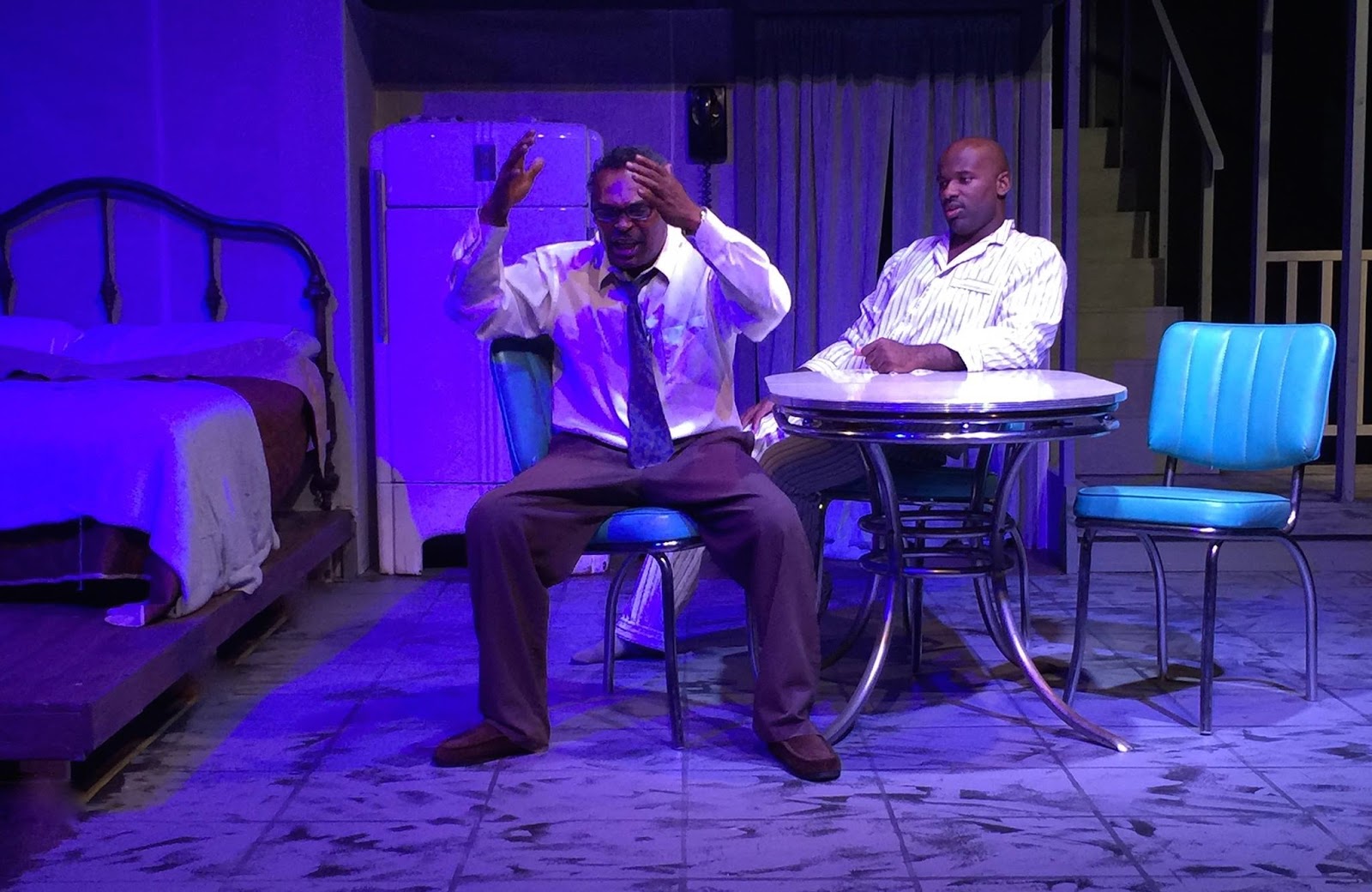
Labels:
Beck Center,
Reviews
Thursday, September 17, 2015
Broadway legend John Kander to attended Musical Theater Project’s PERFECTLY MARVELOUS @ Allen Theatre
Liza Minnelli once said, “The greatest thing about [John] Kander and [Fred] Ebb is you sing their songs and you feel good.” She was referring to the multi-award winning Broadway writing team who gave the world such songs as, “How Lucky Can You Get?,” “Maybe This Time,” “All That Jazz,” “Cabaret,” and “But The World Goes Round.”
These, and other compositions, came from such Broadway shows as CABARET, THE RINK, THE ACT, WOMEN OF THE YEAR, AND THE WORLD GOES ROUND, KISS OF THE SPIDER WOMAN, FOSSE, CURTAINS, and THE SCOTTSBORO BOYS. The duo also contributed to such movies as FUNNY LADY and NEW YORK, NEW YORK.
Kander and Ebb met in 1964. Though it had a short-run, their first collaboration, FLORA THE RED MENACE, created a bond between the writers and Liza Minelli. At age 19, she not only made her first Broadway appearance in the show, but was the youngest person, to that date, to win a Tony Award.
In 1966 the duo transformed the play I AM A CAMERA into CABARET, which went on to win seven Tony Awards. The musical, about the decadence in Germany that helped lead to the rise of Hitler, was later turned into a movie, which again reunited Liza Minelli with Kander and Ebb. She won a Best Actress Oscar for her portrayal of Sally Bowles.
The Broadway show and film CABARET also starred Tony and Academy Award winning Cleveland-born Joel Grey, who will appear on October 24 & 25 at the Allen Theatre in JOEL GREY UP CLOSE AND PERSONAL, as part of Cleveland Play House’s Centennial Celebration Weekend.
Shows like THE HAPPY TIME, ZORBA, 70 GIRLS 70, and CHICAGO followed, and led to Kander and Ebb being anointed Broadway royalty.
Besides their three Tony Awards, the duo were recognized for their contributions to theater and music with the prestigious Kennedy Center Honors.
Ebb died in 2004, but Kander continues to create. Last season THE VISIT, a work that the duo started in 1998, starred Chita Rivera on Broadway.
The 88-year old Kander will be the subject of The Musical Theater Project’s PERFECTLY MARVELOUS: THE SONGS OF JOHN KANDER, which will be performed at the Allen Theatre on October 31 @ 8 PM and November 1 @ 2 PM.
The TMTP concert will feature Tony Award winner Karen Ziemba, who attended the University of Akron, danced with the Ohio Ballet, and performed on the Great White Way in three Kander and Ebb’s shows.
Others in the TMTP multimedia concert will be Bill Rudman, The Musical Theater Project’s Artistic Director, musical director Nancy Maier, and performers Derrick Cobey, Katherine DeBoer and Matthew Wright.
For tickets to PERFECTLY MARVELOUS; THE SONGS OF JOHN KANDER call 216-241-6000 or go online http://www.playhousesquare.org
On October 29, two days before Kander attends the PlayhouseSquare concert, he will be at Oberlin College, his alma mater, for a production of his 2011 musical, THE LANDING, which he wrote with Greg Pierce (nephew of David Hyde Pierce). The script will be staged at the Apollo Theatre, 19 E. College Street. Admission is free, but tickets are required. To obtain tickets, call the Oberlin Central Ticket Service Box Office at 440-775-8169.
JOHN KANDER: HIDDEN TREASURES, 1959-2015, a 2-CD deluxe collection with a 70-page booklet, including written notes by Jesse, Green, theater critic of “New York” magazine, and dozens of production shots and behind-the scenes photos of Kander’s musicals, will be released shortly. Produced by Ken Bloom and Bill Rudman, the 49-tracks will include recordings from Kander’s student compositions at Oberlin, songs cut from CABARET, CHICAGO, and tunes released for the first time from Kander’s archives, as well as new recordings by Anita Gillete and Karen Ziemba. It can be pre-ordered at http://www.MusicalTheaterProject.org
These, and other compositions, came from such Broadway shows as CABARET, THE RINK, THE ACT, WOMEN OF THE YEAR, AND THE WORLD GOES ROUND, KISS OF THE SPIDER WOMAN, FOSSE, CURTAINS, and THE SCOTTSBORO BOYS. The duo also contributed to such movies as FUNNY LADY and NEW YORK, NEW YORK.
Kander and Ebb met in 1964. Though it had a short-run, their first collaboration, FLORA THE RED MENACE, created a bond between the writers and Liza Minelli. At age 19, she not only made her first Broadway appearance in the show, but was the youngest person, to that date, to win a Tony Award.
In 1966 the duo transformed the play I AM A CAMERA into CABARET, which went on to win seven Tony Awards. The musical, about the decadence in Germany that helped lead to the rise of Hitler, was later turned into a movie, which again reunited Liza Minelli with Kander and Ebb. She won a Best Actress Oscar for her portrayal of Sally Bowles.
The Broadway show and film CABARET also starred Tony and Academy Award winning Cleveland-born Joel Grey, who will appear on October 24 & 25 at the Allen Theatre in JOEL GREY UP CLOSE AND PERSONAL, as part of Cleveland Play House’s Centennial Celebration Weekend.
Shows like THE HAPPY TIME, ZORBA, 70 GIRLS 70, and CHICAGO followed, and led to Kander and Ebb being anointed Broadway royalty.
Besides their three Tony Awards, the duo were recognized for their contributions to theater and music with the prestigious Kennedy Center Honors.
Ebb died in 2004, but Kander continues to create. Last season THE VISIT, a work that the duo started in 1998, starred Chita Rivera on Broadway.
The 88-year old Kander will be the subject of The Musical Theater Project’s PERFECTLY MARVELOUS: THE SONGS OF JOHN KANDER, which will be performed at the Allen Theatre on October 31 @ 8 PM and November 1 @ 2 PM.
The TMTP concert will feature Tony Award winner Karen Ziemba, who attended the University of Akron, danced with the Ohio Ballet, and performed on the Great White Way in three Kander and Ebb’s shows.
Others in the TMTP multimedia concert will be Bill Rudman, The Musical Theater Project’s Artistic Director, musical director Nancy Maier, and performers Derrick Cobey, Katherine DeBoer and Matthew Wright.
For tickets to PERFECTLY MARVELOUS; THE SONGS OF JOHN KANDER call 216-241-6000 or go online http://www.playhousesquare.org
On October 29, two days before Kander attends the PlayhouseSquare concert, he will be at Oberlin College, his alma mater, for a production of his 2011 musical, THE LANDING, which he wrote with Greg Pierce (nephew of David Hyde Pierce). The script will be staged at the Apollo Theatre, 19 E. College Street. Admission is free, but tickets are required. To obtain tickets, call the Oberlin Central Ticket Service Box Office at 440-775-8169.
JOHN KANDER: HIDDEN TREASURES, 1959-2015, a 2-CD deluxe collection with a 70-page booklet, including written notes by Jesse, Green, theater critic of “New York” magazine, and dozens of production shots and behind-the scenes photos of Kander’s musicals, will be released shortly. Produced by Ken Bloom and Bill Rudman, the 49-tracks will include recordings from Kander’s student compositions at Oberlin, songs cut from CABARET, CHICAGO, and tunes released for the first time from Kander’s archives, as well as new recordings by Anita Gillete and Karen Ziemba. It can be pre-ordered at http://www.MusicalTheaterProject.org
Labels:
Feature story,
Musical Theatre Project,
preview
Sunday, September 13, 2015
World premiere of Ken Ludwig's A COMEDY OF TENORS delights @ CPH
The Cleveland Play House opened its 100th season in a lavish and theatrically exciting way. An invitation only group of CPH financial supporters, politicians, and theatre enthusiasts, draped in tuxedos and high fashioned gowns, entered the beautiful Allen theatre lobby to have their pictures taken with the 2015 Best Regional Theatre Tony Award statue. Guests were then escorted into the inner lobby where a cocktail party was in full swing.
The crowd then assembled in the Allen Theatre for the world premiere of Ken Ludwig’s A COMEDY OF TENORS.
Last May, the play had a reading as part of the New Ground Festival. With Ludwig present to judge the quality of the script, as well as audience reaction, it became quickly obvious that the grand master of farce was well on his way to another big hit. In part, as a result of the reading, A COMEDY OF TENORS was booked as the opening show for CPH’s second centennial season.
A COMEDY OF TENORS is the second in Ludwig’s look at the world of farcical classical musical stagings. His first show on the topic, LEND ME A TENOR, is one of modern America’s best farces. It received nine Tony award nominations, has appeared twice on Broadway, has been translated into sixteen languages and has been produced in twenty-five countries.
A COMEDY OF TENORS carries forth many of the madcap characters from LEND ME A TENOR. There is Henry Saunders, the former Mayor of Cleveland, who is now a producer of operatic concerts. His son-in-law, Max, now a recognized tenor, is still Saunders’ do it all man Friday. Tito Morelli, (“Il Stupendo”) the temperamental, world famous Italian tenor and his ever put upon wife, Maria, are still bickering and threatening each other. Add Carlo, the new heart throb tenor, who is having a secret affair with Mimi, Morelli’s daughter, Tatian Racón, Tito’s former lover, and a surprise guest, and hysterical chaos reigns.
Farce, a light dramatic work with a highly improbable plot and exaggerated characters, is hard to both write and perform. The writing must be so precise that the audience is led to laughter by the realism of the language imbedded in unbelievable situations. The performances must be authentic, not beg for laughs, and the actions so broad that they require laughter. Lots of door slamming, mistaken identifies, non-stop stage movements, and pure joy on the part of the audience are the keys to success.
Laugh after laugh greets one improbable scene after another. Ludwig knows no ridiculous limits. There’s a talking deli tongue, lots of people in underwear, cast members diving off a balcony, sexual innuendoes that might shock, some Swedish put downs that are sure to bring groans, and making fun of death. Even the curtain call is hysterical.
The cast has been melded into a unit by director Stephen Wadsworth that understands that, for farce to work, the actors must be totally real in their character development. Their earnestness must come across. These are “real” people caught in a series of ridiculous situations. We laugh at what is happening to them, the outlandishness which is coming out of their mouths, but not at them per se.
Ron Orbach rants, raves and overplays Saunders to perfection. He creates a producer who is walking on a tight-rope of hypertension.
Petite Rob McClure, he of unbounded energy and fine tenor voice, leaps over ottomans, dashes around putting out possible disasters, and sweetly allows us to share the wonder of the birth of Max’s son, with total glee.
Bradley Dean creates a Tito who is a hot-blooded Italian drama queen, an aging superstar on the cusp of his career, and a loving father and husband, with nice texturing. He has a wonderful touch with comedic timing and a great singing voice.
Antoinette LaVecchia as Maria, Tito’s high strung wife, is his counterpart in displaying stereotypical Italian excitement, and gets her share of laughs.
Handsome Bobby Conte Thornton charmingly cavorts around the stage showing off his gym-toned body in a pair of tighty-whities as he romances Mimi, Tito and Maria’s daughter. He, as the other tenors in the cast, has a fine singing voice. His face slapping scene with Mimi, brought verbal gasps and laughs from the audience
Beautiful Kristen Martin is very believable as Mimi, while Lisa Brescia does a nice turn as Tatiana.
Charlie Corcoran’s plush, art deco set, is not only attractive, but well built as it stands up to the numerous powerful door slams. William Ivey Long’s costumes are era correct, including the males’ high-waisted pleated pants, and the female courtier dresses.
Last night Ludwig shared, in a conversation we had following production, the challenge of writing a farce. The author, who loves Cleveland, has been in town during the rehearsals of the show and had been doing some rewriting the script. That tweeking continued until shortly before last night’s curtain went up. His reaction to the CPH staging was on the personable Ludwig’s cherubic face, as he wandered the crowd, smiling, sharing stories, and graciously receiving a massive number of compliments from the assemblage.
CAPSULE JUDGMENT: Ah, what a night at CPH. The viewing of their well-deserved Tony, a Ken Ludwig farce which will forever be listed as having had its world premiere beside the PlayhouseSquare chandelier, was a class act celebration of the theatre’s one- hundredth anniversary. As for the play, if the opening night audience’s reaction is an indication of things to come, Ludwig should be well- off financially from the royalties to be garnered from the professional and amateur rights to the show. If you love farce, if you go to the theatre to have a good time, you must see A COMEDY OF TENORS.
A COMEDY OF TENORS runs through October 3, 2015, at the Allen Theatre in the CPH complex at PlayhouseSquare. For tickets call 216-241-6000 or go to http://www.clevelandplayhouse.com.
Please vote for Issue 8--which supports Cuyahoga County's Arts & Culture sector and is NOT A TAX INCREASE.
The crowd then assembled in the Allen Theatre for the world premiere of Ken Ludwig’s A COMEDY OF TENORS.
Last May, the play had a reading as part of the New Ground Festival. With Ludwig present to judge the quality of the script, as well as audience reaction, it became quickly obvious that the grand master of farce was well on his way to another big hit. In part, as a result of the reading, A COMEDY OF TENORS was booked as the opening show for CPH’s second centennial season.
A COMEDY OF TENORS is the second in Ludwig’s look at the world of farcical classical musical stagings. His first show on the topic, LEND ME A TENOR, is one of modern America’s best farces. It received nine Tony award nominations, has appeared twice on Broadway, has been translated into sixteen languages and has been produced in twenty-five countries.
A COMEDY OF TENORS carries forth many of the madcap characters from LEND ME A TENOR. There is Henry Saunders, the former Mayor of Cleveland, who is now a producer of operatic concerts. His son-in-law, Max, now a recognized tenor, is still Saunders’ do it all man Friday. Tito Morelli, (“Il Stupendo”) the temperamental, world famous Italian tenor and his ever put upon wife, Maria, are still bickering and threatening each other. Add Carlo, the new heart throb tenor, who is having a secret affair with Mimi, Morelli’s daughter, Tatian Racón, Tito’s former lover, and a surprise guest, and hysterical chaos reigns.
Farce, a light dramatic work with a highly improbable plot and exaggerated characters, is hard to both write and perform. The writing must be so precise that the audience is led to laughter by the realism of the language imbedded in unbelievable situations. The performances must be authentic, not beg for laughs, and the actions so broad that they require laughter. Lots of door slamming, mistaken identifies, non-stop stage movements, and pure joy on the part of the audience are the keys to success.
Laugh after laugh greets one improbable scene after another. Ludwig knows no ridiculous limits. There’s a talking deli tongue, lots of people in underwear, cast members diving off a balcony, sexual innuendoes that might shock, some Swedish put downs that are sure to bring groans, and making fun of death. Even the curtain call is hysterical.
The cast has been melded into a unit by director Stephen Wadsworth that understands that, for farce to work, the actors must be totally real in their character development. Their earnestness must come across. These are “real” people caught in a series of ridiculous situations. We laugh at what is happening to them, the outlandishness which is coming out of their mouths, but not at them per se.
Ron Orbach rants, raves and overplays Saunders to perfection. He creates a producer who is walking on a tight-rope of hypertension.
Petite Rob McClure, he of unbounded energy and fine tenor voice, leaps over ottomans, dashes around putting out possible disasters, and sweetly allows us to share the wonder of the birth of Max’s son, with total glee.
Bradley Dean creates a Tito who is a hot-blooded Italian drama queen, an aging superstar on the cusp of his career, and a loving father and husband, with nice texturing. He has a wonderful touch with comedic timing and a great singing voice.
Antoinette LaVecchia as Maria, Tito’s high strung wife, is his counterpart in displaying stereotypical Italian excitement, and gets her share of laughs.
Handsome Bobby Conte Thornton charmingly cavorts around the stage showing off his gym-toned body in a pair of tighty-whities as he romances Mimi, Tito and Maria’s daughter. He, as the other tenors in the cast, has a fine singing voice. His face slapping scene with Mimi, brought verbal gasps and laughs from the audience
Beautiful Kristen Martin is very believable as Mimi, while Lisa Brescia does a nice turn as Tatiana.
Charlie Corcoran’s plush, art deco set, is not only attractive, but well built as it stands up to the numerous powerful door slams. William Ivey Long’s costumes are era correct, including the males’ high-waisted pleated pants, and the female courtier dresses.
Last night Ludwig shared, in a conversation we had following production, the challenge of writing a farce. The author, who loves Cleveland, has been in town during the rehearsals of the show and had been doing some rewriting the script. That tweeking continued until shortly before last night’s curtain went up. His reaction to the CPH staging was on the personable Ludwig’s cherubic face, as he wandered the crowd, smiling, sharing stories, and graciously receiving a massive number of compliments from the assemblage.
CAPSULE JUDGMENT: Ah, what a night at CPH. The viewing of their well-deserved Tony, a Ken Ludwig farce which will forever be listed as having had its world premiere beside the PlayhouseSquare chandelier, was a class act celebration of the theatre’s one- hundredth anniversary. As for the play, if the opening night audience’s reaction is an indication of things to come, Ludwig should be well- off financially from the royalties to be garnered from the professional and amateur rights to the show. If you love farce, if you go to the theatre to have a good time, you must see A COMEDY OF TENORS.
A COMEDY OF TENORS runs through October 3, 2015, at the Allen Theatre in the CPH complex at PlayhouseSquare. For tickets call 216-241-6000 or go to http://www.clevelandplayhouse.com.
Please vote for Issue 8--which supports Cuyahoga County's Arts & Culture sector and is NOT A TAX INCREASE.
Labels:
Cleveland Play House,
Reviews
Subscribe to:
Posts (Atom)


