Friday, November 12, 2021

BW’s INTO THE WOODS offers a path out of Covid angst


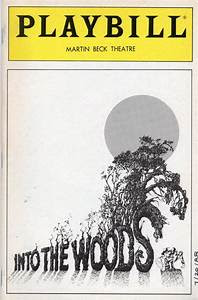
INTO THE WOODS is a musical with a book by James Lapine and music and lyrics by Stephen Sondheim. 

Yes, that Stephen Sondheim, the man who is credited with reinventing the American musical with shows that tackle unexpected themes, music and lyrics of such complexity and sophistication that they challenge performers and musicians who are responsible for taking “Sondheim” off the page and into the world of production.  

Sondheim, the man who ignores the genre’s traditional subjects and writes instead of assassins (ASSASSINS), unmarried men (COMPANY), has-been performers (FOLLIES), revenge (SWEENEY TODD), artists (SUNDAY IN THE PARK WITH GEORGE), isolationism (PACIFIC OVERTURES) and the foibles of fables. 
 
Foibles of fables is the focus of INTO THE WOODS, now on stage at Baldwin Wallace University.  

The musical intertwines the plots of several Grimm fairy tales by exploring the consequences of the characters' wishes and desires. The main characters are taken from “Little Red Riding Hood,” “Jack and the Beanstalk,” and “Cinderella,” with guest performances by Snow White and Sleeping Beauty.  

The musical is tied together by a story involving a childless baker and his wife and their quest to have a child, which is actually the original beginning of “Rapunzel,” their confronting the witch who placed a curse on them, and their interaction with storybook characters during their journey searching for things the witch requires to withdraw the curse.

The first act ends with “happily ever after,” while the second act illustrates that life is not a fairy tale, but that there is a price to be paid for our wishes. 

The show’s themes include the angst of growing up, the relationship between parents and children, the difficulties of accepting responsibility, morality and, most importantly, wish fulfillment and its consequences.  
 
Theatre experts have opined that, since the show was conceived in the 1980s, the height of the AIDS crisis, the show is a parable about the disease.  They perceived that “the Giant's Wife serves as a metaphor for HIV/AIDS, killing good and bad characters indiscriminately and forcing the survivors to band together to stop the threat and move on from the devastation.”   The modern day parallel would be the implications of the COVID crisis.

“Sondheim drew on parts of his troubled childhood when writing the show. In 1987, he told Time Magazine that the ‘father uncomfortable with babies [was] his father, and [the] mother who regrets having had children [was] his mother.”

INTO THE WOODS had a 1987-89 Broadway run of 765 performances and was nominated for ten Tony Awards, winning three.

The BW production, under the creative direction of Victoria Bussert, is not only well-conceived and compelling, but is also a tribute to the quality of the students and faculty of one of the best collegiate musical theatre programs.

After almost two years of education via zoom, the cast emerged to face the daunting task of performing a very complex show filled with challenging Sondheim music and daunting acting hurdles.  To make matters even more difficult, because of the need to give the many students in the Musical Theatre program an opportunity to perform before a live audience, the show is double cast and there is a full set of understudies.

The task of getting the horde of students ready for the return to live theater, fell on the shoulders of not only Bussert, but choreographer Greg Daniels and musical director Matthew Webb.  The well-honed production is a tribute to their abilities.

The performance comments are based on my having seen the “Prince” cast, which is on stage November 10, 12, 14, 18 and 20.  The “Cinderella” cast is on stage the other performances of the run.

Dario Alvarez well creates a Baker who is focused on his task and is a loving husband and father.  “It Takes Two,” his duet with his wife, the charming, Amelia Beckham, is delightful.

Claire Marie Miller (Cinderella) displays a wonderful comic-timing sense, especially in doing prat-falls.  Her “On the Steps of the Palace,” illustrates not only her strong singing voice but her music story telling abilities.  She shines, as does Amelia Beckham, in “A Very Nice Prince.”

Nicholas Hermick (Jack) displays a wonderful child-sensitive quality, which is well-expressed in “Giants in the Sky.”

Eileen Brady skips and sprightly dances in creating a delightful Little Red Riding hood. “Hello, Little Girl,” co-sung with Jack Borenstein, the wolf, is a show highlight.

“Agony” is a fun-bit nicely sung by Cinderella’s Prince (Jack Hale) and Rapunzel’s Prince (Makay Johnson).

The “star” of the show was RhonniRose Mantilla, the witch, who made “Children Will Listen” one of the greatest songs in the Broadway musical lexicon, a meaningful show closer.  She has a lot of the qualities of BW grad Ciara RenĂ©e, who has appeared on the Great White Way in BIG FISH, PIPPIN, FROZEN, and will take the stage shortly in Broadway’s WAITRESS.

The rest of the leading players and chorus were excellent. 

Jeff Herrmann’s set design which cleverly used the entire proscenium stage, Tesia Dugan Benson’s costumes, Angela Baughman’s sound design, and David Allen Stoughton’s lighting, all added to the over-all positive effect.

Capsule Judgment:  Sprightly, fresh, well done, all involving INTO THE WOODS is a must see!

For tickets to INTO THE WOODS, which runs from November 10-21, 2021 in BW’s Kleist Center for Art and Drama go to bw.edu/tickets or call 440-826-2369.
 
Upcoming BW/Musical Theater events:
December 4, 7 p.m.—SENIOR CELEBRATION—Each music theatre senior will perform one number from their virtual senior recital.  Tickets required.
 
February 4-27, 2022—LIZZIE THE MUSICAL—Beck Center for the Arts, Lakewood--BW Musical Theatre students, as directed by Victoria Bussert, present the Lizzie Borden tale of did she or didn’t she ax-out her parents.  Tickets required. 


April 22 & 23, 2022—LIGHTNING THIEF—Playhouse Square-Helen Theatre—BW grad Chris McCarrell, who starred in the off-Broadway production, will direct present BW students.  The musical tale centers on Percy Jackson, a dyslexic twelve-year old with ADHD.  While on a school trip to the Metropolitan Museum of Art, one of the chaperones attacks him.  Percy's favorite teacher, Mr. Brunner, lends Percy a magical sword-pen to defeat her.  And, thus, the mythical tale begins.  Tickets required.

Thursday, November 04, 2021


Entertaining THE PROM, a musical with a social message, gets a deserved standing “O” at the Connor Palace 


Roy Berko
 
In 2010 a gay Mississippi high school student was banned from coming to her senior prom by the school’s Board of Education because she wanted to bring her girlfriend as her date.  She challenged the ruling, which resulted in the cancellation of the prom.  The student and the ACLU sued the district.  The federal court found the school district guilty of violating the student’s first amendment rights and said the prom must be held.  

The board reinstated the prom, but local parents organized an alternative event to be held on the same night, but kept the event and its location a secret so the gay student and the media would not know.  
 
Celebrities, such as Green Day and Lance Bass rallied together via social media to show support for the student and sponsored a “Second-Chance” prom, where students could attend without homophobic backlash.
 
That event was the impetuous for Jack Viertel’s concept musical, THE PROM, which is starting its national tour with Cleveland performances as part of Key Bank’s Broadway series.  The show features music by Matthew Sklar, lyrics by Chad Beguelin and book co-authored by Beguelin and Bob Martin.
 
The story centers on four frustrated Broadway actors, at a failure crossroad in their careers, who contrive a way to get attention by traveling to the conservative town of Edgewater, Indiana, to help Emma, a lesbian student banned from bringing her girlfriend to the high school prom.
 
The Broadway production was critically greeted with such comments as, "such a joyful hoot,” “with its kinetic dancing, broad mugging and belting anthems, it makes you believe in musical comedy again," and “with a tuneful score, a playful book, and performances that remind you what Broadway heart and chutzpah are all about, this cause cerebra of a show turns out to be a joyous, funny, and sweet production that should appeal to several generations of musical fans." 
 
The touring production, which rehearsed in Cleveland, was met with smiles, laughs, cheers, resounding applause and a well-deserved standing ovation on opening night.
 
The story, though possessing the quality of a TV sitcom tale, has a meaningful purpose, is tightly written and keeps attention throughout.  This is not CHORUS LINE or MAN OF LA MANCHA, but proves to be a delight to a Covid-experiencing audience, that is in need of a relief from angst.
 
The show follows the tried-and-true pattern of American musicals since OKLAHOMA, the first book musical.  The opening number sets the pattern for the humor, sprightly dancing, and the over-done performances that follow.  The first act ends with a cliff-hanger that the audience must come back for act two, or not know whether the heroine’s problem is resolved, and ends with a joyous audience-invigorating finale. There are several show stoppers, a tender song that is reprised, and an obvious moral. 
 
“The musical opens on Broadway, where 
Eleanor!: The Eleanor Roosevelt Story is celebrating its opening night with its lead cast members Dee Dee Allen and Barry Glickman.  The musical is bashed by The New York Times because Dee Dee and Barry do not understand their characters since they are self-absorbed narcissists, resulting in the show closing on opening night. To improve their image, the actors decide to take up "a cause" to appear selfless After searching on Twitter, they find Emma, a teenager from Indiana whose prom was cancelled by the PTA because she wanted to bring her girlfriend. Seeing the opportunity, and some personal connection, the actors decide to go to Indiana to help.”

Of course, there are stumbles and conflict and love affairs along the way, but, as is the case with all “fairy tales,” there is a happy ever-after ending.

Don’t be surprised to hear Broadway songs that sound familiar.  The writers have snuck in references to GODSPELL (“The Acceptance Song”) and CHICAGO (Zazz”)

The cast for the touring show is top notch.  Patrick Wetzel delights as the “over the top” gay Barry Glickman.  Kaden Kearney is appealing as Emma, the lesbian who only wants to “Dance with You.”  Her heartfelt rendition of that song is the vocal highlight of the show.  Courtney Batan finely walks the tightrope of not going overboard and creating ridiculous, as diva Dee Dee Allen.  She is quite the effective vocal belter.  


Emily Borromeo’s Fosse jazz dancing aficionado is marvelous in “Zazz.”  The real Julliard might be either delighted or abashed to have obsessive Bud Weber (Trent) as a grad, but the audience was enthusiastic with his performance.  The rest of the cast and chorus were excellent.
 
Kudos to choreographer and director Casey Nicholaw and music conductor Chris Gurr for jobs well done.
 
CAPSULE JUDGMENT:  THE PROM is an old-fashioned musical which tells a contemporary tale with a moral.  The touring company gives a fresh, dynamic, fun and tune-filled performance that delighted the audience and got a well-deserved standing ovation.  Applause, Applause!
 
THE PROM will be on the Connor Palace stage through November 21, 2021.  For tickets go to 
https://www.playhousesquare.org/events/detail/the-prom or call 216-241-6000.

Tuesday, November 02, 2021

Thought-provoking AIRNESS brings back live performance to Dobama


Air guitar is a form of dance and movement in which performers pretend to play an imaginary electric guitar.  Performances include exaggerated strumming motions and recorded rock music often coupled with loud singing or lip-synching.


On the surface, AIRNESS, Chelsea Marcantel’s play now on stage at Dobama, is a spoof on air guitar competitions and the people who participate in what many think of as a frivolous activity. 


The story centers on Nina (Maria Burks), a band guitarist, who enters her first air guitar competition, supposedly to compete.  In reality she is searching for her boy-friend, D Vicious (Michael Glavan), the reigning national air guitar champion, who broke off their relationship, leaving with no notice or reason.


She meets contenders Cannibal Queen (Eric Scerbak), Shreddy Eddy (Lue Brett), Golden Thunder (Corin B. Self) and Facebender (Tim Keo), all who are conflicted and in a search for personal purpose.  Instead of finding meaningless, she finds friendships, and discovers what it means to find airness, both on stage and in life.


Airness is the state of a person so absorbed in something that they lose their inhibitions and transcend the lack of self-worth, thus setting themselves free to be in a state of pure joy.


The play helps one to realize that the angst of living, especially in these days of Covid, conflicting realities, and political and philosophical strife, has unleashed a need for escapes from reality.  It illustrates that angst can present itself in physical and verbal aggression, as has been displayed on commercial airlines, in attacking school board members due to misunderstanding the teaching of racial and ethnic awareness, participating in the Black Lives Matter and/or Me-Too rallies, or acting out negatively at athletic events. 


The script seems to proport that maybe a little more air guitar participation might be the way to get rid of stress in a non-aggressive way.


Marcantel, who is presently developing new plays at the Cleveland Play House through a commission from the Roe Green Fund for New American Plays, won the American Theatre Critics Association Osborn New Play Award in 2018 for AIRNESS.  She recently won the Richard Rodgers Award for Musical Theatre from the American Academy of Arts and Letters for her new musical THE MONSTER.


Reviews of other productions of AIRNESS posit that, “If you are looking for an amazing piece of theatre that will get you on your feet tapping, wailing and clapping in mid-air – while also moving you to reflect on and care for yourself – look no further; this bad boy is for you” and

“An all-out comedy that’s fricking funny, hella heartfelt, and badass brilliant.” 


I wish I could use the same platitudes as those reviews for Dobama’s production.


Though the performance, under the directorship of Nathan Motto, is entertaining and develops the play’s theme, it lacks the dynamism needed to get the audience wailing and clapping.  The drawback is not the fault of the actors’ character development or line presentations, it is their lack of charisma during the air guitar presentations.  It is difficult, based on the generally weak routines of the Dobama cast, to believe that thousands of people attend the national and international air guitar competitions.


Weak that is, with the exception of Trey Gilpin, the show’s uninhibited, compelling, rad, heartfelt, rockin’, narrator.  The rest of the cast could take some lessons from him on really getting into the music and being uninhibited.


Some may argue that the lack of talent of the guitar performances aids in drawing the attention to the play’s purpose, but, these are supposed to be people who make the national finals, and those in the real-world are dynamic, compelling and emotionally involving. (If you have never seen a well-performed air guitar playing go onto You Tube and watch.  Try https://www.youtube.com/watch?v=TMIws86ZLyk)


The hour and a half production is performed without intermission.


As per Equity rules, those in attendance must show proof that they are totally vaccinated and wearing of a mask during the entire production.


CAPSULE JUDGEMENT:  AIRNESS is a fine play to attend if you are feeling angst and need an escape.  Though much of the air guitar playing could have been more dynamic and involving, the message of the author stands out. 


AIRNESS continues at Dobama through November 21, 2021.  For tickets go to:  Tickets — Dobama Theatre or call 216-932-3396


Sunday, October 31, 2021

WHERE DO WE SIT ON THE BUS? Is a trip centering on Latinx-American culture at CPH


For the last several years more and more attention has been placed on The Black Lives Matter and Me-Too movements, woke language, micro-aggression, radical feminism, transgenderism, Critical Race Theory and aggression against Asians.  They have become issues for laws, politics, education, media and the arts.


After almost two-years of non-live production, the Tony winning Cleveland Play House opened its 106th season with Brian Quijada’s solo show, WHERE DID WE SIT ON THE BUS?”


During a third-grade lesson on the Civil Rights movement and Rosa Parks, a Latina child raises her hand to ask, “Where did we sit on the bus?” Her teacher can’t answer the question.


“This autobiographical solo show follows that kid from her childhood to adulthood as she explores her family’s history, her identity as a first-generation American, and what the world will be like for her future children. Featuring live music that brings together Latin beats, hip-hop, and looping, WHERE DID WE SIT ON THE BUS?  examines what it means to be Latinx [and a lesbian] in America.”


Brian Quijada, the play’s author, explains that he felt alone growing up as a first-generation Salvadorian-American in a basically all white Chicago suburb, where his friends were almost all Jewish. 


He wrote the autobiographic, WHERE DID WE SIT ON THE BUS, in an attempt to put his thoughts in order.  As the play has been performed around the country, he “was delighted to find that many people from diverse backgrounds felt a deep kinship with the themes of the show.” 


Quijada’s retelling reminds us that we are each the product of not only our heredity, but our environment (our family, theological experiences, school, community, media, and the era in which we lived, among others).  They are the formation blocks for our attitudes and beliefs and the language(s) spoken.


In Quijada’s case, he was “heavily influenced by his upbringing, his immigrant parents, and his continued search for identity.”  Because of this background his writing is infused with Latin rhythms, hip-hop, R&B, ‘70s and ‘80s rock, finger drumming, slam poetry, and looping (the repetition of small musical phrases that are edited together back-to-back), as well as the spoken word.


It is this multi-dimensional-approach, that should have made the production extra-ordinary.  Unfortunately, the fact that the approach is overdone, and also some decisions by director Matt Dickson that detract from the story and instead overly draw attention to the staging devices, the experience, though positive, is not compelling.


Constant sounds, both on-stage produced by the Satya ChĂ¡vez, as Bee Quijada, and off-stage, drown out the words.  Chavez’s constant moving around, with no purpose other than to step on the multi-number of looping pedals, picking up and strumming a guitar for a couple of chords and putting them down without really playing them, and adjusting electronic instruments, often becomes overwhelming.   They distract rather than add purpose. 


Maybe those who are used to music played loudly with no emphasis on the words spoken, or being constantly stimulated with multi-sources of outputs, the cacophony of sounds and actions would add to the experience, but to the theatre-goer interested in words having meanings, and movements being motivated to stress the understanding and build the action, the sensory overload is not helpful.  The oft-random movements also slowed down the action and broke audience involvement.


The script was written by and originally performed by a male.  In the CPH production Bee is played by Satya ChĂ¡vez, an out-lesbian.  Adjustments have been made in the script to add the gay spotlight as well as the Latina experience.  One must also wonder if, in other productions, the ever touched, but seldomly actually played guitars, were actually used to accompany the songs.


One of the productions highlights was a piano/singing solo by ChĂ¡vez.


The author served as the music supervisor for the CPH production.  He provided additional music looping compositions and played multiple instruments through the reimagined production.


CAPSULE JUDGMENT:  WHERE DID WE SIT ON THE BUS tells the angst of being Latino and gay in modern day America.  The CPH production, due to the play’s format and staging, is somewhat frustrating.  Since the piece, according to the author, was intended to be a collection of original poems and songs, it might work best in a concert format, where the huge Allen stage would not have to be traversed and the attention would be just on the performer and the relevant material.


WHERE DID WE SIT ON THE BUS, runs from October 23 through November 14, 2021 in the Allen Theatre at Playhouse Square. Tickets can be purchased by calling 216.241.6000 or by visiting www.clevelandplayhouse.com


Sunday, October 17, 2021

THE TEMPEST storms onto stage, bringing live performance back to Great Lakes Theater


THE TEMPEST, now on stage at Great Lakes Theatre, is thought to be Shakespeare’s last known play. 

The script almost defies classification as it contains both tragic and comic themes, as well as romance.  It explores many themes, including magic, betrayal, revenge, and family.

Twelve years after he and Miranda, his young daughter, were set adrift in exile, we find Prospero, a sorcerer, who was the Duke of Milan before his Kingdom was taken from him, living on an island with Miranda and his two servants—Caliban, a monster figure, and Ariel, a mischievous spirit.  

As in many of the Bard’s works, there is a storm and a vessel is shipwrecked. In this case, the storm is the creation of Prospero who sees his chance for revenge when those who sent him into exile are aboard the ship near his island.

The passengers are caught in the storm, and eventually were brought ashore by Ariel, included are Ferdinand (son to the Queen of Naples), a handsome young man, who eventually falls in love with Miranda, as well as Trinculo (the king’s jester) and Stephano (the king’s butler), Alonso (Queen of Naples), Sebastian (Alonso’s brother), Antonio (Prospero’s brother, the usurping Duke of Milan), and Gonzalo (an honest councilor). 

Prospero vows that once he achieves his goal of revenge, he will set Ariel free, and abandon his magic, saying:
     I’ll break my staff,
     Bury it certain fathoms in the earth,
    And deeper than did ever plummet sound
     I’ll drown my book.

(Side note: Some Bard experts posit that the character of Prospero is the symbol of Shakespeare, and the character’s renunciation of magic signals the writer’s farewell to the stage.)

As is the case in Shakespearian comedies, there is a peaceful ending in which the sorcerer forgives his wrong-doers for past bad deeds.  As the group is ready to leaves the island, Ariel is told to provide good weather to guide the king's ship back to the royal fleet and then to Naples, where Ferdinand and Miranda will be married. After this, Ariel is set free. 
 
Traditionally, in an epilogue, Prospero requests that the audience set him free—with their applause.  In the GLT version, however, the director has omitted that action.
 
This is not the only alteration to the script.  Several roles usually portrayed by males are changed to female.
 
The GLT production is not as filled with outgoing slapstick and high drama as is normally the case with THE TEMPEST.  Maybe it was the long Covid-influenced layoff, but there was a seeming lack of concentration and bigger than life presence that the show requires. 
 
The farcical delight normally afforded by Trinculo and Stephano was not filled with the unbridled out-and-out slapstick, needed.  This is a shame, as those characters are written to be the comic escape from the tragic elements.
 
Aled Davies is properly Kingly and tortured as Prospero.  Joe Wegner was sprightly as Ariel, though a little more “Tinker Bell” would have added to the performance.  Nick Steen, in a counter-role for the actor who usually plays handsome leading men roles at GLT, was properly tortured as Caliban.  Pretty Angela Utera (Miranda) and dynamic Domonique Champion (Ferdinand) were charming as the young lovers.
 
The set design created by Efren Delgadillo, Jr. was overdone.  There were massive amounts of flowing parachute material, which not only enveloped the stage, but also the walls, the upper proscenium and stalls to the right and left of the stage.  It gave an overall illusion of massive ever-present oppressive clouds.  The attempt to imitate a Christo’s wrapping installation, did not work.
 
Rick Martin’s lighting designs helped add story-telling texture.
 
It is hard to figure out what effect Helen Q. Huang was trying to get with her “let’s go shopping at the local thrift store and find costumes as well as costume-pieces-parts which we can sew together.”  The cacophony of colors, styles and textures did little to set a meaningful visual tone.
 
Matthew Webb’s sound design and musical compositions enhanced the over-all effect.
 
CAPSULE JUDGMENT:  THE TEMPEST is not one of Shakespeare’s great plays, but, with the right production it can make for a positive classical theater experience.  Multi-award-winning Director Sara Bruner, who is a master of staging the Bard, unfortunately was not up to her usual superb level in guiding this production.
 
THE TEMPEST runs at The Hanna Theatre from October 15-November 7, 2021.  For tickets call 216-241-6000 or go to GreatLakesTheater.org


Saturday, October 16, 2021

NEW BEGINNINGS @ Cleveland Orchestra 10/14 & 17, 2021


Appreciative audience welcomes Cleveland Orchestra back to Severance Music Center


Roy Berko


As I glanced around the gorgeous, newly renamed Jack, Joseph and Morton Mandel Concert Hall, in The Severance Music Center, my thoughts flashed back several years to a visit to New York City and a tour of Carnegie Hall.  


Upon entering the Stern Auditorium, the largest performance space of the prestigious entertainment mega center, a member of our group said, “This must be the most beautiful performance space in the country.”  Our tour guide, a typical outspoken New “Yawker” quickly said, “Nope, the best classically designed facility is Severance Hall in Cleveland.”  


Later in the tour, when the topic of best American orchestras was brought up, the guide stated, “The New York Philharmonic and Boston Symphonic are good, but the Cleveland Orchestra is better.”  


My goodness, we were in the presence of a Clevelandophile.  


Not only this docent, but The New York Times has declared “Cleveland [Orchestra] under Welser-Möst’s direction is America’s most brilliant orchestra.”  It went on to praise its “virtuosity, elegance of sound, variety of colors and chamber-like musical cohesion.”


Yes, there are many great music venues.  There are many fine orchestras.  A visit to the home and performance of “our” orchestra, only reenforces what a set of treasures CLE has.  How proud we should be of what this city’s philanthropists and citizens, and the on-going Boards of Directors, have created.


The return to a live performance program, “New Beginnings,” staged on October 14 and 17, just reinforced the orchestra’s masterful sound and ability to captivate an audience.


The program opened with Richard Strauss’s “Macbeth, Opus 23,” a tone poem based on Shakespeare’s tragedy.  


The epic sounding piece is credited with marking a turning point in Strauss’s career, was the first of his cannon of tone poems, and is considered to be the defining example of this type of music.


This playing was the first time that the orchestra has performed the powerful “Macbeth.”


The writing has a fascinating pattern.  Each major character is represented by a unique musical theme. King Duncan is signified by a striding musical sound.  “Macbeth and Lady Macbeth have their own themes that merge when their shared ambitions work to the same end.”   The swirling sounds of the duos demise is the piece’s climax.


This single movement composition was meticulously performed under the baton of Franz Welser-Möst, in his twentieth year of his much-praised tenure.


Joan Tower, the composer of “A New Day,” the second offering, was co-commissioned to write the piece by the Cleveland Orchestra for cellist Alisa Weilerstein.”  


Tower, who is credited with being a primary force in encouraging women classical composers says of the piece, which reflects on her marriage, “I realized that our long time together was getting shorter, becoming more and more precious with each new day.”


The composition’s four movements, each representing separate episodes in a day, runs about 25-minutes in length, and was being played for the first time before an audience.


After an encompassing first movement, the tonal contemporary sounds faded into two movements of rather static music, transitioning into a solid ending.  


Alisa Weilerstein, celloist ordinaire, clothed in a bright red gown, not only proved her musical skills, but also her showmanship.  Her facial expressions, both when she was playing or listening appreciatively to the orchestra, displayed animation, changing with the moods of the music.  She is deserving of her title as “one of the foremost cellists of our time.”


The piece ended with a standing ovation from the appreciative audience and three curtain calls for the orchestra, the composer, who was in attendance, and for the celloist.


Sergei Prokofiev’s “Symphony No. 5, in B-flat major, Opus 100,” is noted as “a personal reflection, showcasing the composer’s facility with melody and rhythmic invention.”  


The composer, though not considered as musically gifted as his fellow Russians, Tchaikovsky or Rachmaninoff, tends to write in more modern terms, often including sounds and melodic inventions not found in Russian or for that matter, other compositions of his time. 


Symphony No. 5 is tuneful, energetic and engaging.  There is a delightful quality to the composition that was evident in Welser-Möst’s energetic direction and the postures and facial expressions of the musicians.


During an intermission in the performance, Joela Jones, long-time primary keyboardist, who has announced her retirement, was awarded the Cleveland Orchestra Distinguished Service Award.


For information about future Cleveland Orchestra concerts and to purchase tickets go to:  

www.Clevelandorchestra.com


Be aware that everyone who enters Severance for concerts and events will be required to show proof of full Covid-19 vaccination.  Guests who are unable to be vaccinated or are ineligible will be required to provide proof of negative Covid PCR test taken within 72 hours of entry.  In addition, face masks are required.


Sunday, October 10, 2021

Relevant MA RAINEY’S BLACK BOTTOM gets strong production at Karamu


August Wilson, the author of MA RAINEY’S BLACK BOTTOM, which is now in production at Karamu, America’s oldest African American producing theatre, is known as "theater's poet of Black America." 
 
Wilson is best noted for a series of ten plays, collectively called The Pittsburgh Cycle, which chronicle the experiences and heritage of the African-American community in the 20th century. Several of the plays in the series, including MA RAINEY, won Tony Awards.  

Written in 1982, the play is set in a recording studio in Chicago in 1920.  It deals with issues of race, the attitudes of Blacks regarding Whites, religion, and the historic exploitation of Black recording artists by white producers.
Ma Rainey was a real-life performer, known as “The Mother of the Blues.”  

Despite its title, which refers to one of Rainey’s signature songs, this is not a musical.  It is a play with incidental music.

“In a Chicago recording studio in 1927, Ma Rainey's band players Cutler, Toledo, Slow Drag, and Levee gather to record a new album of her songs. As they wait for her to arrive they tell stories, joke, philosophize, and argue. Tension is apparent between the young hot-headed trumpeter Levee, who dreams of having his own band, and veterans Cutler and Toledo.”  This tension culminates in a startling ending which mirrors the Black-Black self-destruction often seen on the streets of many major cities.

The Karamu production, under the direction of Justin Emeka, is framed by a wonderful set and era-correct costumes.
 
The cast is excellent.  
 
Jaris Owen is seething as Levee, a young trumpeter and composer, who mirrors the rage of the young black man, feeling he is being held back and psychologically abused by the white musical establishment, as well as by the “don’t make waves” older Black musicians.  His “rage” speeches and eventual acting out, vividly screams out as the voice of the real or perceived oppressed.
 
Cornell Hubert hits the right notes as Cutler, the older Black orchestra leader, brought up in the Negro-era of being subservient to the rules of White America.  He “shuffles” through life doing what he needs to do in order to not set off waves.
 
Christina Johnson presents a Ma Rainey who has learned that she has a talent that is needed by the White music producers, which gives her the ability to demand the Coca-Colas that she requires, sing the arrangements she wants, and drag along the entourage that she desires.  She both looks and sings like the living legend.
 
The show’s missing element is the use of recorded music rather than having the on-stage actors play their instruments.
 
Capsule judgment:  MA RAINEY’S BLACK BOTTOM is a well-written, well-performed play, that grabs and holds the attention.  The author, August Wilson, as is his usual manner, brings a strong spotlight onto the plight of the Black population in America.  This is a production well worth seeing!  (Side-note:  The theatre is chilly.  Be advised to bring along a sweater or jacket.) 
 
Special notice:  Be aware that masks are to be worn at all times at Karamu, regardless of vaccination status.  Upon entry all patrons must show proof of vaccination reflecting 14-days since the second/final dose or evidence of a negative PCR molecular or antigen COVID-19 test taken within 72 hours of arrival.
 
MA RAINEY’S BLACK BOTTOM runs October 7-31, 2021 in the Jelliffe Theatre.  For tickets go to:  https://karamuhouse.secure.force.com/ticket/#/events/a0S5G00000IRrzsUAD


Saturday, October 09, 2021

Eye-opening THE EXONERATED contains an important message at Beck, but doesn’t make for compelling theater


The death penalty carries the inherent risk of executing an innocent person. 


Since 1973, more than 186 people who have been sentenced to death have been exonerated. 


Research by the National Academy of Science indicates that about 4.1% of the people currently on death row are likely to be innocent. 


EXONERATED, now in production at Beck Center for the Arts, is a docu-drama based on over forty interviews of wrongfully convicted death row inmates across the United States by the script’s authors, Jessica Blank and Erik Jensen.


Colleen Longshaw Jackson, the show’s director, says of the work, “What drew me to this piece was the opportunity to showcase human resilience with an honest glimpse of the consequences and lasting effects trauma can have on a person.”


Jackson also states, “As some of us commit or recommit to social justice causes across the country we are challenged to ‘Say Their Names’ and ‘Never Forget’ until [there is] justice. The lives of the exonerated in this piece matter as well so we say their names and tell their stories, and my hope is that the audience will be inspired to act in some way to make our country a more just and equitable place to be. There are innocent people still suffering. Still waiting.”


The message of the script is powerful and meaningful.  We hear of prejudice, police intimidation, the wrong-doer blaming the innocent, and arrest for convenience. The fact that we are hearing the words of real people who, for various reasons, were convicted, makes the concept even more powerful than a fictionalized tale. 


Each of the tales of the convicted holds its own message of wrongful conviction.  Each is a tale whose conclusions of the person being released from prison leads of feeling of wanting to cheer, to want to praise the organization, the lawyers, the lay people who helped open the prison door for the individual to return to society.   Return, but in no way get the years of lost freedom returned.  As the released persons indicate, they are not the same person they were before being incarcerated.


The literal telling of the individual tales, which is the strength of the piece, is  also the play’s weakness.  Listening to people telling what happened to them is interesting, but doesn’t make for gripping theater.  There is little action, no visual texturing of experiences, just lots of words…undeniable words, but just words.  Ninety-minutes of this can make for a long sit.


That’s not to say that the many awards given to the piece are not deserved.  It can be conceived that such organizations as the NAACP, Amnesty International, the American Bar Association and the National Association of Criminal Defense Lawyers gave their praise and recognition because of the subject matter, not for the compelling staging.


The cast, Stuart Hoffman, Amy Fritsche, Greg White, Isaiah Betts, Keith Kornajcik, John Polk, Samantha Cocco, Andrea Belser, Mell-Vonti Bowens and Abraham McNeil Adams, many of whom play several parts, are all strong.  A special nod to Amy Fritsche whose textured portrayal of Sunny, who while in jail missed out on watching her children grow-up and the death of her husband, was compelling.


One can only wonder if the director could have gone beyond the words of the script and created some action, whether physical, vocal or visual, that could have added some element of altering speech after speech after speech.


CAPSULE JUDGMENT:  THE EXONERATED has a strong and important message.  It is one that anyone interested in civil justice should hear.  The docu-drama methodology of one speech following another relayed the idea, but didn’t make for compelling theater.


THE EXONERATED runs at Beck Center for the Arts from October 8-November 7, 2021.  For tickets call 216-521-2540X10 or go on line to beckcenter.org


Next up at Beck:  ELF THE MUSICAL (December 3, 2021-January 2, 2022)


Thursday, October 07, 2021

THE LION KING, a gentle roar, at State Theatre


THE LION KING, whose North American touring company, which recently opened in CLE’s Playhouse Square’s Key Bank State Theatre, has an enviable record.  It is the third longest running show in Broadway history, clocking a little over 9,300 curtain raisers.  Only THE PHANTOM OF THE OPERA (12,370) and the revival of CHICAGO (9,692) have had longer Great White way runs.


The Julie Taymor inspired stage show, she was the Broadway show’s director, costume and mask co-designer, has had over 25 global productions and is the only show in history to generate six worldwide productions running 15 or more years. It has been performed in eight different languages (Japanese, German, Korean, French, Dutch, Spanish, Mandarin and Portuguese), and its worldwide gross exceeds that of any film, Broadway show or other entertainment title in box office history.


The original production won six 1998 Tony Awards and has earned more than 70 major arts awards.  


The score features Elton John and Tim Rice’s songs from THE LION KING animated film along with three new songs and additional musical material.  The resulting sound is a fusion of Western popular music and the sounds and rhythms of Africa.


The touring production, which was rehearsed in CLE, after its pause for the pandemic, was staged by Julie Taymor, the first woman to win a Tony Award for Direction of a Musical.  She supervises new productions of the show around the world.


With all the amazing performers available, especially since the Covid epidemic closed all the professional shows, and are only now making a slow comeback, it would be expected that the casting directors could have found a crème-de-la-crème cast.  Unfortunately, this is not true.


South African, Gugwana Diamini, who has appeared in both stage and film versions of THE LION KING, shines as the storytelling Rafiki.  Ben Lipitz (Pumbaa, the warthog) and Nick Cordileone (Timon, the meerkat) delight.  Their “Hakuna Matata” is a show highlight.


Darian Sanders (Adult Simba) and Kayla Cyphers (Adult Nala) have fine singing voices, but develop shallow characterizations.  Their “Can You Feel the Love Tonight,” was lovely.


In other major roles, Spencer Plachy (Scar), lacks the menace and venom to create the script’s fearsome villain.  (This may be the production’s way of cutting down the violence which could scare children who are a primary audience demographic.). 


Mufasa (the King of the Jungle) lacks the needed regalness and physical power.   


While somewhat humorous, the hyenas are lacking in the needed Three-Stooges farcical presence.


Taymor’s puppets, whose entrance as they march down the aisles and fill the stage to participate in the “Circle of Life” opening, are breathtaking.  The opening number has to be one of the most encompassing and joyous moments in any musical.


The score is multi-textured, the songs memorable, but, in this production, the power and pacing of the music often seemed almost lackadaisical.  


CAPSUAL JUDGEMENT:  With its stellar credentials one would expect the Playhouse Square’s production to be spectacular.  The sets, costumes, puppets, and special effects are.  Unfortunately, the quality performances and dynamics needed to make the performance shine, are often in short supply.  This is THE LION KING light…a gentle roar, compared to previous dynamic stagings.


THE LION KING runs at the Key Bank State Theatre from October 1-15, 2021.  For tickets and information go to playhousesquare.org or call 216-640-8800.


The next major theatrical presentation in Playhouse Square is THE PROM, part of the Key 

Bank Broadway Series, playing from November 2-21, 2021.  WICKED tours in December 8, 2021 through January 2, 2022.