Saturday, March 19, 2005

Beauty And The Beast - Carousel Dinner Theater


'BEAUTY AND THE BEAST' at CAROUSEL more beauty than beast, but...

'DISNEY'S BEAUTY AND THE BEAST,' which is now on stage at Carousel Dinner Theatre, tells a "tale as old as time." It was originally conceived as a story in 1740. It was a tedious, dark and scary tale which in 1756 was later transformed into the popular version. In 1992 Disney released a version of the story which became the first animated feature to be nominated for the Academy Award's Best Picture. (It lost to 'THE SILENCE OF THE LAMBS.') In 1994 Disney transformed the script into an award winning Broadway musical which is now the sixth longest-running show in Broadway history. The show has been in presented in15 countries and in translated into 7 languages. It is estimated that over 24 million people have seen the live version of the show.

The story concerns a prince who, because he has no love in his heart, is transformed into a hideous beast by an enchantress. To break the spell, the Beast must learn to love another and earn their love in return. If not, he will be doomed to remain a beast for all time.

Of course, as in all fairy tales there has to be a happy ending, so enter Belle, a beautiful young woman who lives with her eccentric father in a small town near the Beast's castle. Belle longs for a life of adventure like those that she reads of in her books. Her father gets lost in the woods and wanders into the Beast's castle, where he is imprisoned. Upon finding her father in the Beast's clutches, Belle offers herself to the Beast in return for the release of her father. And...well, you can guess the rest. Yes, the Beast learns kindness and love, it is reciprocated by Belle, and we all go out of the theatre singing the likes of "If I Can't Love Her," "A Change in Me," "Be Our Guest," and the title song, "Beauty and the Beast."

Carousel's production, under the direction of Marc Robin, has some shining moments, but fails to create the potential magic of the show. Part of the problem lies with Robin's direction. As in Carousel's 'CATS,' early in this season, he fails to imbue in some of his cast members the necessity to "be" the characters they portray instead of feigning the characterizations. He also paces the show in a meandering pattern. It lacks vitality. His choreography also fails to light up the stage.

The show lacks polish. This may be because, as one member of the cast indicated, "We only had five days of rehearsal before we opened." He said this in wonderment that the production was able to get staged in such a short period of time. I would hope as the production runs, it might meld better.

Another factor in the lack of sparkle is the restriction placed on Carousel by Disney and Music Theatre International, which own the rights to the show. The theatre is not permitted to copy the original Broadway or animated feature designs. Because of this the images which audience members are used to are missing. As good as Dale DiBernardo's costume designs are, there is a visual element missing. Robert Kovach's set designs don't help the matter. They tend to lack creativity and sometimes cause staging problems.

The performance qualities vary greatly. Julia Krohn is a charming Belle. Even though she was sick on reviewer night, her voice still was excellent. She light up the stage. Curt Dale Clark sings the role of the Beast well, though in the early scenes his Beast was not menacing enough.

James Patterson is delightful as Lumiere, the candlesticks. The fact that he has played the role on Broadway and in the touring company shows. John Reeger is wonderful as Cogsworth, the clock, as is Paula Scrofano as Mrs. Potts. Another performance highlight is that of Benjamin Brooks Cohen as the much maligned, punched and tossed LeFou though he often slips into a characture rather than being the character. By overdoing the slapstick he draws away from the delight and we laugh at him rather than with him. As the dresser, Arlene Robertson is delightful.

On the other hand, Matt Stokes feigns the role of Gaston, Belle's boorish muscle-bound suitor. He, of bad wig, is all shticks and gimmicks and no characterization. He dances poorly and his lines lack believability.

The dancing, with few exceptions, is weak. There were times when it actually looked like they were counting their steps. The male chorus lacked the necessary vocal dynamics.Capsule Judgment Carousel's 'BEAUTY AND THE BEAST' isn't a bad show, it just lacks polish, dynamism and the special quality that makes the movie and Broadway productions so wonderful.

Thursday, March 17, 2005

Herbal Bed - Actors' Summit


Fine production of 'THE HERBAL BED' at Actors' Summit

Did you know that William Shakespeare had a daughter named Susanna who sued a man who had slandered her? Were you aware that Shakespeare's son-in-law, Dr. John Hall, was responsible for developing a proper treatment for scurvy? Well, these and many other revelations unravel in Peter Whelan's THE HERBAL BED, now on stage at Actors' Summit.

History recounts that in June of 1613 Shakespeare's elder daughter, Susanna, was publicly accused of having a sexual liaison with a married neighbor, Rafe Smith, as well as having a sexually transmitted disease. On July 15th she sued Jack Lane, the tale teller, for slander in the court of Worcester Cathedral. Lane, a well-born but dissipated young student of Dr. Hall's was upset because of his rejection by both the wife and the doctor and while drunk poured forth the gossip. Susanna's husband, desperate to clear her name and protect his practice, gives her his full support. Arching over all of this is the truth that the neighbor was seen secretly leaving their herbal garden one night when the doctor was on a call.

The title of the piece refers to the fact that John Hall, is a physician whose practice, according to the knowledge of the age, relied on herbal medicines grown in his home garden. The "bed," in 'THE HERBAL BED' therefore, has a double meaning - sexual and horticultural.

The script has been described as "a gripping play, written with a kind of fiery calm, ...a love story, a courtroom drama and a moral thriller, " "...a scrupulously crafted work, thoughtful, often funny, moving and always engrossing," and "A first rate drama with interesting moral issues of truth and expediency." On the other hand, it was also reviewed in more negative terms, "If the prospect of sitting through a play loaded with ...moral philosophy seems unbearably dull to you, you're probably a lot like most people."

The Actors' Summit production is excellent. Though much of the play is low-keyed, it is none-the-less compelling. The love scene between Sally Groth (Susanna) and Nick Koesters (Rafe) is finely tuned and emotionally compelling. Interestingly, in other productions, the scene contained nudity. In the AS production, though Koesters loses his shirt, Groth remains totally clothed. The implied interaction is as strong as if a costume malfunction had taken place and may be even stronger as the audience is unsure of what really did happen that fateful night. And, the final line of the play (which will not be revealed here for sake of ruining the ending of the production) was so cleverly written and so well-delivered by Jen Clifford, portraying a servant, that the audience chuckled all through the curtain call.

A. Neil Thackaberry's directing was on target. The slow pace, clearly developed emotional keying and avoiding forced English accents all worked well.

The cast is generally excellent. Alex Cikra was properly stiff, pious and priggish as Dr. Hall. Groth was exceptional as Susanna. She showed the character to be intelligent, forceful and sensual. Nick Keosters' Rafe was clearly emotionally tortured and love struck while being emotionally conflicted. Jen Clifford was delightful as the servant. William Frederick's portrayal of Bishop Parry was fine.

No one plays pompous better than Thackaberry, who not only directed but portrayed the holier-than-thou Vicar-General. Young Erica DeRoche made for a sweet Elizabeth, the Hall's young daughter.

Only Scott Shriner failed to live up to the rest of the cast. Jack Lane, the accused slanderer, must be coarse and amoral. He must be loathsomely melodramatic yet realistic villain. Unfortunately, Shriner lacked the depth of role development and played the character rather than being the person.

Side note: Often at the conclusion of historical films there are statements concerning what happened to the characters following the ending of the script. As I drove home I was wondering, What really happened between Susanna and Rafe? Was Jack Lane telling the truth or simply a resentful lie? What was the underlying nature of Susanna's relationship with her husband, and with Jack Lane himself? A quick on-line search didn't give me any answers! Oh well....

Capsule Judgment Interested in a history lesson? Want an evening of philosophical drama with low key intrigue? Want to see some fine performances? If so, see 'THE HERBAL GARDEN' at Actors' Summit

Araca Group (Feature Story)


Broadway's ARACA GROUP makes their homewtown proud

Twenty years ago years ago while was I directing ‘THE MUSIC MAN’ at Huntington Playhouse three young men, Matt Rego, Michael Rego and Hank Unger were involved in the production. Little did I realize that they would someday be the “wunderkinds” of Broadway producers.

Today, the three make up the Araca Group, an independent production company that has been responsible for on-Broadway productions of ‘WICKED,’ ‘URINETOWN THE MUSICAL,’ ‘’FRANKIE AND JOHNNY IN THE CLAIR DE LUNE,’ ‘MATCH,’ ‘NIGHT MOTHER,’ and ‘THE GOOD BODY.’ Their off-Broadway shows include ‘DEBBIE DOES DALLAS,’ ‘THE VAGINA MONOLOGUES,’ ‘THE LARAMIE PROJECT,’ and ‘SKYSCRAPER.’ That would be a career total for most producers, but Araca achieved this in 8 years. Not bad for three guys who range in age from 34 to 36.

Matt and Michael, who are from Rocky River, are members of the family who founded the Rego supermarket chain. Matt graduated from the Western Reserve Academy in 1988. Mike is an ‘86 St. Ignatius grad. Unger went through the Bay Village schools and graduated in 1986.

They all got their theatre shoes wet at the Beck Center’s Children’s School. They also appeared on stage at Lakewood Little Theatre, Berea Summer Theatre, Huntington Playhouse, and Bay, Magnificat and St. Ignatius High Schools.

The Araca Group’s name is not a series of secret letters. It was the surname of the Rego’ s grandfather, Charlie, a Sicilian immigrant. Like the trio he was a gambler who parlayed $300, which he won in a game of craps, into a supermarket chain. The young men are not only gamblers, but have lots of guts. With limited initial success for their theatrical ventures, they continue to plot and plan and have succeeded beyond normal expectations.

I recently did a telephone interview with Unger from his New York office. We covered the trios past hits, present activities and future aspirations.

‘WICKED,’ their most recent smash hit is still running on Broadway. It is the untold story of the witches of Oz, made famous in ‘THE WIZARD OF OZ.’ It features music and lyrics by Stephen Schwartz (‘GODSPELL,’ ‘PIPPIN,’ Academy Award winner for ‘POCAHONTAS’ and ‘THE PRINCE OF EGYPT’) and book by Winnie Holzman (TV’s ‘MY SO CALLED LIFE,’ ‘ONCE AND AGAIN’ and ‘THIRTYSOMETHING’). ‘WICKED’ is directed by 2003 and 2004 Tony Award winner Joe Mantello.

According to Unger, ‘WICKED’ is “the first musical in many years that was born on Broadway.” He also indicated that, “The longer it runs the longer people want to see it.” It has a 30-million dollar advance sale so it appears that this is going to be a long running show in the Big Apple. The touring production is in a sold-out run in Toronto. It will then go to Chicago, where “tickets sales are also excellent,” and then to LA.

Is Cleveland on the ‘WICKED’ tour? Contracts haven’t been signed, but “hopefully it will appear on the North Coast sometime in 2006.”

Since ‘WICKED’ opened, ARACA has produced Eve Ensler’s ‘THE GOOD BODY,’ which had a short run. Ensler, who is the author of ‘VAGINA MONOLOGUES,’ is discussing a national tour. ‘NIGHT MOTHER,’ which starred Edie Falco, had a successful limited season run. Their show ‘MATCH’ ran last spring and “received good reviews.”

The ARACA team is working on a movie of ‘DEBBIE DOES DALLAS’ as well as a film version of ‘WICKED.’ They have several other projects under development.

As for their personal lives, Mike is getting married in the Fall, Matt is married, and Hank is “having a good time.” Most importantly, being well brought up midwestern guys, “We are trying to keep our lives in balance.”

Yes, in balance and yet streaking toward the head of the pack as successful Broadway producers, and making Clevelanders proud.

Friday, March 11, 2005

Peter Pan (Playhouse Square Center)


‘PETER PAN’ flies happily through the Palace Theatre

James Barrie’s Peter Pan character has had a long and prosperous life. He was the central character in a play which was published in 1904, adopted in 1912 into a book called “Peter and Wendy,” a musical in 1950, a Disney full-length animated film in 1953, a Sony feature film (entitled ‘HOOK’) in 1990, an A & E television production in 2000, a second Sony film in 2003 and ‘FINDING NEVERLAND,’ a 2004 film which starred Johnny Depp and was nominated for several Academy Awards. Peter was also the central character in a ballet, which received a fine local production by Ohio Ballet. He has even been the basis for The Peter Principal, a psychological theory regarding why certain men refuse to mature emotionally. That’s a long journey for a boy who refuses to grow up.

Peter has been portrayed on stage by the likes of Maude Adams, Marilyn Miller, Eva La Gallienne, Jean Arthur, Mary Martin, Sandy Duncan and most recently by Cathy Rigby. Interestingly, the role of Peter has not been played in a major production by a male.

Rigby, the former Olympic gold-medal gymnast, first appeared in the role in the 1988 national tour of the musical. She received a Tony nomination in 1991 for the Broadway 35th anniversary production of ‘PETER PAN.’ Interestingly, most people think of Rigby solely as an athlete, not knowing that she appeared in professional productions ‘SEUSSICAL THE MUSICAL,’ ‘ANNIE GET YOUR GUN,’ ‘MEET ME IN ST. LOUIS,’ ‘SOUTH PACIFIC, ‘PAINT YOUR WAGON,’ ‘THEY’RE PLAYING OUR SONG, and ‘THE UNSINKABLE MOLLY BROWN.’

A major question to ask is why Peter and his lost boys, his search for a mother, Tinker Bell, Nana the nursemaid dog, and Peter’s conflicts with Captain Hook has remained so continuously popular? Theories abound including that he speaks to each of us through spectacle and fantasy, especially the thrill of flying. He allows children and adults alike to live those fantasies about friendship, fighting the evil doers, and bonding to special people in our lives. It allows adults to rekindle the magic of when they were children and the roles they play in the lives of children. And, of course, in the musical versions we are there carried along by the wonderful songs and dancing.

Cathy Rigby and Peter Pan have almost become synonymous. In the minds of many, especially the younger generation, she is Peter Pan. Rigby has made the role into a family business. In the present touring production of the play, now on stage at the Palace Theatre in Playhouse Square, not only Rigby, but her daughter, son, mother-in law, sister, brother, sister-in-law, nephew and husband are all part of the act.

It took nothing more than watching the children around me on opening night to experience anew the magic of the play. One little girl, all dressed up in her finest clothes, complete with black patent leather shoes and a frilly pink dress, sat on the edge of her seat through the whole production, smiling, jumping with glee, clapping loudly when Peter appealed to the “kids” in the audience “to believe” so that Tinker would be saved, booed loudly when Captain Hook appeared for the first time, and cheered when Captain Hook fell overboard. Two children sat perched on their father’s lap with their lobby-purchased telescopes securely attached to their eyes, watching each and every moment. No sleeping for these kids though it was close to 10 when we finally exited the theatre.

Rigby sings with gusto, the cast has a wonderful time singing and dancing to the fine music, the flying is still magical even though the wires are clearly seen. Rigby somersaults while suspended, swinging madly from side to side high above the heads of the audience. Howard McGillin is wonderful, wonderful, wonderful as Captain Hook, and Patrick Richwood is delightful as Mr. Smee, the bumbling pirate.

CAPSULE JUDGEMENT: The sets and costumes are getting a little frayed from the long road tour, the production is getting a little stale, but the overall effect is magical. This is Rigby’s last appearance in the role, so if you and your children are ever to see the legend in action, this is it. It’s worth a trek through the snow to be entranced once again by Peter Pan.

American Ballet Theatre's 'Swan Lake' (Playhouse Square Center)


Americam Ballet Theatre pereforms 'SWAN LAKE' at State Theatre

‘SWAN LAKE,’ now on stage at Playhouse Square’s State Theatre, is among the most revered of classical ballets. Interestingly, the score and balletic components did not appear in a blaze of glory. Early recorded critical comments called the choreography “weak in the extreme” and “is this not torture?” The music was credited with being ‘undanceable’.

Even the exact origins of the ballet are uncertain. What has been gleaned reveals that ‘SWAN LAKE’ was Tchaikovsky’s first attempt at a composition for the art form. He was commissioned by the Russian Imperial Theatre in Moscow to write the score in 1875 for the sum of 800 rubles.

It is also known that the ‘SWAN LAKE’ most balletophiles have seen is not that which was originally performed. For example, The Petipa/Ivanov version of the ballet, which is considered the "standard" for its staging, was not created until after Tchaikovsky’s death. And, even many traditional features of the choreography, such as the beautiful White Swan pas de deux, are revisions of the Petipa/Ivanov version.

The story itself is of a prince finding his true love in the forest, finding out that she is cursed to remain a swan until a virginal prince saves her, how seduction and fate makes it impossible for the prince to break the spell, which leads to the lovers self-imposed death.

The swan connection centers on many legends about women who are turned into birds. The graceful swan was particularly favored as it is considered womanhood at its purest.

Tchaikovsky was not alone in picking a legend as the basis for his creation. According to modern psychologists the popularity of “love gone astray” legends may be based on the concept that when we are not loved as we need to be loved, we often survive the deprivation through fantasy, our own making or perhaps a more universal fantasy we share with other persons searching for acceptance and love. Tchaikovsky's "SWAN LAKE" fits this theory through a story of love searched for, love unrequited, and love's redeeming power.

The version of ‘SWAN LAKE’ being performed by ABT is that of its Artistic Director Kevin McKenzie based on the work of Marius Petipa and Lev Ivanov. McKenzie’s conception incorporates much walking, posing and posturing encased in grandeur. It does not have the creativity or psychological impact of Matthew Bourne’s recent Broadway production, but it does satisfy those interested in seeing a “close to the original” version.

This is a stunning production. The costumes, the sets and the special effects are grandiose, all the way from the Monet-like lake scene on the front curtain, to the sun rising at the end of the production.

The first and second acts dragged. Though proficiently performed, the initial segments lacked passion and spark. But the orchestra and the company seemed to adopt to the stage and the third and fourth acts were excellent.

Julie Kent as Odette-Odile, the swan, after a less than inspired start, blossomed. She has wonderful body control, her point is strong, her fluttering swan-like moves accented her long, thin body. The only missing factor was facial expression to help us feel her angst, and the final frustration that led to her leap to death.

Jose Manuel Carreno failed to convey any true feelings as Prince Siegried. He spends too much time posing and posturing and feigning emotion. There were no signs of emotional connection between the Prince and Odette. He is handsome and a proficient dancer, but lacks the extra quality to make him a great dancer. In fact, he was outshone by Herman Cornejo portraying Benno, the prince’s friend. Cornejo’s leaps, which carried him well above the stage floor and his rapid flying leaps, were much superior to Carreno’s. Cornejo showed emotional involvement and joy in his dancing, traits missing from Carreno.

The Pas de Trois danced by Erica Cornejo, Xiomara Reyes and Herman Cornejo was charming. The Act III dances of nations was a show highlight. Especially strong were the Czardas and the duet of Carlos Lopez and Craig Salstein.

Jesus Pastor was properly sensual and evil as von Rothbart, the evil sorcerer.

Note: The lead dancers in the various productions will change, so Kent and Carreno may not be the principles seen at other stagings.

CAPSULE JUDGMENT: After a slow start on opening night the ABT staging of ‘SWAN LAKE’ proved why the company has its strong reputation. For those who are uninitiated in the ballet this is a good production to cut your eye teeth on. For the seasoned ballet attender it gives the opportunity to see a modification of the Petipa/Ivanov choreography.

Tom & Susana Evert (Museum of Contemporary Art)


Tom & Susana Evert

Since 1986, when Tom and Susana Evert founded their dance company, they have been enveloping their audiences with dance that fits their mission of "enlightening and energizing the human spirit through the creation and performance of original dance/theatre works." What the Everts do is not done by others. Theirs is a personal approach to movement based on their own backgrounds and physiques.

In their recent performance at the Museum of Contemporary Art Cleveland, they held the audience's attention with six varied pieces.

"Bliss/The Conversation," saw the beautiful Susana, dressed in a filmy, flowing gown, sprightfully move to pleasant music in a state of bliss. Then Tom entered in a monk like robe and the dynamics changed. They interacted without touching, then touched, parted, conflicted and combined as one. The segment was both athletic and powerful, if not sometimes overly dramatic.

"Ego Act" was a solo piece in its Cleveland premiere. It was both choreographed and danced by Tom. In the center of the stage, holding two huge rubber band-like pieces of material connected to the top and bottom of the walls on both sides of the stage, he was the fulcrum of two huge triangles. Moving creatively against the strength of the bands he contorted his body while stretching the material. He interwove his body while standing on, being surrounded by, and finally being encompassed by the fabric. The entire exhausting exercise was done to shrill fingernails-on-the-blackboard music which increased the tension of the experience.

'Once More...Not" found Susana on the floor clothed in combat boots, a flack helmet and fatigue pants. After several rounds of firing an imaginary rifle, to the sounds of music by The Mars Volta and Squarepusher, she took us through the throughs of death, the stripping off of her clothing of war, and dancing in an out of body experience with a strand of prayer beads.

"True Water" is a sensual composition in which Susana writhes nearly naked on a mat in the center of the dance space. She does not rise during the entire piece, using her torso, not her legs as her dance medium. Her beautiful body moved in time to the music creating a sexual energy that, as the program indicated, "is a discipline that should be mastered by means of a fully responsible solitary exercise, without the physical, emotional, mental and physical factors that are introduced by entering into sexual activity with another."

"Olivido" (Oblivion) was a short duet creation which conveyed an interaction between two ordinary hispanic people. It was the slightest of the offerings.

The evening ended with "Satsange" a dance set to the music of Philip Glass and Ravi Shankar. It was a segment filled with harmony and joyfulness. It creatively developed the meaning of "satsang," Sanskrit for, "true or right relationship" and brought a very interesting evening of dance to a purposeful close.

The evening may have been somewhat flawed by people sitting in the rear of the performance space as neither the seating nor the floor was raked, so those seated beyond the second row had difficulty seeing the on-the-floor actions. In the future, MOCA might consider using a portable raised platform similar to the one used by Danceworks in their performances.

Sunday, March 06, 2005

Rounding Third (Cleveland Play House)


‘ROUNDING THIRD’ examines what's important in life through "guyspeak"

What’s the purpose of Little League baseball? Is the goal to win or to teach sportsmanship? Is it a game for the kids who play it or for the egos of the men who coach it? On the surface, these may be conceived as the queries that playwright Richard Dresser had in mind when writing ‘ROUNDING THIRD,’ now on stage at the Cleveland Play House.

The play premiered in Fall 2002 at Northlight Theatre in Skokie, IL. It then moved off Broadway where it ran for 24 previews and 72 regular performances.

In ‘ROUNDING THIRD’, Michael and Don are two sides of the same Little League coaching coin. They disagree about everything from the rules of the game to the rules of fatherhood to the rules of when to change socks. Don is a beat-‘em-at-all-costs kind of guy who is a veteran of many little league campaigns. Michael is a loner, unschooled in the game of baseball, who has a hidden-agenda behind why he volunteers to coach. Don's son, the star pitcher, is his perceived future, while Michael's son is someone with whom he wants to bond. The two men square off in a battle of differing philosophies, and the team is the inadvertent beneficiary of their confrontations.

The play was supposedly inspired when the author’s son Sam came home from Little League practice and announced that his coaches had provided the team with a new strategy for the upcoming play-offs. When one of the slower kids on the team got on base, he’d receive a signal which meant that upon reaching the next base, he should slide and pretend to be injured. That way, the coaches could take him out of the game and replace him with a faster runner. When Sam said, “Coach, isn’t that cheating?” the coach replied, “No, Sam, that’s called strategy.” This started Dresser down a path that first favored the thinking of Michael and later to embrace that of Don, and finally to a compromise. It’s the compromise with which the play concludes.

Besides the literal view, the play can be looked at at a different level. To do that you have to understand “guyspeak.” As linguists have ascertained, guys don't often talk about their feelings, at least not directly. They come at things sideways, with lots of euphemisms. So, if you listen between the lines of ‘ROUNDING THIRD’ you’ll hear what the characters are really saying to each other. They are talking about loyalty, meaning, and even love. These are repeated themes of ‘ROUNDING THIRD,’ assuming you understand “guyspeak.”

The Cleveland Play House production is directed by Jane Page, a woman. It may account for why there are times in the play when there is a feeling of “disconnect” to the interactions. They are paced and presented like women might speak, not guys. This is not to say Page’s direction is way off, but this play might have been better served by a male director who understood the communicative nuances.

The CPH cast is quite good. Michael David Edwards as Michael, effectively portrays the
good-natured guy who gives inspirational speeches to the kids, telling them to enjoy themselves because winning or losing is secondary to the learning experience. Edwards, who looks like a young Mike Nichols, is totally believable in his role. There is an absolutely endearing soliloquy near the end of the play--“please God let my son catch the fly ball.” Edwards nails it for a homerun.

Tony Campisi is good, but he isn’t as quite as Neanderthal as he might be. He barks commands in a less than terrifying manner, so while the lines show a total difference between the men, Campisi’s characterization makes the differences a little shallow. This may be the fault of a woman director interpreting guyspeak. This doesn’t mean the audience should hate Don for being a villain, but we have to clearly see a beer guzzling, lightly educated, “I’m an adult but Little League baseball is my entire life,” high school hero-gone-sour guy.

Bill Clarke’s set design, complete with a real van, works nicely. James C. Swonger’s choice of music is wonderful. From the time you enter the theatre, through scene changes and even after the show, you’ll hear baseball songs that you didn’t know existed. The use of Cleveland Indian’s announcer Tom Hamilton to do the “please turn off your pagers and cell phones” announcement was a wonderful idea. Why, however, was an announcement by New York’s Mel Allen used during the show? That’s not a wise choice in Indian territory!

CAPSULE JUDGMENT: ‘ROUNDING THIRD’ is a small but insightful play. Dresser's script isn't as simplistic or formulaic as it might first appear. Most people will enjoy the goings-on because of his humor even if they don’t delve for a deep message. Go- you’ll circle the bases and have a good time.

Susana Weingarten reviews the reviewer

Dear Roy,

Thank you very much for sending your review of Friday's performance at MOCA.

It is a thrill and a wonderful surprise to see writers like you working on our-art form, and being constructive, positive, passionate, and mostly informing people of this terrific art-form that implies such hard work and dedication, and that many people have no knowledge of it.

Much luck with all your projects.

Much Peace...

Susana Weingarten
(Everett Dancers)

Thursday, March 03, 2005

4 Minutes to Happy (Cleveland Public Theatre)

Morton exposes personal bout with depression at CPT

As a mental health professional I have often had clients report persistent sadness, anxiety, or feeling “empty.” Others report feelings of hopelessness, pessimism, guilt, worthlessness, and helplessness. Everyone knows what it's like to feel sad, down, or "blue" from time to time, but when these feelings continue for two weeks or more, and are accompanied by certain other physical and mental symptoms, the condition is classified as a Major Depressive Disorder, commonly known as depression.

Depression is a serious medical illness that is reported to affect over 14 million people a year in the United States. It is thought to be caused by an imbalance of brain chemicals. It can happen on its own or can be triggered by a stressful or traumatic event. The good news is that depression can be successfully treated. The general process is to prescribe an anti-depressant in tandem with short-term psychotherapy.

Unfortunately, only 1 in 10 depressive people seek the professional help they need -- often because they don't know the symptoms, think depression will go away on its own, or are embarrassed to talk about how they're feeling.

So, what does this have to do with ‘4 MINUTES TO HAPPY,” now on stage at Cleveland Public Theatre? Sarah Morton, who serves both as the author and the solo performer, has based the story on her life, the life of a person with depression. We watch Morton go through the throes of agoraphobia when she refuses to leave her apartment, goes to a doctor but refuses to take the medicine, breaks up a relationship but is not sure why, applies for the Peace Corps as an attempt to get away from her reality, and, in a final act of desperation contemplates suicide. She is supposedly “saved” by a mood change brought about by hearing Naughty by Nature’s “Hip Hop Hooray.”

There is good and bad news in Morton’s script. She seems to have faced her depression and through this writing come to an understanding of her illness. She also brings attention to the topic of depression. In addition, the program and lobby information alerts the audience to the extent and seriousness of the topic.

On the other hand, viewers may perceive that the curative process for depression is simple...listen to the right music and voila, you’re cured. If anyone who is depressed thinks this is the case, there could be some serious repercussions.

Morton’s performance is excellent. She is totally natural and believable. We see her go through the throughs of the illness as she exposes us to not only her dark moods, but the roles played by the people in her life. She makes us want to reach out and grab her off the window ledge as she contemplates suicide.

CAPSULE JUDGEMENT: Morton’s script, using humor and drama, is a good device for exposing an audience to the subject of depression. Her performance skills effectively develop her life experiences.

Tuesday, March 01, 2005

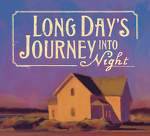
Long Day's Journey Into Night - Ensemble Theater


'LONG DAY'S JOURNEY INTO NIGHT' gets good performance at Ensemble

On July 22, 1941, on the 12th anniversary of his marriage, Eugene O'Neill wrote this letter to his wife: "Dearest: I give you the original script of this play of old sorrow, written in tears and blood. A sadly inappropriate gift, it would seem, for a day celebrating happiness. But you will understand. I mean it as a tribute to your love and tenderness which gave me the faith in love that enabled me to face my dead at last and write this play."

The play he was referring to was 'A LONG DAY'S JOURNEY INTO NIGHT,' now on stage at Ensemble Theatre.

The history of the script is fascinating. In the summer of 1939, at the age of 50, O'Neill began work on an autobiographical masterpiece that confronted the truth about his own family. He completed the work in 1941, but said the play was not to be produced until 25 years after his death.

His wife, however, knowing of the power of the work, released it for production in 1956, three years after O'Neill's death. It won a Pulitzer Prize and has often been hailed as O'Neill's greatest play, even being called the greatest American play of all time.

Though the names have been changed, O'Neill gives an account of his explosive home life. James Tyrone (the father), is an aging actor and a miserly skinflint. His wife, Mary, has been a morphine addict since the birth of their youngest son, Edmund. Their eldest son, Jamie is an alcoholic, unable and unwilling to find work on his own. Edmund, (Eugene O'Neill himself) who has been away as a sailor, has returned home sick and awaits the doctor's diagnosis. Each of them is so self-centered and self-pitying, that they cannot help one-another as they sink further and further into despair.

During his sanitorium confinement for consumption, O'Neill studied voraciously. He devoted special attention to the playwrights Ibsen and Strindberg. His plays reflect these authors' stark realistic styles.

The 1920 Broadway production of 'BEYOND THE HORIZON' marked the start of O'Neill's ascent to fame. He won the Nobel Prize in 1936, the first American playwright to receive the honor. O'Neill's classics include 'THE ICEMAN COMETH,' 'THE EMPEROR JONES,''ANNA CHRISTIE,' 'THE HAIRY APE,''DESIRE UNDER THE ELMS,' 'AH WILDERNESS,' and 'A MOON FOR THE MISBEGOTTEN.'

An award winning 1962 film version of 'LONG DAY'S JOURNEY INTO NIGHT' starred Dean Stockwell , Jason Robards, Ralph Richardson, and Katharine Hepburn.

'LONG DAY'S JOURNEY INTO NIGHT' is a very difficult play to perform. It is very long, talky and depressing. Ensemble's production, under the direction of Licia Colombi, is a very creditable staging.

The handsome and slight Andrew Cruse is a perfect Edmund. His body wracks with deep-lung coughs, he convincingly portrays O'Neill's valiant fight for sanity in an addictively dysfunctional family.

In portraying O'Neill's mother, Annie Kitral takes on one of the great women's stage roles. As with actresses who portray Blanche in 'STREETCAR NAMED DESIRE,' Amanda in 'THE GLASS MENAGERIE,' and Martha in 'WHO'S AFRAID OF VIRGINIA WOOLF,' she confronts a major challenge. And, she wins the battle. This is a finely honed performance. She clearly carries us deeper and deeper into her depression as she attempts to escape from reality through drugs.

Robert Hawkes gives a good performance as the drunken and misguided father. He might have textured the role more to give a clearer picture of the character's mood swings as his frustration with life builds and we see that, as with most alcoholics, he goes from drug induced rage to depression.

John Kolibab has some fine moments near the play's ending when he purports both his love and hate for his younger brother while wallowing in a drunken haze. He, as with Hawkes, needed more clearly defined moments of rationality and psychological clashes.

Capsule Judgment A classic nine word review of the play once stated, " 'A LONG DAY'S JOURNEY INTO NIGHT'--yes, it was!" Fortunately for local audiences Colombi has cut almost an hour off the overly-long script and has molded her cast into an effective unit. Ensemble's production is a fine way to experience the power of O'Neill.

Little Shop Of Horrors - Playhouse Square


‘LITTLE SHOP OF HORRORS’ wonderful fun at the Palace

‘LITTLE SHOP OF HORRORS’ is a true, unadulterated slapstick, potentially in-your face, laugh inciting farce. Farce is hard to do, for both actors and directors. If it’s a farcical musical, it’s even harder. I’ve seen lots of bad, very bad productions of “LITTLE SHOP OF HORRORS’...they get eaten alive. (Pardon the pun.)

FEAR NOT...the professional production of the musical, now on stage at the Palace Theatre, is so good that it even brightens up the overcast, windy fall weather in Cleveland.

The musical version of ‘LITTLE SHOP OF HORRORS," is based on a grade-B non musical movie of the 1960s. With lyrics and books by Alan Menken and music by Howard Ashman, the stage version originally opened off-Broadway and gained a cult following which resulted in a 2,209 performance run. It was transposed into a 1986 musical film which starred Rick Moranis, Steve Martin, Vincent Gardenia, Jim Belushi, Bill Murray and John Candy. In 1991 it appeared as an animated television series, ‘LITTLE SHOP,’ and then, in 2003 there was a smash Broadway revival which laid the foundation for the present touring production, which has been on the road for over a year and will continue to perform through April.

Audrey II moans "Feed me, Seymour. Feed me." So, what does Seymour Krelbourn, a meek foundling who has been taken in by a skid row florist do? Of course, he feeds Audrey II because if he does he’ll become famous and maybe be able to wrest his true love, Audrey (a real person) from a sadistic dentist. And what does Seymour feed Audrey? Blood! Audrey II wants blood? Well, it might help for you to know that Audrey II is a hungry blood drinking, people eating plant from outer space. In his desperation, Seymour makes a Faustian pact with the plant and as it needs more and more blood, and more and more people are sacrificed for the cause. Eventually, Audrey II looks like a venus fly trap on steroids. So much so that people in the theatre’s front rows started to get nervous about whether one of the plants’ tentacles would reach out and sweep them into the plant’s mouth.

This is obviously not ‘ASSASSINS,’ or ‘CHESS,’ or even ‘MISS SAIGON.’ The script is no great musical epic, but it sure can be fun. In the hands of this talented professional cast under the superb direction of Jerry Zaks, this production is a hoot!

The show is punctuated by musical commentary delivered by a Supremes-style trio that bounces around the flower shop's inner-city neighborhood. The trio, which sings, dances and cops just the right attitudes is composed of Iris Burruss, Badia Farha and Latonya Holmes. Their versions of the opening song, “Little Shop of Horrors,” “”Da Doo” and “The Meek Shall Inherit” were wonderful. Side note: If during the run here one of these superstars has to take a night off, Hathaway Brown and Shaker Heights/Warrensville Heights native Marsha Lawson will take her place.

Jonathan Rayson made Seymour a geek extraordinare. His singing voice and development of the character from meek to strong was right on target. If you want to see Rayson’s performance, you’ll have to do so before Tuesday, November 15. On that night Daniel C. Levine takes his place. (Levine sat in front of me during the opening night production and not only looks the role, but it was delightful watching him mouthing the words to the songs and dancing in his seat. As the good luck theatre saying goes, “Break a leg, Daniel!”)

Tari Kelly is right on target as the ditsy blond Audrey. Her version of “Suddenly Seymour,” was totally charming. You’ve never quite seen a kissing scene like that performed by Kelly and Rayson. Her version of “Somewhere That’s Green” was delightfully touching. Kelly also leaves the cast on the 15th, to be replaced by Liz Pearce.

Michael James Leslie (the Voice of Audrey II), and Anthony Asbury, Michael Latini and Marc Petrosino (the manipulators of Audrey II) deserve high praise. They wisely received “in-person” curtain calls.

Darin DePaul was disappointing as Seymour’s boss Mr. Mushnik. He mispronounced some of his Yiddish dialogue and did not have the right “New Yawk attitude” needed to make the role real. James Moye wasn’t quite sleazy enough as the dentist--the “bad guy.” I never felt like booing when he came on stage. If I had done so, he would have been fulfilling his role as the true villain. He did better in all of his other roles.

The sets, costumes, special effects and musical accompaniment were all top-notch.

Capsule Judgment Sometimes it’s just fun to go to the theatre and giggle, laugh and have a good time. If that’s what you want, then this production of ‘LITTLE SHOP OF HORRORS’ is your thing. As for me, I loved it! (Hey, producers, can I go back and see it again with the “new” leading cast members? Aw, please!)

Friday, February 25, 2005

The Exonerated (Dobama)


Dobama's 'THE EXONERATED' unnerving glimpse at reality

Punishment is supposed to fit the crime, but what if there is no crime, only punishment? This is the question at the center of ‘THE EXONERATED,’ now on stage at Dobama Theatre in its Cleveland debut.

This is no ”sit back and appreciate it” play. This is an in-your-face real life expose. We experience the tales of six real people who were placed on death row due to poor or corrupt police work, thoughtless defenses, and crooked judges and politicians.

The play was born when authors Jessica Blank and Erik Jensen attended an anti-death penalty conference and heard a phone call from someone on death row in Illinois who shouldn’t have been there. The duo decided that they would investigate the prevalence of the phenomenon and set off on a country-wide journey in search of the real-life "exonerated."

The authors indicate that "What we really have to say is, every time there’s a horrendous crime, the more likely it is that an innocent person will be convicted. In our six cases, every single jury member who voted to convict those people was 100 percent convinced they were putting away the right person." One of author’s goes on to state, "I don’t expect people to see the play and say, ‘Down with the death penalty.’ I expect people to see the play and say, ‘Oh, this is real. This is happening. We have to do something.’"

The question might be asked, “How common is the arrest and conviction of people who are then proven to be innocent?” The staff of the Center on Wrongful Convictions, which pioneered the investigation and litigation of wrongful convictions, estimates the numbers are massive. Their efforts, on behalf of nine Illinois death-row inmates, were a driving force behind both Governor George H. Ryan's decision to suspend executions in Illinois and the current nationwide movement to reform the criminal justice system.

The movement against false imprisonment has many believers, including a number of actors who have volunteered their time to portray the characters in ‘THE EXONERATED’ in various national theatres. Some of these stars include Marlo Thomas, Brian Dennehy, Richard Dreyfuss, Sara Gilbert, and Jill Clayburgh.

To pre-experience the play, just imagine everything you did between the years 1976 and 1992. Now remove all of it. Those 16 years were taken away from Sunny Jacobs, convicted and sentenced to death for a crime she did not commit. Her story, and the other five, are tales told in their own words. This is, in fact, a spoken-word collage. There is little real action, but the words are powerful and compelling enough to hold your attention throughout the long one-act presentation.

The Dobama production is well directed by Joel Hammer. The pace is right, the emotional feelings are right, even the humor is well-keyed. This is a unit piece and the cast is mostly believable in their portrayals.

Elizabeth Townsend, true to the character’s name, Sunny, smiles through her tears as she tells the tale of how she and her husband, who was electrocuted in a torturous manner, were framed by a killer who later repented. Jimmy Wood is right on as the black dread-locked Gary, who was manipulated into a “confession” and even after being released is denied his right to return to his previous profession as a surrey horse racer, but ironically is allowed to buy a gun.

Allan Byrne is properly pathetic as an innocent man whose conviction results in his brother’s total emotional demise and eventual murder. Jeff Grover plays many roles, all of them well. Darryl Lewis acts as our poet narrator. He sounds much like James Earl Jones and is generally effective, but often looks over the heads of the audience as he speaks, instead of directly at us. This is distracting. We need the consistent direct contact.

Kirk Brown fails to reap full emotional impact as a propertied murderer of his mother and father. His initial confusion, which worked well, doesn’t transfer well into the concluding scenes. Nate Cockerill does many of his multiple roles well, but has difficulty with some of the accent switches. Marnie Task and Sonia Bishop are effective in various roles.

The sparse set consists of nine chairs and a screen on which silhouetted scenes are acted. One might question the need for the silhouettes, as the words, rather than the visual images are the important elements and the acting out of certain actions pulls the viewer from the words to unnecessary images.

CAPSULE JUDGEMENT: ‘THE EXONERATED’ is a play you will not soon forget. The play was selected as one of the 10 best plays of 2002 in both the New York Times and Time magazine and deserves that recognition.

Monday, February 14, 2005

A Raisin in the Sun (Beck Center)


‘RAISIN IN THE SUN’ gets creditable production at Beck

What happens to a dream deferred?
Does it dry up
Like a raisin in the sun?

This segment of the poem "A Dream Deferred" by Clevelander Langston Hughes is the underlying theme for Lorraine Hansberry’s ‘A RAISIN IN THE SUN,’ now on stage at the Beck Center for the Arts.

On March 11, 1959, ‘A RAISIN IN THE SUN’ opened on Broadway. The play had already negotiated a long and troubled road just to find its way to the opening and was filled with many firsts. It was the first major on-Broadway play by a Black female author. It thrust many of its rookie Broadway cast members into major entertainment roles including Cleveland-born Ruby Dee, and future superstars Sidney Poitier and Claudia McNeil.

No one could foresee that the play's imminent triumph would mirror the changing role of Blacks in this country and the role the play’s themes would play in African American culture in the years that followed.

The New York Drama Critics Circle named the Hansberry play the best American play of 1959 though this, probably the most important African American theatrical piece ever written, failed to receive either a Pulitzer Prize or a Tony for Best Play.

‘A RAISIN IN THE SUN’ relates the story of the Youngers, a Southside Chicago family trying to survive in cramped ghetto quarters. When Mama gets a $10,000 check from her husband's life insurance, they consider moving to a house in a white suburb. A suburb in which the residents warn that they don’t want a Black family as their neighbors.

A RAISIN IN THE SUN’ is clearly autobiographical. Chicago, where Hansberry was born in 1930, was self-segregated along racial lines at the time. As a child, Hansberry's family became one of the first to move into a white neighborhood. When their neighbors rebelled, both with threats of violence and legal action, the Hansberrys defended themselves. The case went all the way to the US Supreme Court.

Hansberry told her husband she wanted to write a social drama about Blacks that was good art. She succeeded. Instead of stereotyped characters that would bear no resemblance to actual people, she held up a mirror to the racial nature of this country.

The Beck Center’s production is fine, as far as it goes. The missing element is the extra quality that would make the experience, as Hansberry intended, “painfully realistic.” It may be that the play, itself, has lost some of its power due to the changes that have taken place, at least in some areas of this country. But, more importantly there is an inconsistency in the acting and pacing.

Having seen the original New York production, and being swept up by its power, I feel that some of the Margaret Ford Taylor directed production was diminished because of the production’s languid pace, its lack of consistent intensity. This takes away from the play’s mission.

As for the performances, Connie Blair is fine as Mama, the head of the household. At times, however, she loses her stiff back, her stubborn pride. Sonia Bishop is right on target as her daughter-in-law, Ruth. The scene in which she pleads for the family to move, to develop their dignity, was extremely effective.

Michael May as the son is strongest in his rage scenes, but not as effective in displaying his frustration. Evelyn Stewart lacked the consistent depth of conviction as Beneatha, the daughter who is in training to be a doctor.

Young Anthony Nickerson is appealing as Walter and Ruth’s son. John Polk is on target as the representative of the white homeowners who don’t want the Youngers as neighbors. Jason Samuel’s version of one of Beneatha’s suitors consists of a bad accent which oftten makes him impossible to understand and distracting facial expressions, while Jonathan Wray as George, the other suitor, feigns character development.

Don McBride’s scenic design adds to the era-correct feeling of the play.

CAPSULE JUDGEMENT: The strength of Beck’s ‘A RAISIN IN THE SUN’ is Hansberry’s finely written script. It reflects an important slice of American history. Though the performances and pacing don’t always develop the depth of the material, but the end result is a very acceptable production.

Venus (Cleveland Public Theatre)


‘VENUS’ fails to compel at CPT

During the second act of Suzan-Lori Parks’ ‘VENUS’ at Cleveland Public Theatre, I glanced down the row in which I was sitting. The man next to me was snoring and three of the remaining seven people were sleeping, or at least had their eyes closed. This does not bode well for a production. To be honest, I couldn’t blame them.

Parks play is loosely based on the story of Saartjie Baartman, an African woman with an enormous posterior, who was taken to London in the early 19th century. Dubbed The Venus Hottentot, she left her home not as a slave, but with a desire to make a lot of money. Once in England she became the star of a freak show. A debate began as to whether the exhibition constituted slavery, and a court heard a case to determine whether the exhibitioner should be sentenced under the country’s antislavery laws.

Based on Baartman’s story, Parks wrote a play which examines such issues as the objectification of people and cultures; the fascination with what is heathen, foreign, different, sensational; and how some people are influenced more often by appearances than substance. There is also the underlying commentary on how each of us, in our own way, is a freak.

On the surface, these topics should make for great theatre. The same concept worked well in the ‘ELEPHANT MAN.’ Unfortunately, this play misses the mark. It is pondersome, overly-long and fails to compel. This is somewhat surprising as Parks is the author of some impressive theatrical pieces including the Obie Award winning ‘IMPERCEPTIBLE MUTABILITIES IN THE THIRD KINGDOM.’

Parks’ approach to dialogues assumes that the audience is willing to dig and ponder meanings. She is noted for her dense language and use of metaphors. She repeats ideas and speeches. This writing style leads to a deliberately static plot evolvement, as is evidenced in ‘VENUS.’ There is little real interaction between the characters. Even the scene in which Saartjie and the Baron Docteur, who has purchased her as a “trophy” mistress, negotiate their relationship in bed, there is a lack of true connection between the characters.

Sometimes stagnant scripts can get a breath of life via a director. Unfortunately, Jyana S. Gregory doesn’t appear to be that kind of director. The production is static. Nothing sparks. There is little attempt made to compel the audience to watch, to listen, to understand.

The cast tries hard, but with little overall effect. Nina Domingue, a twice recognized “Times Tributes Theatre Award” winner in 2004, is unquestionably one of the area’s best actresses. Even she couldn’t save the production. She is given little to work with. Part of this is script, part is directorial decisions. She is thwarted by underplaying the character, not being allowed to use texturing of speech and action to make Saartjie live.

Robert J. Williams does a credible job as the Negro Resurrectionist, our guide to the goings-on. Again, he so underplays the role that his meanings are often lost. The chorus is often impossible to understand due to missed timing and not speaking in unison. David Loy, as the Baron Docteur, performs on the surface, not delving into the motivations of the character.

The highlight of the show is Sergio Villegas’s wonderful circus ring set. The program designs and poster art of Nikita Hunter are also wonderful.

CAPSULE JUDGEMENT: As my sleeping row-mates seemed to reveal, CPT’s ‘VENUS’ fails to compel attention or hold much interest.

Wednesday, February 09, 2005

Movin' Out - Playhouse Square Center


Fantastic 'MOVIN' OUT' rocks the Palace Theatre!

There is a love affair going on in Playhouse Square. From the opening note sung by Clevelander Michael Cavanaugh, until the final curtain call which found the nearly sold out house standing on its feet screaming "Cleveland Rocks," the audience at 'MOVIN' OUT,' the Twyla Tharp/ Billy Joel musical now on stage at the Palace Theatre, was wired. During the curtain call the cast was wildly applauding the audience for its enthusiastic reception of the show. Audience comments on the way out included, "That was fantastic," "Best show I've ever seen," "That's what good theatre is all about," and "I'm coming back for more!"

I saw the first night preview of 'MOVIN' OUT' in Chicago where it received its out of New York tryout. My immediate reaction was "this is no ordinary musical." There are no spoken lines, the singing doesn't integrate into the plot, per se. In fact it is more a rock concert and a contemporary ballet done simultaneously. The band, and in this case, a great band, is suspended over the stage with the lead singer center stage. In Chicago, and now in New York, it's local boy Cavanaugh who received a 2003 Tony Award nomination for his Broadway debut. Cavanaugh took a recess from the New York production to sing the role in his home town. And we are very glad he did.

Another reaction to the Chicago production was that the first act was weak, the second act dynamite. I heard shortly after the Windy City opening that Twyla Tharp totally had restaged the first act and Billy Joel had added a song. The second act remained basically in tact. The first act is still weaker than the second, but in a production this dynamic, that's not saying there is much wrong.

The story, in contrast to many dance concerts, is easy to follow, concerns an examination of a group of 60s teenagers who progress through high school, followed by the males going off to the Vietnam War which results in one of them losing his life in combat. After the conflict the others return home, broken from grief and hooked on dope. The boys, now men, finally reconnect and discover they have found their way back.

Don't try to match Billy Joel's words to the dancing. While not all the lyrics are relevant to the action, phrase snatches and the musical themes set the tone for Tharp's choreography.

Cavanaugh, who was found in Las Vegas doing a show in which he sang Billy Joel songs, started to perform professionally at age 12. He is not only known as a singer but does character voices for the Disney Channel and has recorded a solo CD entitled "Sounds a Lot Like Me." His performance in 'MOVIN' OUT' is outstanding. His voice is strong, his articulation clear, and his piano playing wonderful. He sings with feeling and creates meaning from the words, rather than just singing words.

Usually in dance performances the women outperform the men. Not so in this production of 'MOVIN' OUT.' The men, including the male corps, were all strong.

Corbin Popp, who played Tony, showed mastery of not only modern dance, but displayed fine balletic moves. He also displayed strong acting skills. His Broadway idol good looks and buffed body added to his strong stage presence. In "This Night" he showed excellent partnering skills, as was the case in "Big Shot." "Big Man on Mulberry Street" was a show stopper.

As Eddie, the distraught post-Vietnam burnout, Brendan King almost stole the show with his amazing gymnastics and dancing power. A segment entitled, Eddie Attains Grace, danced to "River of Dream," "Keeping the Faith" and "Only the Good Die Young" was amazing. It was one of the strongest dance performances I've seen in any musical.

Sean Maurice Kelly, who filled in for Matthew Dibble, didn't match the dancing polish or dynamics of Popp and King.

On the female side, Julieta Gros was wonderful as Judy. She captured the stage with her petite good looks and controlled dancing movements. Laurie Kanyok was inconsistent as Brenda. She was at her best when partnering with Corbin Popp.

"Goodnight Saigon," which displayed the horrors of war was superb, as was "Captain Jack."

The Movin' Out Band was note perfect. They not only played well, but were excellent in vocal backups.

Technically, the show was of Broadway quality. The lighting, costuming and scenic design all added to the overall positive effect.

Tuesday, February 08, 2005

Groundworks - Botanical Garden


GROUNDWORKS shines at Botanical Garden

The first time I saw David Shimotakahara dance with the Ohio Ballet I knew that I was watching a very talented performer. When I saw his first choreographed piece for the same ballet company, I was equally impressed. The work was creative, the dancers well-disciplined, the piece polished.

When Heinz Poll left his post as Artistic Director of OB, I was hoping that Shimotakahara would be appointed to continue the company's creative work. Unfortunately, the post went to someone else. Instead of giving up, Shimotakahara founded GroundWorks Dancetheater, which has become a leading modern and contemporary dance company in the area. He has developed a loyal following which supports his every effort. This was obvious at the sold out performance where viewers thoroughly enjoyed GroundWorks Landmark Series performance at the Cleveland Botanical Garden.

The Landarks Series places the company in various settings in the community. These are as diverse as churches and abandoned buildings. His purpose is to bring dance to the community. While in the venues, he often expands beyond the performances of production. For example, the company's Botanical Garden stay included exhibitions for Cleveland school students, for a group of seniors, and a fund raiser for the Garden.

The recent program included 'ALWAYS,' a piece centering on the vocals of Patsy Kline, which premiered in 2003. The piece is a collaborated invention of the original performers Amy Miller, Shimotakahara, Mark Otloski and Xotchiti Tejeda de Cerda (who has left the area). In this case the thoroughly enjoyable 'ALWAYS' was danced by Miller, Felise Bagley, Shimotakahara and Brain Murphy.

Murphy, a dancer with Ohio Ballet, was a replacement for Mark Otloski who in mid- January, injured his leg and will shortly be having surgery to correct the problem. Murphy, by far OB's best male dancer, stepped in with less than two weeks of rehearsal and added much to the performance. To add to the awe, Murphy continued to rehearse with Ohio Ballet which will perform in Cleveland (February 18 & 19) and Akron (February 25 & 26).

Murphy's presence aesthetically helped the balance of the dancers. The very talented Otloski is very tall and thin. He towers over the rest of the company. This works in many pieces, especially when he is dancing solo or with a petite female partner. However, his size often creates unbalanced visual lines. Murphy, who is parallel in size to the other dancers, physically fits into the many intertwining movements of Shimotakahara's choreography.

'ALWAYS' is a humorous, creative and delightful piece. Miller, a powerhouse of a dancer, has unbelievable physical control and makes every movement a total picture...beginning, middle and ending. Though the piece's movements don't develop the story of the words, the actions parallel well the mood of the music.

'SEVERAL TRUTHS,' is a duet created by choreographer Gina Gibney, who often showcases her works with GroundWorks. Premiered in 2001 the piece uses sounds rather than music to convey various moods. An emotionally and physically exhausting dance it is dependent on the controlled intertwining of bodies, strong movements, powerful carries, and the execution of parallel precision. Dancers Amy Miller and David Shimotakahara were up to the task. The startling ending, with no sound accompaniment, was greeted with enthusiastic applause.

'BEFORE WITH AFTER,' choreographed by Shimotakahara to music by Bach, according to program notes "suggests life's encounters, steps and crossings but ultimately acknowledge what it means to be alone." This theme was carried out by use of solos, duets, triads, quartets and quads of dancers. As with the whole program, the piece was well-performed. Precise, strong and fast movements were at the center of the concept. Brian Murphy's solo and his duet with newcomer Jennifer Lott were among the highlights, as were duets by Shimotakahara and Miller and Miller and Felise Bagley. Lott, the newest member of the GroundWorks company is an attractive dancer. Her skills, especially her body control, are not yet up to the levels of the other GoundWorks dancers, but under the tutelage of perfectionist Shimotakahara she should develop into a good addition.

The Cleveland Botanical Garden space was a perfect setting for the company. Dancing on a raised stage against a wall of sheer shades, the performers were highlighted by natural as well as artificial light. The trees and even people walking in gardens behind the dancers added to the naturalness of the choreography. Having the audience within feet of the performers allows for an in-your-face experience. Hearing the shoes squeak, the floor lightly creak, and the breathing of the cast, as well as watching their muscles move and flex, makes for audience involvement in the entire process.

Capsule Judgment GroundWorks Dancetheater once again proved in its Cleveland Botanical Garden presentation that it is the area's premiere modern and contemporary dance company. Their next presentation will be as part of 'DANCE WORKS 05'--Cleveland Public Theatre which salutes their residence dance companies: Groundworks (March 31-April 03); Verb Ballet (April 7-10); Inlet Dance Theatre (April 14-17), and SAFMOD (April 21-24). Location: 6415 Detroit Road at W. 65th Street. Tickets: 216-631-2727.

Thursday, February 03, 2005

New Classics Collection (Verb Ballet)

VERB’S the world in local ballet

At the conclusion of Verb Ballets’ ‘NEW CLASSICS COLLECTION,’ the company’s Artistic Director, Hernando Cortez, shouted to a sold-out audience, “Verb’s the word, verb’s the word.” And, how right he is. Verb is the word in Cleveland area ballet.

Ever since The Cleveland-San Jose Ballet packed up its debts and fled the city, Cleveland has lacked a premiere Cleveland-based premiere ballet company. That is not to say there are no local ballet companies. Karen Gabay and Raymond Rodriquez’s Point of Departure has been fine in its presentations and has developed a loyal following. Unfortunately, their presentations are few. Gabay and Rodriquez are still members of the San Jose Ballet family and have no permanent presence in the city. The Ohio Ballet, which many felt would be the logical successor to CSJB has not filled the void. Its attendance in both its Cleveland and Akron performances has been underwhelming. Under its present administration it has failed to build a solid audience base. Ohio Dance Theatre, Denise Gula’s Oberlin based group, does a nice job for a small company with limited resources. It has made quite a positive impact on the Lorain County area and in national outreach, but hasn’t been as successful in its Cleveland ventures.

Two years ago The Repertory Project was transformed. The wand was handed to Executive Director Dr. Margaret Carlson and Artistic Director Hernando Cortez. They made their three wishes and the pumpkin has blossomed into a full-fledged shimmering coach. Now known as Verb Ballet, they have developed a new repertory, repositioned the company’s publicity, signed on a group of enthusiastic board members, and formed a permanent Cleveland based company that offers its dancers on-going employment. It is in the process of amassing its new Classics, Contemporary Artists and Emerging Artists Collections to accompany the works of its Artistic Director.

As witnessed by the appreciative audience at the company’s recent Playhouse Square debut, this is a superb dance company. Besides the fine evening of dance one must be amazed by the fact that potential attenders had to be turned away due to a SRO crowd. A sold out audience to see a Cleveland ballet company? That hasn’t happened in a long, long time.

The program consisted of three pieces: ’APPALACHIAN SPRING,’ ‘ESPLANADE’ and ‘CARMINA BURANA.’

This version of ’APPALACHIAN SPRING’ was a reworking of that presented last summer at Cain Park. There was a new set and costumes (by Suzy Campbell and Robert Katkowsky) and an altered cast. The set worked well though it did not have the severe rustic feeling of the original. The costumes at times distracted. The severity of wilderness living was diminished by the colorful material used for the women’s dresses, especially those of Followers.

Mark Tomasic gave his usual strong masculine presence to the role of the Husbandman, though I thought he added more to the production as the Revivalist in the Cain Park rendition of the piece. Glynn Owens, who danced the Revivalist is slight and youthful. Though he dances well, he failed to convey the sternness and power needed for the role. His hop moves fringed on the comic rather than the serious. Tracy Vogt was wonderful as the Bride. This is one very, very talented dancer. Elizabeth Flynn was excellent as the Pioneering Woman. The Followers danced well, but one of the performers broke the solemnity of the occasion by smiling during segments of the performance.

‘ESPLANADE,’ danced to the music of Johann Sebastian Bach, was originally choreographed by Paul Taylor in 1975 and has been reconstructed by Hernando Cortez. This is a high-energy exhausting, audience pleasing piece that is divided into a series of short segments. The dancers were in a constant state of running, bouncing, writhing, leaping, rolling, twisting, and walking on and jumping over each other. The numerous combinations of line intertwining and single and duet dancing was compelling.

Carl Orff’s ‘CARMINA BURANA’ is one of the most popular 20th century choral works. It is based on a collection of medieval poems from the early 1800s. The topics range from the ever-changing fortune of humans to physical love. The illuminated pictures which accompanied the script which was found in the 1930s was the basis for many of the dance images framed by choreographer Hernando Cortez.

Joan Yellen Horvitz’s pumpkin-like designed backdrop was enhanced by Chaneault Spence’s lighting design which resulted in changed colors to fit the mood of each segment. Horvitz’s costumes were breathtaking and appropriate.

The choreography mirrored the music, and the dancers, who were well prepared by Cortez, continually changed mood to convey the textures of the music.

In its World Premiere, the piece, though overly long, was met with positive response by the audience. Cortez might consider cutting some of the segments in order to make the piece more audience friendly.

CAPSULE JUDGEMENT: Verb Ballet has the fortune of being headed by the dynamic Margaret Carlson and the talented Hernando Cortez. They have assembled a stable of generally very capable dancers. The females, as a whole, are excellent. The males are less consistent. Mark Tomasic is one of the area’s best male dancers. Robert Wesner is a fine but often overly affected solo dancer, but has trouble pulling back and becoming part of the ensemble. Newcomer Glynn Owens appears to have the makings of a solid performer though he needs to work on his posture. Hernando’s challenge will be to flesh out the company with dancers who can help carry the company from excellent to world class.

The Piano Lesson (Cleveland Play House)


'THE PIANO LESSON'--an examination of the African American adventure

Playwright August Wilson thinks that African Americans have not been fairly represented by White culture writers and historians. To counter this, Wilson has set out to create a series of works which examine the lives of Africans who were brought to this country, often against their will, and enslaved. He develops his messages by using cultural patterns such as story telling and music, with references to history, religion and superstition. ‘THE PIANO LESSON,’ now on stage at The Cleveland Play House, is the fourth in Wilson’s 20th century decade-by-decade chronicle.

The story centers around a piano that sits in the parlor of the Pittsburgh home of Doaker Charles and his niece, Berniece. The years is 1936, but the piano serves as a persistent reminder of the ancestral memory of the home’s inhabitants. Carved on the legs and front of the piano, as described in Wilson’s stage directions, are “mask-like figures resembling totems...in the manner of African sculpture...rendered with a grace and power of invention that lifts them out of realm of craftsmanship and into the realm of art.” These figures, created by Berniece’s great-grandfather, tell the history of the family through the long years from slavery to emancipation.

For Berniece, the piano evokes memories and emotions. Her mother used to make her play the piano every day, an obligation Berniece accepted because she was convinced its carved figures had the ability to come alive and walk around at night, to create ghosts and memories too fearful to confront. When her mother died, Berniece “shut the top of that piano...and ain’t never opened it again.” Out of respect for the generations of ancestors enshrined in its tableaux, she’d never dream of allowing the instrument to leave her parlor.

Berniece’s brother, Bob Willie, shares none of his sister’s attachment to the instrument. He views the piano as a commodity to be sold and the money used to purchase the land of the former owner of their slave ancestors. He believes that getting rid of the piano and claiming the land will purge the ghosts from the entire family.

Ghosts, both literally and figuratively, hover over the happenings. The works itself sits at the intersection of realism and metaphor. Are the ghosts real? Is the storm near the play’s conclusion the exorcism of the actual spirits or the end of the family’s obsession with the horrors of the past?

Is ‘THE PIANO LESSON’ a great script? In spite of its awards, reviewers generally agree that it is not a masterpiece. It is repetitious, imperfectly resolved, and as often is the case with Wilson, much too long. What it does have going for it are also Wilson’s trademarks: the rhythms of black speech, the essence of the culturally uprooted, the legacy of slavery, and the knowing message of what it is like to be at the bottom rung of the American way of life.

The CPH production, under the able direction of Chuck Patterson, develops Wilson’s intent. In spite of excellent performances, they cannot, however, completely overcome the excessive length, abstraction and talkiness of the script.

Wiley Moore (Doaker) stands proud as a Black man who has meet the system and taken it on as a hard working productive member of society. Moore adds just the right inner strength to the role. Albert Jones doesn’t consistently smolder as Boy Willie, though he has periods of brilliance. Marlon Morrison, as Willie’s naive country boy friend Lymon, is wonderful. He is simple, without being a simpleton. Linda Powell’s Berneice sometimes lacks the texturing necessary to make her character a totally real person. Sierra Heard as Berneice’s daughter, Kim Sullivan as the preacher, Doug Jewell as Doaker’s brother and Colleen Longshaw as the women who Boy Willie and Lymon hook up with, are all quite good in their performances.

Felix Cochren’s set is outstanding. It is not only era perfect and visually attractive, but gives the actors an efficient place in which to perform. Myrna Colley-Lee’s costume designs are wonderful. William H. Grant III adds much to the production through his lighting.

CAPSULE JUDGMENT: August Wilson is an important African American playwright. ‘THE PIANO LESSON’ is another of his plays that helps give a picture of the African American experience. Though a flawed script, the CPH production is worth seeing for no other reason than it is an important piece in the puzzle of defining an important racial component of the American story.

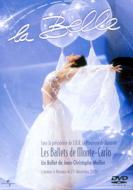
La Belle - Playhouse Square Center


'LA BELLE' IS A BALLET SPECTACLE


The opening notes of Pyotr Illyich Tchaikovsky's "The Sleeping Beauty" are dark and somber. Wait, "Sleeping Beauty" is the story of a beautiful princess who falls under the spell of a wicked witch, falls into a deep sleep, is eventually kissed by a handsome prince, and they ride off to live happily ever after. Well, at least that's the Walt Disney version.

In fact, the tale, as written by Charles Perrault, is a story of forceful carnal characters. The moral, which is drawn from the original story states, "But desire with its ardor aspires to conjugal faith."

Les Ballets De Monte Carlo's production of 'LA BELLE,' as conceived by Jean Christophe Maillot, was performed at the State Theatre of Cleveland's Playhouse Square from February 3-6. The production was given the Nijinsky Award for the Best Choreographic Production 2001 and the Danza & Danza Prize for the Best Show 2002.

Maillot's interpretation explores all aspects of human relationships. It eradicates the original classical ballet version staged by Marius Petipa, which had little to do with Perrault's initial 1697 tale in which the barbaric Queen Mother's jealous rages lead to not only her own dreadful death, but to emotional torture for her husband, son, Beauty and many others. Maillot wanted to create an emotional masterpiece which centered on the dark elements of the tale, while at the same time respecting the euphoric and timeless love story that it has become.

In this interpretation the first act brings to life the joyous past of the princess as recounted by the Lilac Fairy to the curious prince. The second act centers on her rape, the princess's long sleep (as represented by her dance inside a larger-than-life transparent crystal ball), the arrival of the prince, her ultimate awakening, the continued battle with the Queen Mother, the death of the Queen, and the couple's eventual freedom from the ill-influences.

Though I would love to say that I was enchanted by the presentation, I can't. I found much of the staging very gimmicky. The props, the setting, the lighting, the costumes often overrode the impact of the choreography. I also found some of the story line so convoluted that it was difficult to follow. This was not aided by the program notes which confused rather than enhanced. As one of the people behind me whispered, "What do the program notes have to do with what is going on on-stage?"

This is not to say that the performance was bad. It wasn't. The dancing, as a whole was superb.

Bernice Coppieters, who danced Beauty, was breathtaking. Her perfectly toned body was accented in a skin-tight sensual see-through lace unitard. Her movements were precise, her dance interpretations flawless. As the prince Chris Roelandt was fine, but seemed to tire near the end of the performance when his movements became less precise and he lost some of his passion. Their scene in which she arises from the deep slumber culminated in a sultry duet which was punctuated by an arousing kiss that lasted so long that the audience started to titter.

Gaetan Morlotti as the dual-sexed Queen Mother was excellent. In fact, his curtain call was met with "boos." These were not as a negative but as a positive reaction to his effectiveness as a truly wicked person.

The rest of the cast was effective, but the male corps de ballet was sometimes not in sync. The large orchestra was impressive, giving the dancers excellent musical accompaniment.